
On Jan. 8 French President Emmanuel Macron met with members of his country’s parliament to discuss the possible deployment of troops to Ukraine after a peace agreement is reached. This was not the first proposal to send a European contingent to assist Kyiv, yet since the start of Russia’s invasion only a small number of volunteers have fought on Ukraine’s side — often facing the threat of criminal prosecution at home. In the UK, a law banning participation in the armed forces of other countries has been in force since the 19th century, though its application has depended on political circumstances. In any case, by placing obstacles in the way of citizens seeking to join Ukraine’s military, Western countries are widening the gap between their pro-Ukraine rhetoric and limited real support. It is a disconnect that could ultimately prove disastrous for Kyiv, argues Eliot Wilson, a national security expert at the Coalition for Global Prosperity, a former member of the UK House of Commons, and a writer and historian.
Almost as soon as war broke out in Donbas in April 2014, the conflict was internationalised. The “Donbas People’s Militia” — pro-Russian separatist paramilitary groups — seized control of Ukrainian government buildings across Donetsk Oblast. They purported to be elements of the local population supporting the newly declared Donetsk People’s Republic, which sought autonomy from Kyiv. What, you may ask, could be more hyper-local?
In fact, these “people’s militias” were directed, supplied, and supported by Russia. The “separatists” who attacked and occupied Sloviansk were led by a group of 50 heavily armed volunteers from the Russian Armed Forces under the command of Igor “Strelkov” Girkin, a right-wing nationalist and former officer in Russia’s Federal Security Service, the FSB.
By the end of 2014, whether the protagonists admitted it or not, the conflict was positively cosmopolitan. It was not just a heavy Russian presence in the separatist forces (although that contingent alone is reckoned to have totalled over 13,000) — they were also joined volunteers from Armenia, Belarus, Kazakhstan, Kyrgyzstan, Latvia, Chechnya, North Ossetia, Ingushetia, Germany, Serbia, and Hungary (albeit in much smaller numbers).
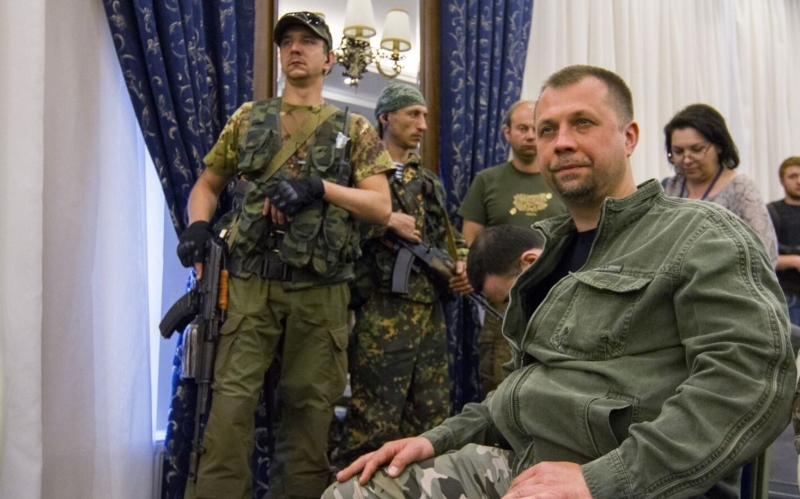
As Ukraine faced up to what was in effect a full-scale war, the government in Kyiv also drew volunteers from abroad. Initially the Armed Forces of Ukraine were ill-prepared to counter a determined uprising. In recognition of that, nearly 4,000 foreign volunteers, predominantly Russian nationals, rallied to the Ukrainian cause. In order to capitalise on this international support, the Verkhovna Rada voted on Oct. 6, 2014 to allow foreign citizens to join the Armed Forces of Ukraine.
The first flush of enthusiasm soon faded, however. One researcher has said that:
“The intensity of the 2014 mobilisation was short-lived. The fighters arrived throughout the summer of 2014, and most of them were gone from Ukraine in 2015, although some returned later, with a small group settling in Ukraine permanently. They mostly departed since little was happening on the frontline, and the war was largely reduced to a series of skirmishes around fortified trench lines.”
The volunteers of 2014 were mostly motivated by ideological considerations, especially on the far-right. The cause of Ukrainian independence was straightforward enough, and Russia’s neighbours have centuries of grievances to fuel their animus towards the Kremlin. At the same time, however, the separatists, maintaining Russia’s party line that the conflict began as an effort to fight “fascism” in Ukraine, sought to invoke the memory of the International Brigades in Spain.
The formation of the International Legion
The phenomenon of foreign fighters could have been a fleeting quirk — but everything changed on Feb. 24, 2022. At 5.30 a.m. Moscow time, Russian state television broadcast an address by Vladimir Putin in which he announced the start of a “special military operation.” In order to check NATO expansion eastwards, he claimed, and to prevent “an 'anti-Russia' hostile to us… being created” in “territories adjacent to us, territories that were historically ours, I emphasise,” nearly 150,000 Russian personnel, organised into 140 tactical battle groups, invaded Ukraine. The ground incursion was accompanied by air and missile strikes all across the target country. Putin might have avoided using the term, but Russia was now at war, having committed a clear act of aggression against a sovereign democratic neighbour.
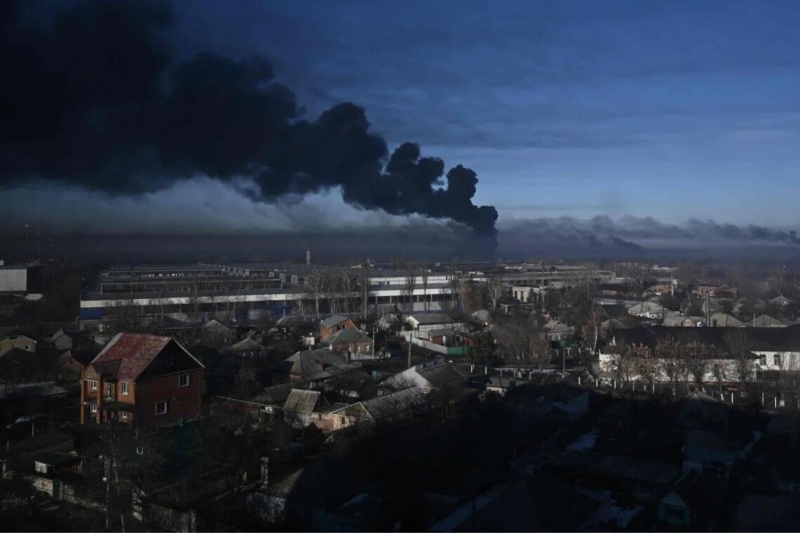
Three-and-a-half years later, Russian combat forces have not seized the Ukrainian capital, though they have occupied around 20 per cent of Ukraine’s territory. Still, the full-scale ground invasion created a wholly new context. This was no longer a proxy war of half-truths, unmarked uniforms, and “little green men.” Suddenly, foreign fighters returned to the agenda, and President Volodymyr Zelenskyy’s government took swift action.
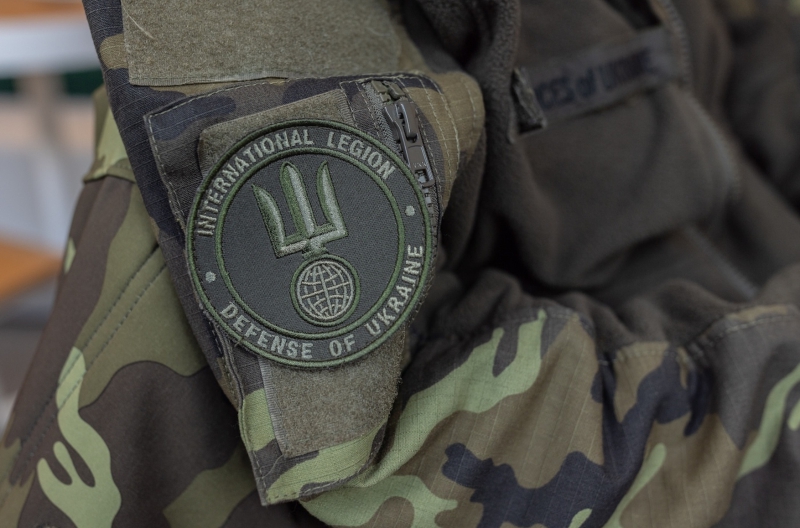
Three days after the start of the Russian invasion, Zelenskyy ordered the establishment of the International Legion of Territorial Defence of Ukraine. “Every friend of Ukraine who wants to join Ukraine in defending the country, please come over,” he announced. “We will give you weapons.” In a statement on social media, Minister of Foreign Affairs Dmytro Kuleba appealed to would-be volunteers “to contact foreign diplomatic missions of Ukraine in your respective countries. Together we defeated Hitler, and we will defeat Putin, too.”
There was a stark logic behind Ukraine’s creation of the International Legion. The country had a population of 41 million, though the departure of refugees had now reduced that to 33 million; Russia’s population, meanwhile, is 145 million. At the outbreak of full-scale war, the Armed Forces of Ukraine had an active strength of 196,000, with another 53,000 available in the State Border Guard Service and around 50,000 in the National Guard (a gendarmerie force controlled by the Ministry of Internal Affairs); the National Police of Ukraine had 110,000 personnel.
By contrast, the Russian Armed Forces numbered 900,000 active service personnel and two million reservists; as of 2025, according to Global Firepower, Russia has 3.57 million military personnel, of whom 1.3 million are on active service (though a Russian presidential decree of September 2024 offers lower figures — an armed forces of 2.34 million, including 1.5 million military personnel). In either case, it was obvious to Zelenskyy, as to any observer, that Ukraine would need any and every assistance being offered.
Ukraine had a pre-war population of 41 million, while Russia’s population is 145 million. It was obvious Ukraine would need any and every assistance being offered.
It is important to be clear on the legal situation of the new wave of recruits from overseas. Although the Verkhovna Rada had voted to authorise the enlistment of foreign citizens in 2014, many of those who had arrived had joined irregular volunteer battalions. In addition, many of the foreign arrivals, as previously noted, had been motivated by ideological, often right-wing or anti-Russian, considerations.
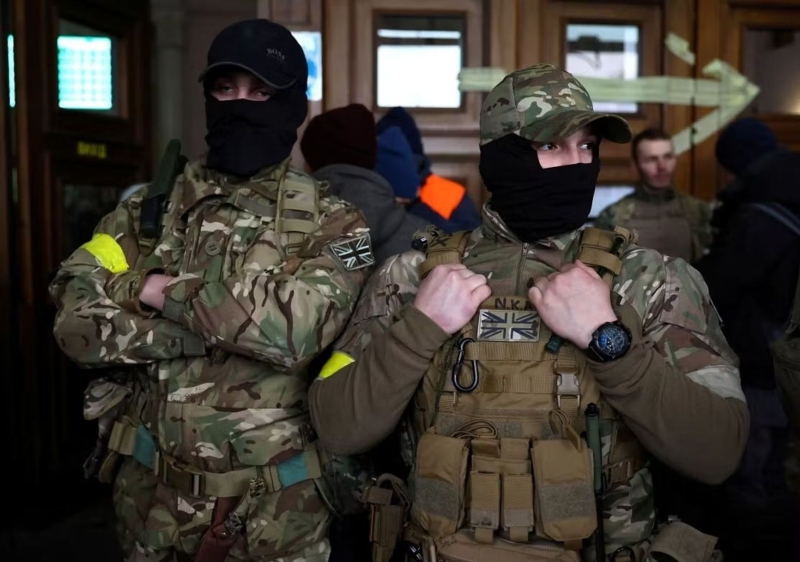
But since 2022, the government of Ukraine has been more proactive and systematic. As Kacper Rekawek put it, it was “an attempt to internationalise the conflict via the mobilisation of Western individuals for the Ukrainian cause,” which also served “to embarrass Western governments, who in the eyes of many Ukrainians are not doing enough to support Kyiv.” This time, these volunteers would be inducted in an orderly and structured way; no longer was the government simply handing a rifle and a Ukrainian flag patch to anyone willing to come.
The International Legion was initially created as part of the Territorial Defence Forces, an organisation for part-time reservists that was only formally activated on Jan. 1 2022, but was transferred to the regular Ground Forces in 2023. Separate from the International Legion is the International Legion of the Defence Intelligence of Ukraine, a brigade-sized formation under the command of the Ministry of Defence’s Main Directorate of Intelligence. It comprises units of battalion or squadron size which undertake reconnaissance, intelligence, and counter-intelligence missions, as well as special forces operations.
In April 2023, Ukraine’s then-Minister of Defense, Oleksii Reznikov, invited volunteers possessing specific experience operating Western-supplied military equipment to come forward. “If there are pilots who know how to fly the F-16 and are ready to take part, the foreign legion is ready to open their doors.”
Who is fighting for Ukraine?
It is generally agreed that volunteers came in greater numbers after 2022 than they had in 2014. But what sort of numbers? President Zelenskyy claimed that the International Legion received 16,000 applications within its first week of existence, and the Ukrainian Embassy in Washington DC told reporters that more than 3,000 U.S. citizens had applied to join. Ukrainian Foreign Minister Kuleba reported that 20,000 people had volunteered by Mar. 7, 2022. These figures are disputed, however, with The New York Times suggesting around 1,500 to 2,000 was a more realistic estimate.
That there is so little definitive information about foreign fighters in Ukraine reflects in part the fact that many of the combatants are people with past experiences they would prefer to conceal or forget. In the first weeks and months, applicants with military records and combat experience were prioritised, others being advised to wait at home. But vetting could not be foolproof: one American volunteer claimed to have served in the United States Marine Corps before becoming an assistant manager at a LongHorn Steakhouse. The Pentagon has denied he has any military service and the restaurant chain revealed he worked as a server.
Volunteers have certainly come from a large number of countries. Government sources in Paris confirmed the presence of French nationals; British citizens have joined up (indeed, the Ministry of Defence in London admitted in April 2022 that some serving soldiers who were absent without leave may have volunteered to fight in Ukraine); Canadian media reported a 550-strong unit of volunteers from the country (there are nearly 1.5 million people of Ukrainian descent in Canada, the second-largest expatriate community in the world after Russia); a former defence minister confirmed a small number of New Zealanders had volunteered; and a photograph issued by the Ukrainian Ministry of Defence in March 2022 showed personnel from India, Mexico, Sweden, and Lithuania. Last year, a spokesman for the International Legion claimed they had enlisted volunteers from more than 100 countries.
Last year, a spokesman for the International Legion claimed they had enlisted volunteers from more than 100 countries.
It is difficult to say exactly what contribution the international volunteers have made in the past three and a half years, though undoubtedly some have brought valuable skills and experience to a Ukrainian military that has been forced to expand and reorganise while simultaneously fighting an existential defensive war with very high casualties.
Plans are underway to integrate the majority of foreign volunteers into the regular forces, and at the end of December 2025 the International Legion ceased to exist as a standalone force — the 1st, 2nd, 3rd and 4th Battalions will be disbanded and most personnel transferred to the recently announced Assault Forces. These will be a separate and specialised, drone-capable assault infantry branch of the Armed Forces which will report directly to the Commander-in-Chief, currently General Oleksandr Syrskyi.
Legal battles
There remains a serious legal obstacle to Ukraine’s use of foreign volunteers: many of the countries from which they have come have partial or complete legal prohibitions on their citizens joining foreign militaries. There are bans imposed, for example, by Algeria, Austria, Belarus, India, Kosovo, Montenegro, Nigeria, North Macedonia, Russia (unsurprisingly), Senegal, Serbia, Singapore, South Korea, Switzerland, Uzbekistan, and Vietnam. Meanwhile there is uncertainty over the status of volunteers from, for example, the United States, Japan, and Australia.
The United Kingdom presents an illustration of the unsatisfactory legal situation and its consequences. British citizens are prohibited from serving in foreign armies under the Foreign Enlistment Act 1870, which was initially introduced in response to the outbreak of the Franco-Prussian War in July 1870. In the UK, once an act is passed, it remains operative and in force unless it is specifically repealed or it is time-limited (the two oldest extant pieces of legislation, the Distress Act and the Waste Act which were part of the Statute of Marlborough, became law on Nov. 12, 1267). By comparison, the Foreign Enlistment Act of 1870 is a relative newcomer.
British citizens are prohibited from serving in foreign armies under the Foreign Enlistment Act of 1870.
However, the reality is made less certain by the fact that the Foreign Enlistment Act has not been used to bring a prosecution since 1896. Dr. Leander Starr Jameson, Administrator General for Matabeleland, was charged under its provisions in February 1896 for leading the so-called Jameson Raid on the South African Republic in December 1895 and January 1896; he had commanded a force formally employed by Cecil Rhodes’s British South Africa Company and did not have the formal sanction of the British government.
Jameson was tried at the High Court of Justice in June 1896 and convicted as a “first-class misdemeanant,” then sentenced to 15 months in prison. Five months later he was released, ostensibly on health grounds, but the decision also reflected the ambivalence of the British government — although there had been no official authorisation of the Jameson Raid, its purpose was consistent with government policy in South Africa, and the Colonial Secretary, Joseph Chamberlain, had been aware that it was being planned (even if he did not know in advance when it would take place).
The legislation has therefore been acutely political and has lain effectively dormant for 130 years. Shortly after Russia’s invasion of Ukraine, Liz Truss, then Britain’s Foreign Secretary, said that she supported British nationals who wanted to volunteer to fight in Ukraine:
“The people of Ukraine are fighting for freedom and democracy, not just for Ukraine but also for the whole of Europe because that is what President Putin is challenging. And absolutely, if people want to support that struggle, I would support them in doing that.”
When asked to clarify if that extended to undertaking military service, she affirmed, “Absolutely if that’s what they want to do.”
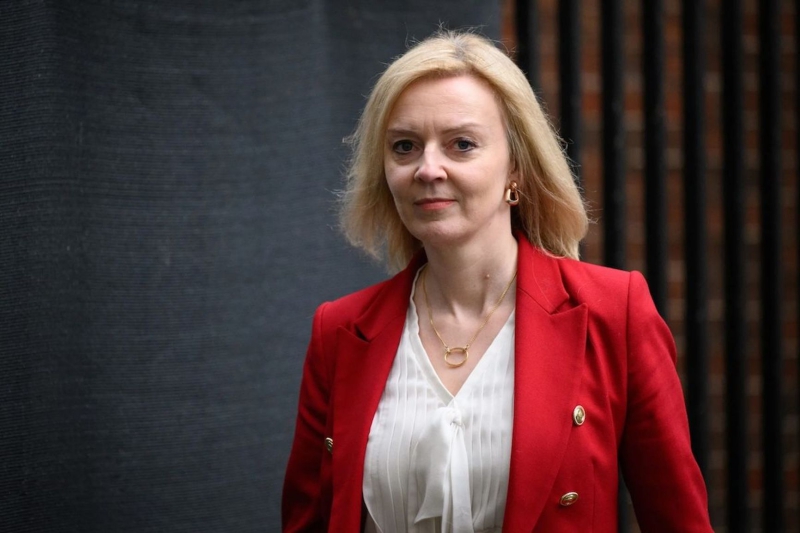
It must be admitted that Truss has not always shown herself to be a politician of the most considered and circumspect public pronouncements, but she was at that time Foreign Secretary and would briefly be Prime Minister later in the year, so her words cannot be dismissed as the outburst of a maverick, even if she was giving her support to a course of action by British nationals which is, at least in theory, explicitly prohibited by British law and might leave any such volunteers open to prosecution. After all, the Foreign Office’s website features a clear warning.
“If you travel to Ukraine to fight, or to assist others engaged in the war, your activities may amount to offences under UK legislation. You could be prosecuted on your return to the UK.”
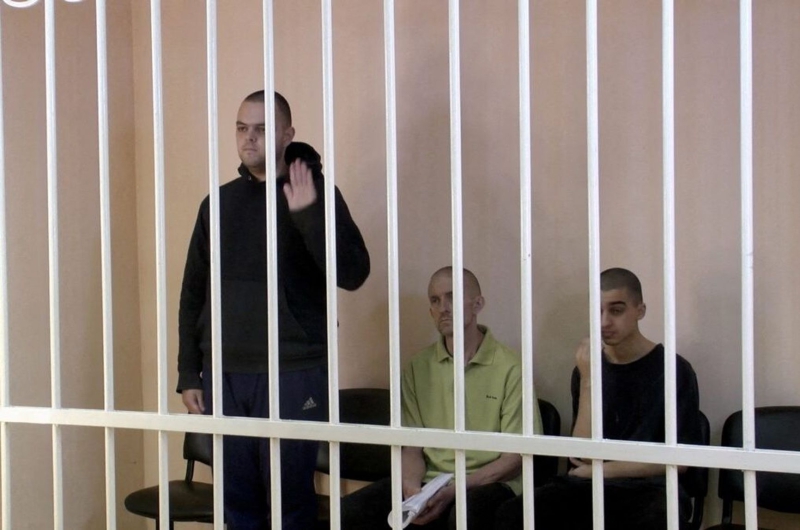
Why is the British government cleaving to such a cautious position on its citizens volunteering to fight in Ukraine? One partial consideration may have revealed itself at an early stage: in April 2022, only weeks after the invasion, a Conservative MP raised the plight of two British citizens, Aiden Aslin and Shaun Pinner, who had volunteered to fight in Ukraine, then had been captured by Russian forces.
Foreign Office minister James Cleverly focused on the fact that they “should be treated as Ukrainian military and as prisoners of war, with all the protections that the international humanitarian law affords.” It may have been in those early stages that the primary concern of the British government was the risk of its own citizens — and, by extension, those of other third-party countries — becoming hostages or propaganda tools.
Nevertheless, what remains striking is the dissonance between the rhetoric that the UK’s “unwavering support for Ukraine will continue as long as it takes” and expressions of “unwavering support to Ukraine and for a just and lasting peace” on the one hand, compared not merely with a theoretical legal obstacle to volunteers who want to fight for Ukraine, but repeated and emphatic reminders that they would be in breach of UK law and liable to be prosecuted. If it is motivated by an abundance of caution, the government needs to revise its risk matrix: war is dangerous.
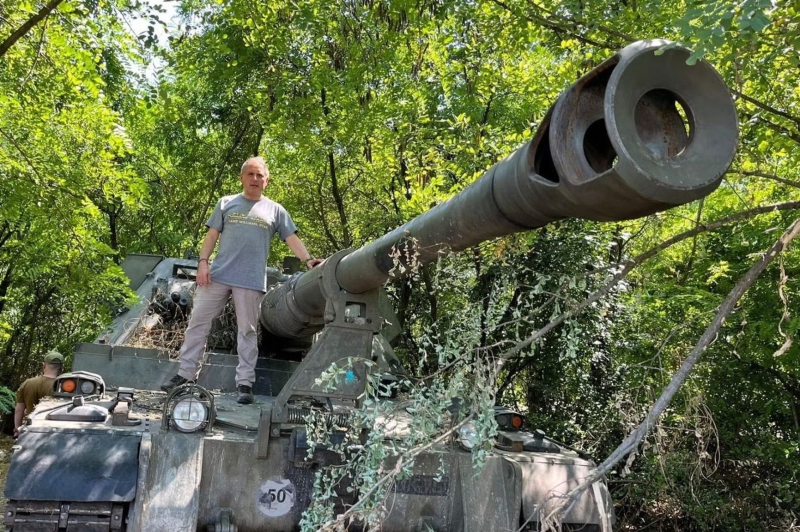
This issue is brought into sharper focus by the case and public statements of Jack Lopresti. Formerly a Conservative Member of Parliament for Filton and Bradley Stoke, he was defeated in the general election of July 2024. Lopresti had served in the British Army Reserve since 2007, initially with the Royal Artillery and then the Royal Wessex Yeomanry, an armoured unit, and had been deployed on active service to Afghanistan in 2008/09. After leaving Parliament, in November 2024 he joined the International Legion of the Defence Intelligence and has since then been based in Kyiv, working on weapons procurement and dealing with issues of foreign relations and diplomacy for Ukraine’s armed forces.
Lopresti is not serving in an active combat role but has said he would be more than ready to fight if the circumstances required it. He told The Daily Telegraph:
“I am a soldier. If I’m asked and needed to do any particular task, I will do it to the best of my ability. It would be very strange for me to serve in the Ukrainian military and not say this. I am here and I will do my best.”
Although he has said optimistically that he does not “think” what he is doing is in contravention of British law — as “the UK is fully behind what the Ukrainians are doing here” — the contradiction he faces is a real one. The Foreign Enlistment Act 1870 would very likely apply to him if he were to return to the UK and if there was a decision to prosecute. That such a course of action was rejected, for example, in relation to British nationals who fought in the Spanish Civil War reflected political circumstances but did not alter the legislative position.
The government is aware of Lopresti’s situation. As outlined above, it has chosen a de minimis response of reiterating the Foreign Office’s travel guidance that advises against visiting Ukraine under any circumstances. It has made no reference to any intention to prosecute or not to prosecute cases under the Foreign Enlistment Act save for the generalised statement on the Foreign Office website.
This matters because the government’s spokesman went on to say: “Obviously, the Government is supporting Ukraine wherever we can.” In a strict sense, that clearly is not and cannot be true. “Wherever we can” could extend to repealing the Foreign Enlistment Act 1870, or at least to declaring it unofficially a dead letter by stating in no uncertain terms that there is no intention to bring any prosecutions under its provisions. There may be valid reasons not to take either of those courses of action, but they remain things the government could do but is not doing.
Rhetoric vs. real action
There is a precedent which the government could follow. In 1939-40, during the Winter War that began when the Soviet Union invaded Finland, there was widespread international sympathy and support for Finland, and the Assembly of the League of Nations passed a resolution which “urgently appeals to every Member of the League to provide Finland with such material and humanitarian assistance as may be in its power.”
In Britain, an unofficial Committee to Aid Finland was established to coordinate volunteers. Significantly, however, and in stark contrast to the current situation, the government of the time indicated strongly that it would not pursue prosecutions under the Foreign Volunteers Act and granted a waiver. Osbert Peake, a junior minister at the Home Office, told the House of Commons in February 1940:
“His Majesty’s Government have carefully considered this matter in the light of the resolution passed by the Assembly of the League of Nations on 14th December last on the subject of the provision of assistance to Finland. It would, in their view, be inconsistent with the spirit and with the terms of that resolution that British subjects who wish to volunteer for service in Finland should be hindered by the provisions of the Foreign Enlistment Act, seeing that that Act contains a power to grant dispensations. Accordingly, a general licence has been granted to British subjects to enlist in the Finnish forces, and a licence has been granted to the recruiting organisation which has been established in London.”
Russian aggression against a smaller neighbour prompted bureaucratic agility and flexibility 85 years ago, but it has shown no signs of doing so in the case of Ukraine.
This muted ambivalence has run all the way through the West’s response to the Russian invasion of Ukraine. Unquestionably, many nations have provided very generous military and financial assistance to Kyiv. The United States has spent nearly $135 billion in all forms of support, Germany has contributed €25 billion, the United Kingdom’s support has totalled £21.8 billion. Yet there have been instances of hesitancy. It took some time before Germany was persuaded to supply Ukraine with main battle tanks, and it has still not delivered the Taurus KEPD-350 long-range cruise missiles which Chancellor Friedrich Merz had promised while still in the opposition. The UK, France, and the United States imposed restrictions on Ukraine’s use of M142 HIMARS rocket systems and Storm Shadow long-range cruise missiles against targets inside Russia for fear of “escalating” the conflict. The various legal prohibitions and uncertainties on foreign volunteers are, unless and until they are resolved, part of the same pattern.
The various legal prohibitions and uncertainties on foreign volunteers are, unless and until they are resolved, part of the same pattern of hesitancy.
At the same time, Western leaders have been extravagant and staunch in their rhetoric when it comes to supporting Ukraine. Former President Joe Biden said it had been “a top priority of mine to provide Ukraine with the support it needs to prevail;” UK Prime Minister Sir Keir Starmer declared this summer that “our unwavering support for Ukraine will continue as long as it takes;” Chancellor Merz told the media, “Nobody should doubt our support for Ukraine.”
None of this is strictly true. Time and again, events have proven that the West’s support for Ukraine is conditional and that it does indeed have its limits. There are steps the countries which claim such a staunch alliance with Kyiv will not take. As the conflict threatens to spill into a fifth year, Ukraine’s friends need to consider much more carefully and with greater clarity how far they are willing to go and what public statements they should make. It is the gap between declaration and reality which could be disastrous for Ukraine’s position.