
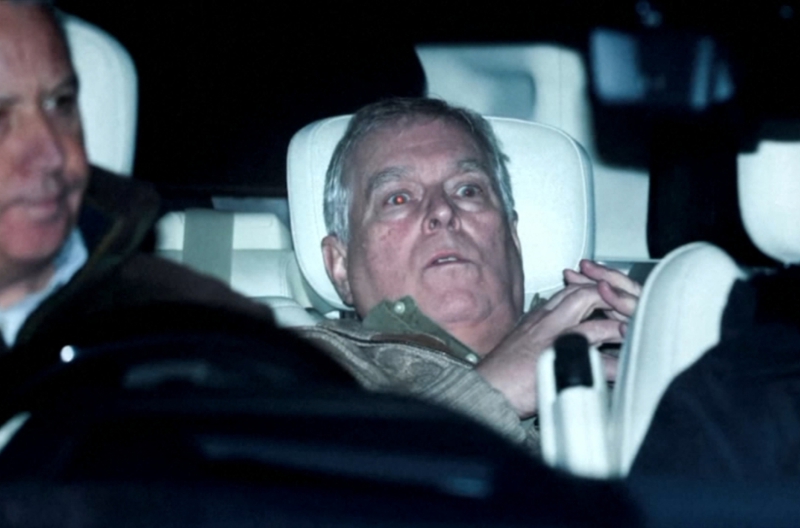
The British monarchy is going through an unprecedented crisis. Police have arrested the brother of King Charles III — Andrew Mountbatten-Windsor, known until recently as the Duke of York. The former prince Andrew is suspected of committing serious official offenses that could theoretically lead to imprisonment up to and including life behind bars. And although he was released 11 hours after being taken into the station — without even having to post bail — the investigation continues. The case may yet go to court, but even if it doesn’t, British society finds itself in a state of profound shock.
Commentators are looking for the roots of the scandal in the former prince’s personal qualities. They recall, for example, that as a boy he had a habit of crudely mocking the footmen. One of them, unable to endure the humiliation, slapped the child across the face. Certain that the incident would cost him his job — if not land him behind bars — the servant went to confess everything to Elizabeth II. But the queen did not punish him — she even refused to accept his resignation, saying that her middle son had apparently deserved the slap.
British newspapers consider this episode highly telling. What happened, in their view, reflects well on the late monarch and extremely poorly on the former prince. The press also recall a long list of arrogant, vain, rude and deeply selfish behavior from Andrew — the habits of someone sure that his privileged position could never be taken away.
Mother’s pet
In childhood, Andrew’s idea of fun involved pranks that were not exactly harmless. He would climb onto the roof of Buckingham Palace and move the television antennas to deprive his mother of the chance to watch her beloved horse races. He sprinkled an irritating powder into her bed. And he tried to embarrass his grandmother — the Queen Mother — by placing on her chair a device that imitated a loud, indecent sound. Andrew was spoiled and corrupted from the very beginning, journalists believe.
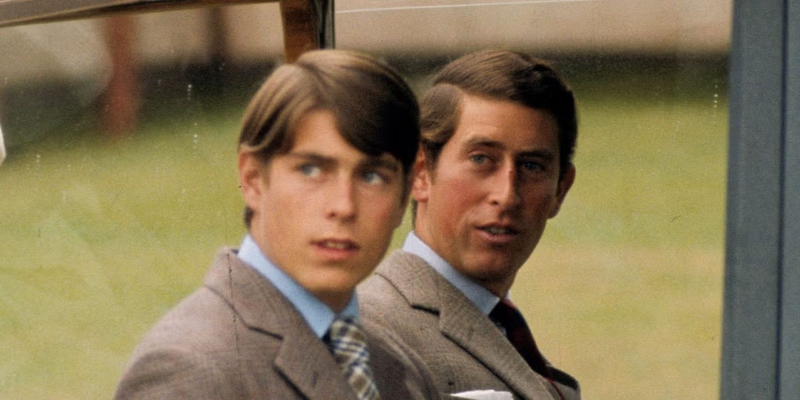
Why? It was all about appearance, some argue. He was good-looking, like a movie star, his brother once said (perhaps with a hint of envy). Indeed, the genes aligned so that Andrew became the only truly handsome one among the royal sons. He was invariably successful with women, which spoiled him even more — members of the royal household staff nicknamed him Randy Andy.
Prince Philip, the spouse of Queen Elizabeth, told his son on one occasion in exasperation: “Get your finger out of your mouth — it’s time to grow up”
The queen was too busy to raise him, but he was considered her favorite, and that alone compelled those around him to tolerate his antics and his brazen selfishness — although his father, Prince Philip, sometimes lost patience. On one occasion he told his son in exasperation: “Get your finger out of your mouth — it’s time to grow up.”
Rising above it
This protective cocoon began to crack when the prince’s close friendship with Jeffrey Epstein — a multimillionaire master of dubious financial schemes in addition to being a pedophile who supplied young girls to please the powerful — came to light. Soon after the American was first formally charged with sexual crimes in 2011, Andrew expressed solidarity in an email, writing: “It would seem we are in this together and will have to rise above it.”
New accusations followed, then a new arrest before Epstein eventually died in a New York City jail in 2019 (the official version is suicide). One of his victims, Virginia Roberts (married name Giuffre), accused the prince of having her sent to him in London “for fun” when she was 17 — and that Andrew raped her there.

The prince categorically denied these allegations, claiming the photo in which he is seen with his arm around Virginia was a fake.
At one point in 2019, Andrew agreed to give a long interview to the BBC’s Newsnight. He was certain the journalists would bow to the authority of the monarchy, listen respectfully to his every word, and help him rehabilitate himself.
But the opposite happened: host Emily Maitlis remained impeccably polite, yet kept pressing Andrew with uncomfortable questions, giving the prince exactly the right amount of rope to hang himself. To the overwhelming majority of viewers, he appeared insincere, extraordinarily arrogant, and unable to refute anything convincingly. His attempts at justification were clumsy and wholly unpersuasive, and he even tried to patch up Epstein’s reputation along the way. Journalists unanimously called the interview a complete disaster, and public reaction was so explosive that Elizabeth II was forced to intervene, relieving Andrew of all his duties as a member of the royal family.
She did not live long enough to see her middle son stripped of all his titles and facing full-scale police investigation, but as a result of his actions, the queen’s previously impeccable reputation has also suffered. Many fault her for the decision to “buy off” Virginia Giuffre in 2022, when she was paid a large sum (according to some reports, as much as 12 million pounds). This happened as part of an out-of-court settlement after Giuffre filed a lawsuit against Andrew, and the public saw the payment as an indirect admission of his guilt.
Brother against brother
The portions of the Epstein files that were released in the United States over the past few months showed that the former prince had been even more closely linked to the financier pedophile than was previously believed. It also emerged that Andrew had passed his friend confidential information — information obtained in his role as the United Kingdom’s trade envoy — which he had no right to disclose. In particular, it concerned an analysis of investment opportunities in certain Asian countries, a tip that could have given Epstein the chance to profit.
This became the grounds for suspecting the prince of an official offense, and it is for this indiscretion that he may yet have to answer in court. However, before that can happen, the Crown Prosecution Service must assess the strength of the evidence against him. If the case does go forward, then according to historical tradition, the charges will be brought in the name of the monarch: King Charles III versus Andrew Mountbatten-Windsor — the king against his own brother. It sounds absurd, but in the court of public opinion, Andrew has already been found fully and irrevocably guilty.
For the British monarchy to continue to serve as a near-sacred institution, the royals must meet royally high standards — embodying the values and dignity of the country and its people. At a minimum, they must be regarded as decent.
For the nearly two centuries beginning with the reign of Queen Victoria, Britain had been mostly fortunate in its monarchs, though in 1936 there was a misfire. Edward VIII was an admirer of the Nazis and, overall, a man wholly unsuited to the role of moral leader. In addition, he married the divorced American Wallis Simpson. As a result, his reign lasted less than a year, after which he abdicated in favor of his brother, the father of Elizabeth II, who reigned as George VI. The latest George was rightly regarded as modest, dutiful, and almost an exemplary monarch, held in great respect, and his daughter continued that tradition. The thought that someone like Andrew even hypothetically might have ended up on the throne horrifies Britons and even undermines confidence in the soundness of the current constitutional order.
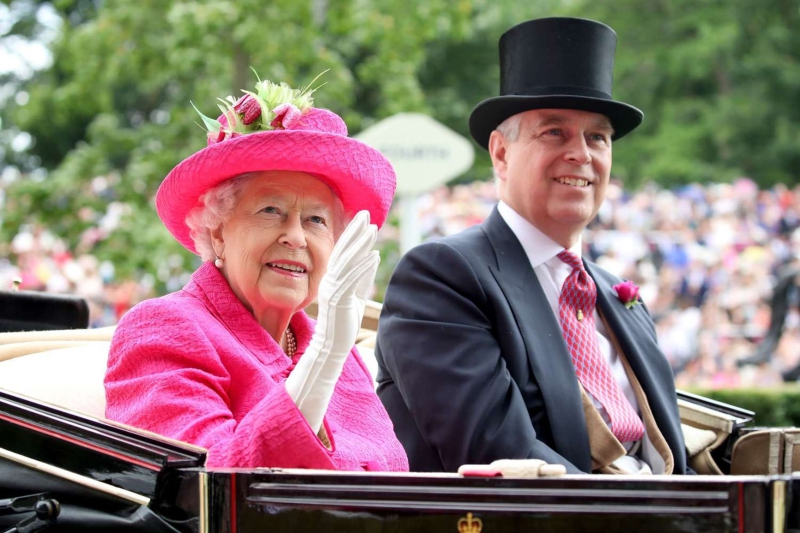
The former prince now formally occupies the eighth place in the line of succession, and the government and Parliament are considering the possibility of removing him from that position as well.
For the king, who has been fighting cancer for two years, it is essential to create maximum distance between the throne and his disgraced brother — to separate the royal family from him so that he is not associated with the monarchy. On the day Andrew was arrested, Charles issued an official statement in which he expressed, on the one hand, “deep concern,” and on the other (and far more importantly) stressed the need for the strictest adherence to the law.
Prime Minister Keir Starmer spoke in the same spirit. “No one can stand above the law,” he said.
A threat to the monarchy
A clear majority of Britons (79%) approve of the actions taken by the authorities and by the king personally. Many, however (29%), believe the palace should have acted much earlier, moving faster and more decisively to distance itself from the “bad apple.”
It is noteworthy that the initiative to investigate the former prince came from the organization Republic, which has spent many years campaigning for the abolition of the monarchy. For them, what is happening is a major victory — an important step toward discrediting the royal family and, possibly, toward changing the country’s system of government.
A majority of Britons (79%) approve of the actions taken by the authorities and by the king personally
Even so, it is still difficult to predict how the scandal will affect long-term support for the institution. The latest polls show that 61% of Britons still consider themselves monarchists, while 24% would prefer to live in a republic. That is the average picture, but among young people (ages 18 to 24) the numbers look different: 31% favor a republic, while only a modest majority (41%) support keeping the monarchy. It cannot be ruled out that this balance will shift — and not in favor of the king and his family — as a result of the current scandal.