
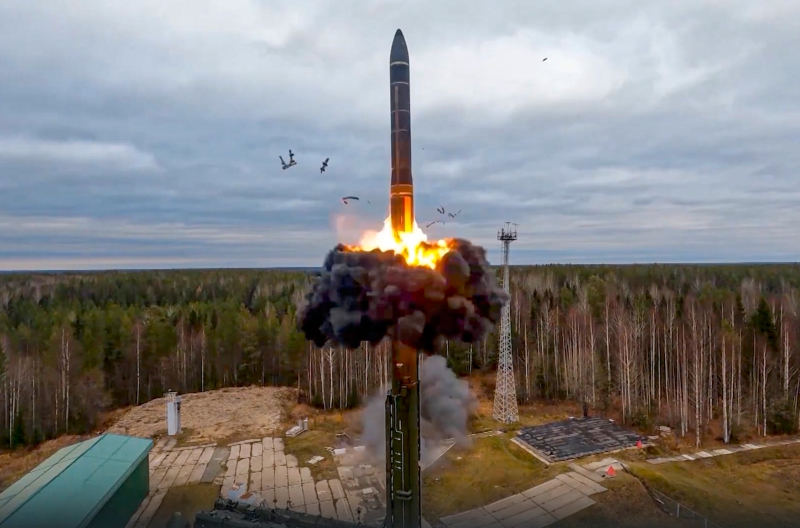
Testing of the Russian PC-24 Yars ballistic missile. Photo: AP
On Mar. 2, French President Emmanuel Macron said his country would expand its nuclear arsenal due to a period of “geopolitical upheavals fraught with risk.” Since the start of Russia’s full-scale war in Ukraine, Vladimir Putin’s threats to use tactical weapons has helped shift the boundaries of what is considered acceptable in the field of nuclear arms control. Now, after the expiration of the New START treaty, Europe’s two nuclear powers — the UK and France — are considering deploying low-yield nuclear weapons and extending their own deterrent capabilities to neighboring countries, and Poland has even begun talking about its own nuclear program. Putin’s nuclear blackmail has triggered a shift in the West’s attitude toward weapons of mass destruction — the consequences are highly unpredictable and extremely dangerous, writes national security expert Eliot Wilson.
Arms limitation talks: the old-fashioned approach
On Feb. 5, with less public attention that it merited, the New START treaty between the United States and the Russian Federation expired. Formally named the “Measures for the Further Reduction and Limitation of Strategic Offensive Arms,” the 2010 deal was the latest — perhaps the last — in a series of agreements on nuclear disarmament between the owners of the world’s two largest arsenals extending back to the Strategic Arms Limitation Talks Agreement (SALT I) signed by President Richard Nixon and General Secretary Leonid Brezhnev in May 1972.
Despite ample mutual suspicion, for more than 50 years the direction of travel of the biggest nuclear powers has been one of stability and, where possible, de-escalation. There are believed to be nine countries in possession of nuclear weapons: eight (the United States, Russia, the United Kingdom, France, China, India, Pakistan and North Korea) have declared their capabilities, while it is universally accepted that Israel possesses somewhere between 90 and 400 nuclear warheads without ever having officially admitted to their existence.
A new nuclear world
The war in Ukraine has changed the world’s perspective on nuclear weapons in a very profound, highly dangerous, and possibly poorly considered way. It remains a basic assumption of Western foreign policy that Iran should not be permitted to develop or acquire nuclear weapons. Last June Donald Trump authorised Operation Midnight Hammer, air strikes carried out using United States Air Force B-2 Spirit bombers and Tomahawk cruise missiles against three of Iran’s major nuclear facilities: the Fordow Uranium Enrichment Plant, the Natanz Nuclear Facility, and the Isfahan Nuclear Technology Center. Disputes remain over how far these strikes set Iran’s development of nuclear weapons back.
Perhaps without intending to, Vladimir Putin has radically altered the calculus on nuclear proliferation. Russia’s full-scale ground invasion of Ukraine — the “special military operation,” which will soon have lasted longer than the First World War — has prompted some to assert that such an attack would not have been countenanced if newly independent Ukraine had not given up the former Soviet nuclear weapons based within its territory in 1994 in return for security assurances from the U.S., Russia, the UK, France, and China — assurances that turned out to be worthless.
Perhaps without intending to, Vladimir Putin has radically altered the calculus on nuclear proliferation.
The corollary of this belief — namely, that surrendering a nuclear capability exposes a weakness — is that countries are safer, especially in relation to military threats from Russia, if they are protected by a strategic nuclear deterrent of some size and sophistication. For the last 75 years or so, Western Europe has implicitly assumed that such protection would be provided by America’s nuclear triad of ground-based intercontinental ballistic missiles, nuclear bombs, and cruise missiles carried by B-2 and B-52 strategic bombers, along with Trident II ballistic missiles launched from the U.S. Navy’s 14 Ohio-class nuclear-powered submarines.
At the same time, the Royal Navy has provided the United Kingdom with Continuous At Sea Deterrence (CASD) since 1969. Since the Nassau Agreement with the United States concluded in 1962, Britain has agreed that “except where HMG [His Majesty’s Government] may decide that supreme national interests are at stake… British [nuclear] forces will be used for the purposes of international defense of the Western Alliance in all circumstances.”
Europe’s other nuclear power, however, has long taken a different view. France conducted its first nuclear test in 1960, and its Force de dissuasion (known as Force de frappe before 1961) has provided a triad of ground-, air- and maritime-launched nuclear weapons (at least until the ground-based component was deactivated in 1996). France maintains air-launched missiles and bombs and submarine-launched ballistic missiles, and like the UK, it ensures continuous at-sea deterrence.
However, France’s nuclear doctrine remains more opaque than Britain’s. France is the only NATO member state which does not participate in the alliance’s Nuclear Planning Group, and its 2008 White Paper on Defence and National Security stressed the complete independence of its nuclear forces. France’s nuclear arsenal is also strictly defensive in nature, and it has been reiterated that its use “would only be conceivable in extreme circumstances of legitimate self-defense.” In February 2020, President Emmanuel Macron expanded on this, saying that France’s “vital interests now have a European dimension,” and that France and the EU had begun examining the “role played by France’s nuclear deterrence in collective security.”
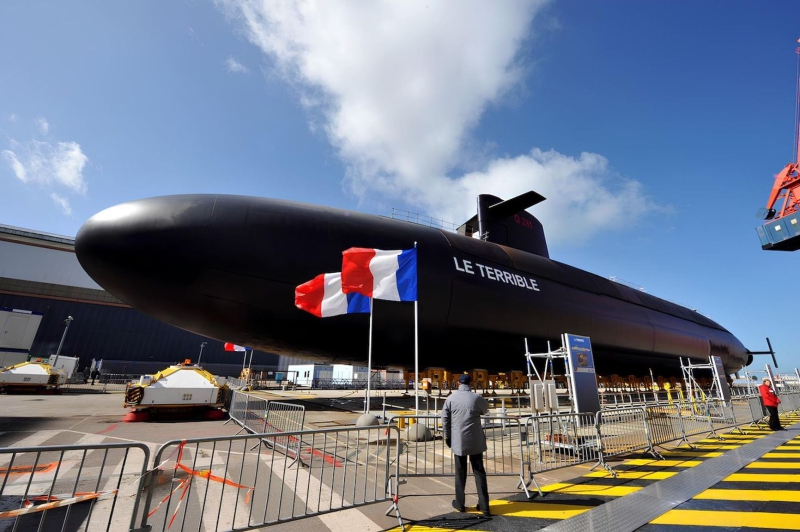
In 2023, General Thierry Burkhard, then France’s Chief of the Defence Staff, said:
“[Our deterrent] is not articulated around the notion of threshold, because it would allow our adversaries to maneuver around in conscience and circumvent our deterrence ‘from the bottom up.’ Our deterrence capability guarantees second-strike possibilities through the redundancy of resources and the invulnerability of the sea-based leg. The possibility of using the nuclear weapon first is assumed: our doctrine is neither that of no first use nor that of the sole purpose, according to which nuclear weapons are only addressed to the nuclear threat… Nuclear deterrence does not seek to win a war or prevent losing one.”
Tactical threats
Since the start of his full-scale ground invasion of Ukraine four years ago, Putin has repeatedly invoked the threat of nuclear weapons. In some ways the West may have played into his hands: in April 2022, seven weeks into the war, it had become clear that it would not be the 10-day decapitation exercise Russia had expected, and the Director of the CIA, Bill Burns, was quoted as warning that “potential desperation” in the Kremlin meant “none of us can take lightly the threat posed by a potential resort to tactical nuclear weapons or low-yield nuclear weapons.” That fear of instability and unpredictability is a factor Putin has been delighted to play on ever since.
A week after Burns’s warning, Russia tested its new RS-28 Sarmat long-range intercontinental ballistic missile. Putin claimed the new weapon, with a range of perhaps as much as 22,000 miles, could defeat any existing anti-missile defences and should make Russia’s enemies “think twice.” In September of that year, he threatened to “use all the means at our disposal” to defend Russian territory, a phrasing that was widely believed not to exclude nuclear weapons. The threat was made more explicit a few days later by the volatile and voluble Deputy Chairman of the Russian Security Council, Dmitry Medvedev.
Putin has used the threat of tactical nuclear weapons to try to intimidate Western powers. These are relatively small, short-range missiles, bombs and shells designed for use against specific battlefield targets like fortifications, large concentrations of troops, airfields, and ships. They typically have yields of up to 50 kilotons, compared to the 100 kilotons of a Trident II D5 warhead carried by the Royal Navy’s Vanguard-class ballistic missile submarines. But even a “lower yield” 50 kiloton weapon would have three or four times the destructive power of the bomb that was dropped on Hiroshima on Aug. 6, 1945, causing a death toll of as much as 166,000. Tactical nuclear weapons are still devices of almost unimaginably devastating force.
Putin has used the threat of tactical nuclear weapons to try to intimidate Western powers, which have three or four times the destructive power of the bomb that was dropped on Hiroshima.
No one has ever used a tactical nuclear device. Remember that nuclear weapons have only ever been used twice in anger — both against Japan in August 1945. All of the doctrine developed around tactical nuclear weapons, including Russia’s notion of “escalating to de-escalate,” are wholly theoretical and untested. Nevertheless, Putin’s invocation of the spectre of tactical nuclear weapons seems to have had the strange effect of convincing a number of countries, without much evidence of deep or critical thought, that the only surety against Russian nuclear aggression is to establish or expand their own arsenals, both strategic and tactical.
How can the UK respond?
While the UK is one of only three NATO members with nuclear capability, it relies solely on strategic nuclear weapons — its Trident II deterrent carried by the four Vanguard-class ballistic missile submarines. These will in due course be replaced by four Dreadnought-class boats, the first of which is expected to enter service in the early 2030s. Britain retired its tactical nuclear weapons — WE.177 free-fall gravity bombs carried by SEPECAT Jaguar and Panavia Tornado strike aircraft — in March 1998.
The decision to retire tactical nuclear weapons was announced to Parliament in April 1995, and the new Labour government’s Strategic Defence Review, published in July 1998, confirmed the decision as being in line with maintaining a minimum credible nuclear deterrence. However, the 2025 Strategic Defence Review — the lead author of which, Lord Robertson of Port Ellen, had overseen the 1998 review as Defence Secretary — emphasised the threats facing the UK from nuclear-armed adversaries and alluded somewhat obliquely to exploring “the potential benefits and feasibility of enhanced UK participation in NATO’s nuclear mission.”
Between 125 and 130 U.S.-owned B61-3 and B61-4 tactical nuclear bombs are believed to be in storage at six bases in at least five European NATO member states (Belgium, Germany, Italy, the Netherlands, and Turkey), and it has been strongly suggested that some are now also in storage in, or will soon be deployed to, the UK. These are of course available for U.S. Air Force aircraft deployed in Europe, but the air forces of Belgium, Germany, Italy, and the Netherlands also provide dual-capable aircraft, which can carry tactical nuclear bombs, for NATO’s nuclear planning.
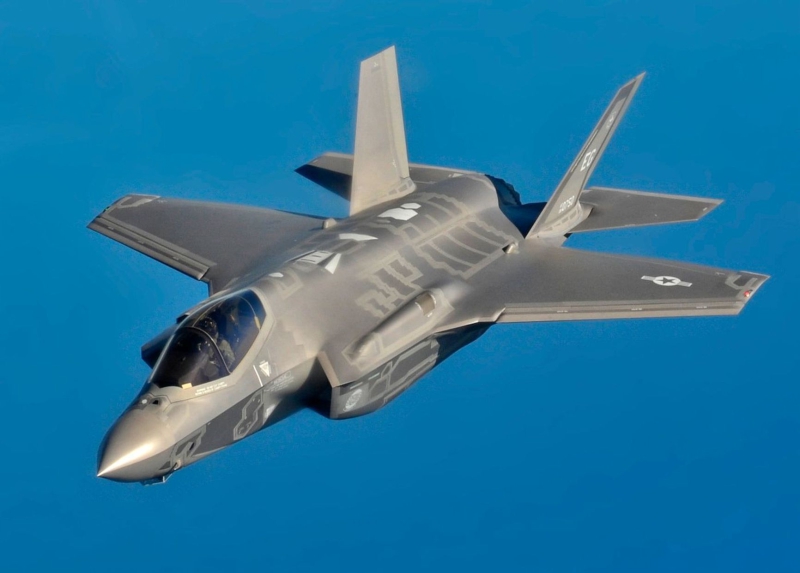
Shortly after the Strategic Defence Review was published, the British government announced that it would acquire at least 12 new Lockheed Martin F-35A aircraft to “join NATO’s dual capable aircraft nuclear mission.” The logic behind this decision is not clear: the move is described as “strengthening of the UK’s nuclear posture… [and] complementing the UK’s existing sea-borne deterrent,” but it can hardly perform that role given that the weapons are U.S.-owned, not British, and can only be used with the permission of the President. It may be “strengthening NATO’s nuclear deterrence posture,” but that is a separate issue. Rather too much prominence is given to the employment the program will supposedly support in the UK, which should only ever be an added bonus of any procurement rather than its motivation.
There has been no substantial opposition raised to the Royal Air Force re-acquiring a nuclear capability, however flimsy or poorly articulated the case may be. The Conservative opposition broadly welcomed the decision, raising only minor queries about delivery and logistics.
France and other allies
Let us accept for a moment the premise that the European members of NATO need to strengthen their nuclear capabilities. Only the UK and France are nuclear powers, and it is not immediately obvious how the rest of the alliance’s member states should proceed. The UK already states that its independent nuclear deterrent is to be “used for the purposes of international defense of the Western Alliance in all circumstances.” Beyond that, one possible solution has been approached tentatively and informally: that France could “share” its nuclear umbrella with NATO allies.
What could this mean? Last year, Sébastien Lecornu, then Minister for the Armed Forces and now Prime Minister of France, rejected any maximalist interpretation. The capability of the Force de dissuasion “is French and will remain French — from its conception to its production to its operation, under a decision of the president [of the French Republic].” But it is not the authority or control over France’s nuclear weapons which is at question.
French nuclear doctrine, deliberately ambiguous, is built on the threat of a massive nuclear response to aggression if the President deems that the country’s “vital interests” (intérêts vitaux) are at stake.
France’s nuclear doctrine is deliberately ambiguous.
The potency of France’s deterrent lies in the possible interpretation of her “vital interests” — could they extend to threats against NATO allies which were not, in themselves, existential threats to France? In 1964, sceptical of America’s genuine commitment to European security, President de Gaulle had indicated strongly that Soviet aggression against West Germany would qualify as a threat to France’s vital interests.
More than half a century later, on Mar. 2, 2026, Emmanuel Macron and German Chancellor Friedrich Merz announced deeper cooperation in nuclear deterrence. France and Germany will create a “high-level nuclear steering group” to work jointly, including through “consultations regarding the appropriate mix of conventional, missile defense, and French nuclear capabilities.” German troops will take part in French nuclear exercises, and both sides will visit each other’s strategic sites. The first steps in implementing the program are planned for this year. The statement stresses that the cooperation will “add to, not substitute for” NATO’s nuclear deterrence.
“This will be fully embedded in our nuclear sharing within NATO and we will not have zones of different security levels in Europe,” Merz said on Feb. 13. “We’re not doing this by writing NATO off.” While this inclusivity is encouraging, it also has the potential to cause delays or make any scheme impractical.
Poland: a different approach
The active pursuit of new nuclear capability seems almost anathema outside the realms of “rogue” states, given that non-proliferation has been an underlying objective for so many decades. There has been no serious discussion of Germany developing a sovereign, independent nuclear weapons programme, and Merz publicly ruled out the notion in a recent interview. It would also be a breach of the 1990 Treaty on the Final Settlement with respect to Germany, which affirmed Germany’s “renunciation of the manufacture and possession of and control over nuclear, biological and chemical weapons.”
Not all NATO allies operate under the same legal, political, or moral limitations, however. Recently, the President of Poland, Karol Nawrocki, told an interviewer that he was “a great supporter of Poland joining the nuclear project,” arguing that the country’s security posture should be “based on nuclear potential.” It is easy to understand the influences on his thinking.
“We are a country right on the border of an armed conflict,” he noted. “The aggressive, imperial attitude of Russia toward Poland is well known.”
Nawrocki gave little more detail. In practice, Poland is eager to participate in NATO’s nuclear mission and has begun the process of certifying its F-35A strike aircraft to carry U.S. tactical nuclear weapons. In addition, it could host nuclear-armed aircraft from other member states on Polish soil. The government has also considered an agreement with France to gain the protection of the Force de dissuasion.
A year ago, Prime Minister Donald Tusk said that “Poland must reach for the most modern capabilities also related to nuclear weapons and modern unconventional weapons…this is a race for security, not for war.” The country’s determination should not be underestimated: at just under five per cent of GDP, Poland has the highest relative level of defence spending in NATO, and it is developing and equipping a large and formidable conventional military establishment, with plans to acquire 1,000 K2 Black Panther main battle tanks from South Korea’s Hyundai Rotem, more than 1,000 Hanwha K9 Thunder self-propelled guns, and 32 Lockheed Martin F-35A Lightning II aircraft.
Some commentators have dismissed the idea of Poland designing and manufacturing its own nuclear weapons, pointing to the country’s commitments under non-proliferation and arms control agreements. Yet Poland has consistently voted against endorsing the Treaty on the Prohibition of Nuclear Weapons at the United Nations General Assembly, and anyone relying on international legal commitments as a cast-iron guarantee of policy direction in the current geopolitical climate is being naïve (whether wilfully or unwittingly).
Becoming a nuclear power would be an enormous technological challenge for Poland, one likely requiring considerable support from allies, and it would cost a huge sum of money — tens of billions of dollars in addition to the ongoing cost of maintaining a nuclear capability. There are more affordable and practical ways of acquiring a degree of nuclear deterrence, but it remains the case that anything less than an independent, sovereign program contains inherent weaknesses and uncertainties. Poland would have to make the same calculation as any sovereign nation: how much is it willing to commit against an existential threat?
A new arms race?
Although it is as much symbolic as practical, the expiry of the New START treaty underlined the reality that we have entered a new strategic landscape and a renewed arms race. Instead of seeing existing nuclear powers working to reduce their stockpiles, countries like the United States, Russia, and China are actively increasing their arsenals, while non-nuclear powers are examining ways in which they can at least participate in nuclear deterrence. This may not mean new countries actually acquiring their own nuclear capability, but such a development cannot be ruled out under these circumstances of heightened tension and mutual mistrust.
Vladimir Putin’s nuclear sabre-rattling over Ukraine, even though his bluff has been called on a number of occasions, has altered the calculus of deterrence for some. The West has almost unthinkingly assented to the proposition that greater nuclear capability represents greater and more certain deterrence. I am deeply sceptical: particularly with respect to tactical nuclear weapons, I dispute the conventional theory of “escalating to de-escalate.” It seems just as likely that proliferation of tactical weapons would lower the threshold for crossing from the conventional to the nuclear.
The West has almost unthinkingly assented to the proposition that greater nuclear capability represents greater and more certain deterrence.
Now we must watch the various players and their differing strategies. We could see an outright arms race involving the accumulation of stockpiles, or maybe states participating in the acquisition of a broader range of nuclear capabilities, or maybe a move to greater burden-sharing, or maybe increased co-operation to extend the reach of existing deterrence.
In any case, what seems certain is that we are at a stage of unprecedented hazard. The Doomsday Clock run by the Bulletin of the Atomic Scientists, set up in 1947 to illustrate how close the world is to a catastrophe, is currently showing 85 seconds to midnight. That is the closest it has ever been.