
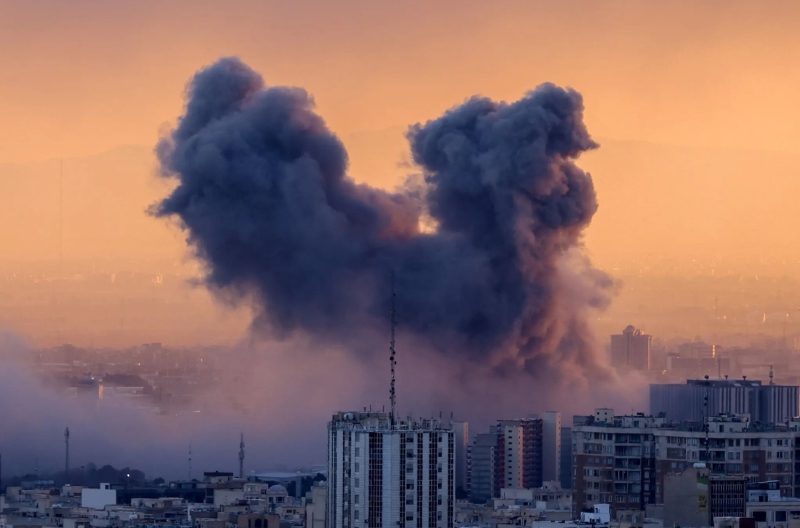
A plume of smoke rises after a strike on Tehran on Tuesday, Mar. 3, 2026. Photo: AFP
As a result of the U.S. and Israeli attacks against Iran, a significant part of Tehran’s ruling elite was killed. The list of deceased senior officials includes the head of the Islamic Revolutionary Guard Corps (IRGC), along with Supreme Leader Ayatollah Ali Khamenei himself. Security measures introduced after the Twelve-Day War in the summer of 2025 proved insufficient. At the same time, despite serious losses and destruction, Iran continues to carry out retaliatory strikes. The IRGC, one of the leading military forces of the Islamic Republic, developed protocols for decentralized activity even before the current war broke out, and it now stands as the most resilient structure of Iranian power. At the same time, the regime faces not only external enemies, but also an active domestic opposition and various ethnic insurgents. Under these conditions, the most likely scenario for Iran’s immediate future is not the establishment of a democratic system, but chaos brought about by the collapse of the state, according to Antonio Giustozzi, a senior research fellow at the Royal United Services Institute (RUSI).
Once again, the Iranian authorities let themselves get caught off-guard. On Saturday morning, a decapitation strike killed Supreme Leader Khamenei, the head of the Revolutionary Guards, the Minister of Defence, and several others.
It is remarkable that, even after everything that happened in June 2025, security measures were still lax enough to allow this to happen. To be fair, the Supreme Leader did almost entirely switch to living in his underground bunkers, changing them frequently. But Khamenei was keen to have proper high-level meetings with other dignitaries of the regime at least once in a while — on occasions such as the meetings of Iran's two highest security councils, the Supreme National Security Council and the Supreme Military Council.
He did not want to subject these close collaborators to the indignity of being taken underground through the tunnels. Which is why the meeting on Saturday morning was scheduled to take place at Khamenei’s residence, despite the awareness that the Israelis (and presumably the Americans too) had spies in very high places. The Americans were tipped off, and the rest is history.
The Americans were tipped off about Khamenei’s meeting with his senior leadership on Saturday — and the rest is history.
This episode, while important per se, also exemplifies the inadequacies of the regime, and in particular of Khamenei himself — all the more so given that the rest of the world was expecting an attack, with embassies around the region starting to evacuate the day before. Once again, the Iranian air defence system failed miserably, proving unable even to warn the leaders in Tehran of the attack being on its way (let alone of shooting down any incoming missile or warplane).
This might not appear to be Khamenei’s personal failure, but in fact Khamenei failed to effectively supervise the Ministry of Defence’s work in building an effective air defence system, which should have been one of the Islamic Republic’s top priorities and indeed absorbed huge resources. Ultimately, given the Islamic Republic’s “assertive” (as they would describe it) or “aggressive” (as others would) foreign policy, it was never going to be really feasible for a sick 86-year-old to oversee all efforts effectively.
The lights are on, but the Ayatollah’s not home
At this point, the decapitation of much of the leadership per se is the least of the Islamic Republic’s problems. This is also clear from the debate over whether the late Supreme Leader’s son, Mojtaba Khamenei, has already been chosen as his father’s successor. On one hand, there have been reports that the choice had already taken place. That would strengthen the dominance of the IRGC. However, many clerics weren’t present at the meeting, and before his Ayatollah Khamenei said that no decision had yet been made. The alternative, meanwhile, is also hereditary. The other apparent candidate is Hassan Khomeini, the grandson of Iran’s first religious ruler, Ayatollah Ruhollah Khomeini.
The Israeli-American campaign is just starting, and its aims, while not wholly clear, are ambitious. The surviving top echelons of the Iranian leadership are left wondering whether the effective first wave of attacks has all been the work of mercenary spies, acting for money, or even whether there is a plot afoot to engineer a Venezuela-style regime transformation.
The decapitation of much of the leadership per se is the least of the Islamic Republic’s problems.
For good measure, the Revolutionary Guards — which are suspicious of any regime elements seeking to negotiate with the Americans yet are unable to run the Iranian system themselves under heavy stress — have de facto taken full control of the vital functions of the state. The only politicians they fully trust, say sources within the Guards, are Ali Larijani and Mohammad-Bagher Qalibaf, two senior figures with a long track record of working closely with the Guards.
According to one of its officials, efforts by the Ministry of Foreign Affairs to re-open talks with the Americans are being undermined by statements made by Larijani, who argues that no negotiations are possible now, as Iran is in too weak a position. President Pezeshkian tried to take on a more active role in the management of the conflict, but he has been asked by the Guards to focus on salvaging what is possible of the civilian government structure.
Paradoxically, therefore, the first achievement of the American and Israeli intervention is to have completed the ongoing transition towards a military regime. Tehran’s retaliatory campaign of missile attacks against the oil infrastructure of the Gulf countries, including against the once relatively friendly Qatar, is likely one of the first consequences of this shift. While one cannot tell what Khamenei would have decided to do had he lived, the Guards were always sceptical of appeasing the Gulf countries, specially Saudi Arabia — contrary to Khamenei, who embraced the Chinese offer of mediating between Tehran and Riyadh, which resulted in the agreement of March 10, 2023. Members of the Revolutionary Guards also entertained doubts about the relationship with Qatar, as they were soured by Doha’s investment in anti-Assad and anti-Islamic Republic groups in Syria. Now, all gloves are clearly off.
The first achievement of the American and Israeli intervention is to have completed the ongoing transition towards a military regime.
While Khamenei and the Guards are often described as one and the same, the reality was always more complicated. The Revolutionary Guards always sought to be on good terms with the Supreme Guide, even when they disagreed with him, but ultimately were sceptical of the clerics’ ability to run the country. Such scepticism was sometimes visible from interviews with members of the Guards. Now they have free rein, but it remains to be seen if their militarist technocratism will turn out to work better than Khamenei’s Machiavellian efforts to balance different factions of the regime against one another.
One key advantage that the Revolutionary Guards have over the other institutions of the Islamic Republic is that they are trained to operate in stateless environments. In fact, they have already switched their operations to a decentralised mode. The different branches of the Guards (Airspace, Navy, Quds Force, Ground Forces, etc.) now operate autonomously, with the HQ relinquishing command and control over them. In turn, each branch decentralises internally.
The Guardians have thus rapidly transitioned to an informal structure, abandoning offices and barracks, evidently with the intent of making it difficult for the Americans and Israelis to carry out targeted attacks against them. Small teams have been formed and tasked to operate away from their offices, constantly shifting the location of their meetings.
It's worth noting that the death of their commander, General Pakpour, appears to have had little impact on their functioning, according to sources within the ranks. There appears to be a hidden command structure, perhaps specifically designed for situations like the current one. Surely, this is not the time to advertise in public who the strategic brains of the military efforts really are.
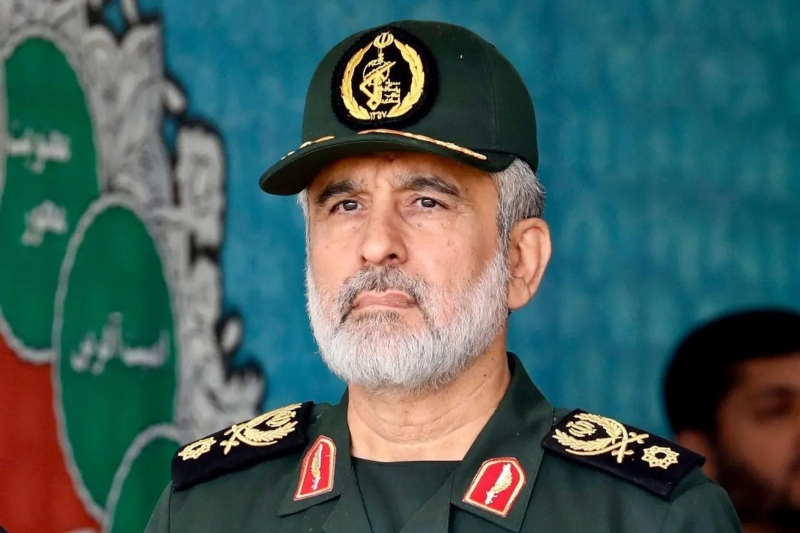
The Revolutionary Guards, therefore, should be able to continue operating even as the Americans and Israelis carry on demolishing the Islamic Republic. As the already inefficient air defence system of the country is dismantled, American and Israeli drones and warplanes will be able to fly over Iranian airspace indefinitely, targeting more tactical objectives. In practice, however, the decentralised Guards might turn out to be hard to hit from the sky, and indiscriminate bombing would make short work of efforts to court the Iranian populace. The Guards’ well-developed expertise in smuggling operations will also no doubt be particularly handy in the coming weeks.
The price of survival
One piece of evidence indicating that the regime’s strategic planning ability has not been eliminated by the decapitation of the leadership is Iran’s retaliatory campaign of missile strikes. According to sources within the Guardians, the original plans for responding against an attack included a massive missile attack against Israel, but those plans have now changed twice already.
During the first day, Iranian retaliation attacks were limited and were probably intended to be a mere warning, perhaps sent in the hope that Trump would be satisfied with a limited strike (as he had hinted he might be). It all shifted again after Khamenei’s death was confirmed, but there was no return to the original plan of mass attacks on Israel alone.
The calculus is now that, this being an existential war for the Islamic Republic, the leadership in Tehran needs to create a wide regional crisis in order to make the conflict unsustainable for their enemies in the long run. Thus the decision to close the Strait of Hormuz and the strikes against oil infrastructure — the aim is to push oil and gas prices to unsustainable levels.
Moreover, Iran has substantial stockpiles of short- and medium-range ballistic missiles that cannot reach Israel and that Israel therefore is not hunting from the skies, but these weapons still pose a serious danger to Iran’s more immediate neighbors. Using shorter-range missiles against the Gulf states allows Iran to maximise the damages it causes and forces the Israelis and Americans to possibly divert resources away from hunting the longer range missiles.
The calculus is now that, this being an existential war for the Islamic Republic, the leadership in Tehran needs to create a wide regional crisis.
A source within the Guards acknowledged that, again presumably helped by local spies, the Americans and Israelis were able to destroy a number of missile launch sites; however, stockpiles remain abundant, he claims. Retaliatory rocket attacks are being conducted sparingly in order to preserve reserves for as long as possible. Trump has claimed to be prepared for a war lasting several weeks; the Revolutionary Guards need to be able last significantly longer than that.
The Gulf states are not pleased with this development, and once-friendly Qatar is enraged, but their capacity to affect the situation is limited. The military capabilities of the Gulf states are puny compared to those of Israel and the U.S., meaning that even if these states retaliated, it would make little difference for Iran.
The Guards also have to worry about the weak response they are getting from their partners in the “Axis of Resistance.” This lack of concrete help is not unexpected — in the weeks leading up to the start of the war the feelers the Guards put out to different members of the Axis often received cold replies, acknowledges one inside source. After the actual war started, the Houthis issued a statement of support, but they have not yet taken any action. Meanwhile, Hezbollah has shelled northern Israel and is clearly entering the war, even though it was weakened by the Israeli ground operation in Lebanon in the fall of 2024 and faces a formal ban on its military wing from the government in Beirut. Some factions of Hash Shabi in Iraq have also been carrying out limited attacks. Perhaps the members of Axis of Resistance are waiting to see whether the Islamic Republic can put together a convincing show of force before really joining in.
A threat from within
The Guards believe that the next phase of the conflict will involve Kurdish and Baluchi rebel forces launching a ground offensive in the west and south-east of Iran — with air cover — probably with the intent of encouraging anti-regime elements to revolt elsewhere as well. The Guards and the intelligence ministry believe that while a number of insurrectionist cells (allegedly set up by Mossad and CIA) were busted in January, more remain undetected.
They also believe, based on the interrogation of the detainees, that the December-January protests and Trump’s offer of protection prematurely dragged these underground insurrectionist networks into action, before they were fully prepared.
Starting from around Jan. 8, elements of these cells started attacking security forces, government buildings, and mosques, but it was only in Iranian Kurdistan that armed opponents were able to seriously challenge the security forces, taking control of the streets in some towns. Interrogations, according to these sources, showed that the smuggling of weapons into the cities was still on-going and but stockpiles were insufficient to mount a serious challenge to the security forces.
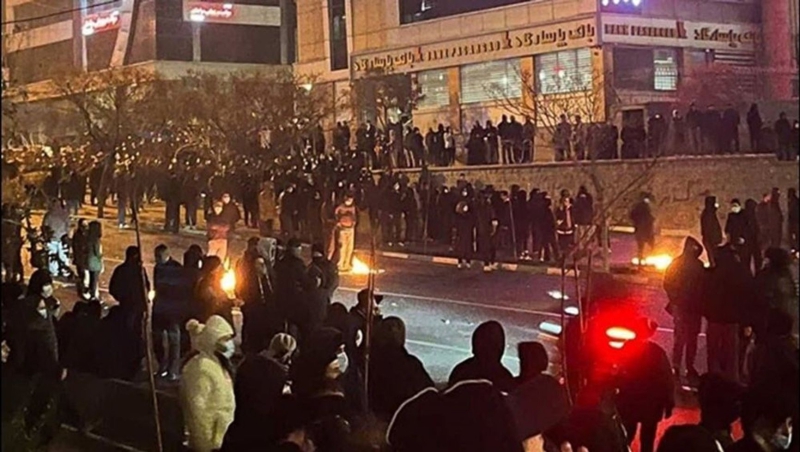
There is no way of confirming this for now, even though weapons smugglers in Pakistani Baluchistan have been saying for many months now that they were selling large numbers of weapons to Iranian Baluchi insurgents. The story is therefore at least plausible. The Guards in any case expect that at some point these cells will be activated in the cities, presumably after the capabilities of the security forces have been degraded.
Trump’s messaging is (as usual) contradictory, one day encouraging Iranian crowds to take over control of the country and next day hinting at a Venezuela-like solution — or even suggesting the possibility of deploying American ground troops. At the moment, chaos and state collapse still appear to be more likely outcomes than a flourishing democracy. The appeal of a regime transformation option, which people around Trump have been hinting at for months, seems limited given the tendency of Trump and the Israelis to conduct strikes in the middle of negotiations. But things might change when Iran eventually runs out of missiles.