
© Pavlo Bahmut / Keystone Press Agency / Global Look Press
Ukrainian society has long expected President Volodymyr Zelensky to make personnel changes, driven both by public dissatisfaction with the effectiveness of some senior officials, and by imbalances within the system of power itself, writes political scientist Georgy Chizhov. The dynamism of political processes was a key element of the informal pact Ukrainians struck with Zelensky in 2019. Russia’s full-scale invasion, however, altered that reality turning the current parliament into the longest-serving in modern Ukrainian history and making Zelensky its second longest-serving president of all time. Changes within the government in the first year of the war were cautious and limited, but that reality has shifted, with major changes taking place in several key posts: the heads of all security agencies have been replaced, including the defense minister and the chiefs of military intelligence, the Security Service of Ukraine, and the Border Guard Service; Andriy Yermak, the seemingly politically invulnerable former head of the president’s office, has also lost his job. The role and consequences of these reshuffles are debated, but one thing is beyond doubt: the country’s main anti-corruption body, the National Anti-Corruption Bureau of Ukraine (NABU) has gained genuine institutional independence of the sort that was envisioned after the 2014 Revolution of Dignity.
From planned reshuffles to “Mindichgate”
In July 2025, Volodymyr Zelensky moved ahead with his most significant reshuffle in years. Denys Shmyhal, who had set a Ukrainian record for the longest uninterrupted tenure as prime minister, left the post. He became defense minister while his first deputy and economy minister, Yuliia Svyrydenko, was appointed prime minister.
Several ministries were abolished or merged, and some Cabinet members took over other portfolios or moved to different offshoots of the executive branch. Former Defense Minister Rustem Umerov, for example, became secretary of the National Security and Defense Council.
Many Ukrainian and international media outlets interpreted the government changes as a further strengthening of Yermak’s political clout — and the de facto #2 man in the country was already seen as an exceptionally powerful figure. But the modest government reboot also underscored something else: the president’s “bench” of personnel options is not just short — it effectively does not exist.
Zelensky’s “bench” of personnel options is not just short — it effectively does not exist.
As a result, once the reshuffles were completed, few expected further changes anytime soon. Then came “Mindichgate” — a criminal case announced in the summer but still gaining momentum as of November. The evidence implicating long-time Zelensky associate Tymur Mindich and his government partners with large-scale corruption proved so shocking that they led to Yermak losing his job.
This marked one of the first times in Ukraine’s history that law enforcement agencies — in this case NABU and the Specialized Anti-Corruption Prosecutor’s Office, or SAPO — persistently investigated the highest levels of government, creating severe political discomfort for a sitting president. Zelensky’s July attempt to curb the independence of NABU and SAPO was thwarted by civil society, and further major revelations appeared inevitable.
The first publications of excerpts from NABU wiretaps led to the resignation of two ministers from the newly formed government. The recordings also contained hints of Yermak’s possible involvement in corruption schemes, but Zelensky made clear at a meeting with lawmakers from his Servant of the People party that Yermak’s dismissal was not under consideration.
On Nov. 28, the situation changed dramatically. NABU and SAPO carried out searches at Yermak’s home and office, and that evening, the head of the president’s office resigned. Whether the decision was voluntary remains unclear, with several media outlets reporting that Zelensky demanded the resignation and that Yermak responded with a half-hour outburst.
The president faced a difficult choice. In effect, there were two paths: to find a way to preserve Yermak’s behind-the-scenes influence and the executive system built by and around him, or to dismantle that system — albeit very carefully, so as not to undermine the country’s ability to defend itself or Zelensky’s own political future. The fact that it took more than a month to appoint a new head of the president’s office suggests the choice was far from obvious.
Budanov as crisis manager
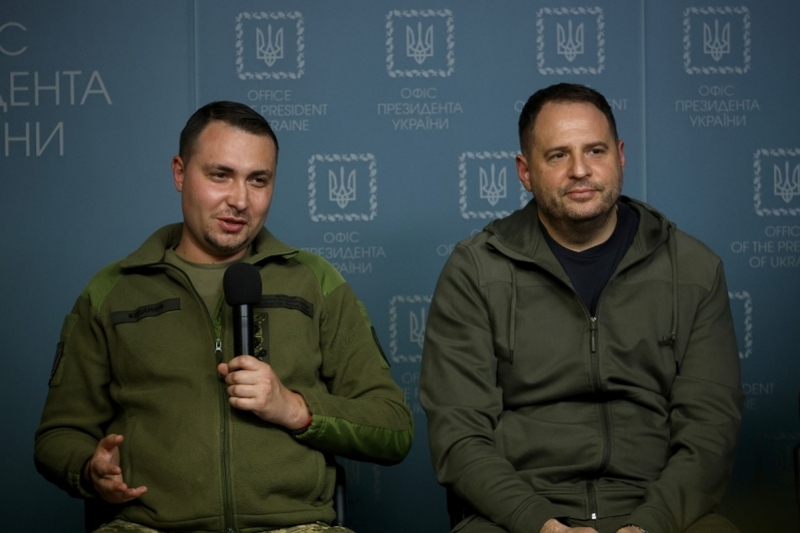
Yermak’s successor Kyrylo Budanov — a general and public figure with a high personal approval rating — is too weighty and independent a figure to simply carry on with the status quo. By its logic, an alternative to the “Yermak system” must involve not only changing people in key posts but also changing approaches — above all, approaches to peace negotiations, a process that Yermak had fully centralized, striving to keep nearly everyone else away from shaping positions and narratives.
Before the recent shake-up, Budanov was perhaps the only Ukrainian political figure who could communicate with the American side “over Yermak’s head,” using his long-standing intelligence-service ties. Budanov also communicated with the Russians — primarily on prisoner exchanges, but also with a Moscow delegation in Abu Dhabi last fall.
Budanov’s first deputy is Serhiy Kyslytsia, until recently the No. 2 official at the Foreign Ministry and a fairly independent negotiator. The backbone of Ukraine’s delegation now also includes the unsinkable Rustem Umerov and Yermak’s “rehabilitated” political opponent, David Arakhamia.
A knock on Yuliia’s door
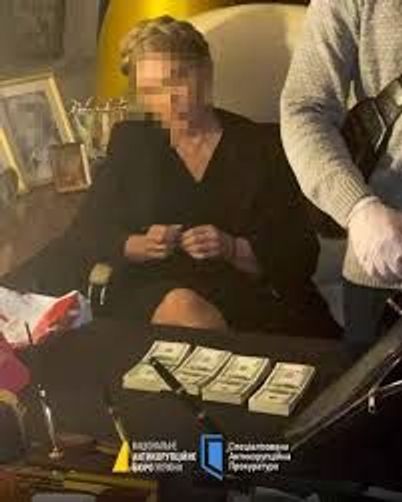
The announcement of criminal suspicion against Yuliia Tymoshenko became another political sensation of recent months. This time, the seemingly tireless NABU detectives allegedly recorded the Batkivshchyna (lit. “Fatherland”) bloc’s leader in conversation with a lawmaker from Zelensky’s Servant of the People faction. Tymoshenko herself says it was Ihor Kopytin and that part of the conversation was fabricated; Kopytin denies that the distorted voice on the recording belongs to him.
The interlocutor, speaking in the voice of the Batkivshchyna head, offers money to the lawmaker and his colleagues who agree to secret cooperation when voting in favor of bills she specifies, as well as for refusing to support the appointment of Denys Shmyhal as energy minister and former digital transformation minister Mykhailo Fedorov to the vacant post of defense minister. The female voice on the recording speaks Russian, saying, “…we want to smash this majority” — an apparent reference to the increasingly fragile single-party majority of Servant of the People.
However, what she hopes to achieve by this, the presumed Tymoshenko does not explain. To reformat the Verkhovna Rada and take control of it? But then who would her allies be? After all, the Batkivshchyna faction is too small to serve as the backbone of a coalition. Or is the collapse of the majority needed in order to offer the Presidential Office a partnership and return the votes that were “snatched away”?
Notably, the situation in the session hall initially unfolded exactly as the woman on the recording proposed. The majority supported the dismissal of Shmyhal and Fedorov from their previous posts, but there were not enough votes to appoint them to new ones. Suspiciously though, after the high-profile revelations, lawmakers voted again — and this time the ministers were confirmed. Anti-corruption officials from NABU and SAPO honorably disproved the suspicions that they were acting on behalf of some anti-presidential forces, as their intervention effectively helped Zelensky once again form a Cabinet largely made up of the figures he had wanted to appoint.
Unpredictable anti-corruption enforcers
Between the wave of resignations sparked by “Mindichgate” and the announcement of suspicion against Tymoshenko, however, another notable event occurred (even ifit attracted less public attention). NABU and SAPO accused several lawmakers from the Servant of the People faction of receiving undue benefits for voting “on command,” and a court imposed preventive measures on five deputies. Social media and news outlets began talking about a “black” party slush fund.
When investigators came for Tymoshenko and it became clear that she had been turned in by a lawmaker from the pro-presidential faction, the greatest uproar erupted precisely within Zelensky’s Servant of the People — not Tymoshenko’s Batkivshchyna. It is logical to assume that someone from the parliamentary majority, seeking to avoid liability, agreed to become a NABU informant. Tymoshenko herself may have come onto the investigators’ radar entirely by chance — after she carelessly made an indecent offer to one such agent.
As a result, against the backdrop of foreign-policy turbulence created by the unpredictable actions of Donald Trump, Ukraine is also experiencing domestic political uncertainty. The reshuffling of the government is nearing completion, as candidates for the vacant posts of justice minister and digital transformation minister have been identified and Servant of the People lawmaker Dmytro Natalukha has been appointed head of the State Property Fund. But the resignations and appointments are only just beginning in the Armed Forces and the security services, and there is no certainty that the president will fully accommodate the preferences of Budanov and Fedorov when it comes to personnel rather than trying to create counterweights to his very capable new cabinet officials. For example, the new head of Ukraine’s military intelligence agency (HUR) is not Budanov’s former deputy Vadym Skibitskyi, but Oleh Ivashchenko, who previously led a “competing” agency — the Foreign Intelligence Service.
At the same time, it is now clear that no one in the government can anticipate the actions of the specialized anti-corruption bodies. It appears that, as envisioned when they were created after the 2014 Revolution of Dignity prevailed, they have indeed gained institutional independence and are prepared to pursue corrupt officials and behind-the-scenes power brokers regardless of the political consequences. And while this adds unpredictability in the short term, in the medium term it may help strengthen the resilience of the Ukrainian state.