
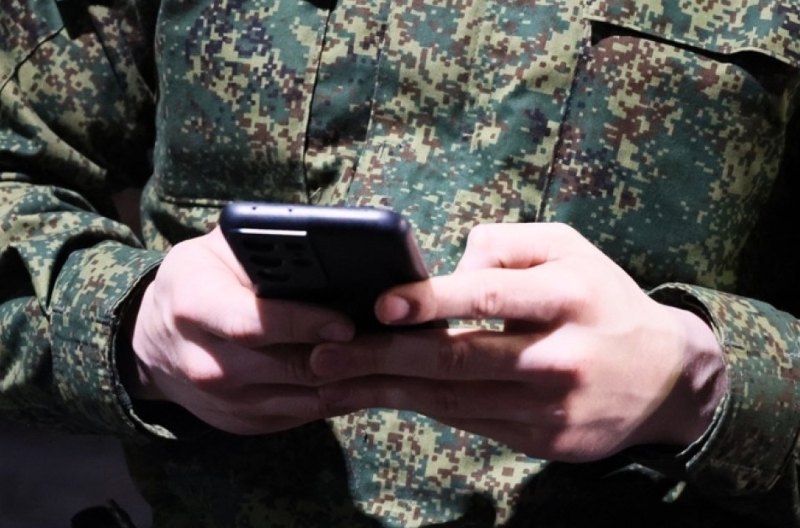
Students in the Russian city of Novorossiysk were recently threatened with being barred from winter exams if they did not install the state-promoted MAX messaging app. School and residential chat groups are also being forcibly moved to the new platform. It is not the Kremlin’s first attempt to push citizens toward censored, state-controlled IT services, and Moscow’s authoritarian peers in Beijing, Tehran, and even Naypyidaw have made similar attempts — with varying results. Russian messengers TamTam and ICQ New failed to attract enough users, Myanmar saw a successful boycott by civil society, and Iranians have developed methods for getting around the state’s restrictions. However, Chinese citizens have largely adapted to the state-run WeChat and struggle to imagine life without it.
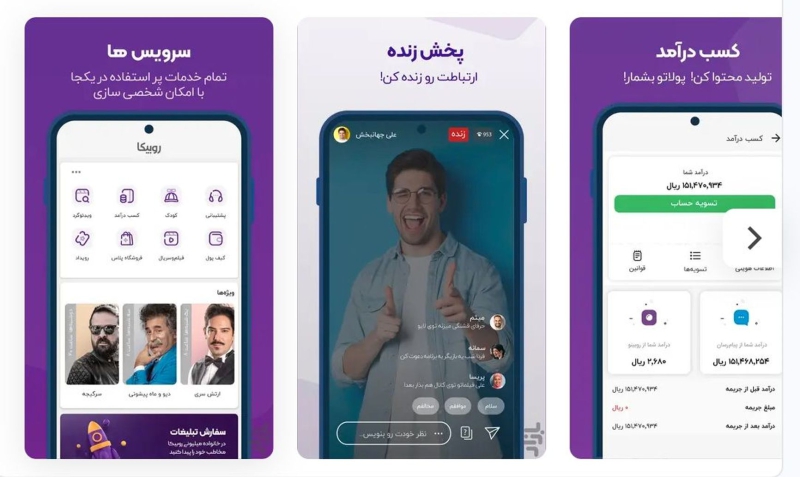
In August 2021, Iranian marketing specialist and social media expert Houman Gorbanian discovered that a page bearing his name had appeared without his consent on the state-controlled social network Rubika. The name and photo were real, and so were the uploads — the service was automatically scanning Gorbanian’s personal Instagram account, copying updates and populating the fake profile.
After Gorbanian posted an angry message on Twitter, many other Iranians — from ordinary Iranians to well-known football players and artists — found similar fake pages on Rubika. Some had even received blue verification checkmarks.
Four years before Russia’s MAX was unveiled, Iran had already begun promoting a state messenger designed to replace Western alternatives. In late July 2021, Iran’s parliament, the Majlis, passed the “User Protection in Cyberspace” law, which sharply restricted internet access and handed control over online traffic to security agencies. The law soon led to the blocking of WhatsApp, Instagram, and other popular services. At the same time, authorities launched an aggressive promotion campaign for Rubika — with fake celebrity pages forming part of that effort.
“They want to use these fake accounts to show that people trust them, to prove their success,” Gorbanian wrote at the time. “They have a low level of intelligence. They don’t understand that they embarrass themselves every time.”
But despite the widespread blocking of familiar messengers and social networks, Iran’s internet censorship has not achieved total dominance. On paper, Rubika is a success: it reports 44 million monthly users, nearly half of the country’s population. Daily usage, however, is far lower — 12 to 15 million users — less than WhatsApp and Telegram, according to Iranian opposition political analyst Amir Chahaki.
“People use Rubika when it has something to do with the state,” Chahaki said. For example, companies seeking to participate in government tenders must do so through Rubika. “Over the past two or three years, the number of such mandatory uses has been growing,” he added. “Rubika now plays the same role as a military service certificate — without it, in Iran, you can’t even get married. But in everyday life, everyone uses blocked WhatsApp and Telegram through VPNs.”
Rubika now plays the same role as a military service certificate — without it, in Iran, you can’t even get married.
Rubika is an attempt to create a so-called super app. It integrates payments, government services, a marketplace, a social network, a video platform, an Uber substitute, and a messenger feature. Users can also communicate with people on three other regime-controlled services: Bale, Soroush, and Eitaa.
All of these Iranian state messaging apps monitor users. The Open Technology Fund’s security lab tested Eitaa, Rubika, and Bale and found that none of the three use end-to-end encryption. The apps also track when users click on external links from messages. In addition, Rubika allows direct monitoring of private chats and interception of sensitive data.
It is not hard to see that in its planned features and level of state backing, Iran’s Rubika closely resembles Russia’s MAX. But the Russian messenger is rarely compared publicly to Rubika and is instead almost always likened to China’s WeChat.
WeChat is also a state-controlled “super app.” It allows the authorities in Beijing to engage in surveillance, real-time content censorship, shadow banning, and other methods of suppressing free expression. Nevertheless, WeChat has nearly 1.4 billion active users and is commercially successful.
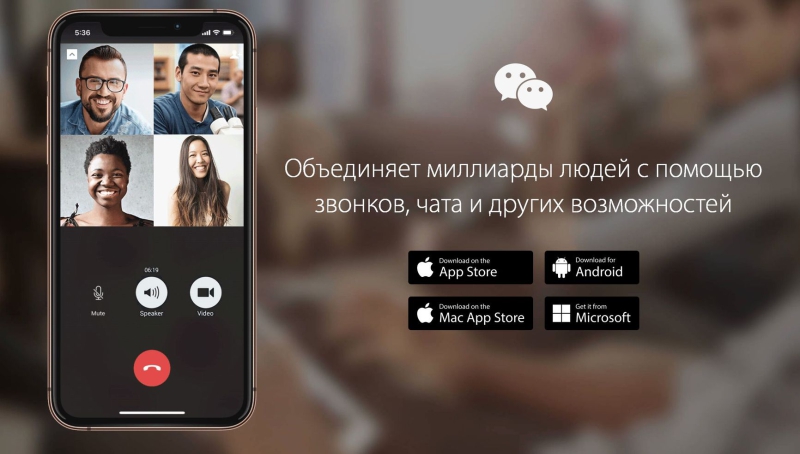
The Chinese messenger is the core of Tencent’s ecosystem and generates a significant share of the company’s revenue via advertising, mini-apps, and a payment system.
The differences between China’s super app and the Russian one — which has yet to develop many additional features — are manifold, said Sarkis Darbinyan, a lawyer and co-founder of the digital rights group Roskomsvoboda.
“First, WeChat emerged as a high-quality private messenger, and only later did the Communist Party take it over and begin supporting it,” Darbinyan said. “Second, commercial success requires scale. China is a huge market in itself. Russia’s market is very small and does not extend beyond the country. I don’t think that even in friendly countries like Armenia or Kazakhstan, MAX could win in a fair competition. So as a product, MAX is doomed to commercial failure. How is it supposed to make money? Paid accounts?”
WeChat first emerged as a high-quality private messenger, and only later did the Communist Party take it over.
The main difference, however, is that censorship in China has existed for as long as the internet itself, Darbinyan said. New technologies there developed from the outset under state control.
“The average Chinese user has never used Telegram,” he said. “The state never had to wean people off familiar apps and train them to use new ones.”
Notably, WeChat does not work in Russia, nor do several other other Chinese services. In late 2025, Chinese tourists complained widely about problems with the app, saying SMS activation codes were not reaching Chinese SIM cards while roaming in Russia. As a result, the main Chinese app (not just WhatsApp) has become a casualty of the Kremlin’s blocking measures.
And there are other examples of governments trying to force users away from familiar and convenient services in favor of “sovereign” alternatives. Mikhail Klimarev, executive director of the nonprofit Internet Protection Society, said Russia’s current efforts most closely resemble the experience of Myanmar.
In 2021, Myanmar experienced a military coup that brought a military junta to power, and the new authorities quickly banned Facebook, WhatsApp, and Instagram.
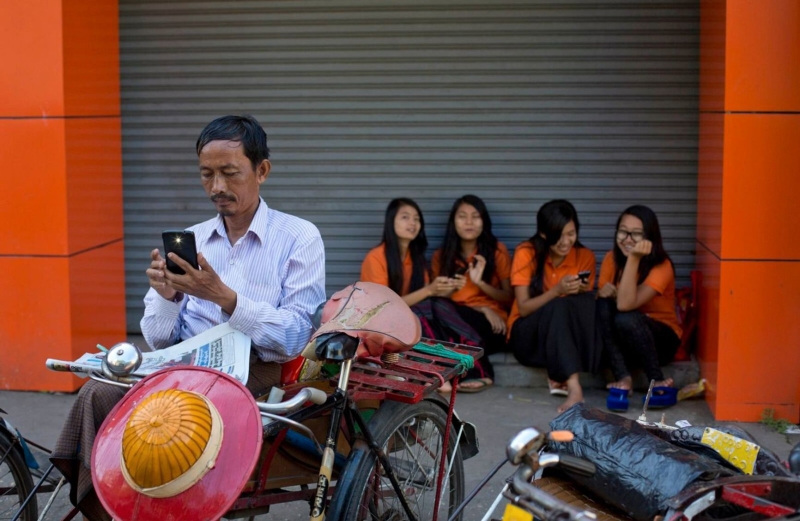
The state then developed its own government-controlled social network called Myspace Myanmar. (Despite the name, it has no connection to the short-lived platform launched in 2003.)
The state-run network made its debut on April 27, 2024, but opponents of the junta in Myanmar and abroad began a boycott campaign, and by June the app was removed from Google Play.
Over those six weeks, Myspace Myanmar was downloaded just over 1,000 times, and the company never claimed more than 20,000 active users — a modest result for a country of nearly 56 million people.
In Russia, both Yandex and Sber made previous attempts to develop a sovereign messenger, but the most prominent project was TamTam. It appeared in the summer of 2016 and initially operated under the name “OK Messages” as an internal messenger for the Odnoklassniki social network.
TamTam gained wider attention in 2018 when it was promoted as an alternative to Telegram amid attempts by Russia’s media watchdog Roskomnadzor to block Pavel Durov’s enormously popular app. By then, TamTam already allowed users to create channels similar to those on Telegram, and the messenger was separated from Odnoklassniki and turned into a standalone product.
In April 2018, copies of well-known Telegram channels suddenly appeared on TamTam without their authors’ permission.
Two years later, Russia’s Ministry of Digital Development added the messenger to a registry of “socially significant” internet resources, also known as a “white list.” These websites and services are meant to remain accessible even in the event that Russia is disconnected from the global internet.
Despite these efforts, TamTam never gained a mass audience. It surpassed 10 million downloads on Google Play only in 2023 but was reported to have about 1 million monthly users.
Instead, it was used by bot developers and fraud specialists to discuss Telegram vulnerabilities outside the platform. In 2019, TamTam also unexpectedly became popular among supporters of the Islamic State, with English-language terrorist chats flourishing on the little-known Russian messenger.
In 2019, TamTam also unexpectedly became popular among supporters of the Islamic State, with English-language terrorist chats flourishing on the little-known Russian messenger.
In 2020, VK Group made another attempt at a sovereign messenger by relaunching ICQ under the ICQ New brand. The app was also included on the “socially significant” list, and Kremlin spokesman Dmitry Peskov used it to communicate with journalists. When the independent outlet Meduza was removed from the presidential press pool in the spring of 2022, one of its staff members was removed from a chat on that platform.
ICQ was also added to the list of apps that had to be preinstalled on all smartphones sold in Russia, alongside Yandex, VKontakte, the government services portal Gosuslugi, and the Marusya voice assistant. Nevertheless, on June 26, 2024, the app officially ceased operations.
A month later, the first media reports surfaced about work on MAX. The name had not yet been chosen, but it was described as a “national messenger.” Reports said VK was developing it based on TamTam, and indeed, after MAX was released, its code was found to contain clear traces of TamTam and the earlier OK Messages.
“All of VK’s products more or less share the same code base,” Klimarev said. “In that sense, there is no fundamental difference between TamTam, VK Messenger, and MAX.” Or, at least, there is no fundamental difference on a technical level.
What makes MAX different is the social context in which it is being promoted — amid wartime censorship and repression that includes a special law “On the National Messenger” (something even China did not do for WeChat). “And now additional regulations are being adopted,” Roskomsvoboda founder Darbinyan said. “Just days ago, amendments to the Housing Code were approved requiring management companies to communicate with residents exclusively via MAX. All of this is accompanied by the blocking of other messengers.”
More laws designed to push Russians onto MAX continue to accumulate. On Dec. 18 alone, two such measures were approved. One allows people to verify their age when buying alcohol and cigarettes through the “national messenger.” The other introduced digital student IDs and grade books accessible via the government services portal Gosuslugi and MAX. It is because of this rule that students in Novorossiysk are now being threatened with being barred from exams over their refusal to adopt the Kremlin’s new app of choice.
A large-scale advertising campaign presents the new messenger as fast and safe from digital scam artists, but MAX’s relative speed is achieved in part by blocking and slowing down competitors. The messenger itself runs on an expanding network of VK servers, and the app does provide fast video loading — similar to what YouTube offered before throttling dampened the user experience.
Protection against fraud, however, is another matter. Above all, MAX has no chat encryption at all, a fact that creates a major security vulnerability that can be exploited by anyone, Darbinyan said.
“Centralizing large amounts of data in one place always increases vulnerabilities. If a single account is linked to government services, doctor visits, and payments, then hijacking it would grant access to a huge number of services,” he said. “In addition, the broader environment in the country encourages fraud. Since the start of the full-scale war, Russia has been cut off from international Interpol databases. In the internet age, it is impossible to fight fraud within one country alone.”
MAX has no chat encryption at all, a fact that creates a major security vulnerability that can be exploited by anyone.
According to Roskomsvoboda, scammers are already buying verified MAX accounts for use in future targeted attacks. A black market for accounts on the “national messenger” has indeed emerged, confirmed Timur, a bot-farm operator who asked that his name be changed.
“MAX accounts aren’t sold in bulk and cost about $2 to $3 each. I don’t know whether they’re stolen or generated, but that’s close to the price of the most expensive Telegram accounts,” he told The Insider. “There are also buy orders. You can tell from the style that these are scam call centers. They usually buy in large quantities, 100 to 200 accounts a day.”
Timur himself is still watching MAX closely. “It has interesting possibilities for bots,” he said. “For example, unlike VK and Telegram, it has no protection against mass messaging.”
There are many rumors about MAX’s surveillance capabilities, but so far they have not been confirmed. Experts at Roskomsvoboda tested the app and found no anomalous behavior. Yes, the messenger requests access to the camera, geolocation, and contacts, but all major competitors do the same, and users can deny permission, Darbinyan said.
Specialists also found nothing out of the ordinary (such as the camera activating on its own without user consent). Still, MAX cannot be considered safe, Darbinyan said, because it belongs to VK — a company listed as an “organizer of information dissemination.” That means all data and metadata are stored on servers accessible to the FSB, and the entire dataset can be processed using artificial intelligence analytics.
MAX cannot spy on data from other apps, said Mikhail Klimarev of the Internet Protection Society. Instead, the main danger lies elsewhere. “Ninety-five percent of cases opened in Russia over words posted online are linked to VK,” Klimarev said. “That doesn’t mean you will definitely be arrested. Repression works like terrorism. A suicide bomber blows himself up in a square, killing 20 people. You weren’t there. But that doesn’t mean you won’t be the victim of the next attack.”
Government officials and law enforcement officers themselves appear reluctant to use MAX. In September, the author of this article received a WhatsApp call from a Moscow district police officer. Asked about MAX, the officer said he had no plans to switch to the new app and preferred to keep using familiar software through a VPN.
For now, Russians are resisting being forced onto the “national messenger,” Darbinyan explained, but he believes it is only a matter of time. “Habits change, too. In five or ten years, a new generation may not even know there was another way to communicate. A native, preinstalled app feels natural and convenient. MAX is fast. I’m sure additional data centers with caching servers are being built for it. Entertainment content will grow. If enforcement trends remain the same, it’s quite possible that half of Russians will start using MAX. Mostly young people who don’t want to spend money and effort on VPNs.”
In five or ten years, a new generation in Russia may not even know there was another way to communicate.
If internet policy tightens further, the story of VK Video could repeat itself. Against the backdrop of YouTube slowdowns, traffic to that service surged sharply in 2025.
Timur, the bot operator, also believes MAX may have a big future and is planning accordingly. “Right now, everyone involved in bots and scams is waiting,” he said. “No one wants to invest in something that could end up like TamTam and other so-called patriotic messengers. But if it continues to be developed and forced on the population, everyone will invest. MAX would remain even after the regime falls. And I would like to have bots there by then.”
In Iran, blocking, internet censorship and the development of a state-run super app began much earlier than in Russia. But Iranians continue to actively resist, said Amir Chahaki.
“If someone claims they use only Rubika, it immediately raises suspicion — most likely they work for the security services,” Chahaki said. “At the same time, the military and police themselves do not trust the app and try not to conduct personal correspondence on it.”
Iran has gone further than Russia in its fight against VPNs. Using the software has been criminalized and can be punished with fines or even prison time. Despite that, Instagram — blocked since 2022 — remains the country’s most popular social network, with nearly 76% of internet users accessing it regularly.
Members of Iran’s ruling elite are also involved in circumventing blocks, Chahaki said. During the presidency of Ebrahim Raisi, the son of the Vice President for Women and Family Affairs, Ansieh Khazali, was accused of selling VPN services (though Khazali denied the allegations).
Chinese users also bypass restrictions on a large scale. About 100 million Chinese accounts were recently counted on Twitter, noted Sarkis Darbinyan — a huge figure for a country that has been largely cut off from the global internet for about 25 years. Those who do not resist, however, effectively contribute to the expansion of censorship.
In Russia, every download of MAX brings the blocking of familiar messengers closer, said Mikhail Klimarev. “The logic is simple. They don’t talk about tens of millions of users for nothing — I think they have KPIs. As soon as MAX reaches a target number of users, they will immediately block WhatsApp and Telegram.”
Those concerns were indirectly confirmed on Dec. 23 in Russia’s State Duma, when United Russia lawmaker Sergei Boyarsky said that Telegram would not be blocked in Russia until all channels move to MAX.
But the main accomplices of censorship are Apple and Google, Klimarev said, because they allow the “national messenger” to be downloaded through their app stores. Apple’s App Store offers MAX not only in Russia and Belarus, but also in a number of other countries, including Argentina. In Klimarev’s view, app stores are effectively undermining sanctions.
VK Group CEO Vladimir Kiriyenko and the company’s main shareholders are on U.S. sanctions lists. At the start of Russia’s full-scale war in Ukraine, VKontakte was removed from app stores but later quietly reinstated. “If MAX were removed from the App Store and Google Play today, censorship in Russia would be set back by a year,” Klimarev said.
There are precedents for app stores taking steps to thwart authoritarians’ attempts at censorship. Myspace Myanmar was blocked a month and a half after its launch, and Rubika, along with other Iranian state messengers, was removed from Google Play back in 2022.