
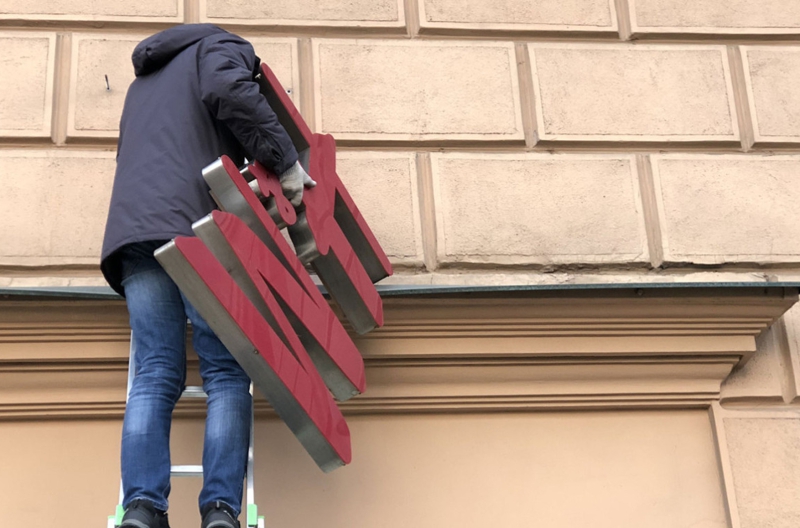
Contrary to the optimistic forecasts of 2022, the mass departure of international brands did not lead to rapid growth among Russian clothing manufacturers. Intensifying fiscal pressure and widespread uncertainty, rising prices for raw materials and accessories, competition from China, and an overall decline in demand (in 2025, shoppers were unmoved even by Black Friday) have combined to doom the sector. True, there are isolated success stories among premium brands, but the mass market is represented mostly by retail operators importing foreign goods. This is not import substitution, but import placement, fashion historian Alexander Vasiliev notes.
In 2022, for the first few months after Zara, Bershka, H&M and other clothing chains left the Russian market, the country’s fashion retail market experienced the illusion of an upswing: some domestic brands increased sales, and demand in major cities grew faster than supply. However, by 2024–2025 it had become clear that this effect was temporary. Rising rental rates, higher prices for raw materials and accessories, and a decline in consumption (despite the nominal growth in incomes) made the fashion sector’s development extremely difficult.
“Everything has shot up into the stratosphere,” a business owner from the Moscow region who runs a small company producing hoodies and T-shirts told The Insider. “A roll of fabric used to cost 30,000 rubles, and now it’s 46,000. I’m sitting here doing the books.”
One of the owners of a small clothing store in Moscow adds: “Rental rates have increased, and the payback period is a big question. Maintaining a location with inventory, a register, and staff is now a luxury that small brands can’t afford.”
Maintaining a location with inventory, a register, and staff is already a luxury for small brands
Problems are visible even in niche areas where demand should, in theory, remain stable. A co-owner of a Central Russian company producing workwear for medical staff and laborers says: “Even our category no longer feels secure. Across the country, workwear shops are closing one after another. People are saving on everything.”
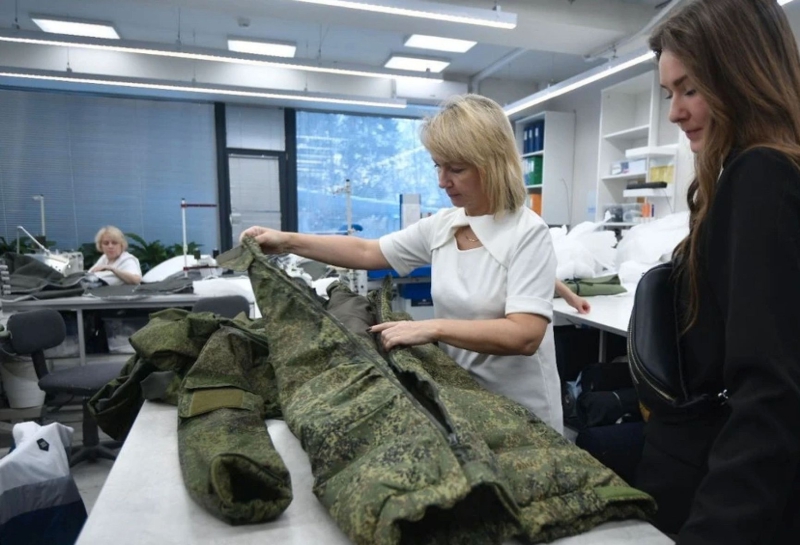
Statistics show that overall clothing production in Russia has grown during the years of the full-scale invasion, but this statistic includes military uniforms. According to Rosstat data, in the first nine months of 2025, the average output of clothing was 3% lower than in the same period the previous year. Output of “other workwear,” however, was 13% higher.
Stores and manufacturers are shutting down en masse. The problems have already led to the bankruptcy of major clothing producer and retailer Modny Kontinent, which owned Incitystores and the underwear brand Deseo. The brand Just Clothes, which billed itself as “Russia’s analog of Uniqlo,” managed to open and shut down in short order. Gloria Jeans is also winding down business — it has sold most of its sewing factories due to mounting losses and an outflow of workers to military plants, and it has closed its teen clothing stores Ready! Steady! Go!, which had operated for less than a year. The company also plans to move production from Russia to Bangladesh, Vietnam, and Uzbekistan.
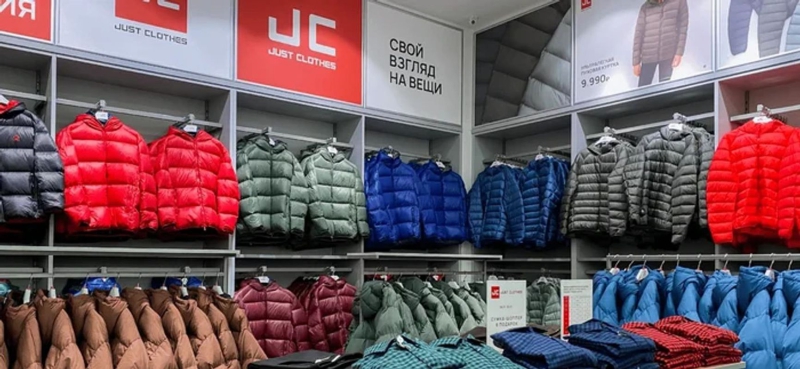
Over the first ten months of 2025, 12 clothing brands in Russia either shut down or are selling off remaining stock, NF Group calculated. In the third quarter, half of all retail locations that closed nationwide were operating in the clothing and footwear sectors. Dmitry Yanin, head of the International Confederation of Consumer Societies, attributes this to broader economic stagnation — ever more shoppers are foregoing new purchases and instead simply wearing what they already have.
Entrepreneurs interviewed by The Insider explain that after Western chains left, the nominally vacated market did not go to Russian manufacturers. Expecting a breakthrough was naïve, because there was no real exit.
“Theoretically, this should have given domestic manufacturers a chance. In practice, everything that left remained, just under different signs. One label came down, another went up. The same thing that happened with McDonald’s after its departure and the emergence of ‘Vkusno i Tochka’ restaurants in its place. They changed the name, tweaked the menu a bit, but essentially it’s all the same,” the workwear producer says.
Dubai-based Fashion And More Management DMCC tried to take over former Inditex locations with its Maag, Dub, Vilet and Ecru stores. However, due to low profitability, it soon closed some outlets. In practice, the real replacement for Inditex is the Russian retailer Melon Fashion Group — Love Republic, Befree, Zarina, Sela, and Idol. The clothes sold under these brands are produced mainly at factories in China, and control of the company remains with Swedish shareholders.
Part of the market has also shifted to the Lime brand (OOO Stil Treid), whose production is likewise located in China and Turkey, and there are other retail operators working mostly with imported assortments, including from Asia. Overall, according to analysts’ estimates, about one-third of Russian brands’ orders are now placed in China and more than 5% in Kyrgyzstan, while local factories lose out due to their higher manufacturing costs.
The number of genuinely Russian brands that have managed to take up part of the vacated niche is small. One example is 12 Storeez, which is already in the premium category. The brand’s flagship boutique opened in GUM in December 2024, but by 2025 problems common to the industry were reaching them as well. “We finished October with a year-on-year drop in sales. That has never happened in the company’s history. This is a new experience,” co-founder Ivan Khokhlov admitted.
Another example, the Cocos brand developed by Maria Titova, daughter of business ombudsman Boris Titov, also felt the need to change its format. It is now known as Abrau Club — “a club space, café, and store” — with locations in Moscow, Abrau-Dyurso, and Gelendzhik.
In general, the structure of the offline market has barely changed, business owners say. The mass segment is stocked with the same assortment labeled under new names, while wealthy women (and those from government circles) still spend their money on expensive Western brands. “Liliya Rakh — a buyer from Kazakhstan — brings those to them,” fashion historian Alexander Vasiliev says, describing the situation with the coinage “import placement.” Rather than leading to the emergence of domestic producers, sanctions have simply meant that luxury fashion from Europe flows into Russia via Belarus, Georgia, Kazakhstan, and the Baltic states. The buyers’ market remains fragmented and semi-legal — and customers must cover the added risk premium — but the continuing availability of familiar Western brands has provided Russia’s economic elite with an alternative to Russian designer brands, even if the imports must be procured outside of official retail channels.

What has changed fundamentally — especially over the past two years — is the very process by which Russians shop for clothes. A significant share of purchases has shifted to online stores, primarily Wildberries and Ozon, where shoppers can find reasonably priced goods mainly of Asian origin. According to Russian business owners, sellers from China often receive lower commissions (from 5–16%) compared with Russian sellers (35–38%), along with more favorable logistics rates and additional promotion tools.
Russian manufacturers, meanwhile, face higher costs, stricter labeling and certification requirements, and lower visibility on the platforms. As a result, marketplaces that could have become a pillar of local production are seen by many business owners as serving cross-border trade rather than supporting Russian brands.
As Vasiliev explains, the challenges to Russia’s fashion industry run far deeper than the exit — or non-exit — of Western brands. First, there is a shortage of ideas. In 2023, prominent designers Vyacheslav Zaitsev and Valentin Yudashkin both died, and although bright representatives of a new generation have emerged — such as Tatyana Parfyonova, Alena Akhmadullina, and Yulia Yanina — “no replacement comparable in significance and popularity has appeared,” Vasiliev argues.
Secondly, there is the absence in Russia of a production base. “The textile industry is poorly developed — few technologies, little raw material, little demand. Ivanovo, once the center of textiles, now mostly produces technical fabrics — waffle towels, tarpaulin, hospital flannel. There are small producers of linen upholstery fabrics, but these are niche examples. There is no full-fledged production of fashion textiles and knitwear in Russia,” Vasiliev says. Accessories are almost entirely Chinese, and for “silk, festive, wedding, and lace fabrics, Russian designers still fly to the United Arab Emirates and bring back yardage in small batches for wealthy private clients. Even military uniforms had to be ordered in China,” he notes.
From the start of 2022 through September 2025, footwear in Russia rose in price by 59%, and clothing by 36%. Although by 2025 price growth in this category had aligned with overall inflation — in the range of 6% to 9% — experts explain that this does not indicate price stabilization. Instead, the market has simply hit the limits of what shoppers can afford.
“Yes, clothing has gone up by about thirty percent, but the situation isn’t perceived as a tragedy. Clothes are clothes, and even if stores are closing, people still order through Wildberries and other marketplaces,” the workwear manufacturer says. However, the assortment on marketplaces often consists of counterfeit or fake goods.
Consumer priorities have shifted, notes the Moscow business owner interviewed by The Insider: “Food service is growing, but the clothing market is not. People who have disposable income are more likely to choose going to a café or a bar rather than buying a new T-shirt. Food is a social ritual, but clothing hardly performs that function. You can buy less clothing, and people have really started buying less,” the entrepreneur concludes.
People who still have disposable income are more likely to go to a café or a bar rather than buy a new T-shirt
These observations are confirmed by research: in 2025, 31% of Russians deliberately avoided unnecessary purchases, business-focused Russian journalistic outlet RBC found. As the Moscow entrepreneur puts it, “People have either already become poorer or are preparing for the fact that they will be poorer.”
Sources who spoke to The Insider expect the situation to deteriorate further, and that the decisive blow to clothing manufacturers will come not from sanctions but from tax and regulatory policy. First, starting in 2026, the VAT rate will rise from 20% to 22%, which automatically increases production costs and makes small businesses less profitable.
Second, businesses fear changes to the self-employed status. It has not yet been abolished, but proposals to do so have already been voiced. For small enterprises, this is critical. If they are forced to carry a full tax burden in place of the current 4% rate, many small businesses will move into the shadows.
Businesses fear changes to the self-employed status, and for small enterprises this is critical
Third, the government commission has already approved an increase in maximum fines for economic offenses, sometimes by as much as a factor of five. For tax evasion, fines can now reach 2.5 million rubles (instead of 300,000). For small businesses, receiving such a penalty is effectively equivalent to a bankruptcy sentence.
An entrepreneur from Central Russia complains: “If you end up paying 30–40% in taxes while your real margin is 25%, then no matter how much of a genius you are, the math still won’t work. On top of regular taxes, you’ve got VAT hanging over you — now it’s 22%. With a 25% margin, that’s just impossible. If companies suddenly start paying taxes in full, the way it should be in a normal country, that’s it — you can close immediately.”