
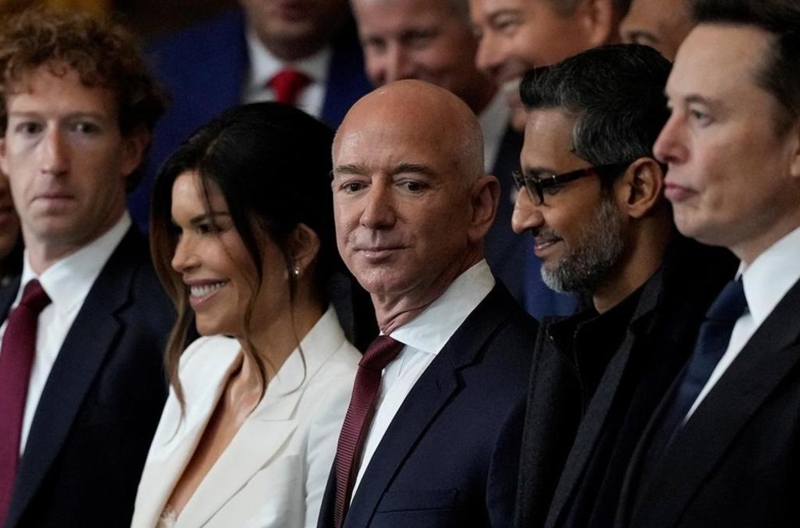
In early February, Elon Musk’s net worth topped the $800 billion mark, a new record for the richest man in history. Today, the combined fortunes of the dozen wealthiest Americans exceeds $2 trillion — four times more than the total in 2020. A similar trend is visible far beyond the United States. The assets of the extremely wealthy are growing several times faster than the combined savings of the poorer half of the world’s population. Modern extreme wealth is not only the result of talent or diligence on the part of certain people, but also a consequence of an economic system that produces closed and self-reproducing mechanisms for distributing capital. Effective policies to combat inequality have yet to be developed, as measures like antitrust and tax legislation cannot keep up with the power of the elite, which buys up media outlets and often determines the outcome of elections.
In 1324, Mansa Musa, the ruler of Mali and, by some estimates, the richest person in history, decided to perform the hajj — the religious pilgrimage to Mecca. Contemporaries wrote about his journey with both awe and horror: the king was accompanied by 60,000 servants and 12,000 slaves, and a caravan of camels carried more than a ton of gold in addition to equipment. Musa, who effectively owned the entire gold reserves of the empire, was so wealthy that the cities he passed through faced inflation never seen before, leading to localized economic crises. It is difficult to determine the king’s wealth in modern terms, but some sources estimate it at today’s equivalent of approximately $400 billion.
At the moment, the richest person in the world, Elon Musk, is even better off than the legendary emperor of Mali. But modern extreme wealth differs radically from medieval fortunes, or even from capital in the early twentieth century. In the past, wealth was associated with ownership of land, natural resources (as in the case of Mansa Musa), or the means of production that so concerned Marxists. Today, however, the largest fortunes are largely intangible: they are based on the market valuation of intellectual property and the growth potential of businesses (which, thanks to investment, can sometimes expand rapidly for years without even generating a profit). This is a relatively new phenomenon that emerged in the era of the digital economy, and the rules developed earlier are poorly suited to these new conditions.
Since the 1990s, the share of people living on less than $6.85 a day — the poverty threshold for middle-income countries, according to the World Bank — has been stubbornly hovering at around 44%. In other words, although wealth is growing, it remains concentrated in the hands of a narrow group of people.
To feel the consequences of such a distribution firsthand, there is no need to wait until Elon Musk converts to Islam and sets off on the hajj with his modern equivalent of 12,000 slaves. Billionaires influence economic growth, financial stability, social welfare, and even the effectiveness of democratic institutions. The mere fact of a widening income gap increases social discontent and weakens public trust in state institutions. But even worse, the extremely wealthy actively use their resources to influence these very institutions, reinforcing their privileged position by further reducing trust among broad sections of society.
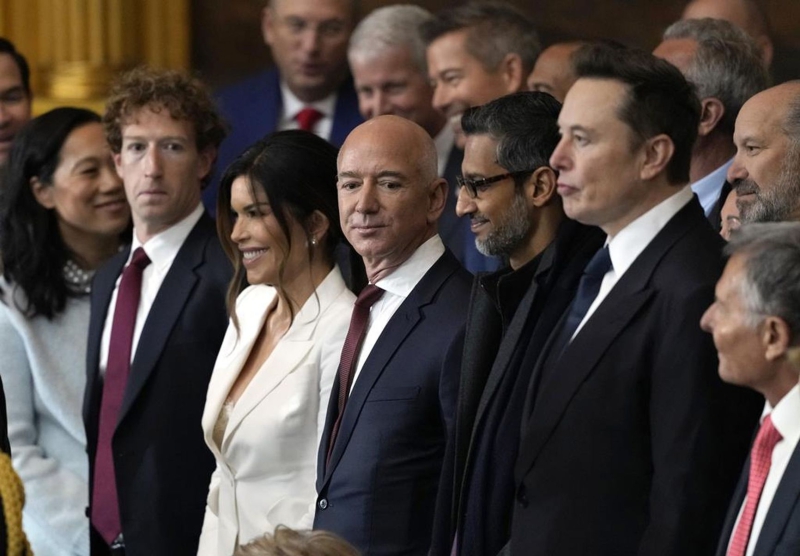
The past decade has been marked by a historic surge in fortunes. Since 2009, the number of billionaires has nearly doubled, with a new one appearing roughly every two days. In 2024, the pace of growth in the wealth of the extremely rich reached $5.7 billion per day. By Ney Year’s Day in 2026, the combined wealth of the 12 richest U.S. citizens had exceeded $2 trillion — 193% greater than in 2020 and roughly equal to Russia’s GDP.
These trends are not limited to the West — similar growth and concentration of wealth can be observed in China and India. A 2025 report by the World Inequality Database shows that the poorest half of the world’s adult population owns just 2% of global wealth, while the richest 10% hold 75%. The middle class (the remaining 40%) accounts for 23%.
Neither talent, nor intellect, nor effort guarantees wealth. Far more decisive is origin. According to the U.S. Federal Reserve, between 1995 and 2016, sums of $1 million or more were transferred through inheritance in only about 2% of cases on average, yet inheritance accounted for 40% of the wealth transferred between generations.
Neither talent, nor intellect, nor effort guarantees wealth. Far more decisive is origin
In other words, finances become concentrated in the same families across generations, reinforcing the wealth of the elite. Children of wealthy parents, in turn, can afford the best education and have more opportunities in business. It is a closed system that reproduces itself.
At the same time, many of the current leaders on the Forbes list — including Jeff Bezos and Mark Zuckerberg — were not heirs to financial empires. They gained influence thanks to the features of the specific modern economy, whose structure has made the emergence of the extremely wealthy almost inevitable.
Tax authorities and the rest of the political system are increasingly unable to cope with capital’s drive toward concentration. As early as 2014, French researcher Thomas Piketty, in his work Capital in the Twenty-First Century and in a number of articles, noted that at present the return on capital exceeds the rate of economic growth. In other words, the wealth that asset holders generate — through rent, dividends, investment profits, and so on — is growing faster than the wages of the average worker. As a result, an ever larger share of national income goes to those who already own a significant portion of it.
At the same time, the economic elite (like the political one) tends to reproduce itself. The extremely wealthy typically form closed networks — clubs, alumni associations, political communities — whose members gain access to exclusive opportunities, whether elite education, high-level deals, or simply jobs arranged through connections. Moreover, such networking helps the extremely wealthy gain seats on the boards of major NGOs, lobbying groups, and private research centers that directly influence countries’ political agendas. This only strengthens their position, allowing them, for example, to advocate further tax cuts or to secure assistance in capturing markets (as happened with Elon Musk and SpaceX, which received government contracts worth record sums). Unequal access has always existed, but beginning in the 1990s this problem overlapped with another trend: the boom in globalization and the growth of global corporations, especially in the IT sector.
In a number of technological and knowledge-intensive industries, the “winner takes all” rule truly applies. In sectors such as pharmaceuticals or IT, initial success often guarantees a stable market position and enormous long-term profits because of economies of scale. Put very simply, the larger a company becomes, the less it spends and the more it earns. Digital platforms incur massive investments at the start but then have almost zero costs for servicing each new user, and the product they deliver is of a sort that can be offered to all of humanity at once. As a result, the very nature of IT giants predetermines an extremely high concentration of capital in the hands of a small group of owners.
This trend is particularly evident in social networks and other services built on network principles, where the phenomenon known as Metcalfe’s law applies: the value of a telecommunications network is proportional to the square of the number of connected users (n2), meaning value increases exponentially rather than linearly as the network grows. This means once a company in such a sphere expands a certain distance past its competitors, it rapidly captures the rest of the market.
It may seem that there are many social networks, but this is not competition among equals; rather, it is an oligopoly — many monopolists divided into (rather large) niches of the IT sphere. For example, Meta (Instagram and Facebook) does not compete with Twitter, as they are different services with different functions. As for Google, competition has emerged only in countries with a large domestic market and their own national language — such as Russia and China. Competitors may eventually break into these markets as well, but even if that happens, there will be few of them, so the main effect will likely be improved service quality without driving down profits.
The growing role of the financial sector in the economy also contributes to the rise of extreme wealth. Since the 1980s, economic activity (especially in Western countries, beginning with the United States) has shifted toward financial markets and lending, whose share of GDP has increased more than threefold. According to Nobel Prize–winning economist Paul Krugman, such a situation is disproportionately beneficial to the wealthiest strata of society. He cites the 2008 financial crisis as an example, as the financial speculation that sent markets tumbling primarily struck the poor and the middle class while actually enriching the top 10%. In addition to increasing the risk of economic crises, the expansion of the financial sector leads to rising asset values, which in the overwhelming majority of cases benefits wealthy households.
Historically low taxes also worked in billionaires’ favor, especially against the backdrop of increasing capital mobility. Since the 1980s, when economic elites arrived at the so-called Washington Consensus, the top marginal rates on income and inheritance taxes have been reduced in many countries. The reasoning was simple: in a globalized economy, businesses and their owners can freely move to wherever returns after all payments are higher. In order to create attractive conditions for them, countries began a kind of race to lower taxes.
As a result, from 1985 to 2010 average corporate tax rates worldwide fell by roughly half (from about 49% to about 24%). But whereas tax havens were once mainly small countries, today even large developed economies are moving in that direction. According to the IMF, the United States itself can be considered a tax haven, since Washington is reluctant to share information about foreigners’ accounts with other countries.
Between 1985 and 2010 average corporate tax rates worldwide fell by roughly half
Even when this policy had a positive effect on economic growth (which, as Krugman emphasizes, was far from always the case), it still invariably increased inequality. The consequences were known and described almost immediately in the 1990s with real publicity, but this did not fundamentally change the situation.
Economists continue to debate the moral and practical aspects of inequality. They tend to conclude that while some level of inequality is natural for society, excessive inequality and an excessively high concentration of wealth harm social development. Stratification slows the growth of overall demand, Nobel laureate Joseph Stiglitz has shown. People with low and middle incomes spend their money, stimulating the economy, while the wealthy save a larger share of their profits. If too much money flows into savings or speculative investments, aggregate demand may weaken, leading to slower growth.
Some analysts link the disproportionate concentration of wealth with the formation of asset bubbles and subsequent crises. A number of studies argue that as demand for labor declined, capital accumulated in the hands of the wealthy, creating “excess demand” for financial assets. This surplus of savings flowed into mortgage lending and then into mortgage-backed securities, driving up housing prices and creating the credit bubble that burst in 2007–2008. Put simply, when extremely wealthy people have excess money, they look for risky investments, leading to instability.
Economist Edison Jakurti holds a similar view. After studying the history of 18 developed economies over 150 years, he concluded that a sharp rise in the concentration of wealth increases the likelihood of banking crises. Jakurti notes that even after accounting for known predictors of crises, an increase in the wealth share of the top 1% by one standard deviation is associated with a rise in crisis risk of 3 to 8 percentage points.
The sharp rise in the concentration of wealth increases the likelihood of banking crises
In other words, financial instability is more likely when wealth accumulates among the upper strata of society. Wealthy households that invest money in credit markets can sustain bubbles that eventually burst. By contrast, a more even distribution of funds appears to have a moderately stabilizing effect on the banking system.
In addition, inequality undermines social mobility. When wealth is highly concentrated, fewer resources flow into schools, vocational training programs, and other avenues of career advancement for people with low incomes. The Brookings Institution notes that as inequality has grown, intergenerational mobility has declined. In unequal societies, a child’s opportunities increasingly depend on the wealth of their parents.
Moreover, visible inequality can undermine social cohesion. Studies link high levels of economic stratification with rising crime, worsening public health, and declining life satisfaction for everyone but the wealthiest. Economist Robert Frank argues that even if middle-income families maintain their earnings, the need to “keep up” with increasingly lavish elites imposes both psychological and material costs.
Another problem associated with the extremely wealthy is the emergence of political imbalance. Many analysts warn that when a very narrow circle of people controls enormous sums of money, democracy itself comes under threat. The wealthy themselves agree: a survey by the Patriotic Millionaires organization found that 70% of affluent citizens believe their “colleagues” possess “undue and disproportionate power.”
In many countries, private individuals finance election campaigns. This issue is particularly acute in the United States, where legislation places very weak limits on the influence of money in politics. In 2024, a mere 100 billionaire families donated more than $2.6 billion to election campaigns — twice as much as in the previous cycle. And they gained tangible benefits: Musk, who invested $120 million in Donald Trump’s campaign, received control of the “Department of Government Efficiency” (DOGE) and, according to some estimates, profited considerably from it.
Elon Musk, who invested $120 million in Donald Trump’s campaign, received control of the “Department of Government Efficiency”
In general, when political donations are dominated by the wealthy, authorities tend to serve their interests. Influence can be exerted not only through party financing but also through the media. For example, Bezos, who bought The Washington Post in 2013, announced in 2025 that the publication would focus its coverage on “personal and market freedoms” rather than on international news and political investigations. Elon Musk, in addition to his active “work” in the Trump administration, has sought to influence the politics of other countries as well; after the European Commission fined his social network Twitter (X) $120 million, Musk declared war on the EU and began calling for the bloc’s destruction, comparing it to Nazi Germany. Trump, of course, came to his ally’s defense, calling the EU “nasty.”
It should be noted that the political influence of the extremely wealthy does not always have a right-wing or conservative orientation. Michael Bloomberg and George Soros have spent decades investing billions to promote the values of democracy and human rights, environmental sustainability, and education reform. Soros has given away 76% of his wealth (which amounts to $7.5 billion). The once richest person in the world, Bill Gates, has donated almost all of his fortune to charity. The fastest to distribute her wealth (and only slightly short in total volume) has been MacKenzie Scott — Bezos’s ex-wife, who actively participated in the creation of Amazon. Over the past seven years she has donated $26 billion, giving away 75% of her Amazon shares (about 46% of her wealth).
But generosity among the extremely wealthy is more the exception than the rule. In total, the 25 most generous U.S. citizens have shared just 14% of their combined capital. Musk has donated only 0.06% of his wealth over his lifetime, while Larry Page, the second richest person, has given away 0.03% (Bezos is only marginally better at 1.85%). Overall, only 6 of the 12 richest people in the United States appear on the list of the 25 most generous.
The issue is not specific names but the fact itself that an extremely high concentration of private capital allows certain people — regardless of their views — to compete with state institutions for societal influence.
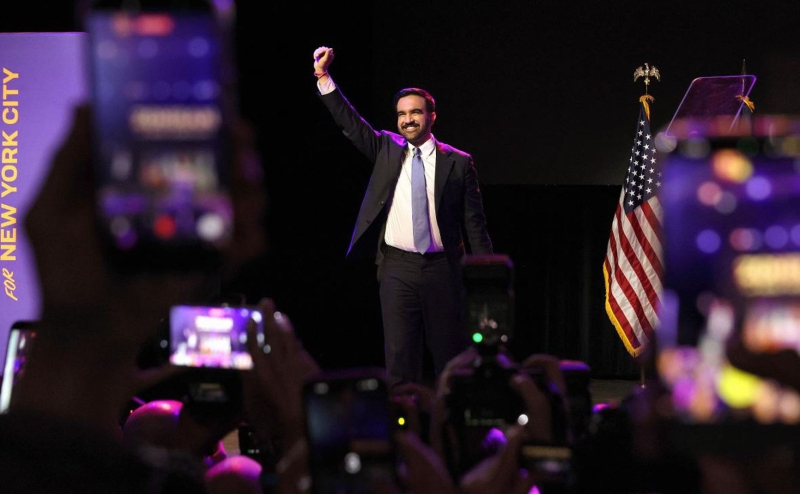
As the wealth gap continues to widen, demand for stronger regulation is growing. Calls for “limitarianism” — the introduction of a threshold above which accumulated wealth should be taxed or restricted as being harmful — are being heard ever more often. The popularity of left-wing politicians elected on a wave of discontent with economic inequality is also rising. In November, for example, the mayoral election in New York, the world’s financial capital, was won by “democratic socialist” Zohran Mamdani.
In recent years, initiatives to combat inequality have been emerging particularly actively all around the world. In 2025, economists (Gabriel Zucman, Thomas Piketty, and others) called on France to introduce a “solidarity tax” for billionaires. Piketty argues that even with a 2% tax on fortunes exceeding €100 million, it would take centuries to “erase” the profits accumulated over the past 15 years, given how quickly they grow. In his view, the richest people can pay small taxes without losing their wealth precisely because it continues to increase.
A hypothetical Elon Musk may hold large stakes in several rapidly growing corporations (which rapidly increases his wealth), but as long as he does not sell those shares, such capital growth is not taxed. He proposes several options for changing that. One is a “prepaid tax” with the possibility of reimbursement in the event of capital losses. A similar initiative was recently approved by the Dutch parliament, which means beginning in 2028, the Netherlands plans to impose a 36% tax on unrealized income from cryptocurrencies, stocks, and bonds.
Another issue is tax avoidance or evasion. The extremely wealthy have access to a vast array of tools for reducing their tax burden (both legal and not), further strengthening the concentration of wealth. As a result, experts and policymakers are increasingly discussing a global minimum tax, as well as measures such as stricter rules for the movement of capital between jurisdictions. This could involve public registries of business owners and real estate, the automatic exchange of financial information between countries, or coordinated action against tax havens and cryptocurrencies.
Great hopes are also being placed on antitrust measures and policies aimed at changing market structures. Lawyers are advocating updated regulations that reflect modern realities. Former U.S. Federal Trade Commission commissioner Lina Khan (considered one of the leaders of the neo-Brandeisian movement), supports the structural separation of modern megaplatforms. She argues that the de facto monopolization of entire markets by giants such as Amazon, and the many negative consequences that follow, justify government intervention in the form of breaking up corporations — for example, separating Amazon’s trading platform from its retail or logistics businesses.
Most economists agree that an expansion of “pre-distributive” policies is needed, measures like investment in education that can prevent such massive wealth divides from emerging in the first place. There is also growing confidence in the need to tighten antitrust legislation and expand progressive taxation. Nevertheless, all these ideas remain far from the implementation phase — not a surprise given how successfully the extremely wealthy continue to accumulate not only money, but also power and influence.