
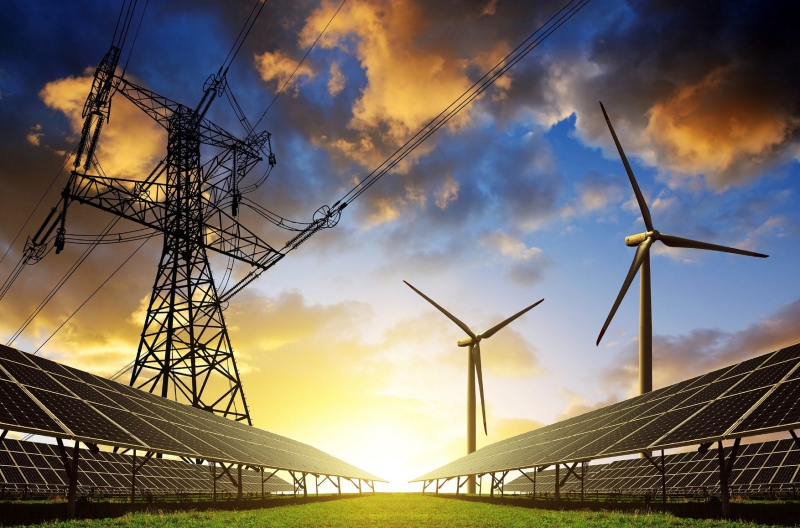
The past year was marked by debates about a deep crisis in the environmental agenda. The United States’ withdrawal from the Paris Agreement and the EU’s rollback from previous environmental restrictions dealt a severe blow to plans aimed at curbing global warming. And yet, despite this unfavorable backdrop, green energy is increasingly displacing traditional sources. In 2025, the global share of renewable energy generation totaled more than one-third of overall electricity generation, surpassing the share of coal-fired power for the first time. One in four cars sold globally this year was electric, and in China, electric vehicles have moved from a niche segment into the mass market, with many priced cheaper than their conventional counterparts.
Emissions from the burning of fossil fuels — the main anthropogenic source of greenhouse gases and the primary driver of global warming — are still rising. According to preliminary estimates by the Global Carbon Budget, carbon dioxide emissions from fossil fuel combustion and the cement industry increased by 1.1% in 2025 compared with 2024. That said, there are signs that total CO₂ emissions may have reached a plateau, meaning 2025 may well prove to have been the turning point in the fight against greenhouse gases.
Notably, this comes amidst a rollback in climate policy initiatives not only in the United States, where the Trump administration consistently opposes the very concept of global warming, but even in the EU, as The Insider previously detailed. In December 2025, the European Commission proposed revising the ban on the sale of new internal combustion engine vehicles, previously scheduled for 2035. The new document calls for a 90% reduction in exhaust emissions by 2035 compared with 2021 levels, rather than a 100% cut as previously planned. This would allow hybrid, gasoline, and diesel vehicles to remain in use after 2035, albeit in very limited numbers.
Nevertheless, in the first half of 2025, the share of clean energy generation worldwide exceeded one-third of total electricity produced, overtaking coal-derived energy for the first time. Solar and wind power generation grew even faster than global electricity demand.
By mid-2025, the share of solar power was already very high in several countries. In Hungary, it bordered on 30%, and in Greece and the Netherlands it exceeded 25%. This transition has already acquired momentum that makes it increasingly insulated from political and geopolitical shifts.
Of particular note is the solar energy boom in Pakistan. In the first quarter of 2021, the country generated less than 5% of its electricity from solar power, but over the same period in 2025, that share had risen to over 20%. Notably, this revolution was driven by market forces, not climate policy.
In just three years, grid electricity rates in Pakistan rose by 155%, making it unaffordable for many households and businesses. Meanwhile, solar panels fell in price by 50% due to overproduction in China and the temporary suspension of import duties and sales tax in Pakistan. As a result, households and businesses began installing small-scale solar power systems, making the country one of the world’s largest importers of solar panels.
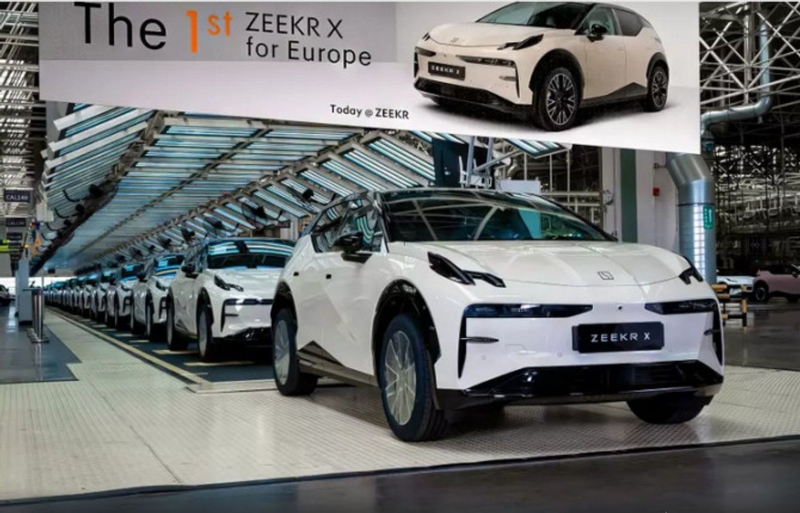
Equally striking is the booming electrification of transport. Roughly one in four cars sold worldwide this year was electric, and in China, the share of electric vehicles in new car sales was already approaching 50% in 2024. Electric vehicles are moving from a niche segment into the mass market, and they are becoming increasingly affordable as competition rises and battery prices fall. In today's China, many electric vehicles are significantly cheaper than their conventional analogs — even without subsidies.
Despite all of Trump’s efforts, December forecasts from the U.S. Energy Information Administration project that the share of renewable energy in U.S. electricity generation will rise from 23% in 2024 to 24% in 2025 and 26% in 2026. This growth will come at the expense of fossil fuel–based generation.
In California, over the 12 months from April 2024 to March 2025, solar power became the primary source of electricity (33.9%), surpassing natural gas (33.3%). Overall, the state now generates more than two-thirds of its electricity from non-fossil sources.
In the EU, despite the easing of restrictions on internal combustion engines, a new legally binding target was agreed upon in December: to reduce net greenhouse gas emissions by 90% by 2040 compared with 1990 levels. This target represents an important intermediate step on the path towards reaching climate neutrality by 2050, and it underscores the EU’s long-term commitment to decarbonization.
Progress is also evident in green electricity production. June 2025 was the first month in history when solar power took the top spot in the EU’s electricity generation mix, supplying 22.1% of total output. Nuclear energy came in second at 21.8%, followed by wind power at 15.8%.
In June 2025, solar power topped the EU’s electricity generation mix for the first time in history
The EU has also taken tangible steps to reduce its dependence on renewable energy equipment from China. In December 2025, Italy concluded a renewable energy auction that excluded Chinese equipment, yet prices rose by only 17% compared with the previous auction (which allowed for the participation of all suppliers). This auction was among the first in the EU to apply non-price criteria in accordance with the EU Industrial Decarbonization Act.
Elsewhere, South Korea has committed to shutting down 40 out of its 61 coal-fired power plants by 2040. Currently, the country is the world’s seventh-largest operator of such plants, with coal accounting for 30% of electricity generation. Seoul plans to increase the share of renewables from the current 10% to over 35% by 2035.
News from the developing world is no less positive. In the first quarter of 2025, the total installed capacity of wind and solar power plants in China exceeded that of thermal (coal and gas) plants for the first time in history. China accounts for nearly half of the world’s installed solar and wind capacity and produces over 70% of all equipment in the clean technology sector (excluding electrolyzers for green hydrogen production).
Thanks to the rapid development of renewable energy, China’s CO₂ emissions have been declining since early 2024. True, fossil fuel combustion for electricity production is still the country’s main source of CO₂ emissions, and China is still the world’s largest greenhouse gas emitter. However, China's carbon dioxide emissions may have finally reached their peak.
China’s carbon dioxide emissions may have finally reached their peak
In 2025, India’s installed capacity of non-fossil fuel power plants exceeded 50% for the first time. These sources include solar and wind power, as well as hydro and nuclear energy. On July 29, 2025, the share of electricity generated from renewables reached a record 51.5%.
India is also actively expanding its solar power equipment manufacturing, and its largest automaker, Maruti Suzuki India, is launching production of its first electric vehicle. The electric SUV was unveiled at the end of 2025 and is set to enter the market in 2026. The company expects the share of electric vehicles to reach 45% of overall sales by March 2027.
In 2025, Russia’s climate and energy policy saw little change. The priority of renewables remains low, as one can see from the problems that continue to accumulate in the fossil fuel sectors due to Western sanctions and the forced shift of Russian energy exports from West to East. The country’s leadership traditionally acknowledges climate change as an issue but views it through the lens of protecting national economic interests.
Russia acknowledges climate change as an issue but views it through the lens of protecting national economic interests
Judging by the strategic documents adopted in 2025, these approaches are unlikely to change. For example, the main scenarios of the 2050 Energy Strategy envision a threefold increase in energy production from renewables by 2030 (excluding hydroelectric power), a fourfold increase by 2036, and a fivefold increase by 2050. However, given that solar and wind power accounted for just 0.6% of the country’s total electricity generation in 2024, meeting these targets should not require significant effort.
By the end of 2025, the installed capacity of solar and wind power plants in Russia was around 7.5 gigawatts. For comparison, in China the installed capacity of solar and wind power plants exceeded 1.4 terawatts — nearly 200 times greater than Russian capacity.
The energy transition is increasingly moving beyond the realm of wealthy, developed economies. The sharp decline in the cost of clean technologies has made many emissions-busting substitutes accessible to developing countries, including relatively poor ones such as Pakistan and several African nations. China has long been the undisputed technological leader in the clean technology sector, and other developing countries are increasingly seeking to compete with it and participate in global value chains. For example, India is actively expanding its production of electric vehicles and solar power equipment.
The further development of the energy transition in India and China is now of global significance. Signs of a possible peak in CO₂ emissions in China, coupled with the rapid growth in India’s share of non-fossil fuel power capacity, point to potential structural changes on the horizon — changes that seemed unrealistic just a few years ago.
In particular, recent years have seen a steady rise in the share of solar and wind generation in China and India. However, most of the new clean capacity had primarily met the growing demand for electricity, without transforming the energy systems or diminishing the role of coal. That is now poised to change rapidly.
Finally, it is increasingly clear that the development of renewable energy and associated technologies can be driven purely by economic factors and energy security considerations, rather than as economically painful policy initiatives that require making sacrifices today in the name of preserving the planet for future generations. As a result, despite the prevalence of climate skepticism, right-wing populism, and even protracted military conflicts, the energy transition is becoming an ever more viable and irreversible process.