
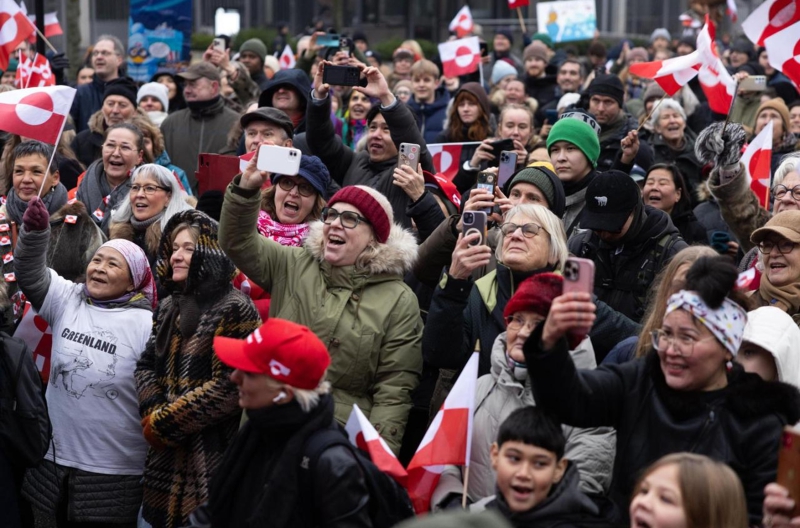
Jan. 17 protests in Copenhagen. Photo by Jacob Crawfurd
The peaceful, prosperous little Scandinavian state hugged by the Baltic and North Seas has long played a crucial but highly discrete role in world politics. Now it finds itself at the center of global attention.
“I simply have no idea,” is an answer one rarely gets from an expert accustomed to distributing their commentary to the media, but this is the candid response The Insider received when asking not one, but four of the most prominent international relations analysts in Copenhagen why Denmark cancelled its participation in the Davos World Economic Forum at the last minute. Apart from the obvious speculation that Danish delegates do not want to run into Donald Trump, who is expected to show up there, there is the fact that the current situation is simply baffling.
“Is it a signal to the U.S., to the other countries?” muses one expert out loud. Another wonders if the Danish delegation “wants to send a confrontational signal to Trump or just feels unprepared to face him.” A diplomatic source eventually tells us that “the foreign affairs minister had never planned on attending, so there is no cancellation here — as for other participants, you have to ask them.”
Anyone tuning in to Danish radio last week would have been surprised to hear reporting of global significance in place of, say, the story of a provincial primary school whose toilet seats turn out not to be low enough for small children to comfortably sit on (a real example of a scandal that shook the country in recent years). Instead, last week, Danish media were on a hysteria loop, exclusively focused on the escalation between Donald Trump — who vowed to “get” Greenland “one way or the other” — and the Danish government — which was scrambling to put forward a diplomatic response while simultaneously stepping up its military posture around the island dependency. The emotion was palpable: radio hosts struggled to find their words, and reporters posted in front of the White House stuttered when describing the black car driving Danish officials into the lion’s den for an audience with Marco Rubio and JD Vance. “Fateful” was the word on all lips. A “fateful day,” a “fateful meeting.”
Last week, Danish media focused on the escalation between Donald Trump — who vowed to “get” Greenland “one way or the other”
And it wasn’t just a media bubble. Denmark was holding its collective breath. “I and everyone I know have been hooked on the newsfeed,” a Danish passerby told The Insider on the streets of Copenhagen. “It does feel like a historic moment, and it is quite stressful. But it’s also so absurd. All these years we have been told to be afraid of one tyrant, Vladimir Putin. Now there is another one, Trump, and he is supposed to be our friend. But he is threatening to attack us. It’s just bizarre.”
It took some time for the full import of the crisis to reach international media. Still shocked by the abduction of Venezuela’s Nicolas Maduro, the world was looking at the Greenland power play as something abstract — far away and much less spectacular than what Trump has wrought in Latin America or Iran. For their part, Danes who had always been afraid principally of their big Eastern neighbour in Moscow were now looking in shock and fear at their hitherto ally in Washington.
Greenland is the largest island in the world, mostly covered by ice. It’s been a dependency of the Kingdom of Denmark since its colonisation in the eighteenth century (alongside the Faroe Islands and, previously, Iceland, which severed all ties to Copenhagen in 1944). Greenland’s relationship with Denmark has been tumultuous. Nuuk obtained home-rule in 1979 and self-rule in 2009, denoting various degrees of autonomy within the Kingdom, but the territory’s foreign policy and defense remain the remit of Copenhagen. Greenland exited the European Union in 1985 while maintaining its affiliation with EU member Denmark, and its relationship with the EU is still ruled by an ad hoc ensemble of special dispositions — such as the right to export the product of their traditional fishing and hunting. Struggling with social and economic issues in spite of an immense and unique natural resources base, the island receives large subsidies from Copenhagen each year, a lifeline that partly explains why it has never opted to secede.
Struggling with social and economic issues in spite of an immense and unique natural resources base, Greenland receives large subsidies from Copenhagen
Within the Danish political class, there has been a quasi-total, if slightly muted, consensus for a while now about granting Greenland its independence the minute officials in Nuuk actually ask for it, but there will still be a sigh of regret the day that happens. Greenland is Denmark’s ticket into the elite club of Arctic powers, the only reason Copenhagen has been able to talk at eye-level with Moscow and Washington on circumpolar issues.
In recent years, Greenland has been the object of low-key geopolitical tensions. Some Chinese investments (in mining and airports) were blocked by Copenhagen, which swooped in with its own funds in what is best described as a last-minute panic about the Asian colossus getting too strong a foothold on this vast island populated by merely 57,000 inhabitants. Copenhagen actually coped with that potential threat itself, and it could do so because Greenland is not actually a key weak point for the Western security architecture. Trump’s claim that the massive, icy island is surrounded by Russian and Chinese ships is simply not true. Such ships would have very little to do there.
Trump’s claim that the massive, icy island is surrounded by Russian and Chinese ships is simply not true
For Mikael Thiesen, the director of a Danish security company with a presence from Ukraine and the Middle-East all the way up to Greenland, it is clear that Trump’s ambitions have little to do with military security. “The U.S. has no understanding and no trust toward the leadership of Greenland. They probably fear that they will massively let in Chinese and Russian investors as soon as they become independent. This whole play is about ensuring that Greenland will never get its independence: either it stays with Denmark — and Denmark controls it more seriously — or the U.S. takes it.”
The current spat between Denmark and the U.S. is not about military access to Greenland. The U.S. has enjoyed such access since the Second World War, and a 1951 treaty granted America essentially unrestrained access to deploy troops, equipment, and infrastructure on the island. At its height in the 1950s U.S. deployment on Greenland reached 10,000 troops manning several bases plus distant early warning stations. By the early 2000s, in line with the changing global security picture, Washington had drawn its personnel on the island down into the few hundreds. However, Trump is entirely free to step it up again — lawfully — under the current bilateral framework, should he wish to do so.
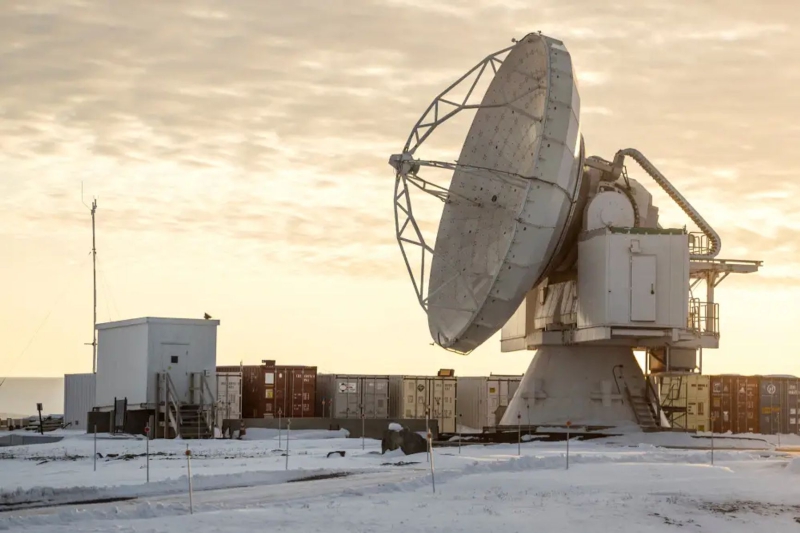
“The protection of Greenland was never about boots on the ground,” explains a senior official in Copenhagen, who asked not to be named. “This is not where our intelligence expects a possible invasion by Russia. It would not make sense.” Denmark has advertised its military investments in the Arctic, earmarking several billion euros last year, but there is little clarity regarding which potential adversary is supposed to be getting the message. “This is mostly about signaling — both to Russia and China, and to our NATO allies — that we’re taking things seriously,” says the official.
Trump can flatter himself with his own social media posts. In fact, his successive short public utterances in recent weeks are the reason that the Danish Ministry of Defense started sending troops to Greenland on Jan. 12 — before confidentially briefing Parliament about it on Jan. 13 and conceding a laconic explanation to the press. According to Mikkel Rynge Olesen of the Danish Institute for International Studies, the ambiguity was carefully maintained: “if you are smart, you say that it is because you’ve listened to the U.S. warnings about Russian and Chinese threats … but the real purpose is to show the Americans that [Denmark and its allies] are committed to protecting Greenland’s integrity, also against the U.S.”
According to Mikael Thiesen, the deployment is part of plans that had already been approved and paid for: “They might have hurried it a bit and presented it as something special, but no, it is not an extraordinary measure.” Another source within the security apparatus, however, carefully countered that, “It is not that simple.” In fact, the general discourse has shifted from one day to the next, reflecting the complete confusion in which both the Danish population and its decision-makers find themselves.
Could there be a military confrontation between transatlantic allies in Greenland? Senior officials consulted separately give a nuanced answer: “There is no question that Denmark could not resist or respond to an attack by the U.S. I mean, our gear comes from the U.S., they could shut us down even before a battle started.” The deployment of small military contingents from allied countries — France, Germany, the Netherlands, Belgium, Italy, and the United Kingdom — is seen as largely symbolic, sent to the island so that “then if the U.S. wants to shoot, it will have to kill Western soldiers.” The point is to raise the stakes — the cost of a U.S. intervention — but on the ground there are other scenarios to consider. “What is a very plausible scenario is that there would be a bloodless, quick general staff confrontation that would mark the end of NATO,” says a source close to the Danish Ministry of Foreign Affairs. The tension is palpable. “I would not describe it as panic,” says another official, “more like confusion and expectation. We are basically ready to give Trump anything he wants, but it’s unclear what that is.”
“Our gear comes from the U.S. They could shut us down even before a battle started”
Denmark has experience facing tyrants — none of it pleasant. In World War II, the little country decided to lay down its arms and let the Germans in after just a few hours of battle. Denmark shipped most of its Jewish population to Sweden and let itself be occupied for the remainder of the war. It did not participate in the liberation of Europe. “The shame never entirely went away,” says a foreign policy official, and it explains why Denmark gave the U.S. free rein in Greenland after that.
Since then, Denmark has been a loyal ally of the U.S, with then-Prime Minister Anders Fogh Rasmussen fully backing U.S. intervention in Afghanistan in 2001. Denmark then committed soldiers to Iraq. In both military campaigns, the small Scandinavian country was among the nations with the highest casualties per capita. This has become such a hallmark of Danish identity that, under the current circumstances, most people on the street bring it up after one or two minutes of conversation.
Denmark has been a loyal ally of the U.S, with Prime Minister Rasmussen fully backing U.S. intervention in Afghanistan in 2001
More concessions were to come. From the mid-2010s onward, Denmark committed to the F-35 fighter jet program led by U.S. defense giant Lockheed Martin, then separately bought several of these expensive flying toys out of political considerations rather than any rational cost or efficiency calculus. The procurement was fraught with tension, and unlucky contractors in Europe were well aware that they had lost not based on the merits of their product, but out of favoritism. Nevertheless, Copenhagen came out satisfied with its own show of loyalty.

It didn’t stop there. Since February 2022, Denmark has contributed ten billion euros in military support to Ukraine. “Denmark makes a quantitatively and qualitatively different contribution from anyone else,” says a senior Ukrainian official.
It remains unclear what the tensions with Washington will mean for Copenhagen’s relationship with Kyiv. “I don’t think the Greenland crisis will directly affect our action in Ukraine, nor our cooperation with the U.S. on the ground,” says a Danish foreign policy source. “These are separate processes. Daily operations in Eastern Europe or the Baltic Sea have nothing to do with the diplomatic process currently unwinding.” Still, in the longer term, other insider sources admit that Trump’s style makes it all but impossible to predict what might come next. Civil servants are reluctant to project themselves into a future where NATO is dismantled, and a Ukrainian senior security official even wonders, “why do the Danes keep buying American military hardware?”
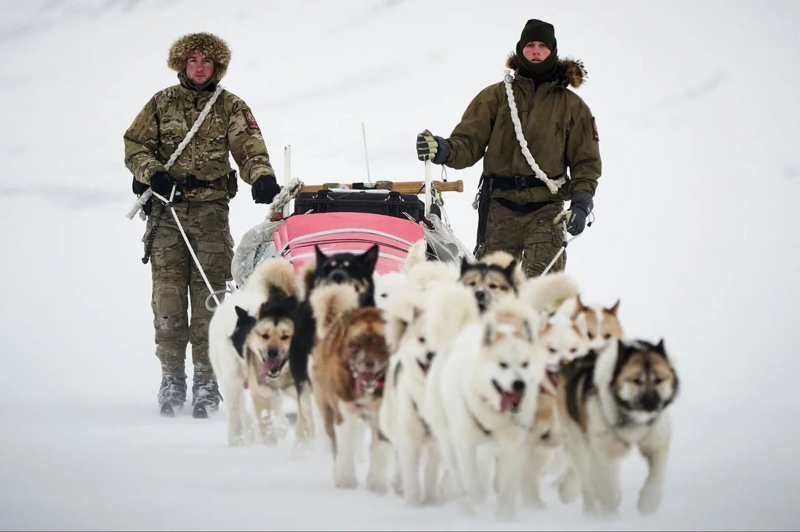
With that long transatlantic history in mind, security company director Mikael Thiesen (who spends a lot of time in Ukraine near the front line) finds it “shameful to see how Trump and the US media now talk about Denmark, with such disdain, such mockery, such ignorance.” A few days earlier, Trump had derisively said: “You know what Denmark did recently to boost up security on Greenland? They added one more dog sled. It’s true. They thought that was a great move.” That particular disrespect for Denmark’s Sirius Patrol elite unit fueled resentment for days in Danish media.
Mostly though, the Danes are worried. “We are a small country,” says a Danish security official. “We have relied on the U.S. and on NATO for our security. It is absolutely beyond doubt that we cannot defend ourselves alone. If we cannot count on this security architecture, the whole global threat assessment should be revised.” The Danish Defense Intelligence Service did not wish to comment on whether such revision was underway, and in its official comment to The Insider, the Ministry of Defense declined to address the potentially shifting dynamics in the alliance, emphasising continuity:
“There is a shared understanding among the Kingdom of Denmark and allies that NATO must assume greater responsibility for security in the Arctic and the North Atlantic. We will therefore strengthen our military presence in Greenland and work closely with NATO allies to ensure a more permanent presence and more joint exercises in the Arctic. This is a natural continuation of the increased presence and exercise activity that we initiated in 2025. The purpose of deploying soldiers and capabilities to Greenland is to continue our existing efforts to train the NATO alliance’s ability to operate under the unique Arctic conditions.”
Mildly comforted by the European show of support for Denmark and Greenland, Danish officials do not fool themselves: these responses are about NATO, not Denmark. Neither Paris, nor Berlin, nor London wants to watch the alliance unravel without a last attempt at saving it from Trump’s assaults.
Neither Paris, nor Berlin, nor London wants to watch the alliance unravel without a last attempt at saving it from Trump’s assaults
The new Arctic Sentry initiative, announced over the weekend by the UK and Norway, echoes the Baltic Sentry operation launched in January 2025 in response to the damaging of underwater infrastructure attributed to Russian ships. It is presented as a NATO initiative, but in the details, it is designed as something that could survive a shift in frameworks should Europe finally take charge of its own defense — whether out of inclination or out of necessity.
Commentators in Danish media have suggested that the current crisis has brought Denmark and Greenland closer together, dampening any separatist aspirations. According to Greenlandic politician Julie Rademacher: “Greenlanders in both Greenland and Denmark are very worried. Many are developing anxiety and intense fear, and many actually cannot sleep. They wake up with nightmares. Kids and families with kids are unsettled and considering moving from Greenland to a safer life in Denmark. This is a very hard time to be a Greenlander.”
“This is a very hard time to be a Greenlander”
She adds, however, that support from the wider world has provided a silver lining amid the storm clouds: “Many Greenlanders have felt the cohesion and support from Danes as well as Germans, Americans, Europeans and people from all the world … This truly means a lot to many in Greenland, where most have generally not been in favour of militarisation but, in the current situation, as many Greenlanders have written on social media, they are happy about the European troops deployed, it makes them feel safer.”
The current crisis comes early on in the reign of a young king, Frederik X, who ascended to the throne after his mother’s abdication in 2024. Queen Margaret’s five-decade rule had been marked by greater distance from the overseas territories, but King Frederik has made his spiritual bond to the royal dependencies clear from the start. Having completed his military service in Greenland, he gave two of his children Greenlandic middle names and once stated that he would have liked to be a Greenlander, earning himself the nickname “King of Snows” on social media. “While the Danish royalty is constitutionally prevented from playing an active role in politics, the population is receptive to their messages and, when a King wishes in his New Year’s speech for stronger cohesion between Denmark and Greenland amidst heightened geopolitical tensions, many people listen,” says Mikael Thiesen.
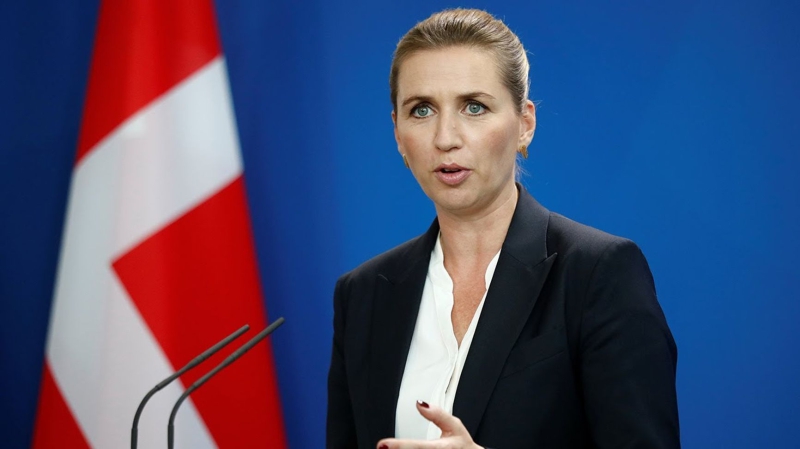
The Greenland crisis does indeed have a significant domestic political dimension in Denmark proper as well. The little parliamentary regime faces general elections later this year, and opinion polls do not bode well for the current prime minister, Mette Frederiksen, whose coalition has trudged through multiple crises —- from Covid to Ukraine — and scandals.
Her foreign minister, Lars Løkke Rasmussen, who comes from a different party and previously served as prime minister, also stood low in the polls before the Greenland affair. Among the opposition, muted voices contend that the escalation is at least as much steered from Copenhagen as it is from Washington: “We could have left Trump to his posts on X,” says a political contender who asked for anonymity. “Instead, the government rushed to obtain an audience at the White House last Wednesday, giving the affair more weight than it would have had.” On Danish radio last week, journalists even speculated that while all eyes were on Greenland, the government had free rein to pass all sorts of unpopular measures.
Most politicians, however, shy away from publicly criticizing the government, waiting to see how things will develop and which way voters will lean. This striking silence in a country used to lively political debate and uninhibited cross-fire between political parties offers further proof of just how extraordinary the current crisis is. Only the Danish People’s Party’s leader, Morten Messerschmidt, has put himself in the line of fire by maintaining that Denmark was wrong to initiate the recent talks with Trump’s loyal representatives.
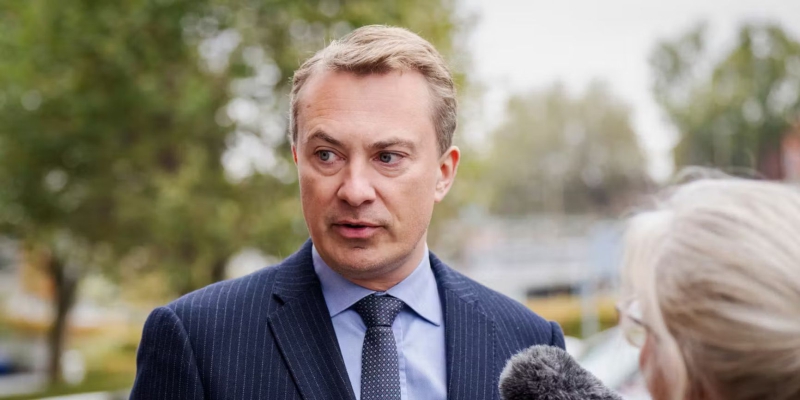
Still, the Greenland crisis has produced a palpable rally-around-the-flag effect. Some citizens were seduced by the foreign minister’s diplomatic style, declaring him to possess a “true statesman’s wingspan.” On Jan. 15, elated journalists on public radio dedicated an entire program to Rasmussen’s skills and his endearing habit of pulling up his socks before important meetings. Commentators enthusiastically described how he came out of the White House “smoking a ciggy” and fist-bumping the Danish ambassador. “There is a widespread view that Denmark could not have sent anyone better into the arena,” says a former spin doctor. “Ironically, Rasmussen was at an all-time low in terms of political credibility before this happened.” As expert Mikkel Runge Olesen notes: “Immediately after the Thursday meeting, the common assessment is that it did not go too badly. But you have to keep in mind that expectations were very low. Observers had been bracing themselves for a Zelensky-style you don’t have the cards nightmare scenario.”
Some mock the Danish government’s naivety. Rasmussen came out triumphant from his meeting with JD Vance and Marco Rubio, proudly announcing plans for a bilateral working group to deal with the crisis. “You don’t do more Danish than that,” a Danish voter derisively told The Insider. In the days following the meeting, statements and social media posts from Trump and his entourage made it perfectly clear that the two parties had not come to a consensus.
Until Sunday, doubts remained in Copenhagen as to Trump’s endgame. Foreign policy sources still maintained that the whole spectacle was a (potentially effective, albeit terribly annoying) means of “bullying Denmark into stepping up its presence in Greenland and making some other concessions.” But the announcement of new U.S. tariffs on nations showing support to Denmark and Greenland has reduced the ambiguity. While European policy-makers continue to officially say that their Arctic deployment is a NATO project aimed against Eastern threats, their reactions to Trump’s tariffs show that both sides are in fact on the same page — this is an escalation of confrontation between the White House and Washington’s erstwhile NATO allies. Last week, Danish media described current events as “perhaps the worst national political crisis” since the loss of Schleswig to Prussia in 1864. Today, the whole of NATO looks on at what could be the alliance’s last adventure.