

Sarah Starkey, CC BY 3.0
When the New START Treaty between Russia and the U.S. expired on Feb. 5, it marked the first time since the 1970s that no mechanism for limiting the nuclear arsenals of Moscow and Washington was in place. Meanwhile, Russia continues to test nuclear delivery systems under combat conditions in Ukraine, launching the intermediate-range Oreshnik ballistic missile at targets near the Dnipropetrovsk (Nov. 21, 2024) and Lviv (Jan. 8, 2026) regions. Other examples of Putin’s new “wonder weapons” include the nuclear-powered Burevestnik missile, the nuclear-armed unmanned torpedo Poseidon, the Sarmat intercontinental ballistic missile, the Avangard hypersonic glide vehicle, and the air- and sea-launched hypersonic missiles Kinzhal and Zircon. However, despite high praise from pro-Kremlin media, these systems have proven to be of little practical value, either falling well short of hyped-up promises, or proving to be altogether unusable. In fact, they have actually made Russia less secure: by expanding the bounds of what is permissible in the nuclear realm, Moscow is giving its American adversary the green light to test weapons of a similar class.
Since late October 2025, Vladimir Putin has been regularly reporting (1, 2, 3) on Russia’s successful development of state-of-the-art weapons that, he says, are unrivaled in their technical and tactical characteristics. If one were to believe Putin’s words, Russia’s achievements in weaponry would indeed be staggering:
- A task once considered “unattainable in the near historical future” has been accomplished.
- “Security and strategic parity have been ensured for decades ahead — one can confidently say for the entire 21st century.”
- The innovations will find application in the country's “national economy,” the lunar program, Arctic exploration, the electronics industry, and supercomputer development.
- “We have accumulated a true treasure trove of new materials, technologies, unmanned systems, software, and digital solutions and components.”
All these achievements were named in reference to the Burevestnik missile and the Poseidon underwater vehicle projects. Alongside them, Putin regularly mentions other “unparalleled” weapons. At an expanded meeting of the Russian Defense Ministry board in December 2025, he announced the deployment of the Oreshnik mobile ground-based missile system on combat duty and talked up a weapon that “no one else in the world possesses” — the Avangard hypersonic glide vehicle.
The first time Putin spoke about Russia’s assortment of new “wonder weapons” was in 2018, during an address to the Federal Assembly. He accompanied his speech with animated clips depicting the potential use of the missiles while hinting that he was willing to negotiate with Russia’s Western partners on an “updated, forward-looking system of international security and sustainable civilization development.”
Since then, Burevestnik, Poseidon, and Avangard, as well as the Sarmat intercontinental ballistic missile and the air- and sea-launched hypersonic missiles Kinzhal and Zircon, have consistently served as instruments of Kremlin power. During the war in Ukraine, the Oreshnik intermediate-range ballistic missile was added to Putin’s arsenal of “wonder weapons.”
Since 2018, Putin’s “wonder weapons” have served as a tool of Russian foreign policy
The problem is that, despite the rhetorical claims of outstanding combat capabilities, the real military value of these “Putin‑Waffen” remains questionable. The use of Oreshnik and Kinzhal in the war against Ukraine has so far had no meaningful impact on the course of the conflict, and several of the promised missiles do not yet exist in the form of tested and deployment‑ready systems, according to available reports. Yet even in this state, Russia’s “wonder weapons” create threats that the United States and Europe cannot ignore.
Vladimir Putin personally announced the first combat use of the Oreshnik intermediate-range ballistic missile in a “hypersonic, non‑nuclear configuration” in a special address on Nov. 21, 2024. According to him, the Oreshnik had been launched at Ukraine “in response to the use of U.S. and British long-range weapons on Russian territory” — in other words, as a signal to Kyiv's Western allies.
In the Russian leader’s telling, the Oreshnik possesses the power of a kinetic strike comparable to that of a meteorite, enabled by warhead elements that heat up in flight to temperatures matching those on the surface of the Sun:
“As for the missile we used, its destructive elements are quite powerful, heating up to a temperature of 4,000 degrees [°C]. I'm not sure — you can look it up on the Internet — but on the surface of the Sun, I think, the temperature is 5,600–6,000 degrees. So it's comparable to the temperature on the surface of the Sun. The kinetic strike makes a powerful impact, like a falling meteorite. We know from history how and where meteorites fell and what the consequences were. That was enough to create entire lakes, right? What did the Tunguska event result in? It’s widely known. The same goes for our missile. The damage is very serious: everything at the center turns to ash, breaks down into its constituent elements, and objects located three or four — maybe even more — floors below ground level are affected too. And these aren’t just ordinary floors — these are reinforced structures. The force of the strike is colossal.”
The Insider analyzed in detail why Putin’s claims about the Oreshnik’s characteristics are dubious at best. In November 2024, inert warheads were used as the missile’s payload, and despite the emergence of highly impressive footage showing the separation of the warhead with individually guided reentry vehicles (MIRVs) over the city of Dnipro, no significant damage was inflicted on the declared target, the Yuzhmash missile enterprise. Needless to say, satellite images of the site taken after the strike show neither a lake nor buildings reduced to ash.
Nevertheless, Putin was so enamored of the capabilities of the new missile that he first stated — at a meeting of Russia’s Council for the Development of Civil Society and Human Rights, oddly enough — that Russia no longer needed to use nuclear weapons provided that it possessed a sufficient number of Oreshniks. Then, during his year‑end phone-in conference in December 2024, he proposed holding a “high‑tech, 21st-century duel”:
“Let [Ukraine’s Western allies] designate some target to be struck, say, in Kyiv — concentrate all their air and missile defense forces there — and we will deliver a strike with the Oreshnik and see what happens. We are ready for such an experiment.”
In June 2025, at a meeting with graduates of military academies, Putin said that the Oreshnik had “proven itself very well in combat conditions.” A month later, he announced the production of the first serial Oreshnik system and its first serial missile.
The second combat use of the Oreshnik took place on the night of Jan. 8-9, 2026. Unlike the first time, the target was not a strategic enterprise but an aircraft repair plant in Lviv. As before, the strike was declared a “response” to actions by Ukrainian forces — specifically a drone raid on Putin’s residence in Novgorod Region on Dec. 29, 2025 (an alleged attack not substantiated by objective evidence). As in the case of Dnipro’s Pivdenmash plant, there have been no reports of critical damage to the facilities in Lviv — let alone of the emergence of a lake at its site.
According to expert assessments, the Oreshnik missile has limited combat benefits in a non‑nuclear configuration due to its high cost and low accuracy. Moreover, both launches were carried out from the Kapustin Yar test range (although the Russian Ministry of Defense claimed the strike on Lviv had been delivered from a mobile ground‑based system), meaning its use with a nuclear warhead is so far limited to fixed test sites. Mobile Oreshnik launchers still lack the infrastructure necessary for full deployment, suggesting that Russia’s recent announcement that it will be deployed to Belarus under a “combat-ready” status is little more than a political gesture.
Yet even the nominal deployment of the system on Belarusian territory creates a challenge to European security. While it remains unclear how much independence the authorities in Minsk might have when it comes to decisions about the system’s use, in December 2025 the Russian state news agency TASS published — and then retracted — a report saying that the Belarusian authorities could independently determine targets for the Oreshnik.
This past Oct. 26, on a visit to the command post of a military unit fighting in Ukraine, Putin received a report on the successful tests of the 9M730 Burevestnik missile (NATO classification: SSC‑X‑9 Skyfall) from Chief of the General Staff Valery Gerasimov. According to their dialogue, the missile had traveled 14,000 kilometers and remained airborne for 15 hours. Putin made a point of asking whether this was the maximum result that could be expected for the Burevestnik, and Gerasimov readily confirmed that it was “not the limit.”
Because it is propelled by an on-board nuclear power unit, the Burevestnik is often described as a “missile of unlimited range.” In his March 2018 address to the Federal Assembly, Putin described it in the following terms:
“A low‑flying, barely noticeable cruise missile carrying a nuclear warhead, with practically unlimited range, an unpredictable flight path, and the ability to bypass interception lines, is invulnerable to all existing and prospective missile defense and air defense systems.”
Putin announced a “successful test” of the Burevestnik as early as October 2023, and two years later the final stage of the missile’s testing appears to have taken place. Although Norwegian intelligence confirmed a test launch from a range on Novaya Zemlya, no radioactive trace was detected in the aftermath. Still, it cannot be ruled out that Russian engineers managed to solve the problem of contamination caused by the “flying Chornobyl.”
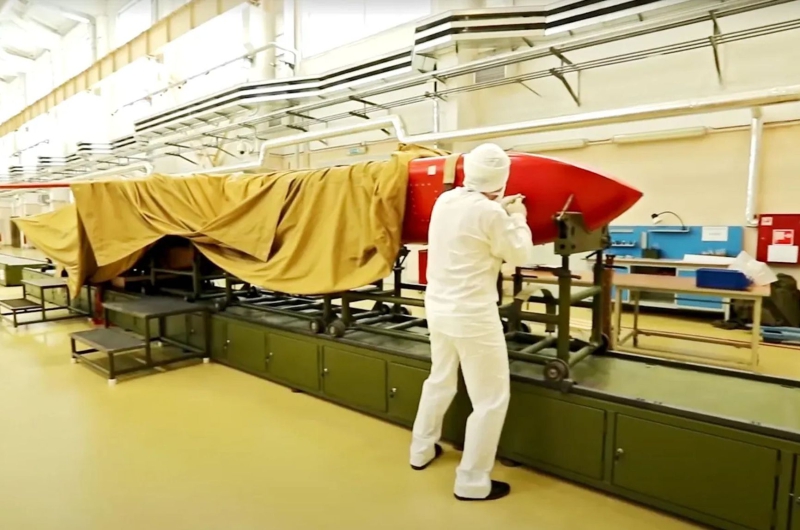
According to some calculations, a system that matches the claimed parameters of the Burevestnik would violate the laws of physics. A similar American project — Pluto, developed in the 1960s — was canceled because the missile was too expensive and too complex to operate.
So far, the greatest threat posed by the Burevestnik has been to Russia’s own population rather than to foreign adversaries. In August 2019, an explosion presumably linked to tests of the missile’s nuclear power unit occurred in the Arkhangelsk Region, killing at least seven people (five died on the spot, while two passed away later from acute radiation sickness). Several others were exposed to significant doses of radiation, which spiked in the Severodvinsk area as a result of the accident.
So far, the greatest threat posed by the Burevestnik has been to Russia’s own population
According to U.S. estimates, out of at least 13 tests that took place between 2016 and 2019, only two were even “partially successful.” Nevertheless, from the Kremlin’s perspective, a missile like the Burevestnik is necessary in a context where the U.S. is expanding its missile defense capabilities. Still, even by Putin’s own account, putting the Burevestnik on combat duty will require considerable adjustments to the available nuclear infrastructure, and potential combat‑use scenarios still need to be “worked out.”
In March 2018, Putin called the future Poseidon (a nameless system at the time) “fantastic”:
“Russia has developed unmanned underwater vehicles that can operate at great depth — at very great depth, I would say — and at intercontinental range at speeds multiple times higher than those of submarines, the most advanced torpedoes, and all types of surface ships — even the fastest ones. They are simply fantastic. They are low‑noise, highly maneuverable, and practically invulnerable to the enemy.”
In October 2025, Putin added the following details to the description:
“The power of the Poseidon far exceeds even that of our most advanced intercontinental missile, the Sarmat… Moreover, in terms of speed and operating depth, there is nothing like this unmanned vehicle in the world, and none is likely to appear in the near future, nor do any means of interception exist.”
The 2M39 Poseidon system (NATO classification: Kanyon) is an autonomous unmanned underwater vehicle (AUV) capable of carrying a nuclear warhead. Russian propaganda regularly uses the Poseidon when making explicit threats — the most famous being Dmitry Kiselyov’s 2022 monologue in which he painted a vivid rhetorical picture of the United Kingdom being plunged into the “ocean abyss”:
“A Russian unmanned underwater robot, the Poseidon, approaches its target at a depth of one kilometer at a speed of 200 kilometers per hour. There is no way to stop this underwater drone. Its warhead has a yield of up to 100 megatons. An explosion of this thermonuclear torpedo off the coast of Britain would raise a giant wave — a tsunami up to 500 meters high. Such a wall of water would also carry extreme doses of radiation. Sweeping over the British Isles, it would turn whatever might remain of them into a radioactive desert, unfit for anything for a long time.”
The Kremlin likely does believe that a “nuclear super‑torpedo” could inflict damage on such a scale, but according to calculations and modeling, an underwater nuclear explosion cannot produce catastrophic radioactive tsunamis. Nor can the Poseidon be tested as a complete weapons system, rather than as separate components.
The Poseidon is incapable of causing anything resembling a catastrophic radioactive tsunami
Moreover, the project appears to be one of the most expensive and resource‑intensive in the modern history of Russia’s defense industry, which is why it is often described as a “never-ending cash-drain megaproject.” In addition to massive investments in research and supporting infrastructure, the Poseidon requires the use of colossal special‑purpose nuclear submarines (SSGN‑type carriers) as launch platforms. During the war against Ukraine, the fleet received the first such submarine, the BS‑329 Belgorod, and two more carrier submarines, the Khabarovsk and Ulyanovsk, are currently under construction.
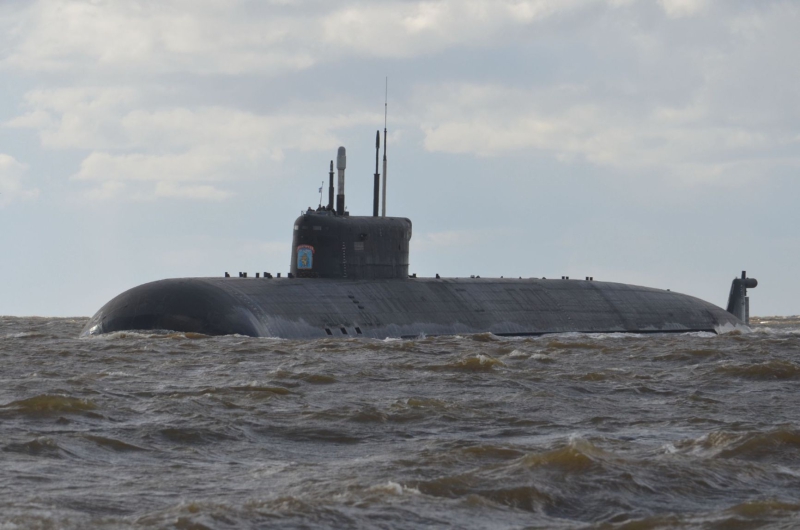
Theoretically, a system like the Poseidon represents a new class of nuclear weapon, combining the functions of an unmanned underwater vehicle and a torpedo. However, there is still no confirmed evidence of its existence as a fully operational system.
Putin himself stated that, so far, it has only been possible to launch Poseidon from its carrier submarine and then activate the vehicle’s onboard nuclear power unit, which kept the torpedo going for “a certain period of time.” Pavel Luzin, a visiting scholar at the Fletcher School at Tufts University and a senior fellow at the Jamestown Foundation, told The Insider that the Poseidon should be regarded not as a weapon, but as a deep‑sea robot.
In his Mar. 1, 2018, address to the Federal Assembly, Putin described the Avangard as follows:
“Unlike existing types of warhead delivery vehicles, this system is capable of flying in dense layers of the atmosphere at intercontinental range at hypersonic speed, exceeding Mach 20. While moving toward its target, the glide vehicle…performs deep maneuvering — both lateral (over several thousand kilometers) and in altitude. This makes it absolutely invulnerable to any air and missile defense systems… It moves toward the target like a meteorite, like a burning sphere, like a fireball. The temperature on the surface of the vehicle reaches 1,600–2,000 degrees Celsius, while the glide vehicle remains reliably controllable.”
Later, Putin commented that the hypersonic glide vehicle resembles an Eskimo Pie — a chocolate-covered slab of vanilla ice cream that was invented in South Dakota in 2021 and became popular in the Soviet Union — in its characteristics:
“The first gliding flight vehicles were developed as early as the 1980s. We called this one Avangard… In the late 1980s, we attempted to create such a system. We failed because we had no suitable materials — that was the issue. It melts in flight like an Eskimo Pie, yet control signals still get through. These are the results enabled by the new materials.”
The Insider has examined which known laws of physics such a system would come dangerously close to violating. First, it is unclear how to maintain “reliable control” over a warhead moving within a plasma cloud impermeable to any external signals. Second, such a construction would struggle to accelerate to speeds exceeding Mach 20 after entering dense layers of the atmosphere — and its stated maximum speed is an almost inconceivable Mach 27, roughly 33,000 km/h (20,505 mph).
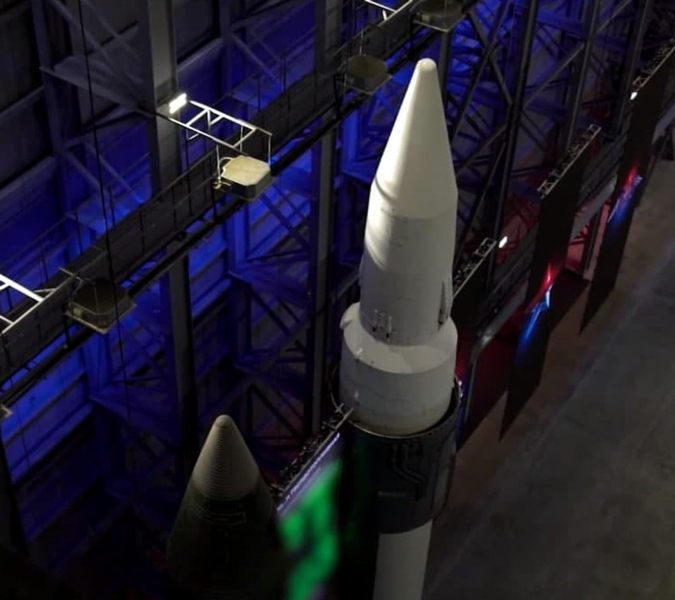
The 15P771 Avangard missile system consists of a booster missile — namely, the modernized UR‑100N intercontinental ballistic missiles (NATO reporting name SS-19 Stiletto) — and the 15Yu71 hypersonic glide vehicle. Officially, the system’s testing cycle was completed after its fifth launch on Dec. 26, 2018. Since 2019, Avangard systems have been entering service with the 13th Missile Division of the Strategic Missile Forces. As Luzin stressed to The Insider, even if the Avangard’s real characteristics match the declared ones, actual use of the weapon “makes little sense.”
The 15A28 Sarmat intercontinental ballistic missile is a truly unique military system: very few, if any, strategic weapons are adopted and put on combat duty after only a single test. Officially, this test took place in April 2022, and no further attempts have been reported since. Putin observed the launch remotely, stating at the time that “there is nothing like it in the world, and there won’t be for a long time.” Naturally, the successful missile test was treated as a signal to the “collective West”:
“This truly unique weapon will strengthen the combat potential of our Armed Forces, reliably ensure Russia’s security from external threats, and make those who try to threaten our country in the heat of rabid, aggressive rhetoric think twice.”
It was the Sarmat that, in December 2022, inspired what may well go down in history as the most cliche-ridden music video of all time. In it, camouflage-clad State Duma deputy Denis Maidanov sings his patriotic ballad “Sarmatushka,” in which the missile is described as “a mighty warrior with complex electronics.”
In addition, Russian cities regularly host motor rallies of so‑called “Sarmatmobiles”: cheap Russian compact cars carrying a mock‑up of a Sarmat missile — emblazoned with the words “To Washington!” — on the roof. When one of the “Sarmatmobiles” was involved in a traffic accident in December 2023, the news drew the attention of federal media.
Six launches were planned as part of the Sarmat flight‑design testing program: one in 2021 and five in 2022. Although only one test had been reported up to that point, in February 2023 Putin announced that the missile was entering combat duty, and in September of the same year Yuri Borisov, the head of the Roscosmos space agency, reported that the system had been put “on duty.”
However, in November 2025 Putin said that the Sarmat still had to be put through trial combat duty before being placed on full combat alert. Indirect evidence suggests that several missile tests during this period failed.
Several Sarmat tests since 2022 have ended in failure
According to U.S. officials, during Joe Biden’s visit to Ukraine in February 2023, Russia failed yet another test launch of the Sarmat. In November of the same year, a typical flight‑restriction notice was issued for the Plesetsk Cosmodrome ahead of upcoming tests, but the launch did not take place (presumably for technical reasons). In September 2024, satellite images emerged showing the aftermath of an explosion in a Sarmat silo launch facility at Plesetsk, prompting OSINT specialists to conclude that the missile had detonated inside the silo. Finally, in November 2025, a missile exploded at the initial stage of flight at the Yasny Launch Base in Orenburg Region. The likelihood is high that this was yet another failed Sarmat test.
In short, the Sarmat missile (intended to replace Soviet-era Voyevoda missiles) still requires technical improvement, while the service lives of the Voyevodas expired long ago yet have been repeatedly extended (notably, the full maintenance of these missiles became impossible after 2014 due to the rupture of ties with their developer, Ukraine’s Pivdenne Design Bureau). Under these conditions, Russia needs either to quickly resume the Sarmat testing program or redistribute nuclear warheads from the Voyevodas to other available delivery systems.
The 9‑A‑7760 Kinzhal missile (NATO classification: AS‑24 Killjoy) has also unsurprisingly been extolled by Putin as a “one-of-a-kind” weapon: a “high‑precision hypersonic missile system” with a claimed speed of Mach 10 and air launch capability that, in his view, “is guaranteed to penetrate all existing…and prospective air and missile defense systems.”
However, during the war in Ukraine, it became clear that the Kinzhal's actual performance is far from what Putin claimed.
First, the Kinzhal missile has not lived up to its “high-precision weapon” fame. Satellite images of strikes on the Starokostiantyniv air base in Khmelnytskyi Region — which hosts F-16 fighter jets transferred to Ukraine — show impact craters hundreds of meters away from the reinforced concrete shelters housing the aircraft.
Second, the Kinzhal does not meet the criteria of a hypersonic missile, since it travels at the relevant speeds only along part of its flight path (and, apparently, without the ability to maneuver at those speeds). According to Ukrainian military experts’ assessments, in the terminal phase of flight, the missile moves at a “sub-hypersonic” speed of only Mach 3 (hypersonic speed is generally defined as Mach 5 and above).
Finally, Ukrainian air defense forces using U.S.-made Patriot systems in the PAC-3 configuration have repeatedly reported intercepting Kinzhal missiles. The first such interception occurred in May 2023 over the Kyiv Region.
The 3M22 Zircon hypersonic missile (NATO classification: SS-N-33), a sea-based system with a range of 1,000 km and a speed of Mach 10, is described by Putin as a weapon capable of “carrying out strategic tasks.” Kremlin propaganda places the missile alongside other “wonder weapons,” portraying it as “intercept-proof” and “changing the principles of naval strategy,” with a flight time of “five minutes to Washington.” (The Insider has explained why Zircon is unlikely to qualify as a “wonder weapon.”)
Theoretically, such a missile poses a significant threat to any surface targets: modern radars can detect it at a distance of roughly 12–14 nautical miles, which at a speed of Mach 5–6 leaves a ship’s air defenses with only about 15 seconds to react. In practice, however, according to Ukrainian assessments, the Zircon travels at about Mach 5.5 during the cruise phase, briefly accelerates to Mach 7.5 before entering the target area, and then slows to around Mach 4.5 in the terminal phase of its trajectory.
The Russian Navy has relatively few submarine and surface carriers compatible with the Zircon — and most importantly, it lacks the capability to obtain targeting data. Moreover, the limited number of strikes carried out with the missile against Ukrainian territory have reportedly been launched not from ships or submarines, but from modified ground-based launch systems in Crimea.
Putin’s “wonder weapons” have so far had no noticeable impact on the course of the war in Ukraine. Neither the demonstrative Oreshnik strikes, nor the occasional launches of Zircons, nor the comparatively regular launches of Kinzhals have brought about anything resembling a turning point in the fighting (while other categories of “Putin-Waffe” are not suited to conventional conflict at all).
As for strategic stability, the “one-of-a-kind” weapons are more likely to harm Russia’s national security in the long term. With the formal expiration of the New START treaty on Feb. 5, (the agreement had largely lost its practical value after mutual inspections ceased during the COVID-19 pandemic in 2020, and Putin demonstrated its lack of practical importance whenhe announced the suspension of Russia’s participation in February 2023), the assorted “wonder weapons” will pose a significant obstacle to concluding any new agreement to replace it.
“One-of-a-kind” weapons undermine Russia’s national security in the long term
A new arms control instrument would have to include criteria for assessing a wide range of potential future developments: accounting for new types of delivery systems like the Burevestnik and Poseidon, responding to resulting changes in the doctrinal approaches of potential adversaries, and implementing countermeasures in response to the development of similar classes of weapons or means to counter them. Rather than serving as tools of deterrence and power projection, these Russian inventions not only raise doubts about their claimed technical capabilities — they have already prompted the United States to make preparations for the resumption of nuclear weapons testing.