
The recently released film A House of Dynamite (2025) and the new season of The Diplomat were produced against the backdrop of Russia’s full-scale war against Ukraine. Both reflect a new portrayal of Russia in Western political entertainment — one that echoes old Cold War-era depictions of Soviet spies and soldiers. But while earlier Hollywood portrayals of Russians were often caricatures, contemporary filmmakers at times capture today’s realities more effectively than politicians or journalists do.
Western cinema’s portrayal of Russians goes back a century, most of it shaped during the Soviet era — from the debauched White émigré Serge Karamzin in Erich von Stroheim’s 1921 silent film Foolish Wives to the ruthless boxer Ivan Drago in Rocky IV.
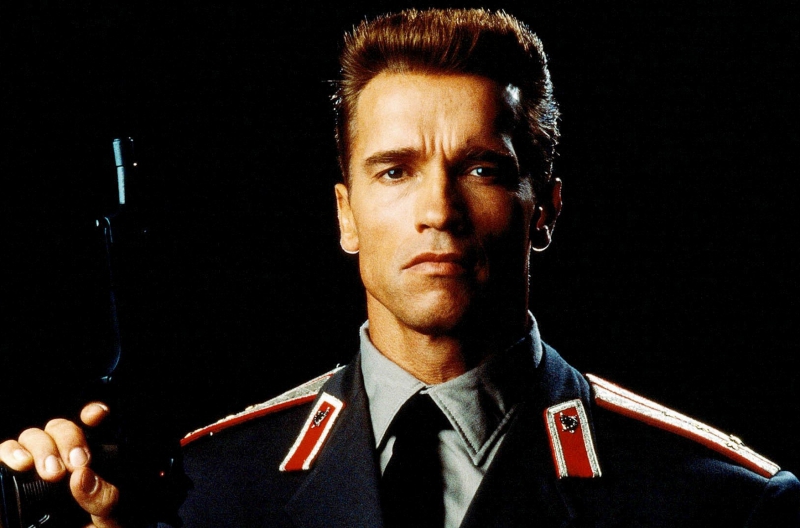
After the Soviet collapse, Western films began introducing positive Russian characters: Arnold Schwarzenegger as Moscow police captain Ivan Danko in Red Heat, the Russian cosmonaut Lev Andropov in Armageddon, the sniper Vasily Zaitsev in Enemy at the Gates and the Soviet submarine commander Alexei Vostrikov in K-19: The Widowmaker, played by Harrison Ford as a brave, principled officer trying to avert nuclear war.
The death of the “Russian soul”
Beginning in the 1990s, Western cinema tried to look past the bear-like stereotype and explore the complexity of the so-called “Russian soul.” Characters in this mold might remain unshaven or gruff, but they were capable of courage and even heroism. By the 2010s, villains on screen were increasingly depicted as Chinese, though more commonly as Arab or even North Korean. As of 2025, however, the cycle has come full circle: Russian characters are once again expected to bring nothing good. They are portrayed as blind executors of the state’s will, and searching for their humanity is pointless.
This shift began with Red Sparrow (2018), where ballerina Dominika Egorova, played by Jennifer Lawrence, becomes a superspy in a “sparrow” training school — and, even in bed with her target, repeats the mantra, “Your body belongs to the State.”
As of 2025, the cycle has come full circle: Russian characters are once again expected to bring nothing good
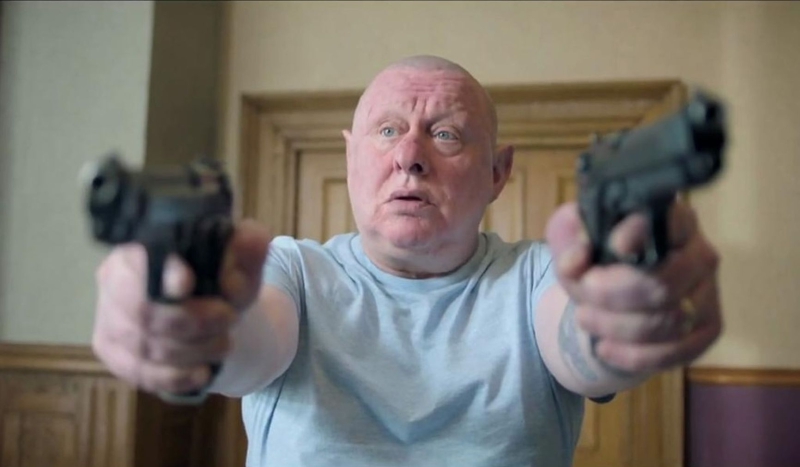
The newest iteration of the “Russian” is pushed to absurdity in the British comedy series Mandy. In episode four, a man named Sergei appears at Mandy’s door in a tracksuit — a nod to the real-life Salisbury cathedral-tourist GRU operatives who poisoned a defector Sergei Skripal using a weapons-grade chemical nerve agent in 2018. The Sergei in Mandy wants to rent a room, but his character is stripped of any mystique. He does not even hide the fact that he is a Russian contract killer, saying so outright — albeit in Russian, which Mandy doesn’t understand — while explaining that he needs to marry a British woman, use her, and then eliminate her. Sergei is portrayed as so monstrously dim that his vile charm almost becomes appealing to the heroine.
In the 20th century, Western cinema still maintained the illusion that a Soviet citizen could be changed by circumstances — as in Ernst Lubitsch’s Ninotchka, where a rigid commissar played by Greta Garbo softens after experiencing bourgeois life. Now, however, such a transformation would be tantamount to the “death of the Russian soul” on Western screens: filmmakers no longer see any point in dealing with “ordinary” Russians. In the interests of global security, only their leaders matter.
A dark force
The plot of A House of Dynamite is simple and catastrophic: someone has launched a nuclear missile at the United States. An interception fails, and the rocket will hit Chicago in 18 minutes. Who launched it? During the Cold War, the Soviet Union was always the central antagonist on screen. Now Russia is merely one piece of a faceless collective threat, alongside Iran, North Korea, and China. Any one of them could have done it, meaning it hardly matters who concretely is to blame. The threat comes from what the film frames as a single black hole of totalitarianism.
Russia is merely one piece of a faceless collective threat, alongside Iran, North Korea, and China
The enemy appears only once — in the face of Russia’s foreign minister on the other end of a crisis hotline. He is shaken and insists that Russia is not responsible, but he warns that his country must respond to NATO bombers that are already airborne. The exchange is telling: with perhaps ten minutes left before possible annihilation, the conversation departs from diplomatic formality. Everything is reduced to one human element — asking the other side to “take their word for it” and confirm that the missiles aren’t heading toward Russia or the United States.
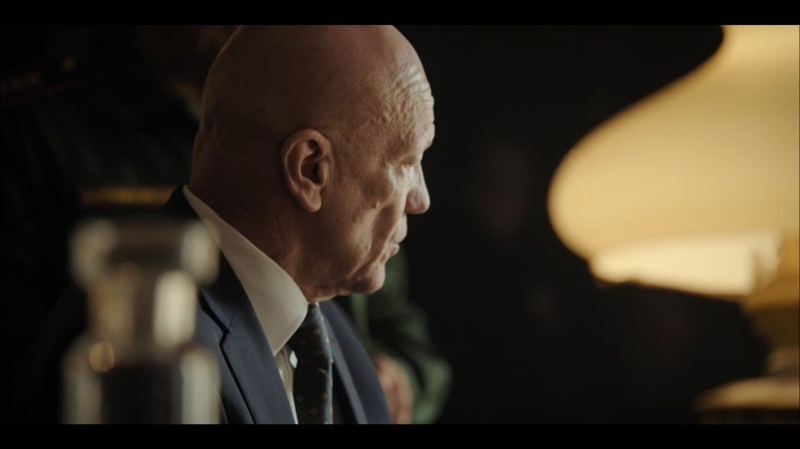
A negotiator, at a moment of peak tension, says, “My wife is six months pregnant.” Then he hesitates. Should he be saying such a thing to a Russian foreign minister — a grim, unsentimental figure who trusts no one? Especially now, with both sides on edge, “a hand on the button,” and the defense minister standing nearby? The value of that honest admission is small, even if neither side is lying — it is something both understand. The exchange ends with only a brief flash of humanity. As the filmmakers hint, it may be the last one.
A fragile balance
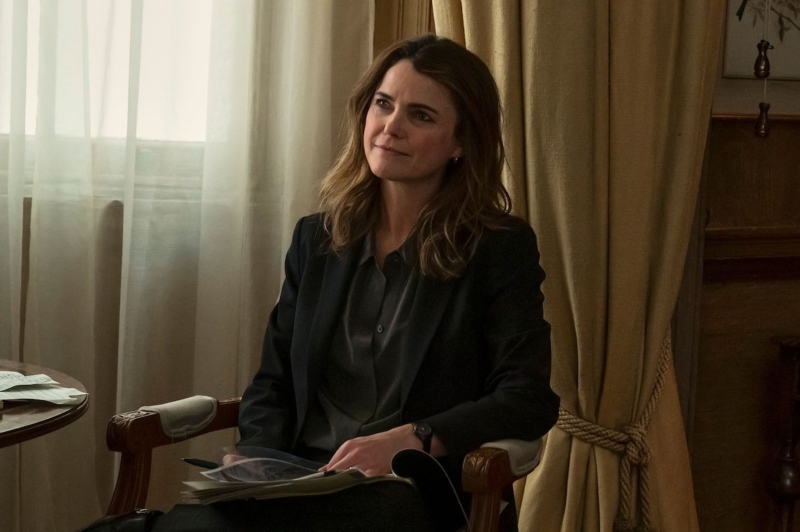
In The Diplomat, a British vessel is attacked in Asian waters. It might be Iran that did it, but Russia also can’t be ruled out. At one point, someone asks, “So who [bombed the ship]? Russia, China, ISIS?” — delivered as if the possibilities were equally plausible. But rash action risks escalation, and someone has to determine the truth. That task falls to U.S. diplomat Kate Wyler, played by Keri Russell, known for her role as a Russian spy in The Americans.
The Diplomat is a spy drama that deliberately breaks genre rules. Wyler rejects the idea of a “black totalitarian hole” and repeats the argument that today’s world is held together by a fragile balance between several global players — not two, as in the Cold War, but five or six, in line with Samuel Huntington’s “clash of civilizations” framework. And with all sides increasingly sensitive, diplomats must at least maintain the appearance of respectful relations. Much of global stability, she suggests, depends on the kinds of informal ties that are sometimes more important than official channels (which, it seems, largely mirrors reality).
Still, at first, the Russians behave exactly as expected. In one of the first episodes in Season 1, the Iranian ambassador collapses and dies in the British foreign secretary’s office after taking a sip of tea. No one doubts he was poisoned by Russians. But how was it done? Did someone add Novichok to one of the three cups? It’s not clear, but the assumption is immediate: “Wouldn't be the first time the Russians poisoned someone on British soil,” the characters say nervously.
One of The Diplomat’s first episodes shows the Iranian ambassador collapsing and dying in the British foreign secretary’s office after taking a sip of tea. No one doubts he was poisoned by Russians
The scene mirrors a new and ominous myth of “Russian omnipotence,” the idea that Moscow can reach anyone, anywhere. “If you think Russians did not send someone to observe my entrance…” the Iranian envoy says moments before his death. Yet direct confrontation must be avoided: “We cannot poke the bear with the world's second largest nuclear arsenal.”
Hawks in the British government call for airstrikes on Russian bases in Libya, but Wyler suggests something else — economic sanctions targeting Putin-linked oligarchs. “Your city is a 24-hour laundromat for dirty rubles,” she says. “The Russian people can't afford toothpaste, yet none of our sanctions touch the Kremlin's money, which, ironically, is all in London.”
The prime minister demands “an in-kind response to Russia that does not make me look like a wobbling pussy!” The dilemma is familiar: Britain has to answer Russia — but without crossing the invisible red line. The plot reflects a central paradox of current global politics: nearly all non-military tools for pressuring Russia have already been used, meaning each new step risks uncontrolled escalation.
In one symbolic exchange, the series openly mocks political impotence:
“I need 17 plausible diplomatic retaliations to Russia.”
“On their own, they feel like nothingburgers. But add them all up, it'll feel like a fire hose of…”
“Nothingburgers.”
The message is clear: none of these “diplomatic retaliations” will change anything.
Still, as in Cold War-era thrillers, not all Russians are the same — not even at the highest levels. In the James Bond universe, for example, there was the fanatical KGB chief Gogol, and later his successor Pushkin, a pragmatic diplomat who helps Bond in The Living Daylights.
The distinction remains in The Diplomat. “Is it the FSB or the GRU?” — the characters ask, even if only specialists will appreciate the difference. In the series, the attack on a U.S. aircraft carrier is ultimately traced not to Moscow but to a private warlord in Africa, Roman Lenkov — a clear reference to Wagner Group founder Yevgeny Prigozhin — whom Russia itself wants removed.
The role of the professional
After the Cuban Missile Crisis, both Soviet and Western films developed more complex spy characters (seen, for example, in the Soviet series TASS Is Authorized to Declare…). As a result, a new archetype emerged: a quiet fraternity of professionals on both sides, who despite working for mutually antagonistic governments are still able to reach an understanding with one another. Beginning with Funeral in Berlin, spy films replaced propaganda with subtle conversations over whiskey — or vodka. Enemy agents became human.
Echoes of that trend survive in modern productions. Professionals — even adversaries — are the last safeguard. And today, that applies beyond intelligence officers. Unlike heads of state, who the show portrays as populists concerned mostly with optics, specialists understand the enemy more deeply.
Wyler is a specialist on Iran. “Did you consult the region’s best intelligence service?” she asks. Viewers can assume similar experts exist for Russia — but the show jokes that there aren’t enough of them:
“Is Carly… the Russia person?”
“Uh, my background is Tolstoy's influence on the later work of Chekhov.”
It’s a subtle nod both to actual historical knowledge and to bureaucratic turnover in Western agencies. The show stresses the idea that a shallow understanding of an adversary only increases risks, even if detailed knowledge is not enough to fully eliminate the danger that everything might turn out horribly wrong.
There is a single Russian character in The Diplomat: Russia’s ambassador to the UK. Beneath his rigid patriotic exterior lies cold rationality and pragmatism. He helps Wyler obtain critical information about Lenkov. He delivers a loud, sanctimonious denunciation of the “decadent West” — something reminiscent of Kremlin propagandists Dmitry Kiselyov or Vladimir Solovyov — but the tirade serves only to distract others long enough for Wyler to slip away, get the information she needs, and return. The ambassador exits immediately afterward.
The Diplomat’s only Russian character hides cold rationality and pragmatism behind his rigid patriotic exterior
In the end, the Iranian envoy is found to have died of a heart attack, not poisoning (or perhaps no toxin could be detected?), and it turns out both Russia and Britain were manipulated by the United States. The series suggests a clear moral: even when Russians are not guilty of something specific, nearly everything is ultimately aimed at containing them. The U.S. vice president displays a dramatic map of Russian bases and submarines ringing the U.K.’s maritime borders. Russia is no longer a party to negotiations, but its shadow is everywhere.
Then a Russian submarine carrying the secret nuclear weapon “Poseidon” sinks off the British coast. “Russia doesn't just lie to its enemies. They lie to themselves,” the characters remark — meaning no one truly knows the truth about this “doomsday weapon.” That uncertainty is the only consolation.