
Amid worsening relations with Donald Trump’s America and Vladimir Putin’s Russia, public trust in the European Union has reached historic highs. One visible sign came via Hungary’s recent election, where a visit by Vice President JD Vance and open support from Moscow appear to have hurt, rather than helped, Viktor Orban’s reelection bid. In 2026, the EU’s popularity reached peak levels among its inhabitants, and polls suggest that more than half of UK citizens would now support rejoining the bloc.
Доступно на русскомContents
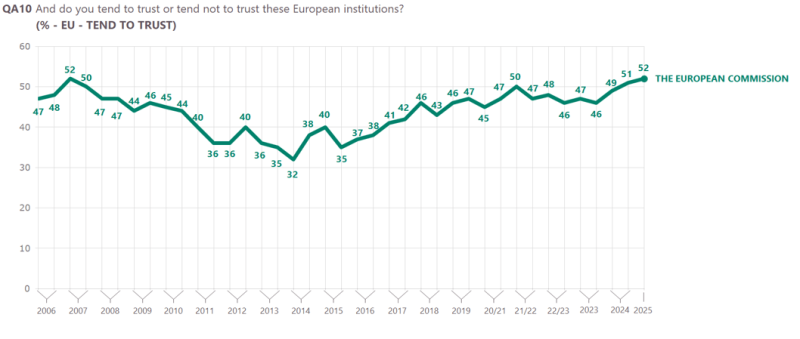
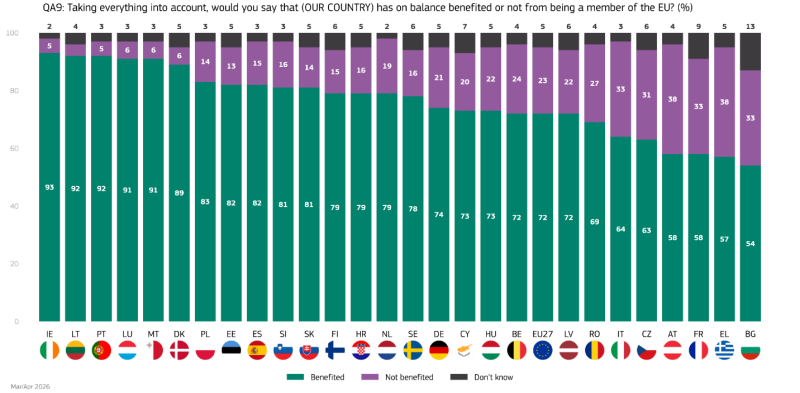
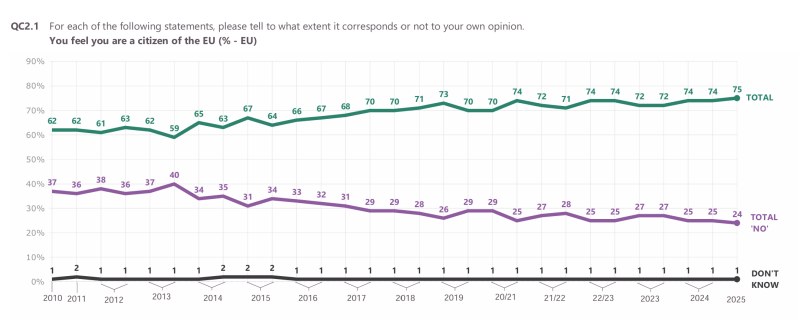
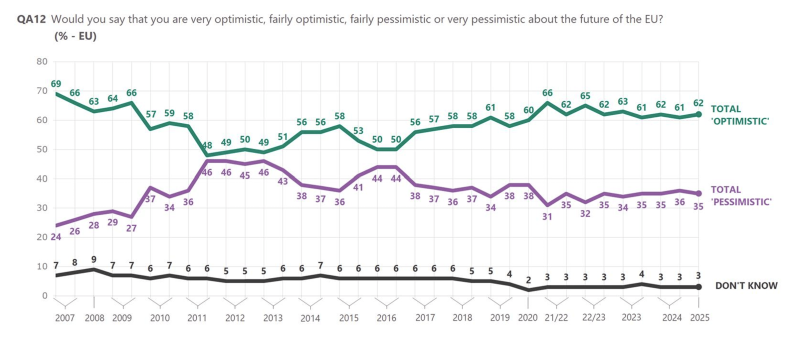
Polls in the spring and fall of 2025 recorded record levels of trust among Europeans in the European Union and its institutions. Seventy-four percent of EU citizens believe their individual country has benefited from membership in the bloc, while 52% continent-wide say they trust the EU and the European Commission. Ensuring peace and strengthening security rank first among the benefits of EU membership, with respondents describing the EU as a point of stability in today’s troubled world.
A graph indicating Europeans' trust in the European Commission, with 2013 marking a historic low of 32% and 2025 showing the highest level of trust (52%) since 2007
However, with the war in Ukraine showing no sign of ending, 78% of respondents are concerned about the state of EU defense and security, and in almost every European country, Russia is named as the main threat.
At the same time, Europeans no longer view America as a reliable ally and support rearming their own militaries. There are also calls for creating a single European army, but that is an idea that could gain momentum only if relations with the United States deteriorate further. For now, France is negotiating with Germany on the joint development of a nuclear shield, while Poland has even threatened to develop its own nuclear weapons.
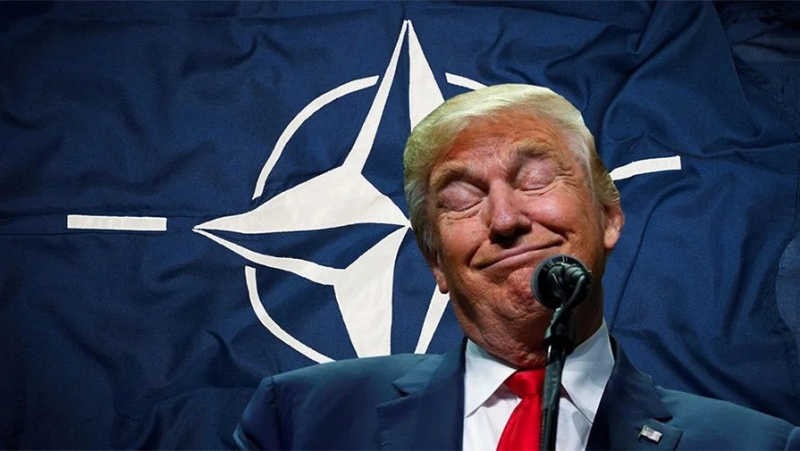
Trump has effectively called the NATO collective defense clause into question
These moves may have been influenced by Trump’s actions. The U.S. president demanded that NATO countries raise defense spending from 2% to 5% of GDP while effectively casting doubt on America’s willingness to live up to its obligations under Article 5 of the North Atlantic Treaty, which provides for collective defense. Although the sides reached an interim agreement, a debate began over Europe’s ability to defend itself without U.S. help. The crisis over Greenland and the war against Iran have deepened that debate.
The EU’s strategic autonomy rests on several flagship projects, including a “drone wall” and the creation of a unified air defense network. These systems will be integrated into NATO, but the trend is clear: the EU is standardizing its procurement efforts and plans to produce and buy key weapons inside Europe rather than from third countries. In this way, the European Union is trying to close gaps in its defenses.
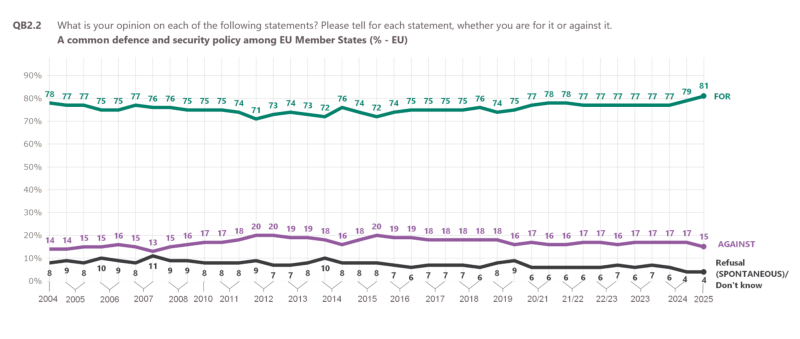
81% of the Eurobarometer's respondents supported a common defense and security policy among EU member states in 2025
For the first time, the EU is introducing a common regulation for the defense industry: the European Defence Industry Programme, or EDIP. The project is expected to establish a joint procurement system and localize the purchase of components. More than half of the products must be of European origin, a necessary condition for access to preferential loans from the new SAFE defense fund. All these initiatives are being discussed against the backdrop of a reassessment of relations with the United States.
The EU is also trying to reduce its dependence on U.S. arms supplies. However, as NATO Secretary-General Mark Rutte said shortly after the situation over Greenland was resolved, Europe will not be able to build its defense without U.S. involvement.
The possibility of war with Russia also matters, as it is seen as the most likely short-term threat. Rutte, for example, has previously said Moscow will be ready to attack NATO countries within the next five years. Collective defense will therefore need to make a “quantum leap,” which would require a significant increase in spending.
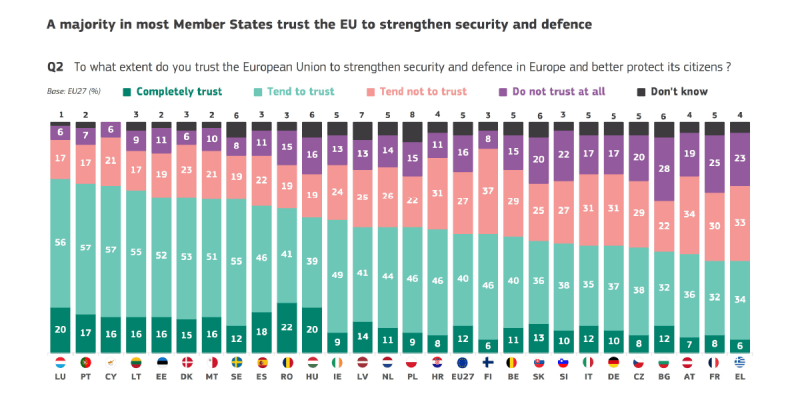
The majority of Europeans (52%) trust the EU to strengthen security and defence
But Europeans are not giving up on the idea of defending itself. Danish Prime Minister Mette Frederiksen, for example, said Europe’s rearmament and a reduced dependence on the United States should be top priorities for European leaders. Supporters of strategic autonomy also include Emmanuel Macron, Friedrich Merz, Donald Tusk, and even Giorgia Meloni.
Meloni summed up the prevailing mood most vividly:
“Trump has said most emphatically that the US intends to disengage and Europeans must organise to defend themselves: hello Europe. For eighty years we outsourced our security to the U.S. pretending it was free, but there was a price to pay and that price is called conditioning. Freedom has a price. We have spoken in unsuspected times of the need to strengthen our defence and security capacity and claimed when no one else did the need to finally create a European NATO norm of equal strength and respect to the American one.”
“Canada is the most European of the non-European countries,” Canadian Prime Minister Mark Carney said during his first foreign trip, visiting France and the UK. In doing so, Carney sought to show that the country was returning to its roots and looking for allies where the foundations of Canadian statehood were born.
During the visit, the prime minister made clear that Canada had no intention of becoming “America’s 51st state,” as Trump had proposed. “Canada will never, under any circumstances and in any form, become part of the United States,” he said.
44% of Canadians believe the government should consider the possibility of Canada joining the EU
In a Davos speech that was widely quoted, Carney urged middle powers to stick together: “The strong have their strength. But we also have something — the ability to stop pretending, name reality, strengthen ourselves at home, and act together. That is Canada’s path.”
In practice, this is already taking shape through Canada’s participation in joint defense procurement under SAFE and a series of trade and investment projects with the European Union. Polls show that 44% of Canadians believe the government should consider the possibility of Canada joining the EU.
German politician Joachim Streit has even launched a campaign for Canada’s EU membership, arguing that Canada could become the bloc’s fourth-largest economy by GDP, while its energy resources would help Europe reduce dependence on Russian gas. Aware that he may not succeed, Streit hopes the EU will use the moment to build ties with Canada as deep as those it previously developed with Norway and Switzerland.
However, under Article 49 of the Treaty on European Union, only a “European state” may apply for membership. Canada is not considered one, and the European Parliament clearly has no plans to revise that provision for Canada’s sake, even though EU documents do not provide a clear definition of a “European state.”
The line of candidate countries is long enough without Canada, with nine currently seeking EU membership. The last to join the bloc was Croatia in 2013, and under the European Commission’s latest “enlargement package,” admitting new members is again a priority — one that is expected to show results by 2030, with Montenegro and Albania considered to be the most likely candidates.
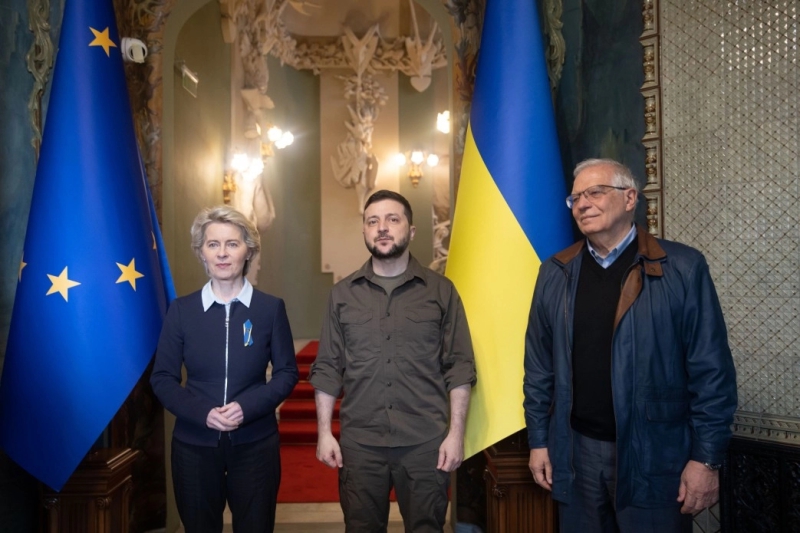
European Commission President Ursula von der Leyen, Ukrainian President Volodymyr Zelensky and EU foreign policy chief Josep Borrell at a meeting in Kyiv in 2022
The European Union expects Montenegro to close the remaining negotiating chapters by the end of 2026 and join the bloc in 2028. Its accession is expected to serve as a showcase, demonstrating that the EU’s doors remain open to new members. Montenegro’s example is meant to encourage reforms in other countries, especially Moldova and Ukraine. For Ukraine, EU membership is closely tied to security guarantees, President Volodymyr Zelensky has said. Zelensky expects Ukraine to join the EU as early as 2027.
Polls show that more than half of EU citizens support the accession of Montenegro and Ukraine. A comparable level of support exists only for the highly unlikely “Breturn” — Britain’s return to the EU.
Countries that are not at the front of the accession line are also expressing a desire to join the EU. Serbia has held candidate status for 14 years but clearly has not lost hope of moving negotiations forward and recently created a task force to speed up the progress.
For years, the main obstacle has been the normalization of relations between Belgrade and Pristina and the possible recognition of Kosovo’s independence. President Aleksandar Vucic is regularly criticized for trying to maneuver between the EU and Russia, but after the crisis over the sale of Russia’s stake in the Serbian oil company NIS, Belgrade began drifting toward the European Union. Now even Vucic is talking about the possibility of joining the bloc without veto power over its decisions.
Commenting on Vucic’s meeting with EU Enlargement Commissioner Marta Kos, U.S. presidential envoy Richard Grenell wrote on X that Brussels is suffocating European economies and that Serbia’s president should steer the country toward the United States, not the EU. In response, Vucic said Serbia wants a strategic partnership with America but is located on the European continent.
For years, the main obstacle has been the normalization of relations between Belgrade and Pristina and the possible recognition of Kosovo’s independence. President Aleksandar Vucic is regularly criticized for trying to maneuver between the EU and Russia, but after the crisis over the sale of Russia’s stake in the Serbian oil company NIS, Belgrade began drifting toward the European Union. Now even Vucic is talking about the possibility of joining the bloc without veto power over its decisions.
Commenting on Vucic’s meeting with EU Enlargement Commissioner Marta Kos, U.S. presidential envoy Richard Grenell wrote on X that Brussels is suffocating European economies and that Serbia’s president should steer the country toward the United States, not the EU. In response, Vucic said Serbia wants a strategic partnership with America but is located on the European continent.
A separate issue is Europe’s far right, with which Trump and his team have long sought to build ties. Elon Musk marked the start of his brief but high-profile campaign in support of Germany’s far-right party, the Alternative für Deutschland (AfD), with a post reading “Only the AfD can save Germany.” At the time an ally of Trump and one of the largest donors to his presidential campaign, Musk not only publicly backed the AfD but also took part in one of its rallies.
The German government accused him of trying to influence the election, and Friedrich Merz, then the leader of the conservative opposition, said in February 2025 that Musk’s interference would not go unanswered. Germany did not respond directly, but in late 2025 the social network X was fined 125 million euros in the EU for violating European transparency requirements. Trump responded by again saying that Europe was moving in the wrong direction and should be careful.
Similar ideas appeared in the new U.S. National Security Strategy. According to the document, Europe suppresses political opposition, restricts freedom of speech, and is moving toward “civilizational erasure” due to high immigration and low birthrates.
But the document also notes a positive trend: the growing influence of so-called “patriotic parties.” According to the strategy’s authors, the United States should help them resist what Washington characterizes as Europe’s false course from within. An expanded version of the strategy (the existence of which the White House denies), reportedly contained even more radical statements.
“In the first drafts, it said the United States should do everything possible to persuade Poland and Italy that they do not need to be in the European Union, that they should carry out some kind of Polexit, Italexit, Hunexit. It said they should continue working to effectively divide society by explaining how harmful an actor the European Union is,” commented Petar Tanev, an expert on EU policy.
European right-wing parties, however, no longer always return Trump’s support. The conflict over Greenland, along with various tariff wars, prompted some to distance themselves and others to openly criticize U.S. policy. Among the latter were Alice Weidel of the AfD, whom Musk had previously supported, and Giorgia Meloni, whom the press had described as one of the European leaders closest to Trump.
The conflict over Greenland and Trump’s tariff wars prompted some European right-wing politicians to distance themselves from Washington, while others openly criticized U.S. policy
Any support that exists is highly conditional. Polish President Karol Nawrocki and the prime ministers of Hungary and the Czech Republic said the question of Greenland should be resolved by Denmark and the United States. Slovak Prime Minister Robert Fico also distanced himself. Experts say it is easy for the right to align with Trump on ideological issues like migration, climate, and anti-elitism, but difficult on foreign policy, because the national interests of European countries and the United States really do diverge.
As for the recommendation to leave the EU, various “exits” are used rhetorically by the right but do not have significant public support, even in countries where Euroskeptics effectively hold parliamentary majorities, such as Slovakia, Austria and, until recently, Hungary.
“Hungary will not leave the EU; it will fall apart on its own,” Viktor Orban said in January. However, on April 12, Orban himself fell apart — or, more precisely, his party suffered a crushing defeat.
Orban appears to have succeeded in flattering the Americans, but such statements do not resonate with Hungarians: 82% of those surveyed by Eurobarometer consider EU membership beneficial for the country, and 52% trust the bloc. In fact, Hungarians’ trust in the EU showed more growth in 2025 than that in any other EU country. In addition, 72% of Hungarians support adopting the euro, the highest figure among states outside the eurozone.
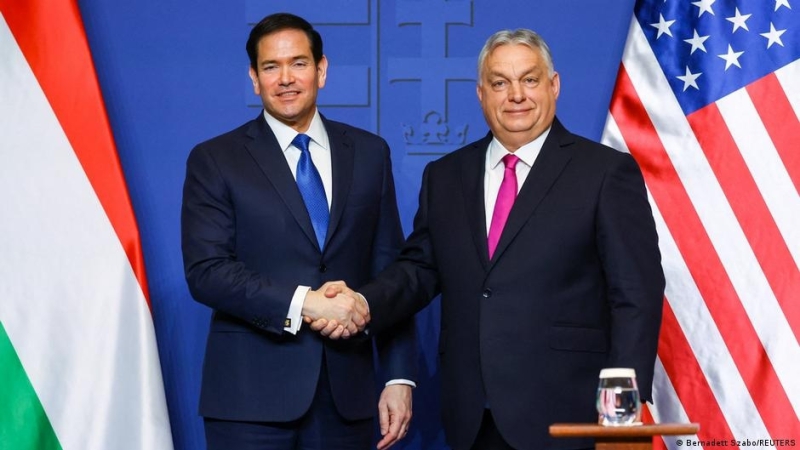
US Secretary of State Marco Rubio during a meeting with Hungarian Prime Minister Viktor Orbán
The only country to leave the EU so far — the UK via Brexit — is coming to regret the move six years on. More than half of Britons consider Brexit a mistake, and only 11% see it more as a success than a failure. Moreover, 53% would support a “Breturn” — Britain’s return to the European Union.
Within the bloc, such an idea is most popular in Denmark, Germany, Spain, and France, but with one condition: no more special terms. Any future accession could be granted to the UK only as a new membership on standard terms. At the same time, EU citizens support closer cooperation with the UK regardless of its status.
Despite a significant level of Euroskepticism in the UK, Brexit has shown that leaving the EU costs far more than was promised by supporters of the exit. Many now acknowledge that the divorce from the European Union only weakened the country, especially critical given the threat posed by Trump.
Many in the UK now acknowledge that the divorce from the EU has only weakened the country, especially in the face of the threat posed by Trump
Although there is no serious discussion of Breturn underway — as Keir Starmer himself and other officials have stressed — Trump has clearly brought the EU and Britain closer together. In 2025, their defense talks led to the signing of a framework agreement on Britain’s participation in defense initiatives, particularly joint procurement through SAFE.
Sharp criticism of Europe and attempts by the United States to challenge its autonomy have instead led to stronger collective defense and closer ties — both within the EU and between the bloc and its neighbors. By 2030, Montenegro, Albania, and Ukraine are quite likely to join the EU, while relations with the UK may reach, if not the point of its return, then at least the highest possible level of policy coordination.
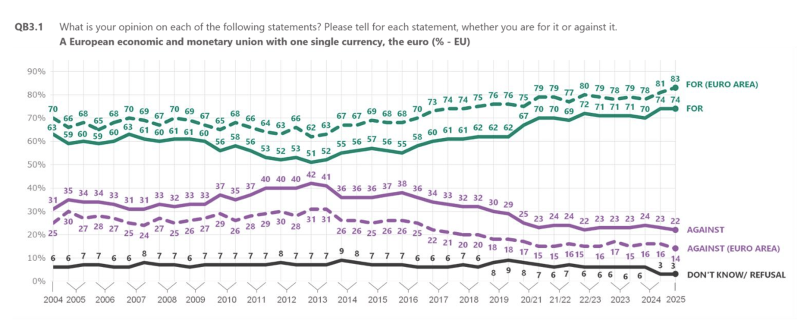
Commenting on the U.S. National Security Strategy, former Swedish Prime Minister Carl Bildt noted that, despite all the challenges, no region on Earth provides such a high standard of living to such a large share of its population as the EU. The firmness with which European politicians are pushing back against the United States has moved far beyond the once-memed expression of “concern.” It may all still be more word than deed, but Europeans are slow to get moving — and once they do, the process of change becomes irreversible. Especially now, when they must not only get through Trump’s second term, but also prepare for whoever succeeds him, however unpredictable that person may be.