
About 6,000 mobile communications base stations in occupied Ukraine are using Chinese equipment, according to a March report by the Eastern Human Rights Group. About 80 bank branches in Donbas offer cash transactions in yuan. Grassroots delegation exchanges and cautious cooperation with Chinese companies under the banner of “import substitution” are unfolding as Beijing carefully avoids sanctions. Officially, China never recognized Russia’s occupation of Crimea, the independence of the Donetsk and Luhansk “People’s Republics,” or their incorporation into Russia. Meanwhile, enterprises in Luhansk are preparing for a May trade fair in the northeastern Chinese city of Harbin, while in January a delegation from the Russian-occupied Kherson Region visited China to “establish long-term cooperation.” Quietly but deliberately, China is entrenching itself in occupied Ukraine.
Доступно на русскомContents
Chinese investors’ interest in doing business in Crimea emerged even before Russia’s annexation of the peninsula in 2014. In December 2013, the Ukrainian government signed a memorandum on economic cooperation with a Chinese canal building company belonging to multimillionaire Wang Jing. The firm is known for its ambitious plan to build a shipping canal in Nicaragua that was meant to compete with the Panama Canal — and to advance China’s geopolitical interests.
The Ukrainian-Chinese project envisioned construction of a deepwater port in Crimea and Chinese participation in the reconstruction of the fishing port in Sevastopol. The first phase of investment was to total $3 billion. Wang Jing, owner of Beijing Interoceanic Canal Investment Management Co. Ltd., said that the project would turn Crimea into “an economic and transport hub of the Maritime Silk Road.”
Even then, some Ukrainian experts believed this was the first step in a large-scale Chinese plan for expansion: first a port in Crimea, then leases of agricultural land in Ukraine’s south, ending with the country becoming an agricultural appendage of China. Crimean environmentalists also opposed the project, but at the time, the Maidan protest movement had already begun, and President Viktor Yanukovych needed to attract money to Ukraine from any source still willing to invest.
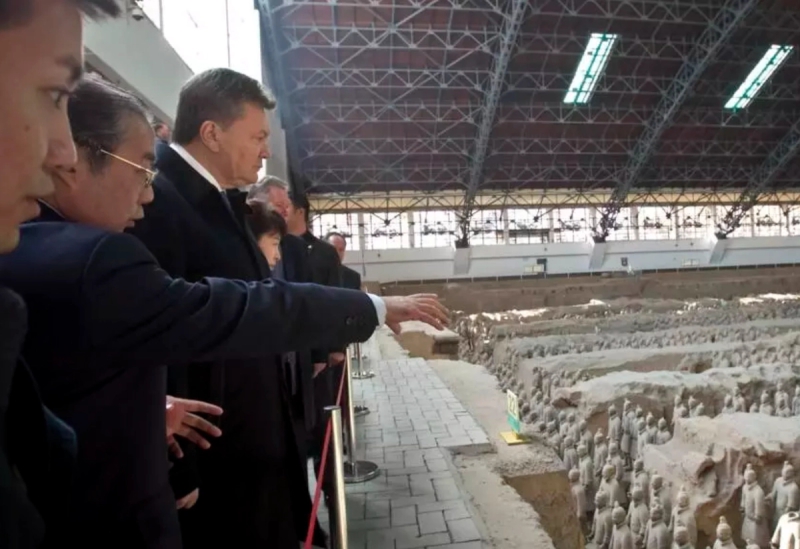
Viktor Yanukovych at the Museum of the Terracotta Army in China
The events that followed – the confrontation on the Maidan, Yanukovych’s flight to Russia, and Russia’s intervention in Crimea – put an end to this large-scale Chinese venture. In June 2014, Beijing Interoceanic Canal Investment Management Co. Ltd. said it was no longer pursuing any projects in Crimea, and Russian attempts to attract Chinese investors for construction of the Kerch Bridge also ended in failure — none of them wanted to come under Western sanctions. Between 2014 and 2022, Russian media periodically reported that Chinese companies were ready to participate in infrastructure projects on the annexed peninsula, but nothing moved beyond talk.
The situation began to change after the start of Russia’s full-scale invasion of Ukraine, when cooperation between Moscow and Beijing reached a new level. As early as November 2023, The Washington Post reported that Russia and China were in talks to build a transport tunnel under the Kerch Strait — a militarily significant potential project, given that on July 17, 2023, Ukrainian forces successfully attacked the Crimean Bridge with a naval drone.
At the time, Moscow and Beijing jointly denied the American newspaper’s report. Nevertheless, stories about the possible involvement of Chinese companies in infrastructure projects in Crimea began appearing ever more frequently. In 2025, Ukrainian intelligence said that the occupation authorities in Crimea wanted to attract Chinese investment for construction of the Kerch seaport and expansion of the infrastructure of the military base at Lake Donuzlav. In 2025, the Panama-flagged vessel Heng Yang 9, owned by Guangxi Changhai Shipping, repeatedly entered the port of Sevastopol with its transponder switched off. Ukraine’s Foreign Ministry lodged a protest with China over the matter.
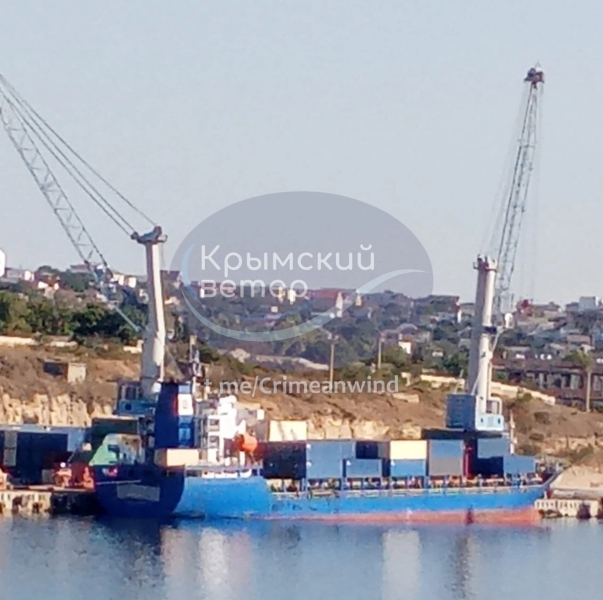
The Chinese container ship has entered Sevastopol in temporarily occupied Crimea four times since June 2025
The Chinese side, fearing secondary sanctions, is in no rush to openly invest in the infrastructure of annexed Crimea. However, there is information suggesting that, at a minimum, Beijing is highly interested in the peninsula. In fact, it may already be covertly cooperating with Russia in the Black Sea basin.
There is information suggesting that, at a minimum, Beijing is highly interested in the peninsula
A report by the Extrema Ratio initiative, which tracks China’s global expansion, notes:
“China’s interest in the Black Sea and the Sea of Azov extends beyond mere support for Russia in Crimea, fitting into the broader Belt and Road Initiative (BRI) strategy and presenting potential dual-use implications…
Any infrastructure development in these regions, even if nominally commercial or civilian, inherently supports and enhances Russia’s military and logistical capabilities. This aligns with China’s strategic partnership with Russia, especially given Russia’s increasing dependence on China for critical military technology and components following Western sanctions.”
In the summer of 2022, the authorities of the Donetsk “People’s Republic” began showing interest in the abandoned Karan Quarry near the village of Myrne in the Donetsk Region’s Volnovakha District — an area that had been under Ukrainian control before the start of the full-scale war. The quarry had produced crushed stone for construction, but operations there ceased in 2008. In August 2022, the processing plant began to be restored, and by October the relaunch of the Karan Quarry was officially announced.
In November 2023, the head of the occupation government, Russian official Yevgeny Solntsev, said that the Karan Quarry had signed cooperation agreements with two Chinese enterprises: Amma Construction Machinery Co. Ltd., a factory producing rock-grinding equipment, and Zhongxin Heavy Industry Machinery Co., Ltd., which makes crushing and screening equipment. The signing took place at the “Republic’s” representative office in Moscow.
Local residents began referring to the Karan Quarry as “the Chinese quarry.” Crushed stone extracted there is used for construction across the occupied territories of Ukraine, where the Russian authorities have announced large-scale “reconstruction” projects following the destruction wrought by their “liberation.”
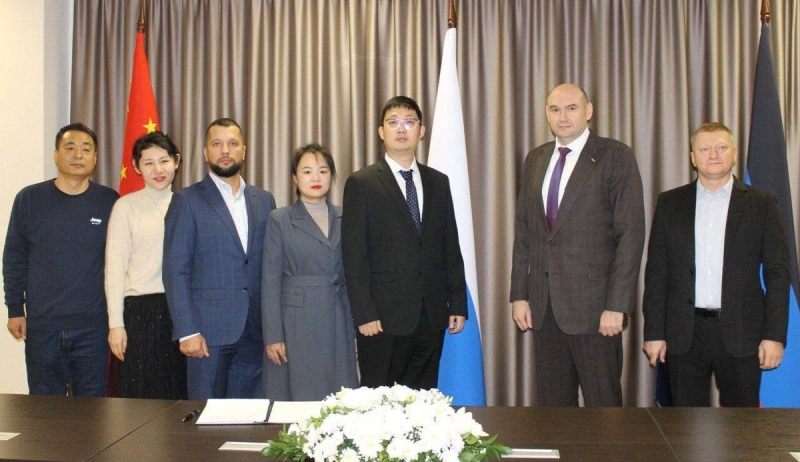
LLC Karan Quarry signed cooperation agreements with two Chinese enterprises. 2023
The Ukrainian publication Realnaya Gazeta, which since 2014 has featured the work of journalists from Donbas who were forced to leave their home region, conducted its own investigation into cooperation between the authorities of the “People’s Republic” and Chinese companies. According to the outlet, the companies named by Solntsev – Amma Construction Machinery Co. Ltd. and Zhongxin Heavy Industry Machinery Co., Ltd. – are actively doing business in Russia, including with the Kamensky Crushed Stone Plant in Rostov Region.
The likely intermediary was Zhang Jingwei, a postgraduate student at Southern Federal University engaged in developing defense technologies for the Russian army. For example, it was reported that he created an improved neural-network model for unmanned aerial vehicles (UAVs), making it possible to speed up real-time detection of small objects. Zhang Jingwei was named a winner of the “Leaders of Russia” competition overseen by Sergei Kiriyenko, first deputy head of the Russian presidential administration.
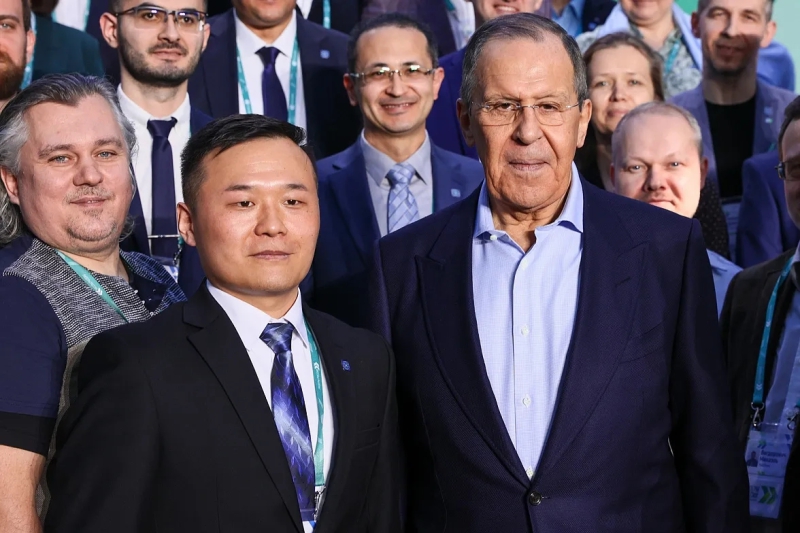
Zhang Qing Wei, laureate of the “Leaders of Russia” competition, with Russian Foreign Minister Sergei Lavrov. 2023
Realnaya Gazeta editor-in-chief Andriy Dikhtyarenko told The Insider that this kind of intermediary role illustrates the mechanics of Chinese penetration into the occupied territories.
“Zhang Jingwei studies and works at a university in Rostov. He is also the head of the local Chinese community association, and he serves as an intermediary between the DPR and Chinese firms from his home province. While official Chinese state structures appear to keep their distance – major state corporations do not want to risk sanctions – medium-sized private businesses are being given the green light to organize joint projects in the occupied territories of Ukraine.”
Without drawing much attention to their presence (had it not been for the vanity of local officials, these investments might have gone entirely unnoticed), Chinese companies are taking part in infrastructure projects. In addition to the Donetsk quarry, Dikhtyarenko explains that Chinese mining equipment is being supplied to the Belorechenskaya mine in Luhansk Region, one of the few profitable mines in the occupied territories. “The restoration of industry under occupation is already being financed with Chinese money. Without China, Russia has no ability to rebuild all this quickly,” the journalist explains.
According to Dikhtyarenko, this cooperation has a significant political dimension: “There is also an exchange of experience among propagandists. Staff from Luhansk propaganda outlets, for example, are actively invited on familiarization trips to China, where they are given tours of drone manufacturing plants.”
As an example in the other direction, Dikhtyarenko cites the visit to Mariupol by Chinese blogger and singer Wang Fang in 2023: “At the same time, her husband, an official, did not go to Mariupol. He waited for his wife in Rostov, and afterward they held a joint press conference.” During the visit, Wang Fang sang “Katyusha” on the ruins of the Mariupol Drama Theater, which had been destroyed in a Russian airstrike. Her trip prompted a protest from Ukraine’s Foreign Ministry.
Chinese artist Wang Fang sings “Katyusha” at the Mariupol Theater
Sputnik Telegram channel
For the occupation authorities of the “DPR,” cooperation with China is an important way to increase their own standing within the bureaucratic hierarchy. In April 2024, Solntsev attended the 1st Russia-China Construction Forum in Harbin, organized by the All-Russian Center for National Construction Policy, together with the Harbin regional government.
“We discussed with colleagues opportunities for launching and modernizing our metallurgical enterprises,” Solntsev said. He also announced plans to cooperate on the “reconstruction of Donbas” with two Chinese construction companies – Genertec International Co Ltd and China Xinxing Group Co Ltd – though no official contracts were signed.
Plans for cooperation with China are also being drawn up by the occupation government of Zaporizhzhia Region. As acting Economic Development Minister Yuri Guskov said: “Zaporizhzhia Region, as a new region of the Russian Federation, plans to actively cooperate with Chinese businesses. Our grain is of the highest quality, and Chinese consumers will undoubtedly appreciate it. We will actively use people-to-people diplomacy to promote our products.” In reality, however, little came of the initiative.
Another story is better known: in Melitopol, a Chinese businessman nearly had his cherry-processing plant seized. The company, Eurofruit, was founded in 2015 by Shanghai investor Zheng Feng. But after the region’s occupation, the plant caught the eye of influential local businessman Sergei Zhelev, who was cooperating with the Russian authorities. The Chinese owner had to rush to Melitopol to protect his investment.
There has also been room for farce. In July 2025, the authorities of the Luhansk “People’s Republic” announced a visit by a delegation of Chinese investors. It soon emerged, however, that they were not Chinese at all. The supposed “investors from China” turned out to be businessmen from Voronezh of Vietnamese and Azerbaijani origin.
In July 2025, the authorities of the “LPR” reported a visit by a delegation of Chinese investors — but they turned out to be businessmen from Voronezh
In July 2025, Russia’s Promsvyazbank (PSB) organized a trip to China for representatives of ten companies from the occupied territories of Ukraine, winners of the nationwide domestic producers’ competition “Know Ours.” PSB, the first major Russian bank to open offices in Russian-annexed Ukrainian regions, is an important element of the occupation structure.
In 2018, PSB was nationalized and has since become the main lender to Russia’s defense-industrial complex, handling up to 70 percent of state defense procurement orders. The bank is headed by Pyotr Fradkov, son of former prime minister and ex-chief of foreign intelligence Mikhail Fradkov. Since 2022, the bank has been under sanctions from all major Western countries.
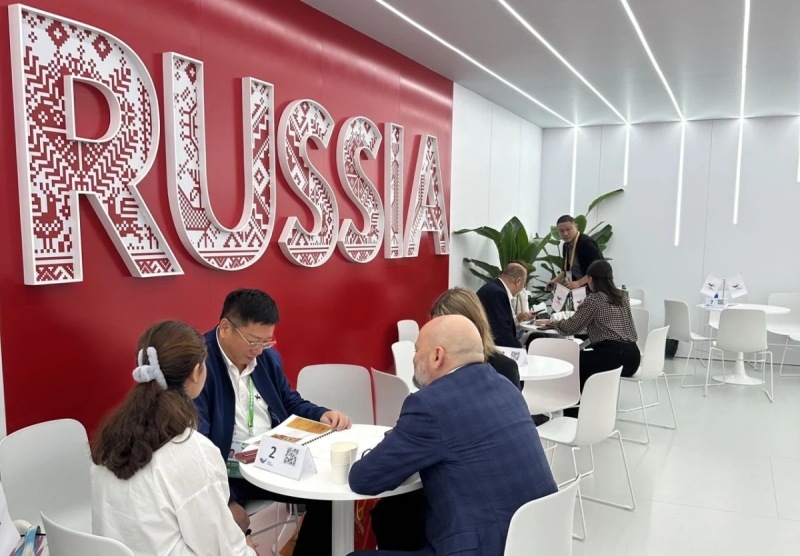
Entrepreneurs from the so-called “LPR” and “DPR” in Shanghai in November 2025
China’s penetration into the occupied part of Ukraine has also been aided by Viktor Medvedchuk, formerly Ukraine’s leading pro-Russian politician and a personal associate of Putin’s. Medvedchuk was actively involved in joint business projects with China even while serving as a Ukrainian lawmaker, and companies linked to him and his business partner Taras Kozak had been building a cable car on the Russian-Chinese border near Blagoveshchensk and Heihe since 2020.
Medvedchuk was also actively involved in the coal trade in the “LPR-DPR” through the company Donskiye Ugli, which he controlled and which became one of the key beneficiaries of the local coal industry from 2021 onward. After the start of the full-scale war, Donskiye Ugli expanded rapidly, taking control of mines in occupied parts of Donbas and then supplying coal to China disguised as “Russian” product. However, because of China’s reduction in purchases of Russian coal and the company’s overall inefficiency, in 2006 Medvedchuk’s business found itself burdened with debts of 2 billion rubles ($26.6 million).
Medvedchuk’s business is involved not only in exports to China, but also in imports, as companies linked to him supplied Donbas with vehicles from the Chinese subsidiary of the German concern Daimler Truck.
The process of Chinese expansion into Russian-occupied Ukrainian territory has not yet reached a large scale. “China is watching closely,” as one “LPR” official put it. But it is gradually becoming systematic, with ever more Chinese companies entering the occupied territories and building ties with local elites. For China, this is also a test of the resilience of sanctions, with private companies scouting the ground for the eventual arrival of the PRC’s state-backed corporate giants.
China is testing the strength of sanctions, while private companies are reconnoitering the ground for the arrival of state-backed giants
Beyond purely economic considerations, geopolitics is also crucial. Crimea plays a key role in the Black Sea region, while the southeastern territories of Ukraine serve as a strategic bridgehead for expansion into Eastern Europe. For China, this penetration is part of a global strategy to build a Eurasian logistics corridor.
This logic is reflected in Russia’s construction of the Rostov-Mariupol-Melitopol-Crimea highway (the so-called “Novorossiya” highway), which could be linked to the Europe-Western China international transport corridor, a joint project of Russia, China, and Kazakhstan. Notably, construction of the “Novorossiya” highway is using crushed stone from the aforementioned “Chinese” quarry in the Donetsk Region.
Another important motive for China is access to resources, above all deposits of rare earth elements. According to Ukrainian estimates, half of Ukraine’s rare earth metal deposits are located in areas under Russian occupation.
For example, the Donetsk Region contains deposits of lithium and titanium, as well as Ukraine’s only integrated source of zirconium. Over time, all of this could end up in the hands of Chinese developers, particularly given the fact that Russia lacks the technology and resources to extract all of it on its own.
The same can be said of the occupied part of Ukraine’s economy as a whole. As long as the occupiers’ resources are consumed by waging war and preserving regime stability, China’s presence on these lands is likely to keep growing.