
It is becoming increasingly difficult for Russian citizens to obtain asylum — not only in Western countries, but also in states neighboring Russia. As deportation flights from the United States continue, rights advocates interviewed by The Insider note that the immigration and political climate in a number of other countries that once accepted anti-war Russians has changed markedly.
Доступно на русскомContents
When Russia launched its full-scale invasion of Ukraine in February 2022, one consequence was a mass exodus of Russians who opposed the war or feared mobilization. Later, among those fleeing the country were veterans who had managed to desert the military. Some of them did not have passports, which sharply limited the list of countries they could enter.
Legalizing their status in other countries was never easy for anti-war Russians, and over the past year the situation has deteriorated significantly. Media outlets and social media increasingly carry reports of Russians being denied asylum, deported and even detained for possible extradition. In most cases, however, this is not specifically about persecution of Russian citizens — attitudes toward migrants in general have changed.
In the United States, about 1,000 asylum seekers with Russian citizenship have faced the threat of deportation, and the first flights to Russia — routed through third countries — took place last summer. In Croatia, applicants from the Russian North Caucasus are being denied protection in large numbers, while in Germany courts have issued negative rulings even in military desertion cases that rights advocates describe as “ironclad.” Kazakhstan, too, has already expelled people who clearly faced criminal liability in Russia. And Moscow is trying to use Interpol databases and lists of “terrorists and extremists” to pursue disfavored citizens, creating problems even for those who hold another country’s passport.
In the United States, about 1,000 asylum seekers with Russian citizenship have faced the threat of deportation
The Russian authorities have also helped fuel panicked rumors about the threat of mass deportations of anti-war émigrés. However, rights advocates stress, the situation is not actually as bad as the Russian government says it is. The alarming picture that had emerged by 2026 is made up of many unrelated factors, not a single coordinated campaign. At the same time, in some countries the authorities’ attitude toward Russians who fled war and repression has indeed changed. According to rights advocates, the situation has worsened most noticeably in Kazakhstan and the United States, but Russian émigrés in Germany, Croatia, the Netherlands, Sweden, Bulgaria, and some other countries are also encountering new problems.
Russians are increasingly facing difficulties in Europe. This shift is especially visible in Germany, which, while still remaining a “safe haven” for many, has taken a much tougher stance on migration since the change of government in May 2025. The policies pursued under Chancellor Friedrich Merz and his team in an attempt to appeal to right-wing populist sentiment in the country are even frequently compared with what took place in the United States under Donald Trump. And although the scale of the process in Germany still does not match that across the Atlantic, it is hard to miss the indiscriminate approach of the German government.
For example, Germany has now effectively halted its humanitarian visa program for Russians. The authorities cite the need to ease pressure on the budget and the social system. Yet fewer than 3,000 Russians arrived in the country through the humanitarian visa program over four years of war, far fewer than the number of migrants in other categories.
In Germany, people who had previously received approval for humanitarian visas still have not been able to have them placed in their passports.
“We fought for a long time to secure humanitarian visas for the Moskalyovs in an exceptional case. I know that Germany’s Foreign Ministry made every effort to get the visas issued, but the Interior Ministry blocked the decision, and the interior minister did not sign the approval, so we applied for French humanitarian visas for them and brought them to France. The authorities say humanitarian admission will remain only for absolutely exceptional cases. But the Moskalyovs’ case is exceptional, and they still were not given visas. A group of opposition figures — Ilya Yashin, Andrei Pivovarov, and representatives of Free Russia — specifically went to the CDU/CSU party congress to discuss the possibility of resuming the humanitarian program, but they also got a negative response,” the inTransit staff member said.
In January 2026, the story of Russian army deserter Georgy Avaliani spread widely in the media. The Moscow construction engineer had ended up in the war in Ukraine against his will, was subjected to torture, and deserted three times. He managed to get to Europe, eventually reached Germany, and applied for asylum there. The Federal Office for Migration and Refugees, known as BAMF, examined the case on its merits but rejected Avaliani and his family, concluding that he faced no danger in Russia. To justify its decision, BAMF cited a statement by former Defense Minister Sergei Shoigu that mobilization in Russia had ended in October 2022.
In addition, an official at the agency cast doubt on the existence of “torture basements” in the Russian military. Rights advocates say Avaliani’s case is not unique and that BAMF is issuing template denials without examining the details of each case, changing only the applicants’ personal data in its decisions. European bureaucratic bodies have repeatedly cited statements by Russian authorities that mobilization has ended, Aleksandr Solovyov, coordinator of the Anti-War Committee project Consuls, told The Insider: “The decisions regularly say that applicants face nothing in Russia, so they should go back.”
In March, Russian-language media widely reported a story by the independent exiled outlet Echo saying Germany had begun deporting anti-war Russians through third countries, in some cases explaining its decisions by the “absence” of mobilization in Russia.
Previously, local authorities had not used such a practice, as there are no direct flights between the two countries. However, Russians are now sometimes being expelled under escort through Belgrade or Yerevan. Among those deported are LGBTQ+ activists, anti-war Russians, and people who donated money to organizations that Russia considers “banned” or “terrorist.”
The situation is partly the result of the peculiarities of German bureaucracy. Until the end of 2023, Berlin made an exception by allowing people to apply for freelancer visas. That meant a person with a credible fear of returning to Russia could come to Germany even on a standard tourist Schengen visa issued by any country and then legally prolong their stay without much trouble, inTransit said. Many Russians took advantage of that option. But local authorities later abandoned the practice.
As a result, instead of residence permits, Berlin’s migration office began issuing applicants “Duldung,” a status granting a temporary suspension of deportation. If a person found permanent work, they could legalize their stay. In addition, Duldung documents were routinely extended. But in August 2025 their issuance also stopped, and people began receiving deportation orders. Usually, a person was given time — about four months — to leave Germany voluntarily. However, deportation police began showing up just a couple of weeks later and escorting them to Russia through third countries.
Even so, rights advocates stress that it is still not accurate to speak of mass deportations. Maria Krasova, a lawyer for the inTransit project, told The Insider that the process is better described as “random”:
“There are no signs of a systematic pattern — the deportations are not linked, for example, to antisocial behavior, offenses, gender, or length of stay. In Germany the situation is complicated by several factors: public fatigue and the high social burden on society, as reflected in the election results; the sluggishness of the law enforcement apparatus; an opaque decision-making process on asylum; and the inaccessibility and often ineffectiveness of legal protection systems for asylum seekers. In Berlin, for example, the situation is made worse by an obvious lack of cooperation and any sensible division of responsibilities between BAMF and LEA, the Berlin foreigners’ authority.”
That said, the relatively small number of the deportations is unlikely to make life easier for those unlucky enough to become candidates for a growing list of “individual” cases. In mid-March, police detained 26-year-old Ilya Shkolny and placed him in pretrial detention in Hof, Bavaria.
In Russia, the young man had taken part in protests, volunteered in Alexei Navalny’s political campaigns, donated money to Navalny’s Anti-Corruption Foundation (ACF), and served on the committee of the Moscow branch of the Libertarian Party of Russia. He arrived in Germany in June 2022 on a tourist visa.
Ilya, who speaks German at a C1 level, enrolled in a master’s program at the University of Bayreuth, married German citizen Ansuela, with whom he had been in a relationship since 2019, and applied for asylum. He was denied on the grounds that there was no mobilization in Russia. He then applied for a residence permit based on marriage and was denied again.
“The migration office said that because Ilya had not been granted asylum, his risks were ‘irrelevant’ and he should return to Russia and apply for a marriage visa from there. Returning to Russia was impossible for Ilya — he faced a clear danger there,” inTransit said.
In March 2025, German authorities prepared to deport the Russian, accusing him of crossing the border on the “wrong visa.” At the same time, the university was ready to offer Ilya a job. In addition to rights advocates, local politicians also joined efforts to prevent Shkolny’s deportation to Russia. Krasova said this case clearly appears to be an administrative error.
Ilya Shkolny
The inTransit coordinator, in turn, stressed that defending people already being held in deportation detention is extremely difficult, and that a person cannot cope alone, or even with the help of German lawyers:
“We gathered new circumstances confirming the risks and a new body of evidence based on our experience. A year ago, we defended a person in Denmark whose entry in the Khimera database was marked ‘extremist, ACF.’ We argued that he would face danger in Russia, relying on letters from organizations such as Transparency International, letters from Russian investigative journalists specializing in Khimera and, most importantly, academic publications by the Russian Interior Ministry Academy. Those publications describe in detail how the database is used in operational work to collect information and identify oppositionists, extremists, political activists, and so on. Eighty percent of operational departments are connected to it. This is an extremely important corroboration that no applicant could collect on their own. On that basis, we filed an urgent request with the court to halt the deportation — and another asylum application. The court decided that the risks were indeed high and ordered BAMF to review his case again.”
According to Echo, Germany forcibly deported 126 Russians in 2025, while another 1,748 Russian citizens are listed in statistics as having “left voluntarily.” At the same time, rights advocates stress that this is not about the targeted presecution of Russians — the new approach of the German authorities affects almost all migrants with uncertain status.
The number of deportations is likely to rise in the near future — and not only in Germany. In February, the European Parliament approved a unified list of “safe third countries,” a measure intended to simplify procedures for denying refugee status and carrying out deportations. How that will work in practice, however, remains unclear. As The Insider’s sources note, there are a number of European countries where Russians are not advised to seek asylum. They include Croatia, the Netherlands, Sweden, and Bulgaria.
In the Netherlands and Sweden, asylum seekers often have to wait for decisions in refugee camps under psychologically and physically harsh conditions, while Bulgaria and Croatia have openly shown that they do not want to grant asylum to Russians.
Rights advocates are aware of a case in which a person won in court in Bulgaria, but the migration authorities still refused to legalize his status. Croatia, for its part, has not approved a single asylum request from Russian deserters during the entire war in Ukraine. If an applicant is also from the North Caucasus, he may even face detention and extradition to Russia.
Croatia is not a lone case. On March 20, for example, Estonia deported a Chechen asylum seeker to Russia even though he faced danger there. The young man, whose name has not been disclosed for security reasons, was deprived of adequate legal assistance and was unable to defend his rights, advocates say.
In addition, deserters who signed contracts with the Russian military are treated with particular suspicion in Europe. “The main problem for people applying for refugee status is that often even those who genuinely deserve it put together their documents incorrectly or describe their case improperly. Many come to us only after their first rejection. That makes the process harder. That is why we strongly advise contacting rights advocates before applying,” Solovyov said.
Deserters who signed contracts with the Russian military are treated with particular suspicion in Europe
Margarita Kuchusheva, a consul with the Anti-War Committee, told The Insider that it would be inaccurate to speak of a tightening of European policy specifically toward Russian asylum seekers. There is now a large backlog in the EU of people who arrived in 2022-2023 and, by 2026, have gone through all the bureaucratic stages: a first rejection, a first appeal, a second appeal, and so on. Technically, the time has simply come for final decisions in their cases, which may create the impression that the situation has worsened.
Even so, the statistics are troubling. The outlet Verstka pointed to Eurostat data showing that in 2025 EU states issued 10,415 orders for Russian citizens to leave their territory — the highest figure in the past five years. That was nearly double the level seen in 2021, just before the start of the war. In 2025, the EU deported 38% more Russians than in 2024. The data, however, do not make it possible to determine how many of the deportees had cases similar to Avaliani or Shkolny.
In short, despite a sufficient number of examples in which Russians facing serious danger at home were threatened with deportation, the situation in the EU is, perhaps, still one of the most favorable overall. Deportations of people who would face serious danger in Russia, if they do occur, remain isolated cases for now. In addition, European authorities often give potential deportees sufficient time to leave the country on their own. Still, such allowances do not change the fact that, overall, the situation of Russians who left the country for political reasons after 2022 is becoming objectively more difficult.
In the United States, the decline of the refugee reception system was helped along by the arrival in power of the Republican administration led by Donald Trump. Anti-war Russians also became victims of Washington’s declared crusade against migrants. At the same time, Aleksandr Solovyov, coordinator of the Anti-War Committee’s Consuls project, told The Insider that although there are indeed many deportations from the United States, “not every flight is full of Russians, and those being deported are far from always political activists who face danger in Russia.”
“Unfortunately, there are many people who, it seems, came in search of a better life. They filed documents that either contained falsehoods or did not provide sufficient grounds for asylum. Another matter is that there really are activists among those being deported who should under no circumstances be sent back. But it would also be wrong to say that the United States is deporting hundreds of anti-war Russians,” Solovyov said.
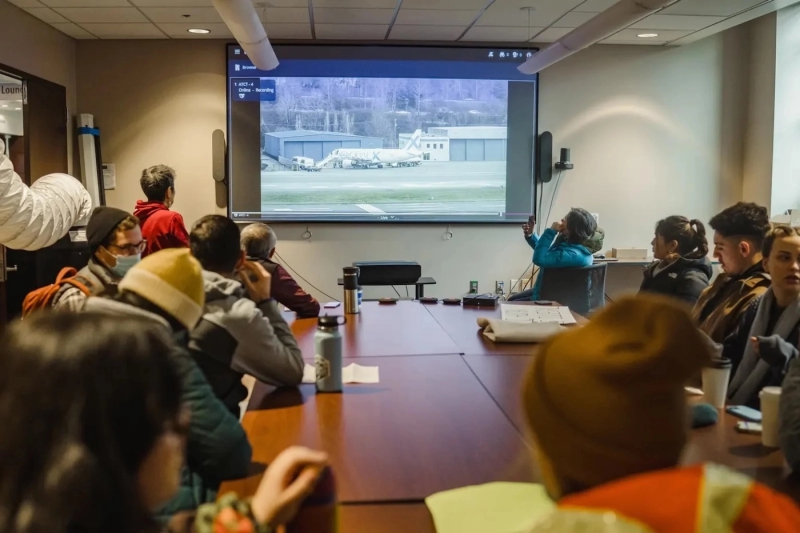
Immigration lawyers at the University of Washington watch a live broadcast of boarding for a deportation flight at Boeing Field airport
Sergei Vlasov, head of the U.S.-based nonprofit Russian Refugee Foundation and a former Moscow municipal deputy, also told The Insider that among Russians seeking asylum in the United States there are quite a few who “came for a better life.”
According to him, attitudes toward Russians seeking asylum began to worsen even under Joe Biden. After all, it was in June 2024 when American authorities decided to more closely screen Russian citizens crossing the border from Mexico. In practice, almost all asylum seekers with Russian passports began to be sent to immigration jails, or “detentions,” although previously most had been released pending a decision in their case. After Trump returned to power, immigration judges at those facilities began, in Vlasov’s words, “denying everyone and sending everyone home.”

The wall on the US–Mexico border
“Judges in detention facilities are usually former prosecutors or ICE employees who are used to working within the system and carrying out orders. They are obviously biased,” the head of the Russian Refugee Foundation said. “Let’s say there are 10 cases, and only a couple have real grounds. But now even those cases may be cut down. A person has no criminal record and has been checked against all international databases. So why not release him so he can fight his case in his own state, where judges are less biased? Instead, they are kept for a year or even longer in immigration jails, where the attitude is completely different.”
In the rights advocate’s view, obtaining asylum in the United States under current conditions requires “a very strong case with real documents and a clear story.” As Vlasov continued, “The old way — arriving with a single administrative offense on your record and sitting around waiting — no longer works. And I absolutely would not recommend trying to enter through the Mexican border right now, because that means a 100% chance of ending up in jail and before a biased court.”
Obtaining asylum in the United States under current conditions requires “a very strong case with real documents and a clear story”
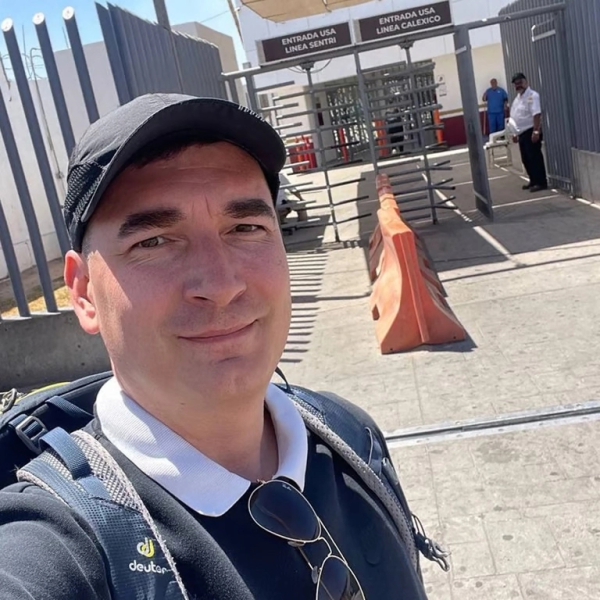
Even so, even Russia’s asylum seekers with “strong cases” have fallen victim to the U.S. administration’s chaotic campaign against migrants. One of the most shocking cases involved Perm activist Leonid Melekhin, who was deported from the United States and then placed in pretrial detention in Russia on charges of “justifying terrorism” based on his ties to Alexei Navalny’s organization. Melekhin crossed the Mexican border in August 2024, essentially right after the Biden administration introduced the practice of placing Russian asylum seekers in immigration detention centers.
Leonid Melekhin
Another drama is unfolding right now for spouses Elizaveta and Dmitry. She had openly opposed Russia’s repressive laws targeting LGBTQ+ people, while he is a Ukrainian from the currently occupied territories. According to Elizaveta, they applied for asylum in the United States within the required time limits and submitted all necessary evidence, documents, and letters of support. At one hearing, the judge said she had no further questions about the case. But later, at the prosecution’s request, the hearing was postponed so the couple could provide original internal passports, a military ID, and documents showing past employment. Before the next hearing, the prosecution filed a motion to dismiss the case without consideration, and the court granted it. Rights advocates say Elizaveta and Dmitry now need to file an appeal or face deportation to Russia.
The Insider spoke with three Russians who, like Melekhin, ended up in U.S. immigration jails and were then deported to Russia. All three managed to avoid arrest once back home.
Anti-war activist Andrei Sakharov left Russia for Georgia in 2022, spent eight months in Mexico in 2024, and from there finally managed to enter the United States legally with his wife after getting a slot in the CBP One app. After arriving on American soil, however, they were immediately handcuffed and forced to sign documents saying they had crossed the border illegally.
“My wife was held at the border for 17 days, me for 10, even though they have posters up there saying the maximum period for that kind of detention is three days,” Sakharov said. According to him, some staff in immigration jails enjoy humiliating people: “On the day I was leaving, I asked the officer on duty if I could say goodbye to my wife — she could see me, she was standing there crying. He just smiled and said, ‘No.’ I started arguing, and they told me I was nobody here and should shut up.”
Andrei had evidence of his opposition activity going back to the 2010s, but his lawyers did not submit the required documents in time. The judge agreed to wait, but postponed the hearing on his case for three months. During that time, U.S. immigration policy became much harsher. Andrei was denied protection.
Fearing forced deportation, he asked to be deported himself, hoping to avoid ending up in Russia. And in fact, during a layover, a Moroccan officer helped the couple buy tickets to Istanbul. In the end, they found themselves back in Mexico, where their dog had been waiting for them the whole time. Andrei now plans to legalize his status there, turning down offers to apply for humanitarian visas in Europe.
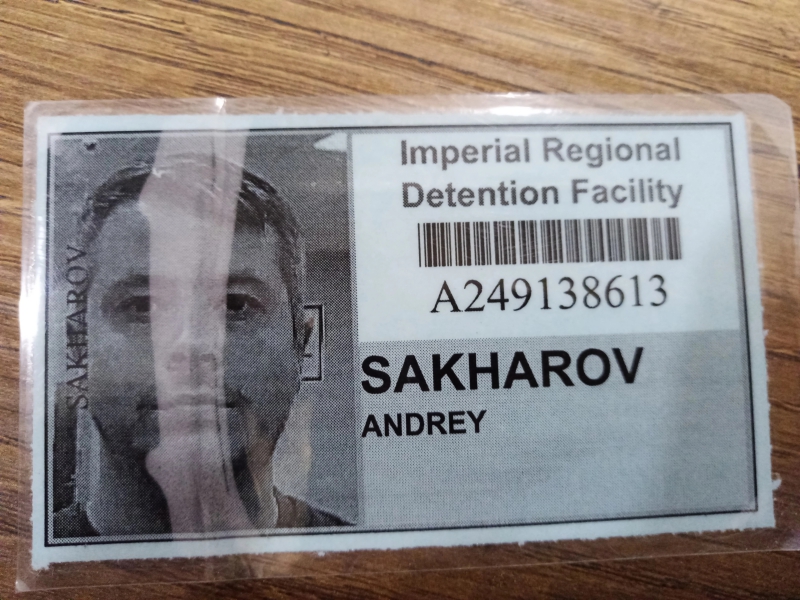
A badge issued to The Insider's interviewee at a US migrant detention center
Two other people The Insider spoke with, Pavel and Yelena, flew to Mexico in September 2024 and waited about five months for a CBP One slot to cross the border legally. But after Trump returned to power in January 2025, everything changed abruptly: the app was shut down, already approved appointments were canceled, and the National Guard was deployed to the border.
“We were in shock, but in early February we still decided to go the old way — by car,” Pavel said. “There were nine of us in the vehicle. On Feb. 8, we crossed the border on the first try. Police ran up, put handcuffs on us and took us in for processing.”
In the United States, they were sent to different detention facilities — Pavel to one in California, Yelena to one in Louisiana. At first, they were told that everyone arriving after Jan. 20, 2025, would be deported. Later, Pavel underwent an interview under the Convention Against Torture screening process, which he passed successfully: he had previously been detained at protests, had donated to FBK, and had even been reported to police by his own father because of his anti-war stance. Yelena, however, was denied, and despite the judge’s promise to give the couple a “second chance,” she was soon being prepared for deportation. Pavel asked that they be sent out together.
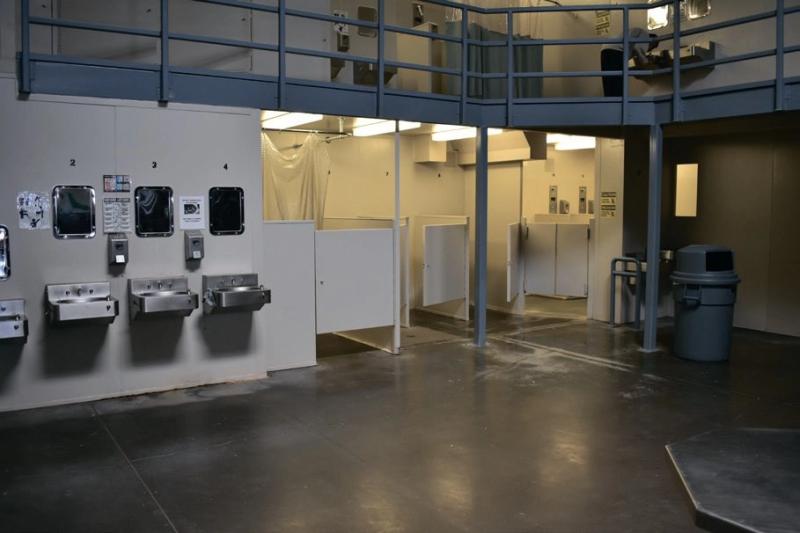
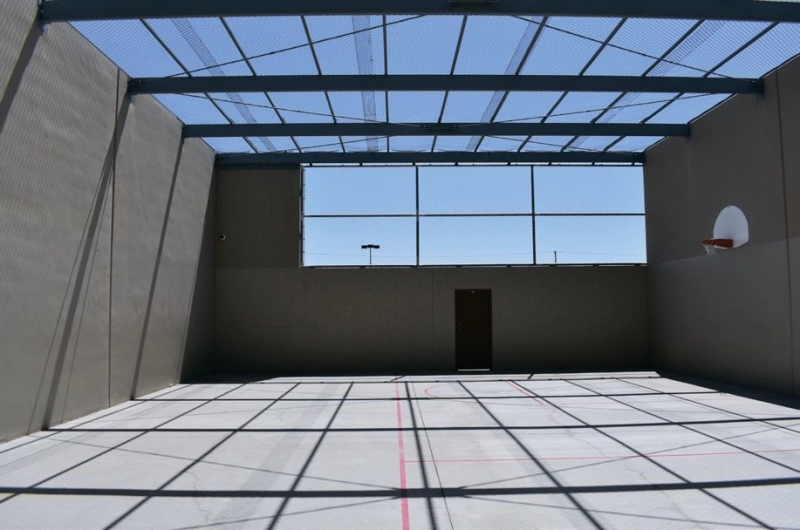
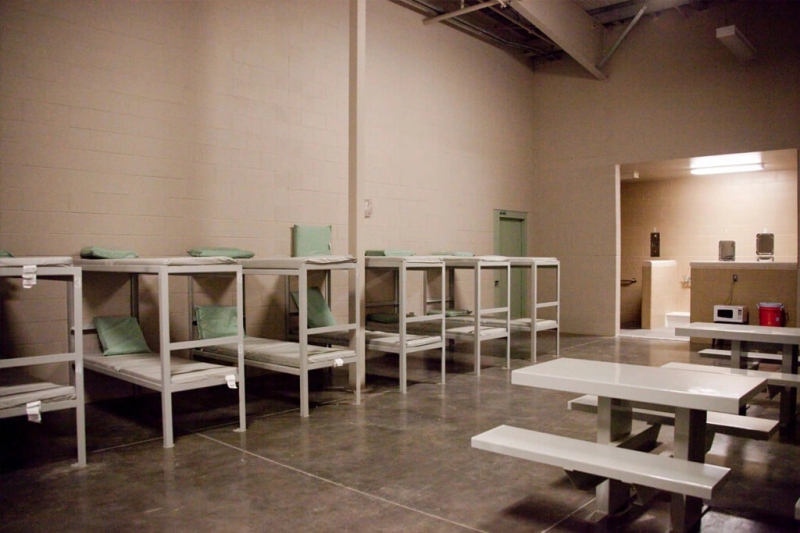
Conditions in U.S. migrant detention centers Photo provided to The Insider by an interviewee
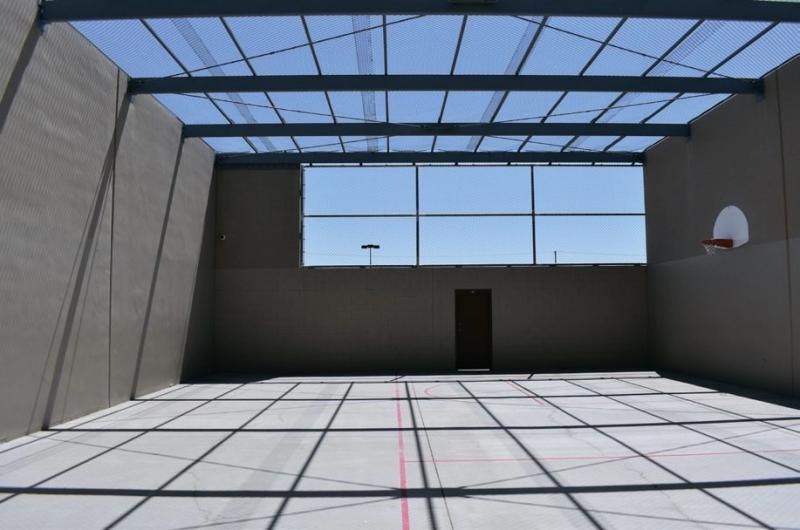
Conditions in U.S. migrant detention centers Photo provided to The Insider by an interviewee
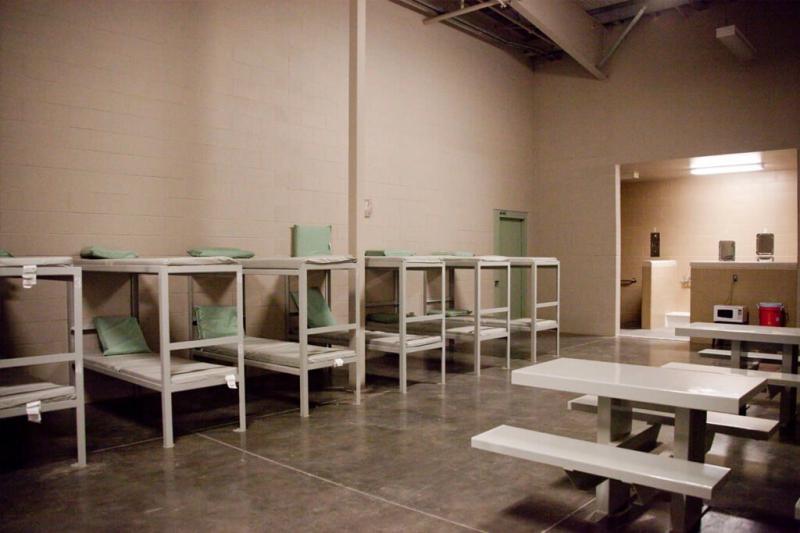
Conditions in U.S. migrant detention centers Photo provided to The Insider by an interviewee
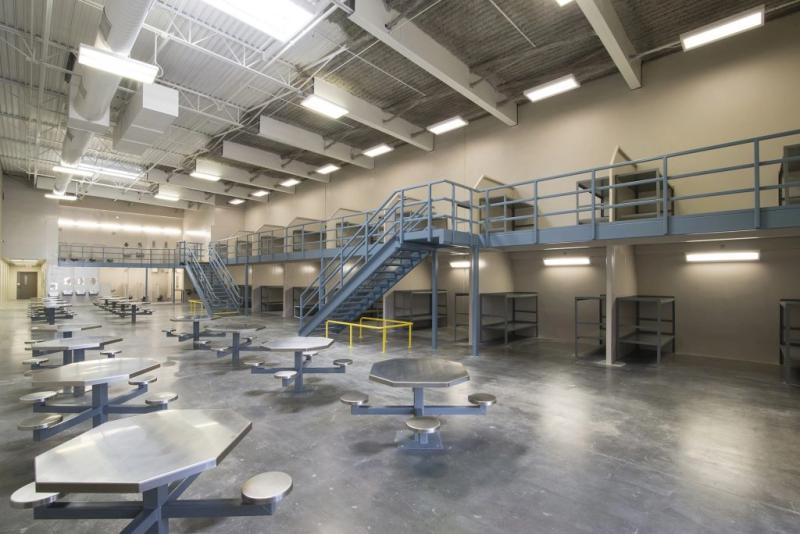
Conditions in U.S. migrant detention centers Photo provided to The Insider by an interviewee ❮
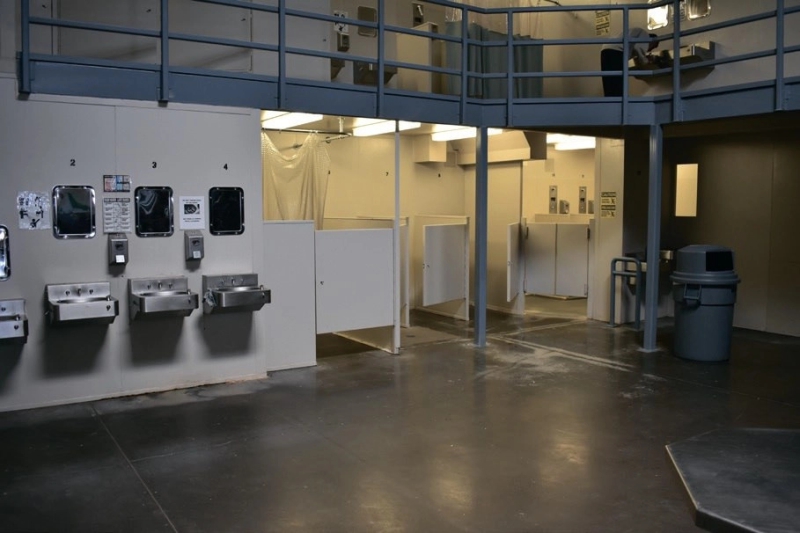
Conditions in U.S. migrant detention centers
❯
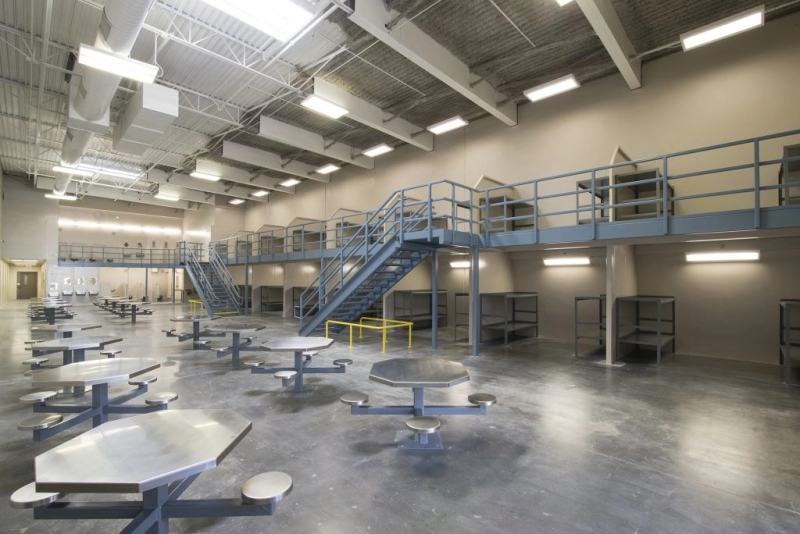
The couple ended up back in Russia, but managed to avoid detention and leave again — this time for Europe. Pavel and Yelena are now in France, studying the language and hoping to fully legalize their status. “Here they don’t put you in any jail, they give you social housing, a little money, and food packages,” Pavel said of their new country.
Another of The Insider’s interviewees, Yevgeny, had taken part in opposition protests since 2017, had been detained once, and joined protests in 2022 during the first days of the war in Ukraine. In May 2023, Yevgeny and his wife flew to Mexico to apply for political asylum in the United States. At the border crossing they were separated: his wife was released, while Yevgeny was sent to an immigration detention center in California.
During his confinement, he was moved through seven detention facilities, two of which, he said, were real prisons. People from former Soviet countries, unlike citizens of other states, went months without receiving any information about their status, Yevgeny recalled. It later emerged that his case would be heard by a judge known for having a minimal rate of approval in cases involving asylum claims. On top of that, Yevgeny himself made a mistake by deciding to file the paperwork on his own. The documents were delivered to the court one day late, meaning he lost the chance to wait for a decision in freedom.

A line of vehicles at the U.S.–Mexico border
At Yevgeny’s final hearing, the judge said he saw no threats to the asylum seeker if he were to return to Russia. Yevgeny tried to challenge the ruling, but soon faced a choice: remain in jail for another year or two while waiting for a decision in his wife’s case, or agree to removal and return later if her case succeeded. Yevgeny chose deportation, and his flight was set for May 1, 2025. During a layover in Morocco, the Russian caused a commotion, flatly refusing to fly to Moscow and demanding that his passport be returned so he could leave for another country. Despite threats from airport staff and even police involvement, he managed to fly to Istanbul and then to Astana, where he stayed with relatives.
At the final hearing, the judge said he saw no threats to the asylum seeker if he were to return to Russia
“I’m in Kazakhstan now, and my wife is in the United States,” Yevgeny said. “I have no doubt everything will be fine. We have a good lawyer, a good judge. But it’s frightening to stay in Kazakhstan for long. The situation here is changing for the worse, and I’ll probably have to move somewhere else.”
In late March, it became known that another deportation flight carrying dozens of Russians had left the United States for Moscow via Cairo.
The second country where rights advocates say conditions have worsened for anti-war Russians is Kazakhstan. At the start of the war in Ukraine, President Kassym-Jomart Tokayev publicly criticized the Kremlin’s actions. In September 2022, amid the flight of hundreds of thousands of Russians escaping mobilization, he instructed the government to “show concern for them and ensure their safety,” as “most of them are forced to leave because of the hopeless situation they face.” At that time, Tokayev called the situation a “political and humanitarian crisis.”
Thanks to Tokayev’s rhetoric, Kazakhstan gained a reputation as a relatively safe country for a quick move. But it soon became clear that the republic was unlikely to remain a “quiet haven” for anti-war Russians. By the end of 2022, the first reports had already appeared of deserters being deported. One of them was Federal Protective Service officer Mikhail Zhilin, who fled Russia during mobilization and was sent back home. He was later sentenced by the Barnaul garrison military court to 6.5 years in a maximum-security penal colony.
At the start of the war in Ukraine, President Tokayev publicly criticized the Kremlin’s actions, so Kazakhstan gained a reputation as a relatively safe country for a quick move
In 2023, Kazakhstan continued detaining and deporting military personnel who did not want to take part in what Russia calls its “special military operation.” Moreover, Russian security officers began operating inside the country: in Astana, they detained former contract serviceman Kamil Kasimov.
Some anti-war Russians tried to obtain asylum in Kazakhstan, but rights advocates say doing so is virtually impossible. Since the republic declared independence, there has been almost only one known case of refugee status being approved — and that was back in the 1990s. Instead, authorities drag out the process of denying asylum, giving the person time, with the help of rights advocates, to leave for a third country.
In recent months, however, that arrangement has begun to break down badly, and Kazakh security services have shown increased interest in Russian migrants. In January 2026, Crimea native Aleksandr Kachkurkin, who worked as an IT developer, was sent from Kazakhstan to Russia.
The formal grounds for his deportation were two administrative citations — for jaywalking and for smoking hookah indoors. An extradition process that usually drags on for weeks or even months took only a few hours in his case. In Russia, Kachkurkin was immediately detained and taken to Moscow’s Meshchansky District Court, which ordered him jailed on charges of “high treason.”
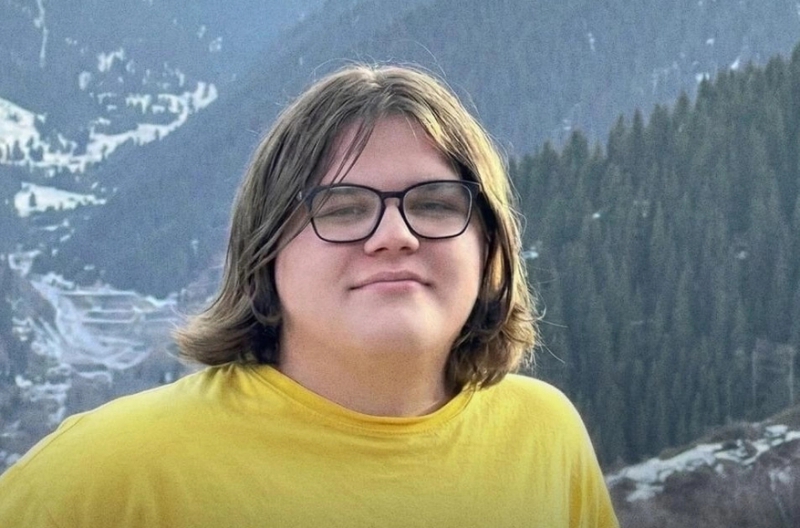
Aleksandr Kachkurkin
At the end of January 2026, at Russia’s request, Kazakhstan’s Prosecutor General’s Office approved the expulsion of Chechen opposition activist Mansur Movlayev, who had been tortured in his homeland. The authorities issued that decision in violation of their own law — Movlayev had a hearing scheduled for Feb. 11 to appeal the denial of refugee status.
Thanks to the efforts of rights advocates, the activist has not yet been sent to Russia, but he has been denied protection. His lawyers plan to appeal. At the same time, Movlayev is being held in pretrial detention, which means he cannot leave for a third country. A serious threat hangs over him: in Chechnya he would almost certainly face torture and possibly extrajudicial execution.
In yet another case, in February Kazakhstan granted Russia’s request to extradite Yulia Yemelyanova, a former employee of Alexei Navalny’s headquarters, who was detained Aug. 31, 2025 at Almaty airport while changing planes for a flight to Vietnam. To avoid extradition, she tried to obtain asylum in Kazakhstan. The country’s Prosecutor General’s Office had guaranteed that the question of handing her over would not be considered until all procedures related to her asylum application were completed. Rights advocates managed to slow her extradition, but on Feb. 27 a court denied her asylum.

Yulia Yemelyanova
Commenting on Yemelyanova’s case, the Anti-War Committee’s Margarita Kuchusheva said that Kazakhstan had not actually approved the extradition request under the article Russia had cited in requesting her surrender. “Legally, it is absolute nonsense. That alone is a monstrous procedural error,” she said. Kuchusheva also told The Insider that the court announced the extradition ruling at a closed session without the lawyers present: “The court refused to provide us with either a written or oral decision. All of this shows that such cases are handled very poorly. Political decisions are being made, and the process itself goes far beyond any bounds of jurisprudence.”
Rights advocates stress that the risks for opposition-minded Russians in Kazakhstan have grown so significant that it should not be considered even as a transit country. “Many people think transit is safe. No — now you shouldn’t go anywhere near Kazakhstan at all,” Kuchusheva said. For those already in the republic, rights advocates advise relocating elsewhere, if possible.
In March, Kazakhstan’s National Security Committee opened an investigation into forged temporary residence permits in the country. Reports appeared in the media citing anonymous rights advocates claiming this portended the “mass deportations” of anti-war Russians; however, lawyers interviewed by The Insider explained that buyers of fake documents are treated in as witnesses in such cases and do not actually bear criminal liability, even if other factors may in fact lead to their expulsion, particularly if they have lived in the country illegally for more than a year. In any case, rights advocates advise anyone who used such schemes to leave Kazakhstan, especially if they face persecution in Russia.
It is all but impossible to draw up a single map of safe and unsafe countries for Russian citizens given the nuances in each individual case. Still, the rights advocates The Insider spoke with identified several states where even transit carries serious risks: Azerbaijan, Belarus, Venezuela, Vietnam, Egypt, India, Indonesia, Kazakhstan, Cambodia, China, Cuba, Kyrgyzstan, the United Arab Emirates, the United States, Tajikistan, Thailand, Turkey, and Uzbekistan.
Overall, no country in the former Soviet space can be considered safe for Russian opposition figures, but Armenia and Georgia are still often the best option for those who cannot get to Europe. Armenian Parliament Speaker Alen Simonyan has said his country will not hand over Russians persecuted for political reasons. At the same time, the republic remains closely tied to Russia in legal terms, meaning there is always a risk that a person listed in the unified wanted database could be detained. There have also been known cases of deserters being abducted by Russian security forces, and it is especially dangerous for Russians on the run to appear near the Russian military base in Gyumri.
Overall, no country in the former Soviet space can be considered safe for Russian opposition figures, but Armenia and Georgia are still often the best option
At the same time, since the start of the war in Ukraine, Armenia has not extradited a single Russian citizen for political reasons. The greater risk is becoming stuck in the republic for an extended period while proceedings drag on. In that event, a person is left in limbo and forced to rely on the goodwill of Armenian officials. One example is that of activist Ilfat Gareyev, from Tatarstan, who has been stranded in Armenia because of a Russian extradition request.
Even so, in the words of Kuchusheva: “So far Armenia is holding up well. There have been no systemic violations on their part.”
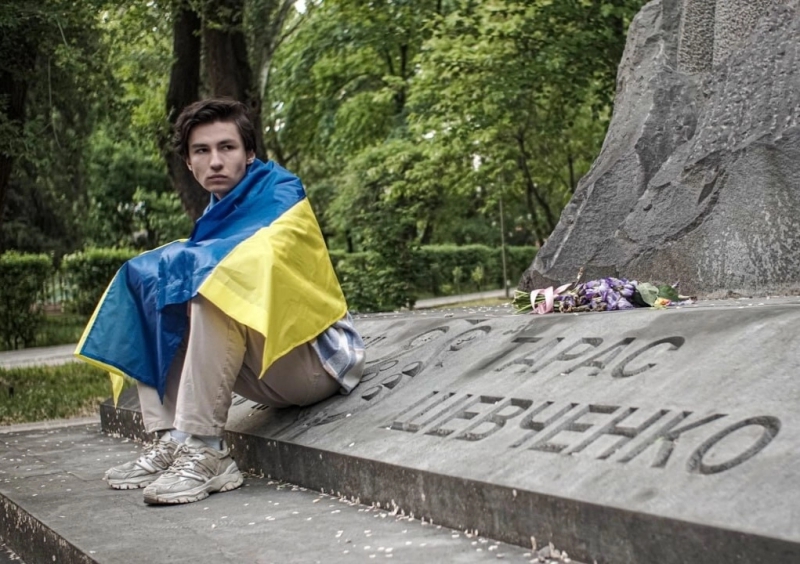
Ilfat Gareyev
Georgia has not openly extradited Russian political activists so far, but there have been known cases of abductions and unlawful removals. The domestic political situation there is also having a negative effect, as the authorities have leaned toward a more pro-Russian course and rhetoric in recent years. There have been incidents in which anti-war Russians who took part in local protests or were “simply active” were barred from entering the country.
“Sometimes people leave for personal reasons and then are not allowed back in. We haven’t yet seen extraditions, but we do not advise staying there for the long term,” Kuchusheva said.
In March, Georgia expelled Russian artist Konstantin Rachkovsky, who had tried to obtain asylum, even as his wife remains in the country. And now Mikhail Timofeyev, a former aide to ex-Khabarovsk region governor Sergei Furgal, has been detained in Tbilisi. He has already been denied political asylum, and local authorities are expected to make a decision regarding extradition soon.