
The escalating conflict in Mali is only the latest episode in the struggle for influence in the Sahel, the semi-arid tropical belt of Africa, once a part of France’s colonial domain, now torn by civil wars. Russia’s risky attempt to seize influence in the region through alliances with local dictators so far appears to have had limited success.
Доступно на русскомContents
The Sahel, a vast region south of the Sahara where desert gradually turns into savanna and tropical forest, usually draws global attention only when a military conflict escalates in the area, as it recently did in Mali.
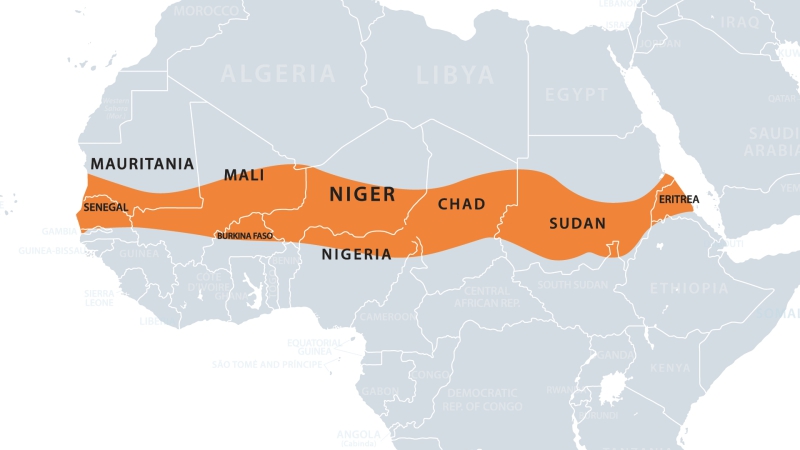
The geographic and political core of the Sahel is traditionally understood as five countries: Mauritania, Mali, Burkina Faso, Niger and Chad. Sudan is sometimes added to that list, but today that is more of a formality. Since 2023, Sudan has been consumed by its fourth devastating civil war and is following its own trajectory. The five core Sahel states, however, share a similar historical background and a whole set of acute modern problems.
The Sahel is a broad semi-arid belt of Africa south of the Sahara Desert, stretching roughly from the Atlantic Ocean to the Red Sea. The name comes from the Arabic word for “shore” or “coast,” referring to the Sahel as the “shore” of the Sahara.
These states are first and foremost united by their colonial legacy. The countries, which gained independence from France in the 1960s, remained within the former colonial power’s sphere of influence for decades. A major factor was the use of the African franc, which firmly locked them in their economic dependence.
Another important factor is religion. Islam dominates the region, with Muslims making up more than 90% of the population in Mauritania, Mali, and Niger, and about 65% in Burkina Faso and Chad. At the same time, large territories are de facto controlled by radical groups operating under the banners of al-Qaida or the Islamic State. The economic situation remains dire, with the Sahel consistently ranking among the poorest regions in the world. GDP per capita ranges from $1,500 in Mauritania to a very modest $550 in Niger.
GDP per capita in the Sahel ranges from $1,500 in Mauritania to a very modest $550 in Niger
Extreme poverty is accompanied by a deep crisis of statehood. With the possible exception of relatively sparsely populated Mauritania, these are classic failed states, where authorities have weak control over borders and cannot provide the population with basic services, from education and health care to justice. The situation is aggravated by high birth rates, ranging from 4.4 children per woman in Burkina Faso to 6.7 in Niger, which could double the region’s population by 2050.
All these factors predictably led to political turbulence. About 10 to 15 years ago, the fragile stability there broke down. The rise of Islamists and the inefficiency of old pro-French elites triggered a series of military coups in Mali, Burkina Faso and Niger, finally undermining the legitimacy of state institutions.
In the middle of the last century, much of Africa was under French rule. Unlike Algeria, which went through a brutal war of independence, the Sahel countries parted with the colonial power relatively peacefully. That left hope for constructive ties in a new format.
France’s strategy in Africa was based on maintaining its presence through military bases, economic projects, and development programs. But no clear long-term plan was ever developed. Memories of the Algerian conflict and discontent in newly independent states made the policy highly vulnerable: almost any action by Paris could easily be interpreted as neocolonialism.
For a long time, the Sahel remained on the margins of attention, overshadowed by more prosperous African neighbors. Local governments cooperated with the French military and French companies, for example, in uranium mining in Niger or gold mining in Mali, while periodically invoking historical injustice.
Another pattern was also visible: the more successful a state became, like Senegal or the Ivory Coast, the easier it was to build dialogue with France. Others, meanwhile, often sought to justify their failures by blaming the negative influence of the former colonial power.
States often sought to justify their failures by blaming the negative influence of France, the former colonial power
The colonial past is a difficult legacy, but more than 65 years of independence now make it possible to speak of different trajectories among various African states. Some have developed dynamically, even as others have remained stuck in ineffective models of corrupt and incompetent regimes that continue to seek legitimacy by settling scores with the former colonial power. Nevertheless, Senegal, the Ivory Coast, Benin, Cameroon, Gabon, and several other countries have workable relations with France.
A new phase for the region began in January 2013, when jihadists in Mali launched their first offensive toward the capital, Bamako. Mali’s government formally requested help from Paris, and France responded with Operation Serval. Relying on bases in Niger and Chad, French forces quickly defeated the militants and restored government control over the north of the country.
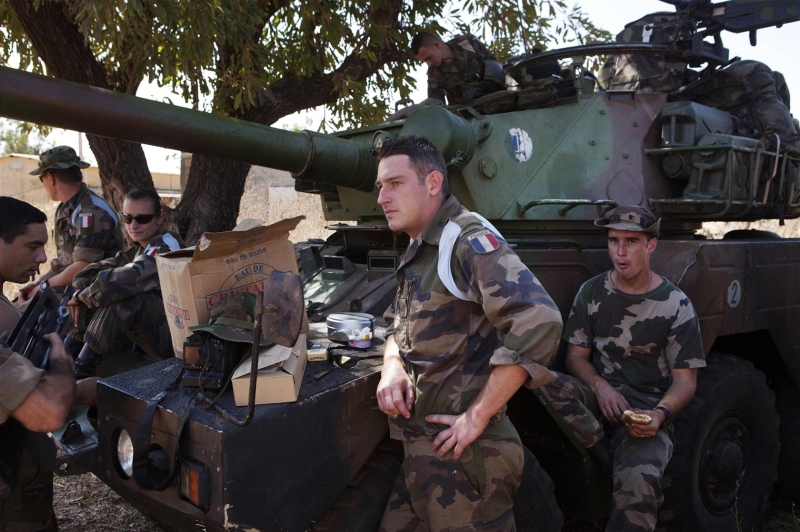
French troops at a base in Bamako in 2013
But local military success did not solve systemic problems. To consolidate the gains, Paris launched Operation Barkhane. Its goal was to help the Sahel countries provide their own security with minimal external support. Still, even at its peak, the contingent numbered only 5,500 troops — far too few to control an area the size of Europe. The strengthening of national armies played an unexpected role: they developed political ambitions.
In the end, the initiative failed. Local governments remained passive, and the French presence, which had produced positive results at first, increasingly came to seem useless and reminiscent of the recent colonial past. A deepening internal crisis led to a series of military coups: two in Mali (in 2020 and 2021), then one in Burkina Faso in 2022, and finally one in Niger in 2023. Events in Chad, where President Idriss Déby was killed in an armed clash in 2021 and power passed by default to his son, must also be added to this list. In short, nearly all of the region’s weak and corrupt (but legitimate and pro-French) governments were replaced by military juntas with revolutionary ambitions.
France’s postcolonial policy is changing before our eyes. Operation Barkhane was Paris’ last attempt to build a major regional coalition against radical Islam and in support of development programs. However, France lost 58 troops during Operations Serval and Barkhane, a toll that French society expected ought to produce visible results. Those results did not materialize. As hostile forces seized power in key countries, the mission lost its purpose. In 2025, France officially closed its bases in Senegal and Chad. Now, in the event of a new crisis, France no longer has the infrastructure in place for a rapid military response.
Even before that, Paris had reacted cautiously to regime changes. Sanctions and diplomatic pressure from regional bodies such as the Economic Community of West African States, or ECOWAS (also known by its French acronym CEDEAO), did not shift the new authorities’ positions. Neither did threats that lacked military backing. When Assimi Goita led a mutiny in Mali in 2020, France stopped short of forceful intervention. Paris accepted the new political reality, seeking to avoid accusations of occupation after concluding that past direct military interventions in similar cases had been a mistake.
France’s departure created an opening for Russia. Moscow offered a model of cooperation through private military companies, in which protection for the ruling regime is exchanged for access to natural resources.
Since the 1960s, the Soviet Union viewed Africa as an important theater for anti-Western operations during the Cold War. Countries in the Sahel did not play the main role in those projects, but some of them, particularly Mali and Burkina Faso, declared that they had chosen a socialist path of development and received arms supplies, economic aid, and student training programs in return.
After the Soviet Union collapsed, Russia struggled for years to define its inherited relationships with African countries. With the emergence of the Wagner private military company in the 2010s, a solution appeared — providing security services for African governments in exchange for access to mineral resources. Russia had already tested that approach in the Central African Republic.
Two points are worth noting. First, the regimes most in need of PMC support were the most unstable, seeking to preserve the personal power of their leaders by any means possible, from police repression to aggressive propaganda. Second, there are questions about the economic profitability of these projects, since their costs can be enormous. They are not always possible without strong political backing. However, Vladimir Putin has revealed that Russian PMCs were funded by the state.
The regimes most in need of PMC support were the most unstable, seeking to preserve the personal power of their leaders by any means
Military juntas, disillusioned with Paris, turned to Moscow. Mali was the first to initiate the withdrawal of French troops, specifically to replace them with Wagner units. Around the same time, the military juntas in Mali, Burkina Faso, and Niger fell into international isolation and came under sanctions from neighboring countries. They then created the Alliance of Sahel States and officially left ECOWAS. Russia, meanwhile, remained in the region after the death of Yevgeny Prigozhin, with Wagner’s functions transferred to the Africa Corps, which is controlled by Russia’s Defense Ministry.
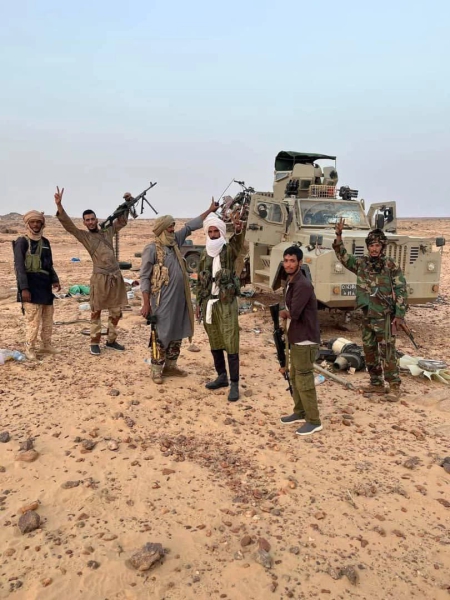
Vehicle and bodies of Russian mercenaries ambushed in Mali
But changing partners has not brought stability. In July 2024, Mali’s army and Russian mercenaries were ambushed in the north of the country and suffered heavy losses. In November 2025, Bamako faced a blockade by radicals, and in January 2026, militants attacked the airport in Niamey, the capital of Niger. The recent killing of Mali’s defense minister offers another example.
In foreign policy, however, Moscow strengthened its position through support from these countries. In February 2025, the three Sahel states voted against a UN General Assembly resolution condemning Russia’s actions in Ukraine.
Before the 2023 coup, Niger was France’s second-largest uranium supplier, with extraction carried out by the company Orano. Ore from Niger was transported south to the Beninese port of Cotonou, from where it was shipped by sea to France. There, uranium was enriched to the level needed for use in nuclear power plants. But Niger’s new leadership decided to revise the agreements, leading to litigation and a halt in production. In 2025, Niger signed a cooperation memorandum with Rosatom, Russia’s state-owned nuclear energy corporation.
Niger’s generals may have expected Russian companies to replace Orano quickly and easily. Instead, the plan ran into a logistical dead end. The problems include not only uranium extraction and storage, but also exports. Previously, uranium was shipped through Benin, a country friendly to France. However, that border is now effectively closed. An attempted coup in Benin in December 2025, in which Russia was suspected of involvement, failed.
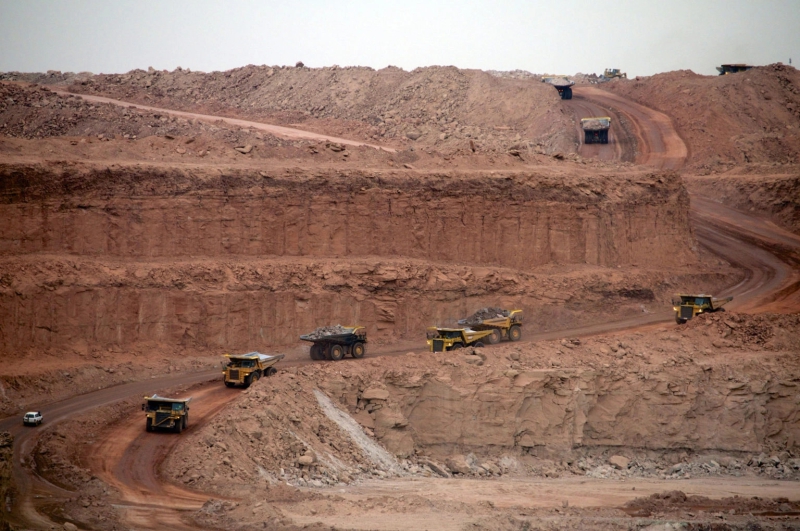
Uranium ore being transported out of a mine in Niger
Unlike the departing French — or representatives from China, India, Turkey and the Gulf monarchies, which are moving in — Russia has little to offer beyond military support for the current regime. It lacks experience operating in modern Africa through development programs, despite talk of possibly launching them.
Niger’s uranium sector shows that even where Russian companies may have potential advantages, the support of a military junta does not offset practical obstacles. The region’s main telecommunications operators, for example, still belong to international groups with no Russian involvement.
The Sahel is at an impasse. Military governments are in no hurry to hold elections, fearing the loss of power. The fight against jihadists is producing no clear successes, while interethnic conflicts remain acute. There is a serious risk that if radical groups create a caliphate here, it would be a structure modeled on ISIS, recognizing no borders. It would not look like Afghanistan, where the Taliban, while imposing its order inside the country, understood that borders existed and that neighbors were ready to defend them. In that sense, the Taliban could be considered a local phenomenon.
High birthrates, meanwhile, are creating an explosive demographic mix of rising unemployment and a low average age. The situation is partly eased by growing emigration, mainly toward the EU. But even those who fail to reach Europe try to settle in the Maghreb or the Middle East. This is not a free exodus, but an extremely risky undertaking given the prevalence of criminal trafficking through parts of the Sahara where no laws apply. Young people from the Sahel are not seen as welcome guests in more developed parts of Africa, let alone in Europe. The absence of life prospects leaves them with a narrow choice among attempted emigration, radical Islam, or criminal groups.
The young people of the Sahel are left with a narrow choice among attempted emigration, radical Islam, or joining criminal groups
Destabilization around the Sahel is unfolding almost on its own. It threatens, above all, the more prosperous countries of the Gulf of Guinea. The Ivory Coast, Ghana, Benin, Nigeria, and Cameroon feel this pressure on their northern borders, and the attempted coup in Benin in December 2025 can be seen as a sign of an expanding zone of political chaos. The Sahel risks becoming a vortex of instability that is already projecting threats onto neighboring states. Without large-scale international support, which is so far absent, it will be extremely difficult for the region to overcome this crisis.