
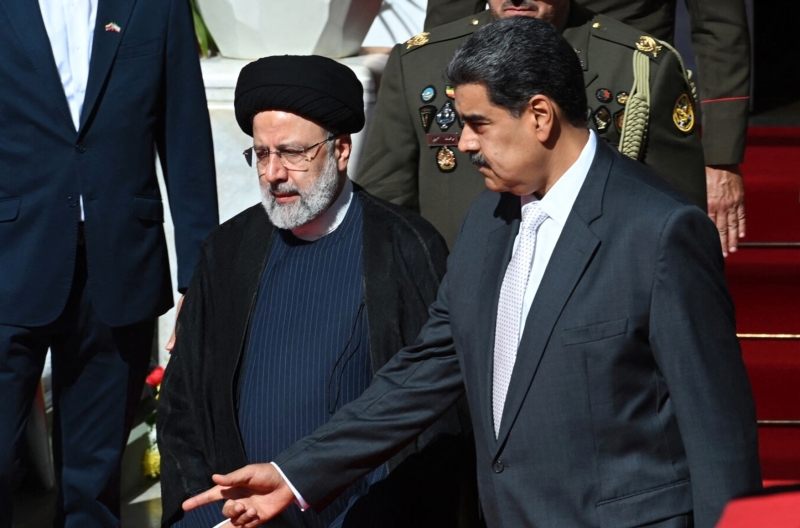
The combined 26 years of rule by Nicolás Maduro and his predecessor Hugo Chávez turned Venezuela into the Islamic Republic of Iran’s main ally outside the Middle East. One consequence of this rapprochement has been the active penetration of Venezuelan business, politics, and criminal networks by Lebanon’s Hezbollah, the terrorist organization that operates as Tehran’s overseas paramilitary proxy. It has put down such deep roots in Venezuela that even Maduro’s ouster will not be enough to drive it out of the country.
In March 2007, a “bridge of resistance to imperialism” was opened between Tehran and Caracas, according to state propaganda in both countries. The grand title was bestowed on the first-ever direct air route between Iran and Venezuela — albeit one with an intermediate stop in Damascus, Syria.
Flight IR744, jointly operated by Iran Air and Venezuela’s Conviasa, was not available to ordinary people — its tickets were not offered for open sale. According to official information, they were distributed through authorized government bodies responsible for contacts between the government of then Venezuelan president Hugo Chávez and the ayatollahs’ regime.
The “by invitation only” route was launched just months after a visit to Caracas by Mahmoud Ahmadinejad, who at the time served as Iran’s president. Ahmadinejad and Chávez found common ground in anti-Americanism and decided to confront Washington together, backing up their words with a raft of bilateral agreements.
During Chávez’s presidency, Iranian manufacturing facilities and financial entities were established in Venezuela. The Islamic Revolutionary Guard Corps (IRGC) — an elite branch of Iran’s armed forces that was under international sanctions and was deeply involved in the country’s economy — was also active.
The IRGC set up companies in South America affiliated with Venezuela’s main oil company, Petroleos de Venezuela S.A. (PDVSA). The two states also jointly pursued research and development in the energy, engineering, and chemical sectors.
Iran’s state shipping monopoly, Islamic Republic of Iran Shipping Lines (IRISL), was granted control over one of Venezuela’s ports. Notably, the reconstruction of the port infrastructure was carried out by an Iranian company that had been placed on international sanctions lists for its involvement in the Islamic Republic’s nuclear program.
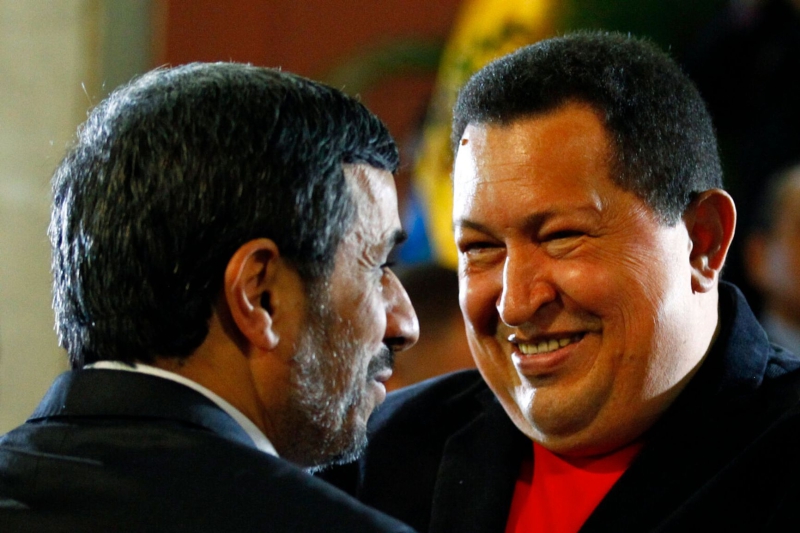
In the West, above all in the United States, there were serious doubts about the “purely peaceful nature” of cooperation between the two rogue regimes. All these joint ventures and projects looked like a cover for various illicit activities — for example, for the illegal acquisition in the Americas and transfer to Iran of military goods that Tehran could not purchase openly because of sanctions. Most importantly, they appeared to facilitate continued work on Iran’s nuclear and missile programs far from Iranian test sites and research centers that by then were already well known to inspectors from the International Atomic Energy Agency and analysts at the Central Intelligence Agency.
Confirmation of these concerns came from an unexpected source: employees of the state airline Conviasa launched an anonymous website, where they disclosed numerous details about the Caracas–Damascus–Tehran flight. Among other things, they wrote that passengers and baggage were brought on board bypassing airport security, customs, and border control.
The Tehran–Damascus–Caracas flight transported missile components, weapons, and even radioactive materials
It also emerged that frequent passengers on the flight included not only Iranian and Venezuelan diplomats but also military specialists from both countries, officers of the Islamic Revolutionary Guard Corps, and operatives from Hamas and Hezbollah. In addition, airline employees disclosed that the flight was used to transport missile components and other types of weaponry, and even radioactive materials. The latter claim may sound fantastical, but it is worth recalling Hugo Chávez’s penchant for extravagance.
The whistleblowing website disappeared just a few days after it appeared, but it managed to cause a stir. In 2010, Venezuelan authorities, fearing new sanctions, canceled the scandal-ridden flight. Cooperation between Caracas and its Middle Eastern partners, however, did not end there. After all, it had begun long before Mahmoud Ahmadinejad and Hugo Chávez signed their package of declarations and memorandums.
Like its northern neighbor, South America is a land of immigrants. Arabs began moving from the Ottoman Empire to South America in the late 19th century, mostly Syrians and Lebanese.
For a long time, migration to Catholic South America consisted exclusively of Arab Christians, fleeing political instability that often escalated into interconfessional bloodshed. But closer to the middle of the 20th century, the economic prospects of the Western Hemisphere — far more promising than those of the Middle East — triggered mass migration by Arab Muslims as well. Venezuela itself was a fairly prosperous country for several decades after World War II. In the 1970s, the famous Concorde even flew to Caracas from Paris.
Venezuela today is home to around 1.6 million people of Arab origin, and across the continent as a whole, the Arab population numbers in the tens of millions. The majority of South American Arabs are Christians and Sunni Muslims.
Around 1.6 million people of Arab origin now live in Venezuela
But there are also Shiites — from several hundred thousand to two million, by various estimates. Among them are some wealthy individuals, including in Venezuela. It is therefore hardly surprising that when Iran created the military-political movement Hezbollah in the 1980s to defend Shiite interests in Lebanon, and later across the wider Middle East, envoys of the movement almost immediately headed for South America.
At first, their mission was straightforward: to collect donations from local Shiites, recruit the most active among them into their ranks, and send them to Lebanon, where a protracted civil war was under way. In addition, as at home, Hezbollah representatives across the ocean engaged in terrorism. It is this paramilitary organization that is suspected of carrying out two terrorist attacks in Argentina in the 1990s against Israeli diplomats and the local Jewish community — those attacks claimed more than 100 lives.
Over time, the tasks facing the envoys of the Lebanese movement grew more complex. They built a shadow financial empire in South America capable of keeping Hezbollah afloat even when funding from its main sponsor — Iran — came up short. Revenues generated by South America’s underground networks could not fully replace transfers from Tehran, which amount to as much as $1 billion a year, but the relationship certainly opened up new opportunities. The backbone of the Middle Eastern group’s overseas business became drug trafficking.
In 2004, the U.S. Drug Enforcement Administration, together with Colombian law enforcement, carried out an operation known as Project Titan. Its goal was to identify and disrupt cocaine shipments from South America to Europe, Africa, and the Middle East that were controlled by Hezbollah.
One of the key figures in the scheme was a trafficker named Shakri Harb, nicknamed Taliban, who held both Colombian and Lebanese passports. He boasted to an undercover agent posing as a buyer that he could, within a matter of days and without any particular difficulty, send 950 kilograms of Colombian cocaine from South America to Lebanon. The speed and lack of obstacles were explained by Hezbollah’s active involvement in the process, with the group taking 12–14 percent of the proceeds from each deal.
Venezuela’s role in this scheme was not limited to serving as a transit country; it also provided political cover. A protégé of Hugo Chávez, the politician of Lebanese-Syrian origin Tareck El Aissami, who served as Venezuela’s minister of interior and justice from 2008 to 2012, issued Venezuelan passports in bulk to citizens of Middle Eastern countries.
Former Venezuelan opposition leader Juan Guaidó claimed that officials at the Interior Ministry were issuing as many as 17 passports a day to Iranians alone, in addition to those handed out to Syrians, Lebanese, and citizens of other Middle Eastern states. Often, the recipients of Venezuelan documents were on international wanted lists, yet these passports granted them visa-free entry to dozens of countries around the world. It is believed that the “El Aissami passports,” which came with new names and freshly laundered biographies, went to more than ten thousand people, many of them involved in Hezbollah’s criminal schemes.
The underground criminal empire was not limited to drug trafficking. Smuggling routes built by mafiosi and officials were used to move illegally mined gold and coal, foodstuffs, alcohol, cigarettes, and electronics. The proceeds were laundered through companies on Venezuela’s Margarita Island, an area with a concentrated Lebanese diaspora.
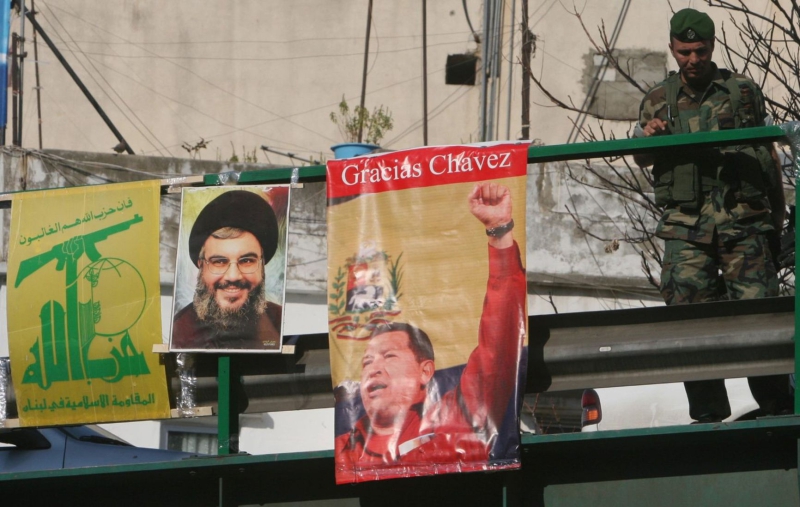
Margarita is one of Venezuela’s main resort destinations, with upscale hotels and restaurants, sandy beaches, and the ruins of old pirate forts. At the same time, this tourist paradise has become a base for several criminal groups operating, according to local residents, under the protection of official Caracas. It was from Margarita’s piers that ships loaded with narcotics set sail, vessels that were regularly intercepted by Western navies and intelligence services.
In 2011, the first evidence emerged that, alongside local gangs and the pro-government militias known as colectivos, Hezbollah was also active on the island. Moreover, it was using Margarita not only as a hub for the stockpiling and onward shipment of illicit cargo, but also as a site for indoctrination and the training of fighters.
Margarita is controlled by the Shiite Nasreddin family, Venezuelans of Lebanese origin. Several members of this family held relatively senior positions in the governments of Hugo Chávez and of Nicolás Maduro. There is, however, no concrete proof that the clan assists Hezbollah or that it allowed the group to open militant training camps on territory under its control.
Nevertheless, one member of the Nasreddin family — Ghazi — is listed in the FBI database of wanted criminals on suspicion of involvement specifically with Hezbollah. Under Hugo Chávez, Ghazi served as Venezuela’s ambassador to Damascus. Until Maduro’s capture by the United States, Ghazi continued to play an active public role, serving as one of the leaders of a Shiite religious center in Caracas and running a state-funded think tank engaged in promoting Maduro’s policies.
Ghazi Nasreddin and Tareck El Aissami are only the tip of the Hezbollah–Iran iceberg in Venezuela. Over the years of its active presence in South America, the movement has managed to embed itself in a wide range of institutions — from drug cartels and colectivos to state structures.
Thousands of Lebanese, Syrians, and Iranians legalized through passport schemes remain in Venezuela and continue to play a double game. Officially holding government posts or running businesses, they unofficially enable Hezbollah to earn and launder millions of dollars. They are assisted by Shiites from Arab diasporas, many of whom sympathize with the Lebanese paramilitary organization, which they see as a defender of their interests and those of their co-religionists in the Middle East.
Thousands of Lebanese, Syrians, and Iranians legalized through passport schemes continue to play a double game
These factors — deep penetration into criminal, state, and business structures, as well as the evident sympathies of an influential diaspora — do not, of course, guarantee Hezbollah’s survival in Venezuela after the capture of Nicolás Maduro by the United States. But they do give it a solid chance of maintaining its presence under whatever new conditions are likely to develop.
In the end, Hezbollah in South America has demonstrated exceptional resilience, embedding itself — right under the noses of the United States — in large-scale criminal schemes and becoming an important partner for drug cartels in Colombia and Mexico. The organization managed to weather the arrest of several of its senior operatives on the continent and retained its structure and operational capabilities after sanctions were tightened.
In Venezuela, without always being able to operate openly, Hezbollah learned to act covertly and adapt to constantly changing circumstances. And its patron and sponsor, the Islamic Republic of Iran, will almost certainly do everything possible to preserve its proxy forces in close proximity to the United States. Given the ayatollahs’ willingness to spend money on a global Islamic revolution even amid a severe domestic crisis — and given Venezuela’s position high on the list of the world’s most corrupt states — it can be assumed that at least some of the movement’s structures will be able to survive the collapse of their Venezuelan patron’s regime.