
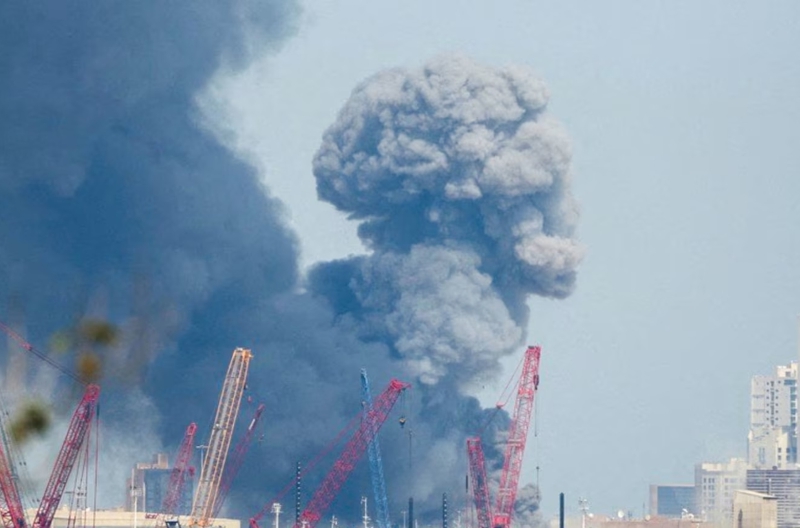
In response to attacks by Israel and the United States, Iran has been indiscriminately striking the territories of Saudi Arabia, the UAE, Qatar, Kuwait, Bahrain, Iraq, Jordan, and Oman, effectively uniting a coalition of angry Arab states against the authorities in Tehran. The surviving ayatollahs seem to have hoped that these Arab states would respond to the attacks by pressuring the United States and Israel to call off their bombing campaign, but that has not come to pass. Instead, new security threats and economic losses in the Middle East have forced the leadership of the Gulf monarchies to quickly make clear whose side they are on.
On Feb. 28, several hours after the first U.S. and Israeli strikes on Iran, the Islamic Republic’s armed forces launched retaliatory attacks. Unlike in June 2025, their chosen target was not only Israel, but also Arab countries.
Such a scenario was foreseeable. Iran had warned that in the event of an attack it would strike American facilities in the region — primarily numerous U.S. military bases — and would also block the Strait of Hormuz. There had already been a similar example in the summer, when Iranian forces struck the U.S. Al Udeid Air Base in Qatar. However, that was an isolated case. This time though, in addition to hitting American bases, Iranian missiles and drones also struck civilian infrastructure: oil refineries, a power plant, ports, airports, data centers, and even hotels.
Oil refineries, a power plant, ports, airports, data centers, and even hotels were hit by Iranian missiles and drones
The attacks primarily affected the UAE, Qatar, Saudi Arabia, Kuwait, and Bahrain, but Iran has also been striking Iraqi Kurdistan — a region that hosts U.S. military and diplomatic facilities as well as armed formations of Iranian Kurdish parties that have opposed Tehran for decades. Missiles fired toward Israel are being intercepted over Jordan, and several Iranian missiles that failed to reach Israel fell on Syrian territory as well.
Of all the Persian Gulf monarchies, Oman — which up until the last moment maintained the role of mediator between Washington and Tehran — has so far been comparatively less affected. Nevertheless, strikes on tankers have been recorded off the Omani coast, and the port of Duqm has also been attacked.
For the Arab monarchies, the consequences of the war extend far beyond military risks. In addition to security threats, in some countries the operation of oil and gas facilities, as well as energy exports, have been suspended. The Strait of Hormuz, which connects the Persian Gulf to the Gulf of Oman, is one of the world’s key energy chokepoints, with around 20% of the global trade in oil and liquefied natural gas (mostly from Qatar) passing through it. Maritime traffic through the strait has almost entirely ceased in recent days.
Any disruptions, whether the result of attacks on vessels, rising insurance premiums, or restrictions on shipping, immediately affect global markets. Of course, countries that have access to alternative maritime routes are in a more resilient position — Saudi Arabia can partially divert export flow through the Red Sea, the UAE can use pipeline networks, and Oman, located on the coast of the Indian Ocean, does not rely on the strait. However, countries like Qatar may face serious problems.
Any disruptions to the flow of energy exports immediately affects global markets
It is also important to take into account the fact that the economic model of the Arabian monarchies has long been built on an image of stability, security, and predictability. This is what attracted international banks, investment funds, technology companies, and tourism to the region, which has become a major financial, logistics, and transport hub connecting Europe, Asia, and Africa. A prolonged military campaign undermines this foundation, and Iran is well aware of that reality.
Most Middle East experts believe that Tehran decided to attack Arab countries in order to force them to pressure Washington to halt the military campaign against Iran and raise the stakes in negotiations lest the global economy suffer too much. The calculation, it seems, was based on the idea that the monarchies will not be able to withstand a prolonged war — and not only them, but also the countries economically tied to them.
In the short term at least, Iran appears to have miscalculated. Arab countries that for months had officially advocated dialogue between Iran and the United States condemned Tehran’s actions. Most importantly, the U.S.-Israeli bombing campaign continues.
Saudi Arabia, Bahrain, Jordan, Kuwait, Qatar, and the UAE issued joint statements with the United States, calling the Iranian attacks «reckless and unjustified.»
«We reaffirm our right to self-defense against these attacks, emphasize our commitment to regional security, and highly value the effective cooperation in air and missile defense that prevented greater loss of life and destruction,» the text published on March 2 states.
There were other similar documents as well, including a declaration by all six Gulf Cooperation Council monarchies(including Oman, which did not sign onto the statement issued with the Americans). Representatives of Qatar, the UAE, Saudi Arabia, and Kuwait also delivered separate statements about the right to respond and/or act in self-defense.
According to Western diplomats frequently cited by Israeli media, Saudi Arabia, the UAE, and possibly Qatar are «very close» to carrying out strikes against Iran, albeit in a largely symbolic form. On March 3, the Israeli television channel N12 reported that Qatar had already struck Iranian territory, even if officials in Doha denied this. Nevertheless, such actions in the coming days cannot be ruled out.
At the same time, warnings are being voiced in the region against direct participation in the war. Former Qatari prime minister Hamad bin Jassim Al Thani said that the Gulf states should not «be drawn into direct confrontation with Iran,» since this would exhaust their resources and allow «Israel to emerge from the conflict stronger.»
In any case, the Arabian monarchies have begun to think about their own future. Against the backdrop of common threat, Saudi Arabia and the UAE set aside their differences and, for the first time since the end of 2025 (when the Saudi air force struck a shipment that had arrived from the UAE at the Yemeni port of Mukalla) set up a phone call between Crown Prince Mohammed bin Salman and President Mohammed bin Zayed, who pledged one another support.
In effect, the anti-Iranian alliance that prevailed during Trump’s first term has been restored. However, if and when the Iranian threat is eliminated, rivalry between the two ambitious regional players will resume.
If and when the Iranian threat is eliminated, rivalry between Saudi Arabia and the UAE will return
On the eve of the war, Arab media repeatedly noted that a weakened Iran under constant pressure from the United States was preferable to the unpredictable consequences of a prolonged war that could lead to the collapse of the ayatollahs’ regime. Such a scenario would mean, for example, crowds of Shiite Muslim refugees flowing into predominantly Sunni Arab states, and Israel benefitting from the elimination of its counterweight in Tehran.
This is why, when the United States and Israel carried out strikes against Iran this past June, the Arabian monarchies expressed condolences while actively calling for de-escalation. At the same time, The Washington Post claims that Saudi Arabia joined Israel’s recent efforts to lobby Washington for strikes on Iran. Riyadh officially denies this, emphasizing that it consistently «supported diplomatic efforts aimed at reaching a credible agreement with Tehran.» Meanwhile, the Qatar-linked publication The Middle East, citing its sources, alleges that it was the Trump administration that persuaded Saudi Arabia to agree to a war against Tehran.
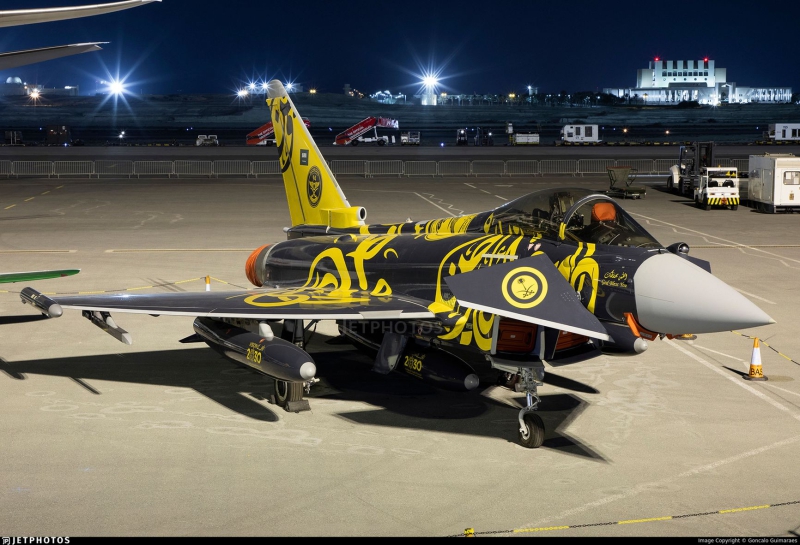
There is no way to verify these claims. Nevertheless, despite Mohammed bin Salman’s impulsiveness, it is doubtful that Riyadh would want to unleash a regional conflict at the moment. At the very least, this would contradict everything that has come from Saudi Arabia over the past three years. However, nothing can be ruled out.
Until recently, Iran was one of Saudi Arabia’s main regional opponents. For decades their relations went through different stages ranging from cold war to open hostility. However, in 2023 the countries restored diplomatic relations. This does not mean that an atmosphere of absolute trust suddenly emerged between them, but public tensions were eased, and economic and cultural contacts resumed. Riyadh declared that diplomacy offered the best guarantee of security and advocated preserving official institutions in various trouble spots throughout the Middle East and Africa.
This largely contrasted with the course chosen by the UAE, which supported armed formations or political structures opposing the recognized authorities in Sudan, Yemen, and Somalia. And while Abu Dhabi increasingly coordinated its regional policy with Israel, Riyadh was gradually aligning itself with the Turkey-Qatar-Pakistan axis. However, the war in Iran has once again reshuffled the regional deck. Ankara and Islamabad condemned the strikes carried out by the United States and Israel, but in Riyadh and Doha, as in the other capitals of most Arabian monarchies (Oman excepted), officials angrily directed their criticism at Tehran.
Like the Arab monarchies, Europe has also been drawn into the war against its will. After the shelling of a British military base in Cyprus and a French base in the UAE, Paris and London decided to send warships and aircraft to the region. They also asked Ukraine for assistance in countering Iranian drones.
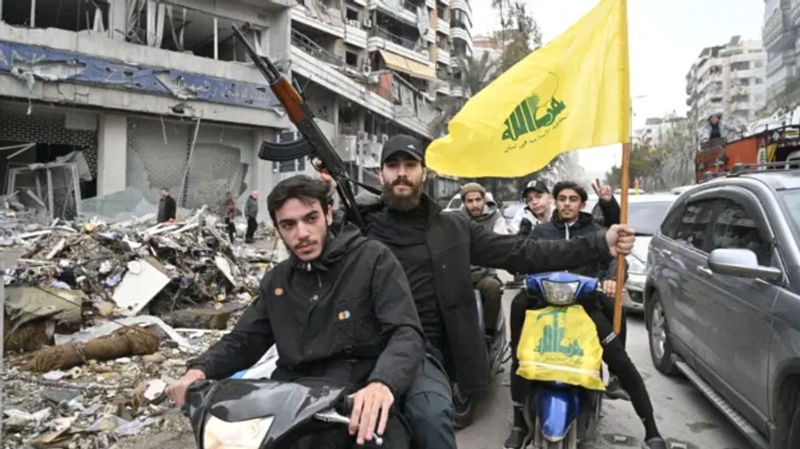
The fact that the strike on the British base was carried out by Lebanese Hezbollah rather than Iran does not change the overall picture. Hezbollah’s armed formations are Tehran’s main proxies in the region. This is a separate headache for regional powers and European states alike – above all for France, which together with the Arabian monarchies and the U.S. acted as a guarantor of the ceasefire between Israel and Hezbollah in 2024.
Hezbollah has attacked Israeli territory as well, creating the risk of reprisals that may once again leave Lebanon in ruins. The government in Beirut vows it will deal with Hezbollah and is pleading with mediators to stop Israeli strikes. But this is unlikely to succeed while the confrontation with Iran continues.
Ankara is also watching developments with concern. Like Oman, Turkey actively tried to prevent a war between Iran and the United States. Unlike the territory of Arab countries, Turkey had previously been spared by Iran, even though it is a NATO member that hosts numerous American military facilities.
Perhaps Tehran did not want to lose political support from Ankara, or perhaps it feared a tough response. The Turkish army is battle-tested, and Erdogan is not lacking in resolve. However, after Iran began launching missiles at Turkish territory, any talk of neutrality can be forgotten. Regional instability will not bypass Turkey, especially if the Kurdish factor comes into play.
Judging by recent publications, the United States and Israel may support the actions of Iranian Kurds against the regime. The main political and armed forces of the Iranian Kurds have been based in Iraq for many years. On the eve of the war, five dissident Kurdish groups announced the creation of the Coalition of Political Forces of Iranian Kurdistan. Its declared goal is to fight «for the overthrow of the Islamic Republic of Iran, for achieving the Kurdish people’s right to self-determination, and for the creation of a national and democratic entity in Iranian Kurdistan based on the political will of the Kurdish nation.»
This alarms many in the region. The Iranian opposition — from supporters of the shah’s heir Reza Pahlavi to adherents of the left-radical Mujahedin-e Khalq — has historically not been friendly with the Kurds. Turkey, Iraq, and Syria also have no interest in seeing Kurdish separatist movements strengthened. Ankara and Damascus have only just managed to put an end to the aspirations for broad autonomy in Syrian Kurdistan, and previously, Washington strongly opposed attempts by Iraqi Kurds to break away from the government in Baghdad. In short, Iranian Kurds are unlikely to be able to count on much outside support, but the United States and Israel may still use their resources and temporarily strengthen them in order to weaken the regime in Tehran.
More broadly, what is happening is forcing Arab countries to recall the experience of Iraq after the overthrow of Saddam Hussein’s regime. In the years since the 2003 American-led invasion, Iraq has experienced occupation, civil war, the threat of fragmentation (mainly from Iraqi Kurdistan), war with the terrorist group Islamic State, and the dominance of armed pro-Iranian formations. At the same time, political instability persists to this day — with all of the attendant economic consequences.
What is happening is forcing Arab countries to recall the experience of Iraq after the overthrow of Saddam Hussein’s regime by the Americans
Of course, the Iranian regime still has not been overthrown, and the process of its prospective demise may drag on for a long time. For now, the ayatollahs and their security structures are demonstrating far greater resilience than Saddam Hussein did in Iraq. This is forcing Iran’s neighbors to wonder whether they were too hasty in backing the attack on Iran. What if the regime endures and they are forced to coexist with it in some way? In any case, decisions must be made about whom to build alliances with and how to ensure the greatest possible security and economic stability under the new conditions.
As some Arab experts note, for the Gulf monarchies the question of the reliability of their security partnership with the United States remains unresolved. In 2019, Donald Trump’s first administration did not respond with a military strike to the attack on Saudi Arabia’s oil facilities, and later Joe Biden’s administration did not react to Houthi attacks against the UAE. Similarly, this past summer, the Qataris were left on their own when Iran and Israel struck their territory in succession. Now they have been drawn into the war and are suffering losses.
In addition, it has become clear that the diplomatic efforts of the Arabian monarchies, reinforced by promises to provide Washington with trillions of dollars in investment, were worth nothing — instead, America’s partnership with Israel prevailed. On the other hand, what would the Arabs do now without American weapons? The answer is nothing, at least for the moment, but they may now intensify the military-technical cooperation already underway with Turkey, China, and Pakistan.
The first lesson of this war for Arab countries, as well as for other regional players, is this: it is better to be on the side of the strong and to avoid waging old battles that have already been lost. At the same time, regional connections, the skillful manipulation of all the strings that Arab leaders can pull, and their knowledge of local realities will still play an important role in the development of events.