
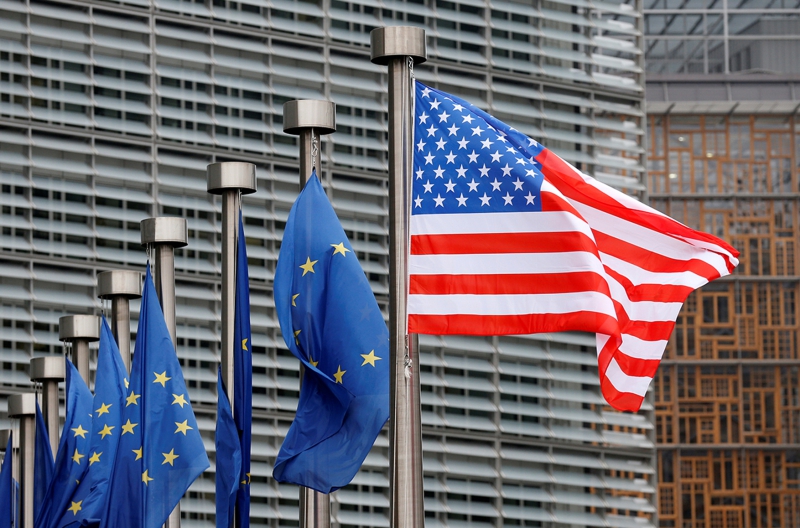
On Jan. 10, representatives from all five of Greenland’s parliamentary parties responded to Donald Trump’s resumption of territorial claims by making clear that they “do not want to be Americans.” The dispute over the enormous Arctic island reflects a systemic crisis in relations between Europe and the United States. Since his return to the White House last January, Trump and his team have made no secret of their disregard for Washington’s traditional transatlantic partners — an approach codified in the administration’s new National Security Strategy. The best course of action Brussels could take would be to acknowledge a definitive break has occurred and to move on along a more independent path, writes Nathalie Tocci, director of Italy’s Institute of International Affairs and a professor at Johns Hopkins University’s School of Advanced International Studies Europe.
As we approach the first anniversary of Donald Trump’s return to the White House, European governments and publics are finally coming to terms with the structural rupture that the events of the past year have wrought in the transatlantic relationship. They no longer hope to save the marriage — at most they want to hope that, after the divorce, Europe and America can eventually become good friends again. This has come with a painful realization that, even in the best case scenario, Europeans will be left to confront the threat from Russia (which begins but does not end in Ukraine) alone. In a worst case scenario, meanwhile, they will face the combined threat posed by Moscow and Washington working in tandem to revise the global security order.
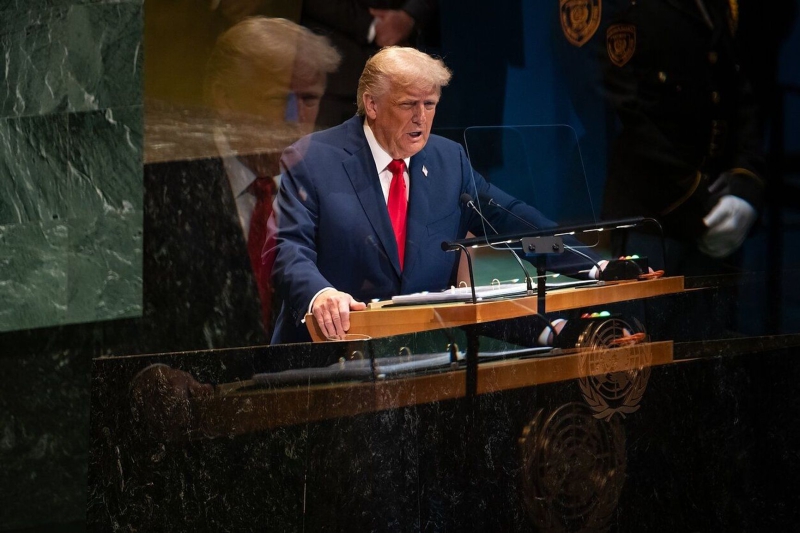
When Trump was elected in 2024, many hoped that the disruption caused by his second administration would be on a scale comparable with his first — a tenure that saw Trump cast doubt on the credibility of Nato’s Article 5, the U.S. renege on the Iran nuclear deal, and Washington withdraw from the Paris climate agreement.
It was a difficult and perhaps even traumatic time for Europeans, but ultimately the transatlantic damage was contained. After Joe Biden was sworn in as president on Jan. 20, 2021, the transatlantic bond felt as strong as ever. Under Biden, the Western coalition organized an unprecedented response to Russia’s aggression against Ukraine, with Sweden and Finland expanding NATO’s ranks. Any ideas of Europe exerting strategic autonomy were all but forgotten.
The in-sincerest form of flattery
Those who watched the evolution of the Make America Great Again (MAGA) movement carefully in the run-up to the 2024 election were rightly alarmed by the prospect of an obsessively vindictive Trump Administration 2.0 that now understood the vulnerabilities of the institutions enforcing America’s country’s democratic norms. From the Heritage Foundation’s Project 2025 to Trump’s increasingly aggressive rhetoric, there was no shortage of evidence suggesting that a second term of Trumpism would present a far more serious threat to the system than the first one had. And yet, most Europeans banked on the whimsical president’s notorious unpredictability, latching on to the comforting hope that things might not turn out to be as bad as the naysayers were warning.
Most Europeans banked on Trump’s unpredictability, latching on to the comforting hope that things might not turn out to be as bad as the naysayers were warning.
After Trump’s second inauguration, Europe attempted to save the transatlantic marriage via two tactical moves: flattery and buying time. The advice regarding flattery often came from well-meaning U.S. colleagues, who were typically either old school Republicans or else MAGA-adjacent figures with a foot remaining in the transatlantic camp. Rarely did Europeans hear the advice from those who were truly in Trump’s inner circle — not out of a lack of will and effort, but because the core members of Team Trump typically shun Europeans (or, at least, they shun Europeans of a transatlanticist bent).
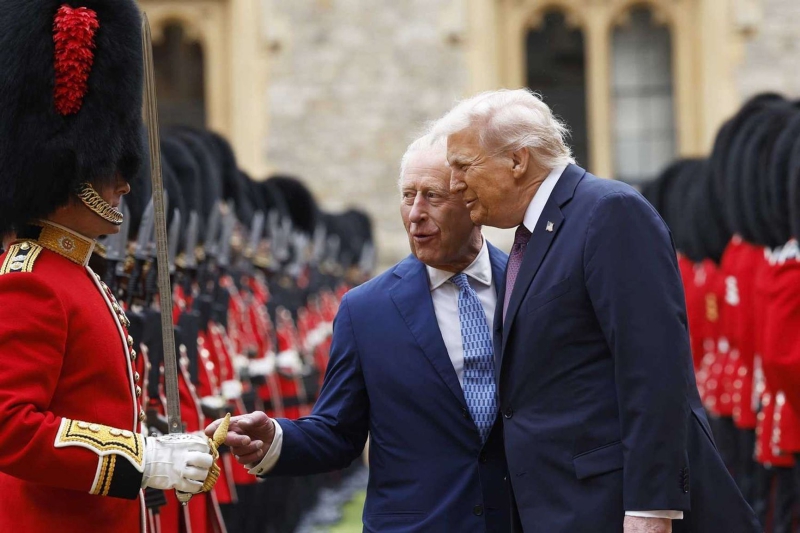
Thus Europeans, listening to those they could reach out to, convinced themselves that flattery would do the trick. As a result, British Prime Minister Keir Starmer broke all protocol by inviting Trump for a second visit to the King. German Chancellor Friedrich Merz brought to Washington a gilt-framed German birth certificate of Trump’s grandfather. And NATO Secretary General Mark Rutte defined Trump as NATO’s “daddy,” complimenting the president for his “WIN” in persuading all NATO allies (apart from Spain) to spend 5% on defense and security.
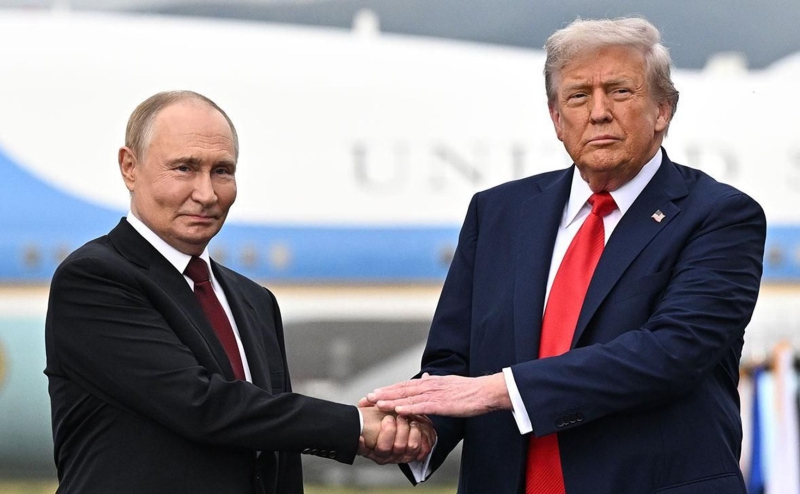
The idea was that flattery would serve to buy time until the second Trump storm had passed and serene transatlantic waters had returned in the form of a new Biden-like figure in the White House. At times this required some frantic European diplomacy aimed at containing the damage caused by events like the Trump-Putin summit in Alaska and the release of the 28-point “peace deal” drafted in Moscow and bought up by Washington. Still, generally speaking, the trick worked — not so much thanks to European diplomatic prowess, but because Putin always overstepped the mark, going too far even for Trump to side with.
Armed dependence
In fairness, even the most optimistic Europeans knew that a healthier transatlantic relationship required them to do more, notably on security and defence. They not only internalized the logic of greater burden sharing, which Americans have been voicing for almost two decades, but even accepted the logic of burden shifting.
They appreciated that in the 21st century there was no real reason why a union whose membership included some of the richest countries in the world should rely on protection from the other side of the ocean. Polish Prime Minister Donald Tusk spoke for many Europeans when he acknowledged that there was no reason why 500 million Europeans had to rely on 300 million Americans to defend themselves against 140 million Russians (who despite their numerical superiority in Ukraine had barely managed to capture 20% of the country after eleven years of incredibly costly war).
Europe appreciated that in the 21st century there was no real reason why a union whose membership included some of the richest countries in the world should rely on protection from the other side of the ocean.
But while agreeing that Europe had to reduce its vulnerabilities by investing more in its own defense, an equally concerted determination to do so while also reducing dependences on the U.S. remained lacking. Instead, the past few months have seen a continuation of a trend in which the share of U.S. weapon systems grows, even as defense budgets increase. Boosting spending at national level has actually led to further European fragmentation in the area of production and procurement, not integration.
Europeans sought to woo the Trump administration, hoping to mitigate the blow of trade tariffs, through the promise of buying hundreds of billions more in U.S. weapons (as well as liquified natural gas). Even in 2025, the transatlantic crisis was treated as a passing phenomenon. Europe needed more gas to wean itself off from Russian supply, and it needed more weapons to defend itself from potential Russian aggression — getting both via the U.S. was not seen as a problem, so long as one assumed that the influence of Trumpism would wane following America’s 2028 elections.
Of course, there have been signals from the very first day of the second Trump administration that increasing, rather than reducing, dependence on the U.S. was not exactly a smart move. Trump has repeatedly voiced his intention of taking over Greenland, directly infringing upon the sovereignty and territorial integrity of NATO and EU member Denmark. After militarily toppling the Maduro regime in Venezuela, Trump has reverted to threatening Copenhagen’s claims to the Arctic island once again.
There have been signals from the very first day of the second Trump administration that increasing, rather than reducing, dependence on the U.S. was not exactly a smart move.
Moreover, when it comes to Ukraine and Russia, the Trump administration has been remarkably coherent and consistent over the last year. An imperial United States, intent on creating and consolidating its sphere of influence in the Western hemisphere, sees Europe as a land to divide and conquer, then share with the Russian empire (a lesser empire, but an empire nonetheless).
Trump’s threats to occupy Greenland, his use of economic coercion against America’s allies, his unabashed support for nationalist far right Eurosceptic forces, his humiliations of Volodymyr Zelensky, and his tacit understandings with Putin all belong to the same harrowingly coherent script.
A new beginning
Trump’s fascination with Vladimir Putin’s Russia remains strong despite the Kremlin’s repeated lack of reciprocity, always deliberately upping the ante of war when Trump trumpeted to the world the expectation that peace in Ukraine was finally within reach — thanks to his mediation. The Trump administration has told Europeans in all possible ways — even writing it down clearly in the 2025 National Security Strategy — that its aim is to end the traditional transatlantic relationship.
Only after all of that are Europeans begrudgingly opening their eyes to this reality. Nowadays one rarely meets a senior European leader who denies that the transatlantic rupture is structural — not because Trumpism will last forever, but because even after America’s authoritarian fever passes, Europe’s dependencies in the areas of defense and technology can be weaponized against them. In this sense, the threat an uncooperative America poses to Brussels is even more existential than that posed by an ultimately mediocre military player like Russia.
Private recognition has yet to be voiced publicly — less still collectively — by Europe’s key leaders. Still, even if it will take awhile for the shift to be reflected in the areas of policy and institutional momentum, sooner or later it will become evident that Europe is moving in the direction of self-sufficiency.
This does not mean the measures it adopts will be timely, adequate, or sufficient — in fact, it is hard to predict that they will be. But it is even harder to believe that Europeans will simply indulge in a slow, collective suicide. Weak and divided as they may be, with eighty years of learned helplessness to unlearn, the transatlantic rupture will not mark the end of Europe — if anything, it will herald a new beginning.