
On May 11, Andriy Yermak was served with a notice of suspicion, and on May 14, a court placed him in custody. Until very recently, the former Head of the Office of the President of Ukraine had been described by many as the “real” president of the country, a figure who held unofficial veto power over all major matters of state. Ukraine’s National Anti-Corruption Bureau (NABU) and Specialized Anti-Corruption Prosecutor’s Office (SAPO) believe the former presidential chief of staff was involved in money laundering. The case grew out of Operation “Midas” – an investigation into large-scale embezzlement in the energy sector that, over the course of six months, evolved into the largest anti-corruption case in the country’s history. Among the suspects are cabinet ministers, deputy prime ministers, and Zelensky allies who were once considered untouchable. Key figures in the “Midas” case are still hiding in Israel, but anti-corruption investigators have managed to demonstrate that they can reach anyone.
Доступно на русскомContents
Court hearings are continuing in Ukraine in the case of Andriy Yermak, the former Head of the Office of the President of Ukraine. On the evening of May 11, Kyiv’s anti-corruption agencies notified Yermak that he was under suspicion for money laundering. This came six months after searches were carried out at his home as part of one of the most high-profile investigations in the country’s history — Operation “Midas,” which concerns the embezzlement of funds in the energy sector.
Businessman Tymur Mindich, a long-time close personal associate of Zelensky’s, has also been implicated, along with several former cabinet level ministers from different Ukrainian governments. The court ordered that Yermak be held in custody for two months, with the possibility of release on bail set at 140 million hryvnias (approximately $3.2 million). The former head of the presidential office said he did not have that kind of money, and that his lawyers would seek the funds “among friends and acquaintances.”
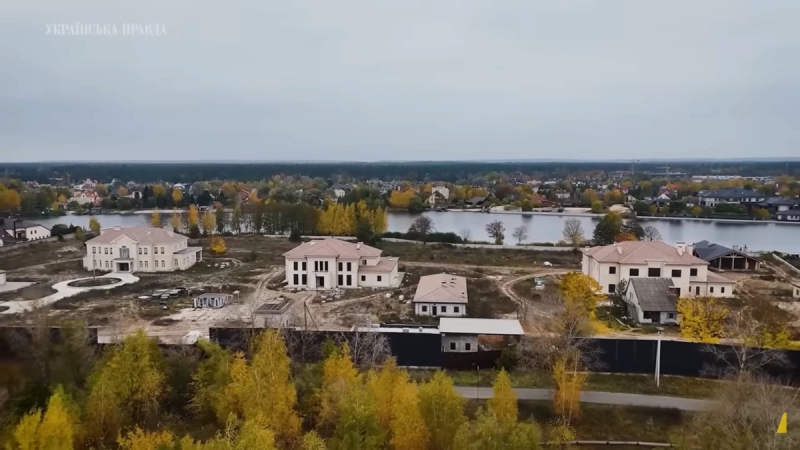
An organized group that allegedly included the former head of the Presidential Office has been uncovered, Ukraine’s Specialized Anti-Corruption Prosecutor’s Office (SAPO) claims. According to the allegations, these people were involved in laundering 460 million hryvnias (€8.9 million) through financing the construction of the elite “Dynasty” cottage complex outside Kyiv.
Members of the scheme allegedly agreed to build four private residences for personal use and one shared residence — with a spa area, swimming pool, gym — the National Anti-Corruption Bureau (NABU) said. The estimated construction cost of a single residence was around $2 million. According to the anti-corruption agencies, one of the houses belonged to Yermak.
Construction work in 2025
According to investigators, the construction was financed using illegally obtained funds funneled through controlled entities, cooperatives, and companies believed to be fictitious entities. Part of the money was disguised, and the real owners of the properties were concealed.
During a hearing earlier this week, it emerged that Yermak consulted a fortune teller about appointments to government posts. She was listed in his contacts as “Veronika Feng Shui Office” and was unlikely to have had official access to government information. Yermak sent her candidates’ dates of birth and asked for advice. Veronika, meanwhile, allegedly turned him against NABU and SAPO.
Yermak consulted a fortune teller about appointments to government posts, and she was listed in his contacts as “Veronika Feng Shui Office”
According to investigators, on Dec. 24, 2025, during a search of Yermak’s driver, a contact saved as “Andriy 2025” (presumably Yermak) sent Veronika the message: “Klymenko, Kryvonos.” Veronika replied that the attacks against him were intensifying and urged him to show resolve and take active countermeasures: “The situation is such that either you [act], or they get you.”
Yermak denies any involvement in the “Dynasty” scheme. Answering journalists’ questions after being served with notices of suspicion, he said that he owned “only one apartment and one car.” He claims that law enforcement agencies were subjected to “unprecedented public pressure” demanding that charges be brought against him. “The investigation must remain independent from political statements, media campaigns, or any other forms of influence,” the former head of the Presidential Office wrote on Telegram.

Design plans for Residence No. 2. According to investigators, this was the codename used for Andriy Yermak
Ukraine’s anti-corruption agencies have also spoken of pressure — this time on potential witnesses involved in the “Dynasty” case. According to NABU Director Semen Kryvonos, investigators are examining the possible involvement of officers from the Security Service of Ukraine (SBU) in the alleged influence plot.
In addition to the former head of the Presidential Office, six other alleged members of the organized group were also served with notices of suspicion on May 12: businessman Tymur Mindich (once again), former Ukrainian Deputy Prime Minister Oleksiy Chernyshov (whom investigators describe as the organizer of the scheme), as well as four people allegedly subordinate to the former deputy prime minister. All of them stand accused of large-scale misappropriation and the laundering of criminal proceeds. NABU has denied any evidence of personal involvement by Volodymyr Zelensky in the case.
NABU denied any involvement by Volodymyr Zelensky in the case
Oleksiy Chernyshov, whom NABU recordings refer to as “Che Guevara,” was formally charged back in November with abuse of office and receiving unlawful benefits.
The court placed him in custody, though he was later released from pretrial detention after posting bail. According to investigators, in June 2020 “Che Guevara” brought a certain “Carlson” — allegedly the aforementioned Mindich — into the construction of the “Dynasty” complex. The businessman himself left Ukraine just hours before the searches began.

Interior design plans for the cottagesScreenshot from a NABU and SAPO video



❮
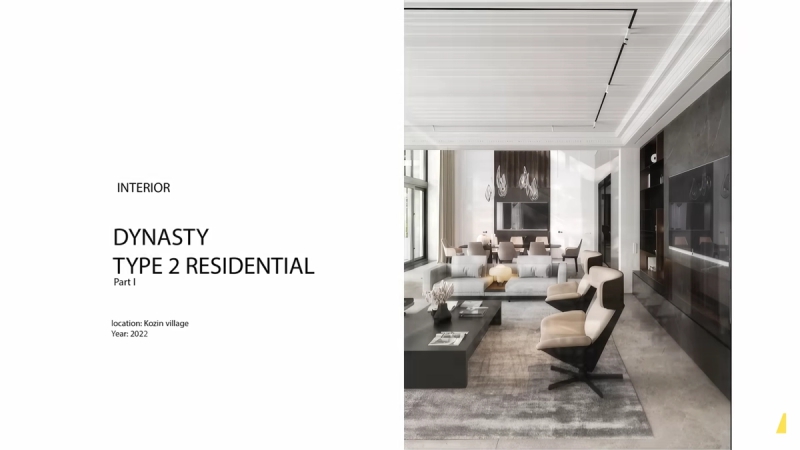
Interior design plans for the cottages
❯



It was during the “Midas” investigation that detectives established that one of the conversations between suspects concerned the construction of a cooperative housing complex outside Kyiv. Amid the public outcry surrounding the case, on Nov. 28, 2025, Yermak was forced to submit his resignation.
As reported by Ukrainska Pravda, Yermak did not believe until the very last moment that he would be dismissed. According to the outlet, when he was asked to write a resignation letter, he reportedly launched into a half-hour tirade in front of the Ukrainian president, one “filled with insults, reproaches, and accusations.”
Commenting on the decision to reshuffle his office, Zelensky said: “I want there to be no questions whatsoever about Ukraine.” After his dismissal, Yermak promised to go to the front, though he never made it into the Armed Forces. Instead, he met with the Secretary of Ukraine’s National Security and Defense Council (NSDC), Rustem Umerov, who has witness status in the “Midas” case, and also with Ukraine’s ambassador to Israel, Yevhen Korniychuk. Mindich is currently living in Israel.
Many expected charges to be brought immediately after Yermak’s resignation, and media outlets were reporting that NABU was already preparing them. But the process dragged on.
The Insider asked SAPO why the charges were brought only now, and spokeswoman Olha Postoliuk explained that Yermak was formally notified of the suspicion regarding his activities as soon as sufficient evidence had been gathered: “At this point, sufficient evidence has been collected to notify the individual in question that he is under suspicion.”
According to Yermak’s lawyer, Ihor Fomin, the case file consists of 16 volumes averaging 250 pages each. NABU insists that the delay was unrelated to any pressure on the bureau.
When preparing to formally notify Yermak that he was under suspicion, the anti-corruption agencies tried to calculate every possible scenario as carefully as possible. “They moved deliberately so that the case would not collapse even at the stage of bail hearings,” says Ihor Reiterovych, head of political and legal programs at the Ukrainian Center for Social Development. Reiterovych agrees that external pressure played no role, and that NABU and SAPO have already demonstrated that “it makes no difference to them what position a person held or currently holds.” He also does not consider the possibility of international pressure to have been significant in the Yermak case: if anything other than the facts and the law influenced the investigation, he says, it was public demand.
The detectives working on “Midas” began their investigation in the summer of 2024, though the operation itself only became public in the fall of 2025. During that time, NABU collected more than 1,000 hours of recorded conversations involving participants in the scheme and conducted dozens of searches.
According to investigators, Tymur Mindich organized a large-scale embezzlement scheme in the energy sector. His trusted associates allegedly skimmed 10–15% from the value of contracts awarded by Energoatom — Ukraine’s largest electricity producer and the operator of all active nuclear power plants in the country.
Six people were initially charged: former Energy Ministry adviser Ihor Myroniuk (“Rocket”), former Energoatom security director Dmytro Basov (“Tenor”), as well as four employees of the so-called “laundromat” allegedly responsible for concealing the money trail — businessman Oleksandr Tsukerman (“Sugarman”), Ihor Fursenko (“Ryoshik”), Lesya Ustymenko (“Lesya Kyiv financier of the brothers”), and Liudmyla Zorina (“Electronic”). Later, the case expanded to include Herman Halushchenko (“Sigismund”), a former Energy Minister who, at the time of his detention, was heading Ukraine’s Ministry of Justice.
Halushchenko was detained while attempting to cross the border and was accused of creating a criminal organization and “laundering illegally obtained assets.” Ukraine’s High Anti-Corruption Court ordered his arrest with the possibility of release on bail.
According to investigators, the group received more than $112 million in cash from schemes in the energy sector after it was allegedly laundered through cryptocurrency and an offshore fund managed by members of Halushchenko’s family. NABU recordings reveal that while heading the Energy Ministry (2021-2025), Halushchenko wanted to leave his post and “go somewhere as an ambassador.”
NABU wiretaps revealed that while heading the Energy Ministry, Herman Halushchenko wanted to leave his post and “go somewhere as an ambassador”
The former minister explained his acquaintance with Tymur Mindich simply by saying that their children had been in the same class at school. “Since then, we stayed in touch, but I wouldn’t say we were close friends… The last time I spoke to and saw Mindich was in the summer of 2025 at an apartment on Hrushevsky Street. It was just a personal meeting. We talked about various things, nothing special was discussed, no issues,” he said, adding that Oleksandr Tsukerman was also present at the meeting.
Halushchenko denies all of the accusations against him. He remains in pretrial detention, as does Ihor Myroniuk. An attempt was made to post bail for the latter, but Ukraine’s financial monitoring service blocked the funds based on the suspicion that they originated from illegal sources.
Four other suspects were released on bail, including “Tenor” — Dmytro Basov from Energoatom, whom investigators consider one of the key participants in the alleged “laundromat” — and the “laundromat’s” suspected accountant, Ihor Fursenko.
The main figures in Operation “Midas,” however — businessmen Oleksandr Tsukerman and Tymur Mindich — left Ukraine before the searches began and have remained in Israel ever since. They were placed on a wanted list in November and arrested in absentia in December. Tsukerman said that he would “gladly return to Ukraine when the time comes.” Needless to say, he has not done so.
Mindich commented publicly on the scandal for the first time at the end of December, when journalists from Ukrainska Pravda managed to track him down in Israel. The businessman said he believed he had been made a “scapegoat” and that he was being accused of “a million things” that he knew nothing about. However, he was unable to refute the allegations made by NABU and SAPO.
At the end of April, Ukrainska Pravda began publishing transcripts of intercepted conversations involving suspects in the case — the so-called “Mindich tapes.” The recordings were made by NABU and SAPO in the Kyiv apartment of businessman Tymur Mindich and were added to the criminal case file. More than ten volumes of materials have already been sent to Israel as part of a request for the extradition of Mindich and Tsukerman.
As it turned out, senior officials speak Russian among themselves and refer to one another by nicknames or first names. The recordings mention “Vova,” “Andriy,” “Lyosha,” “Oleg,” and “Surgeon.” Journalists had to separately explain who was who. “Lyosha” is believed to refer to former Deputy Prime Minister Oleksiy Chernyshov. “Vova” is thought to be Volodymyr Zelensky. “Andriy” and “Surgeon,” according to Ukrainska Pravda, are two designations for Andriy Yermak. “Oleg,” who allegedly “solves problems and became much more intense during the war,” is believed to be Deputy Head of the Presidential Office Oleh Tatarov.
As it turned out, senior Ukrainian officials speak Russian among themselves
In the first batch of recordings, Mindich and former presidential adviser Serhiy Shefir discuss raising bail money for the arrested Oleksiy Chernyshov – with part of the money to be provided “officially” and part “unofficially.” In the second recording, Mindich and then-Defense Minister Rustem Umerov talk about the defense company Fire Point and contracts with the ministry.
According to Ukrainska Pravda, Mindich may have been one of the beneficiaries of the company, which receives more defense contracts than any other firm in Ukraine. According to lawmaker Yaroslav Zhelezniak, 311 billion hryvnias (nearly €6 billion) passed through the company, while Mindich’s personal profit amounted to roughly €1.3 billion. The businessman himself denies any connection to Fire Point. After the publication of the recordings, the public anti-corruption council under the Defense Ministry called for Umerov to be suspended from his duties as Secretary of the National Security and Defence Council; however, he remains in that post. At a May 12 briefing, SAPO head Oleksandr Klymenko said that Umerov had been questioned and that he held witness status in the case.
The second batch of transcripts added new figures to the story. Brothers Andriy Veselyi and Vasyl Veselyi allegedly gained control of the state-owned Sense Bank and the chemical plant Karpatnaftokhim with the assistance of Mindich and Yermak. According to the recordings, six members of the bank’s supervisory board “were supposed to be under the control” of the suspects.
The conversations about construction at the “Dynasty” complex also revealed a curious detail: the fence between Mindich’s plot and “Vova’s” plot had almost already been in place. “There were ten meters left. Everyone dropped everything and left,” Mindich says in the recording. Following the publications, NABU opened criminal proceedings, and the houses in the “Dynasty” complex were placed under arrest.
But the most explosive material was revealed in the third batch of “tapes,” published on May 8. These recordings suggest that the suspects may have been warned about the operation from inside the system. In a September 2025 recording, Ihor Myroniuk and Dmytro Basov discuss then-deputy head of SAPO Andriy Syniuk as “a good contact” who was “ready to help and provide warnings,” though they allegedly said he should only be used in critical situations.
About a month after that conversation, Andriy Syniuk accessed the internal database of Ukraine’s anti-corruption agencies and reviewed files on Oleksandr Tsukerman, Ihor Myroniuk, and Dmytro Basov. Notably, they did this one month before Operation “Midas” was publicly announced.
Ten days later, an aide to Tsukerman allegedly told associates: “The boss called ten minutes ago. He says ‘pack up, we’re going to Palanca.’” Tsukerman crossed the Moldovan border and ended up in Israel. Tymur Mindich left the country four hours before investigators arrived with search warrants.
Syniuk resigned from SAPO of his own accord back in November, immediately after NABU’s first publications. SAPO head Oleksandr Klymenko confirmed that there were at least two separate leaks during the operation, and criminal investigations were opened into each of them. Active investigative measures were not pursued at the time in order not to jeopardize the main operation.
“Midas” triggered a chain reaction. In January 2026, NABU detained Yulia Tymoshenko, leader of the Batkivshchyna parliamentary faction, on the suspicion that she had bribed lawmakers in order to secure their votes in parliament (she says the case was fabricated). Money seized during the searches has already been returned to her.
That same month, former deputy head of the Presidential Office Oleksandr Shurma was arrested in absentia in connection with a case involving the embezzlement of funds allocated under the “green tariff” program affecting Ukraine’s Russian-occupied territories. He said he was prepared to cooperate with investigators from his current whereabouts in Germany. In April, another former Yermak deputy — Andriy Smyrnov — was formally notified that he was under suspicion of bribery.
In total, in 2025, NABU and SAPO opened 737 cases (compared with 669 the previous year), sent more than 750 indictments to court, and secured over 400 convictions. April polling showed rising public trust in the country’s anti-corruption agencies. Researchers link this to the summer 2025 protests, when civil society thwarted the Zelensky administration’s attempts to limit the independence of NABU and SAPO, as well as to the high-profile cases that followed.
In Brussels, the developments have been viewed as a signal. “This demonstrates that Ukraine’s anti-corruption bodies are functioning and carrying out their work,” European Commission spokesman Guillaume Mercier said while commenting on the suspicions against Yermak. Effective anti-corruption efforts, he added, remain a key condition for Ukraine’s progress toward EU membership.
But has Ukraine’s anti-corruption system truly become independent? Skeptics point out that the agencies’ growing effectiveness has been accompanied by tighter personal control by leadership. Former prosecutor Stanislav Bronevytskyi claims that under Oleksandr Klymenko, SAPO prosecutors have turned into “pens” signing documents at the direction of their superior.
For the first time in the history of NABU and SAPO, Ukraine’s anti-corruption apparatus has systematically reached people from the president’s inner circle. But putting the alleged malefactors behind bars will still be no easy task: the main figures in the “Midas” case remain in Israel, leaks risk compromising the process, and former prosecutor Andriy Syniuk can no longer be held accountable after resigning. The system’s ability to see high-profile cases through to actual convictions will become the real test for the institutions that Ukrainian civil society defended in the streets last summer.