
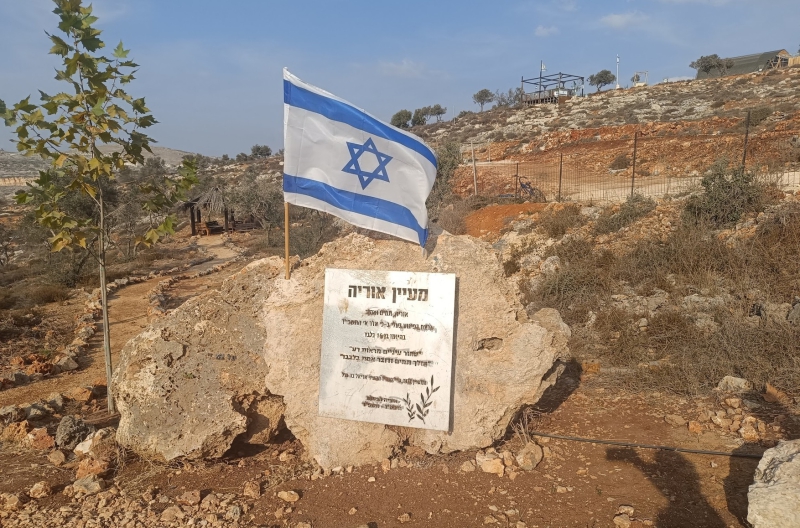
On Dec. 24, the United Kingdom, Germany, Canada, and 11 other countries condemned Israel’s decision to legalize 19 settlements in Judea and Samaria (the West Bank of the Jordan River). A joint statement emphasized that “such steps violate international law and may exacerbate tensions.” At the same time, as early as late October the Israeli Knesset voted to extend the sovereignty of the Jewish state to Judea and Samaria. For now, however, two bills related to this issue remain at the discussion stage, and their further advancement through parliament may indeed stall. This is especially likely amid pressure from Washington, with Donald Trump repeatedly saying that he will not allow Israel to annex the West Bank. Arab allies of the United States are also unlikely to accept annexation. Moreover, they continue to insist on the creation of the State of Palestine, a significant part of which, according to UN Security Council resolutions, should be located precisely in Judea and Samaria. While politicians and diplomats argue, an active battle for land is under way: new farms and outposts are being built, and clashes between Israelis and Palestinians occur almost daily. Marianne Belenkaya spoke with Israelis and Palestinians beyond the “Green Line,” the border separating Israel’s internationally recognized territory from the parts considered occupied under UN resolutions.
It should be acknowledged at the outset: no matter how hard I try to write this text objectively, it will still be biased. It has been more than a year since I began living in the Jewish settlement of Beit Horon, located between two checkpoints that separate the territory beyond the “Green Line.” It is 10 kilometers by highway to one checkpoint and about five kilometers to the other.
An acquaintance of mine rents an apartment in Jaffa, near Tel Aviv, on the other side of the “Green Line,” and says that she is on the “side of good.” Which means that I live on the “side of evil.” This is how not only Palestinians think, but also part of Israeli society, at least in my circle.
Pointing out where I live is also important because, before agreeing to speak to me, some potential protagonists of this story asked where I lived and, upon finding out, categorically refused to give interviews: “We do not deal with occupiers.” At the same time, many who live within the “Green Line” were also not ready to talk. “We don’t give interviews…we don’t deal with journalists” is their standard reply. Some explained their position: whatever we say, we will not be understood anyway, and we will be portrayed as villains.
So, I live beyond the “Green Line,” in the “territories” — that is, in Judea and Samaria, as Israelis say, or in the West Bank of the Jordan River, as it is customary in Arab and international terminology. For some, I am by default a right-wing settler; for others, a leftist, an Arabist, and also a “newcomer,” meaning someone who understands nothing about Israeli politics.
I have found myself not only at the center of the conflict between Palestinians and Israelis, which after years of working in the Middle East is familiar to me, but also caught in the vortex of hatred and contempt that a part of Israel’s citizenry feels toward a different part.
Palestinian farmers go out to harvest olives beyond the boundaries of their communities. Land they own often adjoins Jewish settlements, while villages are frequently cut off from their fields. As a result, harvesting almost always requires permission from the Israeli army and an escort by security forces. However, this does not always help avoid incidents fueled by nationalism.
According to the United Nations and data from Palestinian agricultural organizations, the olive sector provides income to more than 100,000 families and accounts for about a quarter of gross agricultural income, or roughly 5% of GDP of the entire Palestinian economy. More than that, however, in recent decades olive harvesting has become a way for Palestinians to affirm their ownership rights to the land.
According to the Israeli Ministry of Defense, by mid-November 2025, 704 such incidents had been recorded, compared with 675 for all of 2024. By the count of the N12 television channel, an average of about 70 nationalist attacks were carried out per month in 2025. And the victims are not only Palestinians. During the November attacks, several Israelis were beaten, including a reserve officer who was on leave and decided to join a group of volunteers helping Palestinians, as well as two Russian-speaking activists.
Farm outposts are part of the Israeli settlement network in Judea and Samaria (the West Bank) and play a dual role — producing food while reinforcing the Jewish presence in these areas.
The first Palestinian-Israeli agreements were signed in 1993. In the Declaration of Principles (the Oslo I Accord), the State of Israel and the Palestine Liberation Organization recognized each other’s “political rights.” The goal of the negotiations was to create a temporary Palestinian self-governing authority for a transitional period of up to five years. At the first stage, the Gaza Strip (with the exception of areas where Jewish settlements were located) and Jericho were to be transferred under its jurisdiction. Further redeployment of Israeli forces was stipulated in the agreement signed two years later, Oslo II.
Baruch Goldstein, an Israeli physician of American origin, carried out a terrorist attack in 1994 in which he killed 29 Muslim worshippers at the Ibrahimi Mosque (the Cave of the Patriarchs) and wounded more than 150 people. He was disarmed by Muslims and beaten to death.
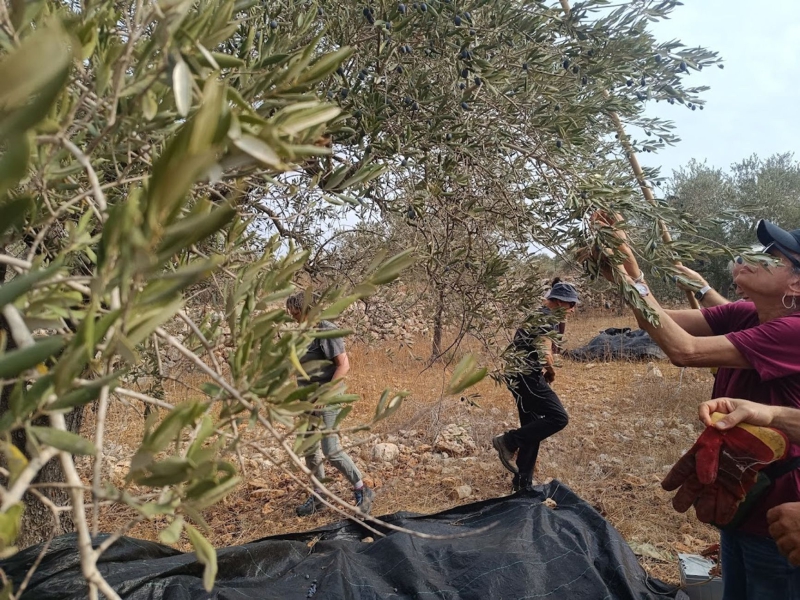
The reason is that under the provisions of the Ottoman Land Code, which is still in force in Judea and Samaria, cultivation of land is recognized as a means of preserving ownership rights. If a plot is not cultivated for three years, the land is reclassified as state property. In parts of Judea and Samaria where Israeli military and civil control is maintained, this automatically means that ownership is transferred to the State of Israel. Against this backdrop, the olive harvest season (October–November) effectively turns into a battle for land.
According to the Israeli Ministry of Defense, by mid-November 2025, 704 such incidents had been recorded, compared with 675 for all of 2024. By the count of the N12 television channel, an average of about 70 nationalist attacks were carried out per month in 2025. And the victims are not only Palestinians. During the November attacks, several Israelis were beaten, including a reserve officer who was on leave and decided to join a group of volunteers helping Palestinians, as well as two Russian-speaking activists.
Farm outposts are part of the Israeli settlement network in Judea and Samaria (the West Bank) and play a dual role — producing food while reinforcing the Jewish presence in these areas.
The first Palestinian-Israeli agreements were signed in 1993. In the Declaration of Principles (the Oslo I Accord), the State of Israel and the Palestine Liberation Organization recognized each other’s “political rights.” The goal of the negotiations was to create a temporary Palestinian self-governing authority for a transitional period of up to five years. At the first stage, the Gaza Strip (with the exception of areas where Jewish settlements were located) and Jericho were to be transferred under its jurisdiction. Further redeployment of Israeli forces was stipulated in the agreement signed two years later, Oslo II.
Baruch Goldstein, an Israeli physician of American origin, carried out a terrorist attack in 1994 in which he killed 29 Muslim worshippers at the Ibrahimi Mosque (the Cave of the Patriarchs) and wounded more than 150 people. He was disarmed by Muslims and beaten to death.
In October and November, the olive harvest season effectively turns into a battle for land
In the autumn of 2025, I managed to go out for the olive harvest only once. It turned out to be one of the calmest harvest days in two months. A small group of activists set out from Jerusalem, and another from Tel Aviv. The event was organized by the Israeli NGO Rabbis for Human Rights (RHR) and was joined by other human rights organizations. It was a weekday, and about 30 people came to help with the olive harvest in the Palestinian village of Deir Istiya, in Samaria. They were Israelis, mostly already retired. But there were also young people, as well as a group of Reform rabbis from the American organization Truah, which is also engaged in human rights work. While still on the road, the group’s escort explained that various provocations were possible and asked us not to argue with the army or settlers if such situations arose.
We arrived at the olive grove and got down to work: spreading tarpaulins under the trees and picking olives together with their Palestinian owners. The only irritation was a drone that circled above the volunteers’ heads for several hours. It was unclear who it belonged to — the army or settlers. At one point, an army vehicle also arrived, and soldiers stood near the harvesting site for about an hour.
“Today it’s somehow very calm,” Ruth said to me, a lone drone not seeming to bother her. Ruth and her husband live in Jerusalem. Now retired, they often take part in such harvests, believing it is important to help Palestinians fight injustice. Without the help of volunteers, many more Palestinians could become victims of harassment or may not be able to reach their olive trees at all.
Less than five minutes passed before we heard shouting — then, almost immediately afterward, gunshots. Two people in uniforms resembling those of the IDF were firing — into the ground, as far as I could see from a distance — and slowly retreating.
According to the Israeli Ministry of Defense, by mid-November 2025, 704 such incidents had been recorded, compared with 675 for all of 2024. By the count of the N12 television channel, an average of about 70 nationalist attacks were carried out per month in 2025. And the victims are not only Palestinians. During the November attacks, several Israelis were beaten, including a reserve officer who was on leave and decided to join a group of volunteers helping Palestinians, as well as two Russian-speaking activists.
Farm outposts are part of the Israeli settlement network in Judea and Samaria (the West Bank) and play a dual role — producing food while reinforcing the Jewish presence in these areas.
The first Palestinian-Israeli agreements were signed in 1993. In the Declaration of Principles (the Oslo I Accord), the State of Israel and the Palestine Liberation Organization recognized each other’s “political rights.” The goal of the negotiations was to create a temporary Palestinian self-governing authority for a transitional period of up to five years. At the first stage, the Gaza Strip (with the exception of areas where Jewish settlements were located) and Jericho were to be transferred under its jurisdiction. Further redeployment of Israeli forces was stipulated in the agreement signed two years later, Oslo II.
Baruch Goldstein, an Israeli physician of American origin, carried out a terrorist attack in 1994 in which he killed 29 Muslim worshippers at the Ibrahimi Mosque (the Cave of the Patriarchs) and wounded more than 150 people. He was disarmed by Muslims and beaten to death.
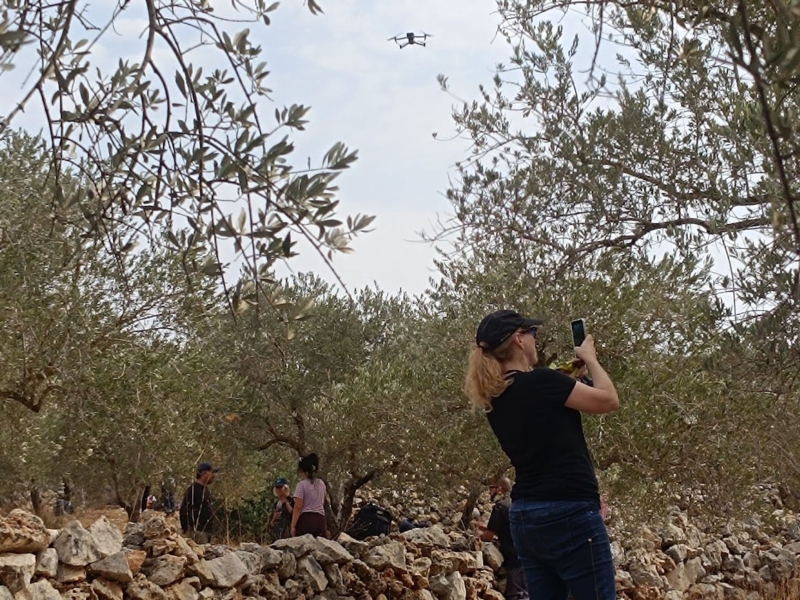
When we returned to the group, it turned out that the drone had descended nearly to the ground and struck one of the RHR staff members. Her shoulder was cut, while the drone itself was damaged. Two armed men came to retrieve it, but when they tried to take the drone away, a scandal erupted. The volunteers demanded to be told who owned the drone and asked that it be left in place until officials arrived. After that, the shooting began. Those who had come took the drone and left. Everything was captured on video.
The injured woman was taken to hospital, and the owner of the olive grove thanked everyone who had come to help him. But we had barely begun to prepare to leave when army vehicles arrived. This time an officer got out and said that a complaint had been filed against the olive harvesters, alleging that they had brought down the drone. It emerged that the drone belonged to the rapid-response unit of the neighboring settlement of Revava, whose members include reservists. After seeing the video recorded by the volunteers, the unit commander apologized for the actions of his subordinates.
The incident made headlines across Israeli media as yet another act of violence by settlers. As a result of an army investigation, one of the participants in the incident was dismissed from military service for unprofessional conduct, which included opening fire “not in a situation of real danger.” The other received a severe reprimand.
What happened was an exceptional case. More often than not, acts of violence are carried out not by people in uniform, but by youth gangs for whom no one takes responsibility. The attackers usually wear masks, and it is not always possible to tell who they are or where they come from. Often, some of them did indeed grow up in settlements, while others are outsiders.
Representatives of the settler community say these gangs are small in number — several hundred people across all of Judea and Samaria. It is claimed that most of them are teenagers from troubled families. They are described as anarchists who recognize virtually no authority — neither that of the rabbis nor of the army. For them, the army itself and the border police are enemies, just like the Palestinians.
Researchers studying this movement, known as the “Hilltop Youth,” note that the situation worsened after Israel’s unilateral withdrawal from the Gaza Strip in 2005, when all Jewish settlements in the area were evacuated. This was accompanied by the evacuation of several settlements and outposts in Samaria as well.
“They felt that their leaders had betrayed them. I am talking about the Settlements Council, about the rabbis of Judea and Samaria. The very fact that settler leaders capitulated to the ‘disengagement’ formed this feeling in them,” Yair Sheleg, a fellow at the Shalom Hartman Institute, said in an interview with Newsru.co.il. Others say that the actions of the “Hilltop Youth” are a response to violence by Palestinians — or even to provocations from left-wing activists.
There are not yet any consolidated statistics for 2025. In March, the Shin Bet reported that, as a result of a counterterrorism operation in Samaria, the number of attacks was declining. However, this does not mean calm has returned. On Nov. 18, a terrorist attack in Gush Etzion, halfway between Hebron and Jerusalem, resulted in one person being killed and three wounded.
According to Anya Antopolskaya, founder of the Meeting Place project, the overwhelming majority of settlers oppose violence. “Those who carry out pogroms are extremists, thugs. There is no support whatsoever for these extremist elements within the settler movement.Our rabbis constantly talk to young people about these issues. I know this from my son. But a campaign is being whipped up against all settlers. At the same time, almost nowhere is it said that there is violence on the Arab side. My husband is an emergency room doctor at a Jerusalem hospital. He says they regularly bring in injured Jewish boys who have been beaten with stones and sticks — shepherds who graze sheep alone. A dozen Arabs attack one boy,” Antopolskaya says.
According to the Israeli Ministry of Defense, by mid-November 2025, 704 such incidents had been recorded, compared with 675 for all of 2024. By the count of the N12 television channel, an average of about 70 nationalist attacks were carried out per month in 2025. And the victims are not only Palestinians. During the November attacks, several Israelis were beaten, including a reserve officer who was on leave and decided to join a group of volunteers helping Palestinians, as well as two Russian-speaking activists.
Farm outposts are part of the Israeli settlement network in Judea and Samaria (the West Bank) and play a dual role — producing food while reinforcing the Jewish presence in these areas.
The first Palestinian-Israeli agreements were signed in 1993. In the Declaration of Principles (the Oslo I Accord), the State of Israel and the Palestine Liberation Organization recognized each other’s “political rights.” The goal of the negotiations was to create a temporary Palestinian self-governing authority for a transitional period of up to five years. At the first stage, the Gaza Strip (with the exception of areas where Jewish settlements were located) and Jericho were to be transferred under its jurisdiction. Further redeployment of Israeli forces was stipulated in the agreement signed two years later, Oslo II.
Baruch Goldstein, an Israeli physician of American origin, carried out a terrorist attack in 1994 in which he killed 29 Muslim worshippers at the Ibrahimi Mosque (the Cave of the Patriarchs) and wounded more than 150 people. He was disarmed by Muslims and beaten to death.
Those who carry out pogroms are extremists, thugs, but a campaign is being whipped up against all settlers
She continues to organize tours for Israelis to settlements in order to change their perception of what is happening, assembling groups for trips to the hills where new farm outposts are located. In Hebrew, outposts are often referred to as hills (gva’ot). “Even for us ourselves, it turned out that there are suddenly very many of them,” Antopolskaya says, specifying that of the ten such outposts located near the yishuv of Nokdim, where she lives, nine exist entirely peacefully. Only one creates problems, refusing to cooperate either with the army or with the settlement administration.
At the same time, the state is still trying to figure out what to do with those who cause unrest — whether to tighten control and/or attempt re-education. Heads of local councils speak of the need to work with “troubled youth.”
But so far, nothing is working. Within the settlements, efforts are being made to separate bandits (or, as they are now called, “hilltop barbarians”) from ordinary farmers who occupy land and build new outposts.
At the same time, arguments similar to those voiced by Antopolskaya are not persuasive for human rights organizations and, more broadly, for supporters of the left-wing camp (who advocate continuing peace negotiations). They say that terrorist attacks and past trauma cannot serve as justification for violence by Jewish extremists. In their view, the settler movement seeks to play down what is happening and, when that is no longer possible, finds ways to justify the actions of youth gangs while doing nothing to restrain them. As a result, all settlers come to be seen as “occupiers and accomplices of apartheid” — and in some cases, also as religious fanatics.
“I have not come across a better label than apartheid to describe the situation in the West Bank, in which two peoples are subject to a single authority but have radically different sets of rights,” says left-wing activist Evgeny Borenshtein.
Among the slogans heard at a spontaneous rally at one of the checkpoints were: “No, no — we will never agree with settler terror!” and “Stop Jewish terror!”
My second attempt to observe the olive harvest failed. Police at the checkpoint did not allow several buses carrying volunteers and activists to cross beyond the “Green Line.” This time the event was scheduled for a Friday, a day off in Israel. More than 200 people had signed up to take part in the “Harvest of Solidarity” action organized by leading Israeli human rights NGOs.
This followed some of the particularly severe incidents that took place during the olive harvest, and police said that the army had declared the area a closed military zone. The organizers had anticipated such a scenario and had prepared in advance to hold a protest as close to the checkpoint as possible. After about 15 minutes of negotiations, the police allowed the rally to take place in order to keep the situation under control.
According to the Israeli Ministry of Defense, by mid-November 2025, 704 such incidents had been recorded, compared with 675 for all of 2024. By the count of the N12 television channel, an average of about 70 nationalist attacks were carried out per month in 2025. And the victims are not only Palestinians. During the November attacks, several Israelis were beaten, including a reserve officer who was on leave and decided to join a group of volunteers helping Palestinians, as well as two Russian-speaking activists.
Farm outposts are part of the Israeli settlement network in Judea and Samaria (the West Bank) and play a dual role — producing food while reinforcing the Jewish presence in these areas.
The first Palestinian-Israeli agreements were signed in 1993. In the Declaration of Principles (the Oslo I Accord), the State of Israel and the Palestine Liberation Organization recognized each other’s “political rights.” The goal of the negotiations was to create a temporary Palestinian self-governing authority for a transitional period of up to five years. At the first stage, the Gaza Strip (with the exception of areas where Jewish settlements were located) and Jericho were to be transferred under its jurisdiction. Further redeployment of Israeli forces was stipulated in the agreement signed two years later, Oslo II.
Baruch Goldstein, an Israeli physician of American origin, carried out a terrorist attack in 1994 in which he killed 29 Muslim worshippers at the Ibrahimi Mosque (the Cave of the Patriarchs) and wounded more than 150 people. He was disarmed by Muslims and beaten to death.
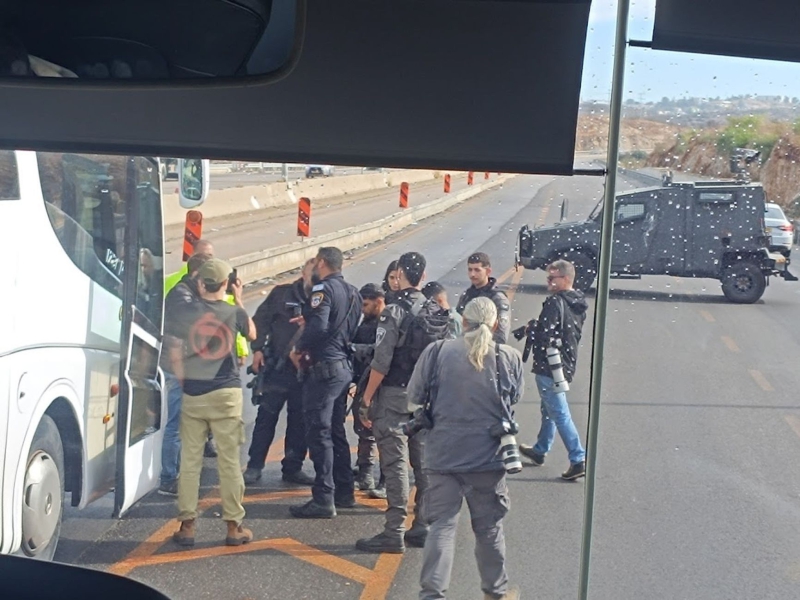
The negotiations were conducted as politely as possible — as all of it was being filmed both by media outlets that arrived with the activists and by the police themselves. The latter did not even object when the protesters stepped onto the highway for a short time, partially blocking traffic. Luckily, after 15 minutes everyone was asked to move to a “neutral strip” so as not to impede traffic in either direction. The action lasted about an hour and was accompanied by irritated honking from passing cars. Teenagers leaning out of bus windows made obscene gestures at the protesters.
The head of the Samaria Regional Council, Yossi Dagan, called for the activists to be arrested and described the blocking of the highway as illegal. In the end, however, everyone dispersed peacefully. Perhaps no one wanted a scandal given how many journalists were present. Two weeks earlier, activists who had taken part in another protest had been detained and ordered not to appear in the area for a specified period of time. Foreign volunteers who had been with them were deported from the country.
Rabbi Avi Dabush, head of Rabbis for Human Rights, was born into a family of religious Zionists of the right-wing camp. In other words, he grew up among the people who form the backbone of the settler movement. He even took part in protests against the Oslo Accords. Over time, however, his worldview began to change, including as a result of the assassination of Yitzhak Rabin.
“I began asking myself questions: if Oslo is bad, then what is the alternative, and why are Palestinians denied the right to self-determination?” Avi says.
According to the Israeli Ministry of Defense, by mid-November 2025, 704 such incidents had been recorded, compared with 675 for all of 2024. By the count of the N12 television channel, an average of about 70 nationalist attacks were carried out per month in 2025. And the victims are not only Palestinians. During the November attacks, several Israelis were beaten, including a reserve officer who was on leave and decided to join a group of volunteers helping Palestinians, as well as two Russian-speaking activists.
Farm outposts are part of the Israeli settlement network in Judea and Samaria (the West Bank) and play a dual role — producing food while reinforcing the Jewish presence in these areas.
The first Palestinian-Israeli agreements were signed in 1993. In the Declaration of Principles (the Oslo I Accord), the State of Israel and the Palestine Liberation Organization recognized each other’s “political rights.” The goal of the negotiations was to create a temporary Palestinian self-governing authority for a transitional period of up to five years. At the first stage, the Gaza Strip (with the exception of areas where Jewish settlements were located) and Jericho were to be transferred under its jurisdiction. Further redeployment of Israeli forces was stipulated in the agreement signed two years later, Oslo II.
Baruch Goldstein, an Israeli physician of American origin, carried out a terrorist attack in 1994 in which he killed 29 Muslim worshippers at the Ibrahimi Mosque (the Cave of the Patriarchs) and wounded more than 150 people. He was disarmed by Muslims and beaten to death.
I began asking myself questions: if Oslo is bad, then what is the alternative, and why are Palestinians denied the right to self-determination?
In the end, he found himself in a completely different political camp from the one he was born into. “This is an initiative based on a struggle for land that is morally deeply problematic and does not take the sanctity of life into account. In other words, it is a preference for land over people,” Avi explains his position, adding, “Most settlers are good people in and of themselves, but they are accomplices in an immoral and very dangerous movement.”
At the same time, he agrees that it is impossible to evict people from most settlements, which makes the search for a compromise inevitable. “I am a member of the organization Land for All, which proposes a confederal model. Under this model, settlers would not have to leave. They would be able to live in Palestine as citizens of Israel. And of course, this also implies that our country would be open to Palestinians who would be citizens of Palestine. This should be similar to how people live in the European Union,” Avi explains his vision of the future.
Avi’s position was not altered even by October 7 — even though the kibbutz of Nirim, where he lives, is located next to the Gaza Strip and was directly hit by the Hamas terrorist attack.
“Of course, it was a very difficult experience. I understand where the voice of emotion, revenge, grief, despair, and fear comes from. All of this is inside me, but my values are peace, justice, equality, and human rights. In the Book of Deuteronomy it is said: ‘See, I have set before you life and death, and you chose life.’ Therefore, we must choose life in peace and justice. I do not want an eternal war,” he explains.
According to the Israeli Ministry of Defense, by mid-November 2025, 704 such incidents had been recorded, compared with 675 for all of 2024. By the count of the N12 television channel, an average of about 70 nationalist attacks were carried out per month in 2025. And the victims are not only Palestinians. During the November attacks, several Israelis were beaten, including a reserve officer who was on leave and decided to join a group of volunteers helping Palestinians, as well as two Russian-speaking activists.
Farm outposts are part of the Israeli settlement network in Judea and Samaria (the West Bank) and play a dual role — producing food while reinforcing the Jewish presence in these areas.
The first Palestinian-Israeli agreements were signed in 1993. In the Declaration of Principles (the Oslo I Accord), the State of Israel and the Palestine Liberation Organization recognized each other’s “political rights.” The goal of the negotiations was to create a temporary Palestinian self-governing authority for a transitional period of up to five years. At the first stage, the Gaza Strip (with the exception of areas where Jewish settlements were located) and Jericho were to be transferred under its jurisdiction. Further redeployment of Israeli forces was stipulated in the agreement signed two years later, Oslo II.
Baruch Goldstein, an Israeli physician of American origin, carried out a terrorist attack in 1994 in which he killed 29 Muslim worshippers at the Ibrahimi Mosque (the Cave of the Patriarchs) and wounded more than 150 people. He was disarmed by Muslims and beaten to death.
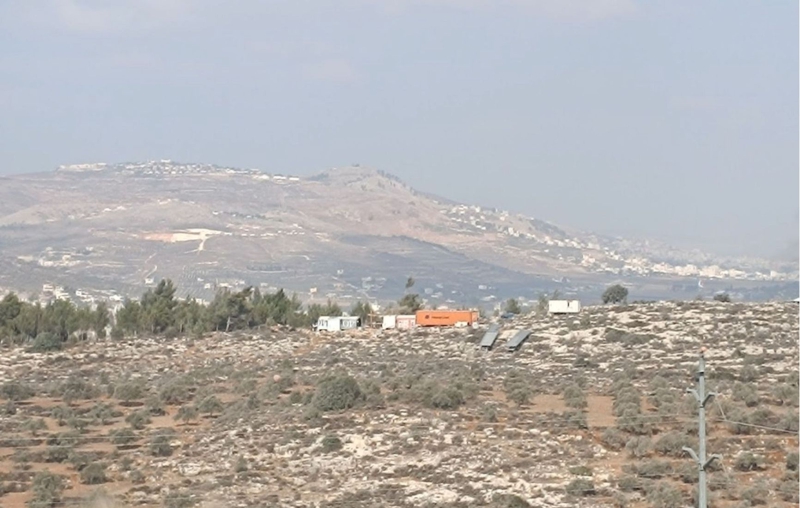
Appealing to Jewish religious law (Halakha), Shaul Yudelman, a resident of the settlement of Tekoa, takes a similar position. He became one of the initiators of a letter by residents of Gush Etzion speaking out against violence toward Palestinians. “We do not presume to claim that all of Gush Etzion is with us, but we believe that because of the war our red lines have become blurred. We wrote a petition to begin a dialogue and to clearly state that vigilantism is a problem, that regulation must take place at the state level, and that innocent people must not be harmed simply because they are Arabs,” Yudelman says.
He believes that the problem lies in violence, not in the presence of settlers in Judea and Samaria. “I am not avoiding the important political questions that may arise in the future, but right now one of the main tasks for Jews who have settled in the very heart of the Land of Israel is to establish clear boundaries against abuse and violence for which there is no justification. Attacking elderly people or burning down houses in a village because we were forced to leave an outpost is a crime and a disgrace. Two weeks ago [the radicals] burned down a mosque — this directly contradicts Halakha and violates our fundamental values,” Yudelman adds.
But there are also those who consider the idea of peaceful coexistence naive, especially after October 7. “We fought, we are fighting, and we will keep fighting to defend our right to be on this land” is the fairly common position of members of the right-wing camp, above all among settlers and representatives of the religious Zionist movement. They believe that the war will continue for a very long time, if not forever, since neither Jews nor Palestinians are prepared to relinquish their claim to this land.
“The Land of Israel (Eretz Israel, as spoken of in the Torah) is the inheritance of the people of Israel, and no one can renounce an inheritance. We have no such right. Therefore, we will not surrender and will fight, whatever happens,” says Nadav Tzadok Yair.
Nadav has an interesting biography. He was born in Hawaii and had no connection to Judaism, but upon arriving in Israel, he realized that this was his place. He underwent conversion to Judaism and built a house — effectively an outpost near the settlement of Kfar Tapuach in Samaria. Today he continues to do what he started many years ago during his service in the Israeli army — training soldiers in the Hawaiian martial art of Kapu Kuialua.
According to the Israeli Ministry of Defense, by mid-November 2025, 704 such incidents had been recorded, compared with 675 for all of 2024. By the count of the N12 television channel, an average of about 70 nationalist attacks were carried out per month in 2025. And the victims are not only Palestinians. During the November attacks, several Israelis were beaten, including a reserve officer who was on leave and decided to join a group of volunteers helping Palestinians, as well as two Russian-speaking activists.
Farm outposts are part of the Israeli settlement network in Judea and Samaria (the West Bank) and play a dual role — producing food while reinforcing the Jewish presence in these areas.
The first Palestinian-Israeli agreements were signed in 1993. In the Declaration of Principles (the Oslo I Accord), the State of Israel and the Palestine Liberation Organization recognized each other’s “political rights.” The goal of the negotiations was to create a temporary Palestinian self-governing authority for a transitional period of up to five years. At the first stage, the Gaza Strip (with the exception of areas where Jewish settlements were located) and Jericho were to be transferred under its jurisdiction. Further redeployment of Israeli forces was stipulated in the agreement signed two years later, Oslo II.
Baruch Goldstein, an Israeli physician of American origin, carried out a terrorist attack in 1994 in which he killed 29 Muslim worshippers at the Ibrahimi Mosque (the Cave of the Patriarchs) and wounded more than 150 people. He was disarmed by Muslims and beaten to death.
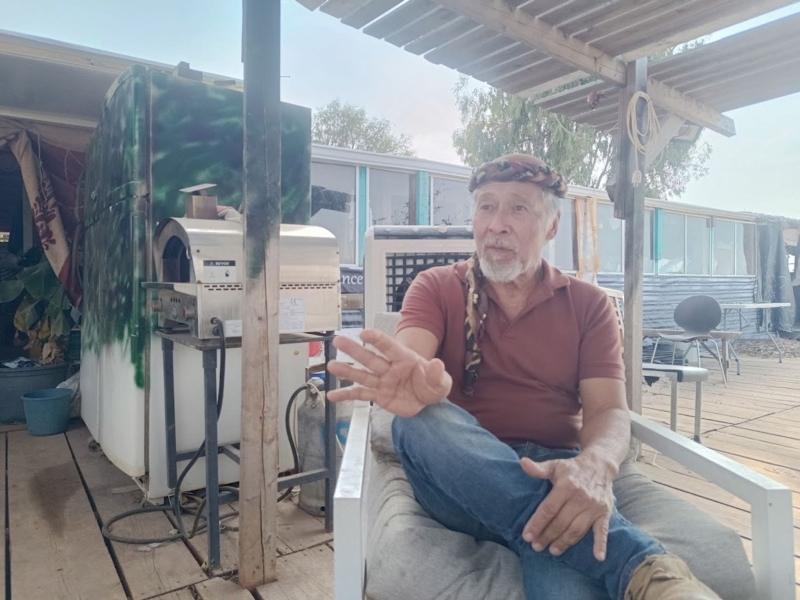
For nearly fifteen years, Nadav has lived alone with his son on a hill built with his own hands. In front of the entrance is a training area for fighters. The hill still has no name. “I’m waiting for the right name to come to me,” he says.
Nearby are several more self-built hills. Some are home to a few families, others to slightly more. Construction has been ongoing for many years. Almost all of these outposts, like Nadav’s house, were demolished by the army more than once, but the settlers returned each time. Now they are no longer being stopped. According to Nadav, the administration of Kfar Tapuach has given tacit approval for construction on the hills.
A little farther on are new outposts built literally half a year ago by teenagers from Kfar Tapuach — the “Hilltop Youth.” Nadav says that if the youth had not come to these hills, Palestinian villages would have begun expanding there. He points to a quarry and excavators on the other side of Kfar Tapuach, where Palestinians are cutting away one of the hills to build a road.
Nadav drove me around the older outposts. “Everything here looks a bit chaotic, not very well organized. But compared with other hills, there is still some order here. There are hills where only two people live with sheep. They go out with the flock to the pastures, and Arabs attack them,” he says.
Nadav also shares his own explanation of why clashes occur during the olive harvest: “If Arabs come, they come to make trouble. And often left-wing activists come with them. The leftists come and push the Arabs to go farther, closer, so that fights will break out, so that they have material for reports.”
According to the Israeli Ministry of Defense, by mid-November 2025, 704 such incidents had been recorded, compared with 675 for all of 2024. By the count of the N12 television channel, an average of about 70 nationalist attacks were carried out per month in 2025. And the victims are not only Palestinians. During the November attacks, several Israelis were beaten, including a reserve officer who was on leave and decided to join a group of volunteers helping Palestinians, as well as two Russian-speaking activists.
Farm outposts are part of the Israeli settlement network in Judea and Samaria (the West Bank) and play a dual role — producing food while reinforcing the Jewish presence in these areas.
The first Palestinian-Israeli agreements were signed in 1993. In the Declaration of Principles (the Oslo I Accord), the State of Israel and the Palestine Liberation Organization recognized each other’s “political rights.” The goal of the negotiations was to create a temporary Palestinian self-governing authority for a transitional period of up to five years. At the first stage, the Gaza Strip (with the exception of areas where Jewish settlements were located) and Jericho were to be transferred under its jurisdiction. Further redeployment of Israeli forces was stipulated in the agreement signed two years later, Oslo II.
Baruch Goldstein, an Israeli physician of American origin, carried out a terrorist attack in 1994 in which he killed 29 Muslim worshippers at the Ibrahimi Mosque (the Cave of the Patriarchs) and wounded more than 150 people. He was disarmed by Muslims and beaten to death.
If Arabs come, they come to make trouble, and often left-wing activists come with them
Despite all the atypical aspects of Nadav’s background, his worldview is typical of residents of outposts and hilltop farms, as well as of those settlers who chose to live beyond the “Green Line” for ideological reasons — rather than simply because housing is cheaper.
There are quite a few of the latter as well. The settler movement is becoming increasingly bourgeois — those who go off to the hills to build farms stand apart from the rest. “They deserve respect. They demand almost nothing from the state. They just want to live and to hold on to this land,” Nadav explains.
Palestinians also speak about “holding on to the land.” “We are constantly being pushed out of here, life here is difficult, we have fewer rights than you do. When you come to Hebron, we cannot walk along most streets without permission, take people to hospital, buy cigarettes, or visit friends,” says Muhanned. He is the main local spokesperson whom foreign journalists and human rights advocates meet when the human rights NGO Breaking the Silence brings them here to understand “how the occupation works” in Hebron.
“Why, despite all the difficulties, do you stay here?” Muhanned is asked. “Staying here is one form of resistance. Like the Jews, we create facts on the ground, so we do not leave,” he replies. Muhanned meets with the “tour groups” in a two-story building that has become a kind of headquarters for the Palestinian movement Youth Against Settlements. Throughout the entire conversation, an army drone circles above us. According to Muhanned, the army has tried several times to evict them from this building, but they always return.
According to the Israeli Ministry of Defense, by mid-November 2025, 704 such incidents had been recorded, compared with 675 for all of 2024. By the count of the N12 television channel, an average of about 70 nationalist attacks were carried out per month in 2025. And the victims are not only Palestinians. During the November attacks, several Israelis were beaten, including a reserve officer who was on leave and decided to join a group of volunteers helping Palestinians, as well as two Russian-speaking activists.
Farm outposts are part of the Israeli settlement network in Judea and Samaria (the West Bank) and play a dual role — producing food while reinforcing the Jewish presence in these areas.
The first Palestinian-Israeli agreements were signed in 1993. In the Declaration of Principles (the Oslo I Accord), the State of Israel and the Palestine Liberation Organization recognized each other’s “political rights.” The goal of the negotiations was to create a temporary Palestinian self-governing authority for a transitional period of up to five years. At the first stage, the Gaza Strip (with the exception of areas where Jewish settlements were located) and Jericho were to be transferred under its jurisdiction. Further redeployment of Israeli forces was stipulated in the agreement signed two years later, Oslo II.
Baruch Goldstein, an Israeli physician of American origin, carried out a terrorist attack in 1994 in which he killed 29 Muslim worshippers at the Ibrahimi Mosque (the Cave of the Patriarchs) and wounded more than 150 people. He was disarmed by Muslims and beaten to death.
We, like the Jews, create facts on the ground, so we do not leave
In 1997, under the Hebron agreements, the city was divided into two sectors: Zone H1 (around 80% of the city) was placed under the control of the Palestinian Authority. Zone H2, which includes the Old City, the Cave of the Patriarchs (also known as the Ibrahimi Mosque), and Jewish neighborhoods, remained under Israeli control. Between the two zones, according to human rights groups, there are more than 80 checkpoints. There are also checkpoints within Zone H2 itself — some streets are closed to Palestinians for vehicle traffic, and some even for pedestrian passage.
After the terrorist attack carried out by Baruch Goldstein, access to the Cave of the Patriarchs was segregated for Jews and Muslims. The area near the old market emptied out during the second intifada, and it now feels like a ghost town. Many Palestinian shopkeepers and families either received official closure orders for their stores or left on their own because it was impossible to work under conditions of constant restrictions. On the Israeli side, it is emphasized that these restrictions were introduced in response to frequent terrorist attacks in the 1990s and during the intifada.
“The army and the settlers know how to explain everything in terms of security. What security is there here! All the Arab houses are on the hills, the Jewish neighborhood is down below. Everything here is within firing range!” says a representative of Breaking the Silence. And he is right: in Hebron, as in many other areas, the issue is not security but faith in preserving a Jewish presence in Eretz Israel.
A five-minute walk from the meeting place with Muhanned, across the road at the foot of the hill, lies Hebron’s Jewish quarter. In 1929, during one of the waves of pogroms in Mandatory Palestine, more than 60 Jews were killed in Hebron, and the rest fled the city. Two-thirds of those who survived found refuge with Arab families or at British police stations. Jews were able to return to the city only after the Six-Day War.
Even then, settling there did not happen immediately, as Israeli authorities long refused to grant permission. To change the situation, in the spring of 1968 Rabbi Moshe Levinger rented the Hebron Park Hotel and placed an announcement in an Israeli newspaper about celebrating Passover there. The army gave its approval, but once the holiday ended, the participants refused to leave the hotel and began negotiations with the army and the government over the return of a Jewish community to the city.
In the end, permission was granted to build on a hill neighboring Hebron. This is how the Jewish settlement of Kiryat Arba came into being. However, the dream of returning to Hebron itself — where the tombs of the patriarchs Abraham, Isaac, and Jacob are located — remained alive. One night in 1979, a “landing party” made up of several dozen children and their mothers was brought into the Beit Hadassah building, a former hospital and later a clinic in Hebron that was built with funds from Jewish philanthropists in the early 20th century. The group was led by Miriam Levinger, the wife of Rabbi Levinger.
The calculation was that then prime minister Menachem Begin would not use force to expel children and women. While that calculation proved correct, it took a few months before men were allowed to reunite with their families who had taken up residence there. Until then, they were permitted to come to the walls of Beit Hadassah only once a week to say prayers and bless the arrival of Shabbat.
According to the Israeli Ministry of Defense, by mid-November 2025, 704 such incidents had been recorded, compared with 675 for all of 2024. By the count of the N12 television channel, an average of about 70 nationalist attacks were carried out per month in 2025. And the victims are not only Palestinians. During the November attacks, several Israelis were beaten, including a reserve officer who was on leave and decided to join a group of volunteers helping Palestinians, as well as two Russian-speaking activists.
Farm outposts are part of the Israeli settlement network in Judea and Samaria (the West Bank) and play a dual role — producing food while reinforcing the Jewish presence in these areas.
The first Palestinian-Israeli agreements were signed in 1993. In the Declaration of Principles (the Oslo I Accord), the State of Israel and the Palestine Liberation Organization recognized each other’s “political rights.” The goal of the negotiations was to create a temporary Palestinian self-governing authority for a transitional period of up to five years. At the first stage, the Gaza Strip (with the exception of areas where Jewish settlements were located) and Jericho were to be transferred under its jurisdiction. Further redeployment of Israeli forces was stipulated in the agreement signed two years later, Oslo II.
Baruch Goldstein, an Israeli physician of American origin, carried out a terrorist attack in 1994 in which he killed 29 Muslim worshippers at the Ibrahimi Mosque (the Cave of the Patriarchs) and wounded more than 150 people. He was disarmed by Muslims and beaten to death.
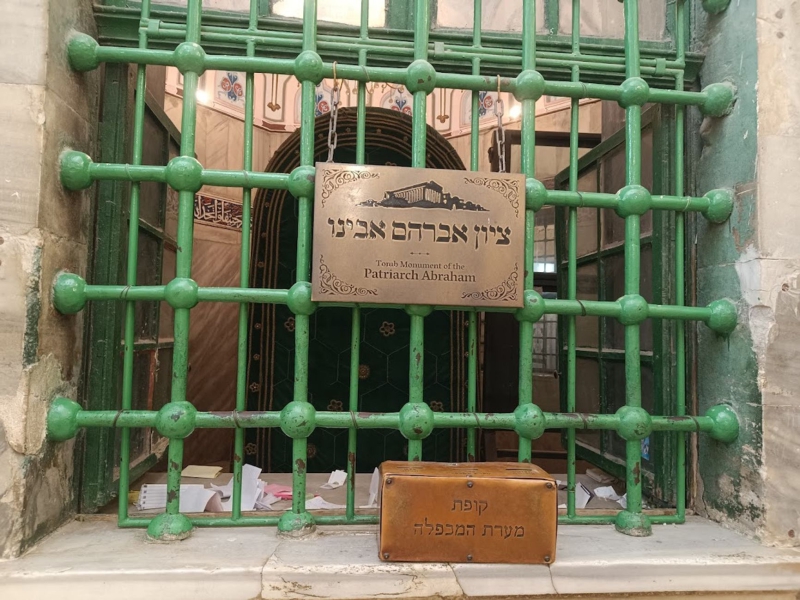
Today, one of the city’s most well-known residents is the artist Shmuel Mushnik, a former Muscovite. He arrived in Israel in 1970 at the age of 15, first living in Jerusalem and later in Kiryat Arba. He was among the men who took part in the “transfer” of women to Beit Hadassah. “Somewhere there is a photograph showing me passing a child over the wall,” he recalls.
Later, Shmuel brought his fiancée to the walls of Beit Hadassah. He wanted to introduce her to the women holding the line there. As soon as it became possible, the young family moved to Hebron as well, settling in Beit Hadassah. For more than forty years now, Shmuel Mushnik has lived there, in the apartment of a Jewish pharmacist who was stabbed to death along with almost his entire family during the 1929 pogrom.
For Mushnik, this is a mission to bring Jews back home — to the Eretz Israel his family dreamed of while spending years seeking permission to leave the Soviet Union. “What drove us when we were planning the operation with women and children? Faith and an understanding of what needed to be done, of what ought to be done,” he says. Faith is why he is still here.
Conversations with local residents point to one conclusion: neither Jews nor Palestinians are going to leave this land. And even if that were to happen, both would always seek to return. That is why Israelis need to “build bridges” not only with Palestinians, but also among themselves.
According to the Israeli Ministry of Defense, by mid-November 2025, 704 such incidents had been recorded, compared with 675 for all of 2024. By the count of the N12 television channel, an average of about 70 nationalist attacks were carried out per month in 2025. And the victims are not only Palestinians. During the November attacks, several Israelis were beaten, including a reserve officer who was on leave and decided to join a group of volunteers helping Palestinians, as well as two Russian-speaking activists.
Farm outposts are part of the Israeli settlement network in Judea and Samaria (the West Bank) and play a dual role — producing food while reinforcing the Jewish presence in these areas.
The first Palestinian-Israeli agreements were signed in 1993. In the Declaration of Principles (the Oslo I Accord), the State of Israel and the Palestine Liberation Organization recognized each other’s “political rights.” The goal of the negotiations was to create a temporary Palestinian self-governing authority for a transitional period of up to five years. At the first stage, the Gaza Strip (with the exception of areas where Jewish settlements were located) and Jericho were to be transferred under its jurisdiction. Further redeployment of Israeli forces was stipulated in the agreement signed two years later, Oslo II.
Baruch Goldstein, an Israeli physician of American origin, carried out a terrorist attack in 1994 in which he killed 29 Muslim worshippers at the Ibrahimi Mosque (the Cave of the Patriarchs) and wounded more than 150 people. He was disarmed by Muslims and beaten to death.