
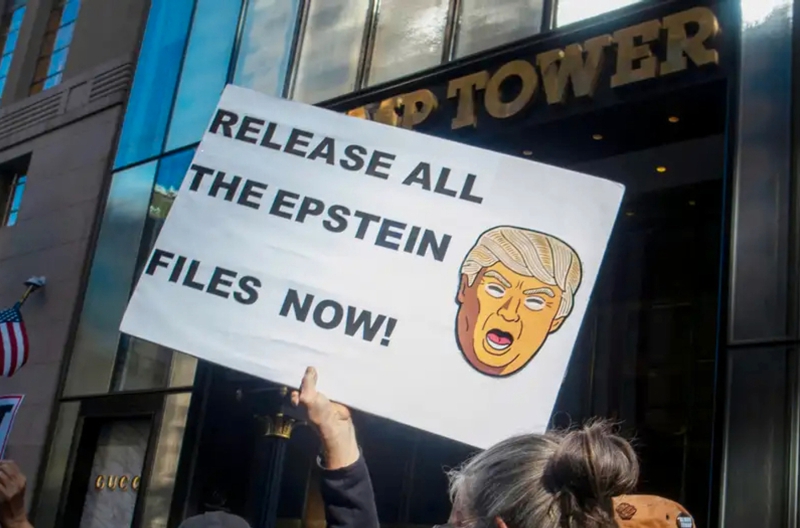
On Nov. 19, Donald Trump was forced to sign a bill that had passed the House by a vote of 427-1 and which was approved via Unanimous Consent in the Senate. The newly adopted law gives the president 30 days to make public the government’s nonclassified records concerning the activities of the late Jeffrey Epstein. Trump actively opposed the decision, calling the documents “a fake created by Democrats,” but this only triggered increased attacks from former MAGA allies. Although Trump has survived several scandals that likely would have ended the careers of most “normal” politicians, it remains far from certain that his demagogic charm is sufficient to get him out of his predicament this time around.
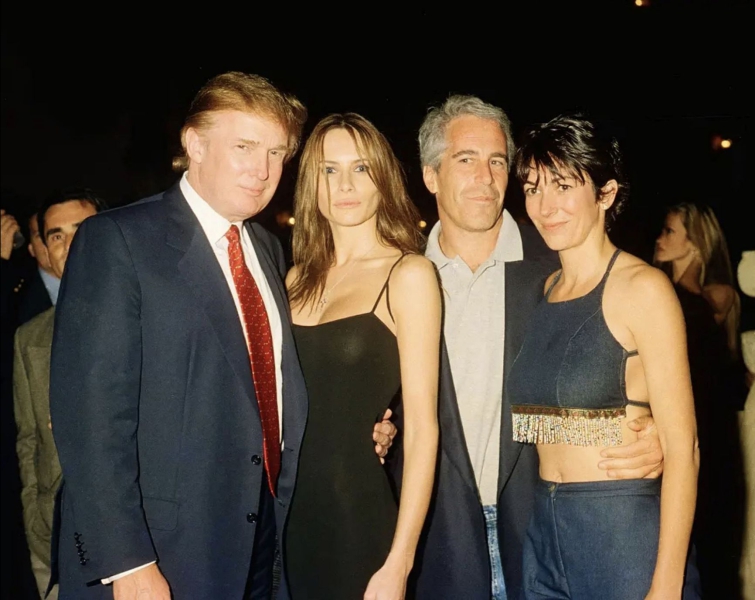
A substantial amount is known about the relationship between financier Jeffrey Epstein and Donald Trump. They met in the 1980s, when Epstein bought a home in Palm Beach two miles from Trump’s Mar-a-Lago estate. Throughout the 1990s, Trump and Epstein were regularly seen together at parties and social events.
In 1992, Trump hosted a party at Mar-a-Lago with a large number of young women; the only invited male guest was Epstein. Businessman George Houraney, who organized the event at Trump’s request, recalled telling him: “Donald, this is supposed to be a party with V.I.P.s. You're telling me it's you and Epstein?” Houraney’s girlfriend, Jill Harth, who was also at the party, said Trump tried to kiss her and force her into sex.
According to released records of Epstein’s private jet trips, Trump flew with him multiple times. Epstein attended Trump’s wedding to Marla Maples, his second wife, in 1993 at the Plaza Hotel in New York. That same year, Epstein brought model Stacey Williams to Trump Tower in Manhattan to meet Trump, and he began making advances toward her.
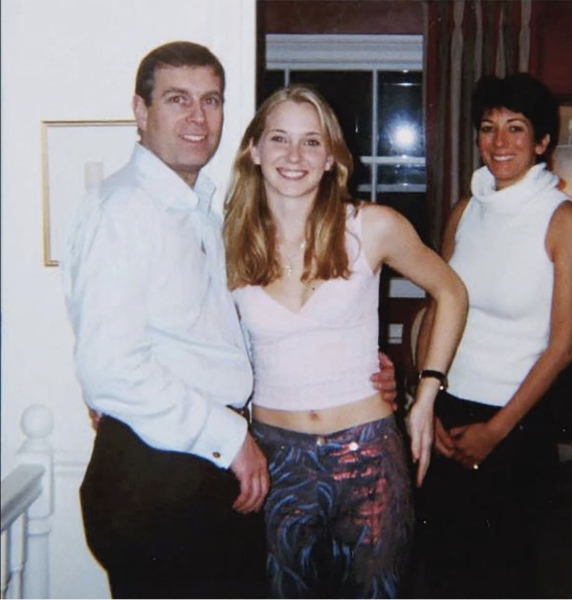
In a 2001 interview, Trump said he had known Epstein for fifteen years, calling him “a great guy” who “likes beautiful women as much as I do, and many of them are on the younger side.” A year earlier, Ghislaine Maxwell, Epstein’s partner, met 16-year-old Virginia Giuffre at Mar-a-Lago, where she worked for Trump. Maxwell hired Giuffre as Jeffrey’s personal masseuse. She was later forced to have sex with Epstein and other people, among them Britain’s Prince Andrew, French modeling agent Jean-Luc Brunel, former New Mexico governor Bill Richardson, and Senator George Mitchell. Giuffre, who died by suicide in April 2025, said she had seen Donald Trump at Epstein’s house but did not consider him to be involved in the crimes.
Trump said Epstein, like him, liked beautiful women, and many of them were quite young
When Epstein celebrated his 50th birthday in 2003, Trump sent him a greeting card in which an imagined dialogue between two friends was framed around a sketch of a nude woman. Trump later denied ever making drawings at all, despite the numerous sketches he had put up for sale.
The Wall Street Journal first reported on the card in 2025. Trump reacted by suing the newspaper for defamation, demanding $10 billion. The image of the card was later released by Democratic members of Congress. Even though the White House said the signature on it did not belong to Trump, it appeared identical to his autographs on other documents from the period.
The friendship between Trump and Epstein ended in 2004 due to a real estate dispute. Both tried to buy a luxury mansion in Palm Beach, but Trump offered a higher price — $41 million — which deeply offended Epstein. According to another account, Trump had to expel his friend from Mar-a-Lago after he began making advances toward the daughter of one of the club’s members.
A few months later, local police received a complaint from a woman who said Jeffrey Epstein had paid her 14-year-old stepdaughter $300 for a nude massage. This led to an FBI investigation that found several dozen minor victims whom Epstein had paid for sexual services.
During a search of Epstein’s home, police found two hidden cameras and numerous photographs of young women. Officers identified about 40 underage girls. The youngest was 14 and most were under 16. Journalists at the Miami Herald later identified about 80 Epstein victims, some as young as 12. Many were recruited in South America and in former Soviet states, supplied to Epstein by MC2, the modeling agency run by Jean-Luc Brunel.
Epstein hired prominent lawyers — Harvard law professor Alan Dershowitz and former independent counsel Kenneth Starr. Starr had previously investigated the scandal over Bill Clinton’s relationship with Monica Lewinsky.
Together they secured an exceptionally favorable deal for Epstein. He pleaded guilty to a Florida state charge of soliciting a minor and received immunity from potential federal charges. The agreement was approved by Alexander Acosta, the U.S. attorney for the Southern District of Florida. In 2017, he became labor secretary in Donald Trump’s first administration.
In 2008, Epstein was sentenced to just 18 months in a minimum-security jail. Unlike others convicted of sex crimes who serve time in state prison, Epstein was sent to a private wing of the Palm Beach County jail.
Three and a half months later, he was allowed to leave the facility almost daily for 12 hours. Epstein’s cell door was left unlocked, and he had access to the attorney room, where a television was set up for him. The Palm Beach sheriff’s office received $128,000 from Epstein’s nonprofit to cover additional services related to his detention. In July 2009, 13 months after sentencing, the financier was released.
After a series of Miami Herald investigations into Epstein’s victims, published in 2018, federal authorities renewed their interest in the case. In July 2019, Epstein was arrested, and the Department of Justice charged him with conspiracy and trafficking minors for sexual exploitation.
During a search of his Manhattan home, FBI agents found hundreds of photographs of naked women, some of them minors, as well as a fake Australian passport with Epstein’s photo bearing numerous entry and exit stamps.
The new criminal case against Epstein was never completed. On Aug. 10, 2019, he was found hanged in his cell at a New York detention center, and irregularities around the incident quickly led to rumors that he had been killed by powerful people who feared he would testify against them and hand over materials proving their involvement in sex crimes against minors.
Two weeks before his death, Epstein made his first suicide attempt after being denied bail, and a special monitoring regime mandated that guards check his cell every 30 minutes. However, on the night of his death, they failed to do so for eight hours. The guards were later accused of falsifying logs but avoided punishment by reaching a deal with investigators. In addition, the day before Epstein’s death, his cellmate did not return after a court hearing, and prison officials did not assign another inmate to the cell — leaving him alone, in violation of the rules. Finally, the surveillance camera footage was deleted, purportedly due to an equipment failure.

The actions of the authorities further fueled the rumor mill. When FBI agents arrived at the jail, Epstein’s body had already been removed from the cell, and his personal belongings had been moved. Standard protocol for such cases prohibits this. For unknown reasons, law enforcement did not interview most inmates, nor the staff member who was among the first to enter the cell, nor even the people who had visited Epstein before he died.
Some doctors also questioned whether Epstein really could have hanged himself by jumping from a bunk bed, arguing that his injuries were inconsistent with suicide, (although the official cause of death was ruled to be hanging). A government investigation concluded that Epstein died by suicide, although it noted that the conditions of his detention, along with repeated negligence and disciplinary violations by jail staff, had contributed to the outcome. The facility was closed in 2021. An additional investigation by the Justice Department’s inspector general in 2023 confirmed these findings.
During the 2024 presidential campaign, Trump and his supporters actively drew attention to the “Epstein files.” Kash Patel, whom Trump appointed FBI director after taking office, accused Joe Biden’s administration of hiding a list of the financier’s influential clients. Conservative blogger and former Fox News host Dan Bongino, who became deputy head of the FBI, said he believed Epstein had been an agent of a Middle Eastern country. Trump himself promised to release the government’s materials if elected president.
In February 2025, one month after Trump was sworn in as president for the second time, a group of conservative media figures was invited to the White House; they walked out carrying folders labeled “Epstein Files: Phase 1.” It quickly became clear that the folders contained nothing new — all the documents had been published before. But the White House promised that a large trove of new materials would soon be released. Attorney General Pam Bondi said Epstein’s client list was “on her desk.”
However, months passed, and no new documents appeared. In May, Patel and Bongino, who had previously questioned the official account of Epstein’s suicide, told Fox News that there was no evidence of foul play in the high-profile death. In early July, the FBI and the Justice Department issued a joint statement saying that no Epstein client list existed, that no new documents would be released, and that the investigation was being closed.
Although the FBI and Justice Department leadership worked together on the statement, tensions broke out at the White House between Attorney General Bondi and Deputy FBI Director Bongino. The press quickly reported rumors that FBI Director Patel and his deputy might resign. But both ultimately stayed in their positions, sparking anger among MAGA conservatives who called for Bondi to be fired.
The White House also faced criticism for its lenient stance toward Epstein’s accomplice Ghislaine Maxwell. She was arrested a year after Epstein’s death and charged with organizing prostitution involving minors. When Trump was asked about Maxwell’s arrest in 2020, he wished her “well.” In late 2021, she was convicted and sentenced to 20 years in prison. Trump biographer Michael Wolff, who had extensive contact with Epstein, later wrote that the president had considered pardoning Maxwell.
When Trump was asked in 2020 about the arrest of Ghislaine Maxwell, Epstein’s accomplice, he wished her “well”
After Trump returned to the White House, Deputy Attorney General Todd Blanche (also a former Trump lawyer) personally conducted an interrogation of Maxwell, and the recording was released. In it, she said she had never seen any improper behavior by Donald Trump. After that, she was transferred — like Epstein once was — to a minimum-security facility, a move that violated existing protocols for holding people convicted of serious crimes. At the new prison, Maxwell also enjoyed numerous uncommon privileges — from food deliveries to expedited visit arrangements and access to email.
Her lawyers unsuccessfully tried to challenge the verdict on appeal and prepared paperwork for a presidential pardon request. Trump told reporters he had no plans to sign such a document.
After the Trump administration refused to release the Epstein files, two lawmakers — Kentucky Republican Thomas Massie and California Democrat Ro Khanna — announced that they would push for a bill compelling the Justice Department to make them public. The bill was immediately opposed by House Speaker Mike Johnson, who controls the lower chamber’s legislative agenda, and so Massie and Khanna launched a petition that would allow the bill to be brought to a vote without the speaker’s approval if signed by 218 members.
The petition quickly gained traction, and by September all 213 Democrats had signed it. Among Republicans, only three joined Massie: Nancy Mace, Lauren Boebert, and Marjorie Taylor Greene. Trump’s White House stated that signing the petition would be considered a “very hostile act.”
Trump accused Massie of colluding with Democrats, threatened to throw him out of the Republican Party, and pledged to support his primary challenger. The president accused Marjorie Taylor Greene — once one of his most loyal supporters — of betrayal, prompting a wave of anonymous threats against her and leading Greene to announce on Nov. 22 that she was resigning due to harassment from Trump. In addition, the president repeatedly called Mace and Boebert, trying to persuade them to withdraw their signatures (and even summoned the latter to a meeting in the White House Situation Room).
The petition’s authors planned to secure the crucial 218th signature after a special House election in Arizona in 2025, where Democrat Adelita Grijalva won on Sept. 23. But amid the federal government shutdown, Speaker Johnson sent the House into recess, refusing to swear Grijalva in until Nov. 12.
When the House finally returned to end the shutdown and Grijalva signed the petition, Johnson was forced to schedule a vote on the bill mandating publication of the Epstein files. Soon, more than a dozen Republican lawmakers were publicly backing the measure, and privately between 50 and 100 conservative members signaled they intended to vote for it.
Two days before the vote, Donald Trump (likely having realized resistance was futile), said he was urging his fellow Republicans to support the bill because his administration had “nothing to hide.” The bill passed the House 427 to 1 and cleared the Senate unanimously.
Under the law’s text, the Justice Department must release all documents, materials, and correspondence related to the criminal cases of Jeffrey Epstein and his accomplice Ghislaine Maxwell within 30 days. These include internal DOJ communications about Epstein and his associates, information and investigative files concerning the financier’s death, and materials referencing people and organizations connected to him. Also in the package would be any of Epstein’s plea agreements or pretrial settlements with prosecutors.
The only materials not slated for publication concern the personal data of crime victims, materials involving child sexual abuse, and images of death, violence, or injury. The attorney general may also withhold information if its release would harm an ongoing federal investigation or pose a threat to U.S. national security.
A week before the vote, Democrats on the House Oversight Committee released three emails written by Jeffrey Epstein. In them, the late financier claimed that Trump “knows about the girls” and had “asked Ghislaine Maxwell to stop.” He also mentioned that one victim, whose name was withheld, spent several hours with Trump at Epstein's home. Shortly after that release, a trove of 23,000 of Epstein’s emails, written between 2008 and 2019, appeared online. Trump’s name was mentioned in roughly half of all the correspondence.
The most widely discussed materials were Epstein’s exchanges with his brother Mark. In March 2018, Mark suggested that Jeffrey ask former Trump advisor Steve Bannon, who regularly met and communicated with Epstein, “whether Putin has a photo of Trump blowing Bubba.”
The nickname was commonly used to refer to former Democratic president Bill Clinton, whom Trump had accused of frequenting Epstein’s island estate. However, speaking to reporters, Mark Epstein said the Bubba mentioned in the message was definitely not Clinton. Shortly after that, Trump demanded that Attorney General Pam Bondi investigate Epstein’s connections with Clinton, former Harvard University president Larry Summers, and Democratic Party donor Reid Hoffman, all of whom appear in the released correspondence.
In the same interview, Mark Epstein suggested that the Trump administration had abruptly backed the release of his late brother’s files because, in recent months, it had been actively editing them, removing references to Trump and other Republicans.
Epstein’s brother said the Trump administration abruptly backed the release of the files because in recent months it had been actively editing them
In September, Joseph Schnitt, the acting deputy chief of the Justice Department’s Special Operations Division, was caught on hidden camera (by a woman he had just met on a dating site) suggesting that the White House would keep only the names of liberals and Democrats in the files, removing any references to Trump and conservatives. He also said that the recent transfer of Epstein’s associate Ghislaine Maxwell to a minimum-security prison violated existing protocols and was a reward for her “keeping her mouth shut.”
Shortly after the footage emerged, the Justice Department posted a screenshot of a phone message on its Twitter account. In it, a note attributed to Schnitt said that all his statements reflected his personal opinion and were based solely on press reports, not on information obtained during his work at the department.
Far less attention was drawn to Epstein’s messages in which he mentioned his meetings with Trump after the latter had become president. Epstein wrote, for example, that in November 2017 he and Trump spent Thanksgiving in Palm Beach.
According to publicly available information, Trump was indeed at his Mar-a-Lago residence in Palm Beach from Nov. 21 to 26, hosting a Thanksgiving party; however, there is no information indicating that Epstein was present.
In another message, the late financier claimed that in June 2019, one month before his arrest, he met with Trump and Prince Andrew in London. These claims contradict Trump’s repeated statements that after a falling-out in the mid-2000s he neither saw nor spoke with Epstein.
Throughout Donald Trump’s political career, he has been dogged by scandals, many of them sexual in nature. In October 2016, just two days before his debate with Hillary Clinton, a 2005 audio recording from Access Hollywood was released. In it, Trump admits that his celebrity status allows him to grab women by their genitals. Several dozen Republicans responded by urging him to withdraw from the race, giving way to vice-presidential candidate Mike Pence.
In addition, the 2016 election campaign saw nearly two dozen women accuse Trump of inappropriate behavior, sexual harassment, and assault. One of them, journalist E. Jean Carroll, later filed a civil lawsuit accusing the president of defamation after Trump called her claims false. A jury found Trump liable for sexual abuse and defamation and awarded Carroll $5 million in damages.
Since Trump continued to deny Carroll’s account, she filed another defamation suit and won again — this time Trump was ordered to pay $83 million. His lawyers tried to challenge the ruling, but in 2025 they lost the appeal.
The sum of these scandals, any individual one of which could have ended the career of almost any other politician, hardly affected Trump’s standing among his followers. However, the current story involving the Epstein files shows that not even “Teflon Don” — as both critics and some supporters call the sitting president — has the power to shake off absolutely any accusation.
What’s so different this time? In short, unlike all of Trump’s previous scandals, the Epstein case tends to unite Americans rather than divide them. In a September PBS News/NPR/Marist poll, 77% of respondents — including 84% of Democrats, 83% of independents, and 67% of Republicans — said the Trump administration should fully release the Epstein files. In the same poll, only 20% overall approved of the White House’s handling of the Epstein investigation, while more than 60% rated it negatively.
In another poll, this one conducted by Morning Consult in mid-November, just 15% of respondents believed that Trump was unaware of Epstein’s sexual crimes, while 60% said he knew about these crimes — with 38% saying they believed he was complicit.
Against this backdrop, Donald Trump’s approval ratings have fallen to their lowest levels since the start of his second term. In many surveys, up to 60% of respondents disapprove of his performance, while supporters average around 40%.
Only 15% of Americans believe that Trump was unaware of Epstein’s sex crimes
After all, Trump, along with the leaders he appointed to head the Justice Department and FBI, had all spent the presidential campaign promising to reveal the full truth about Epstein’s associates. Then, after taking office and facing accusations that Trump himself featured in the materials, suddenly declared that there was nothing to report. It should not come as a surprise that the Republican leadership faces growing discontent from their own supporters and party colleagues.
By finally coming out in support of the release of the files just days before the congressional vote, Trump is attempting to ride the wave of public dissatisfaction, following the old maxim: “If you can’t beat them, lead them.” However, it appears that the scandals surrounding the Epstein case will not end with the release of the files. If, after the publication of the full materials in late December, it turns out that Trump appears only very sporadically, many people are likely to accuse the White House of hiding documents that could compromise the president and his circle.
In other words, after years of hyping up suspicions around the Epstein files, Trump now finds himself in a lose-lose position. If his name is indeed all over the documents set for release, then the president’s remaining credibility with his supporters will shrink even further. And also, if his name is not indeed all over the documents set for release, then many of those same supporters will accuse the president and his law enforcement officials of censoring the reports. Maybe something sticks to Teflon after all.