
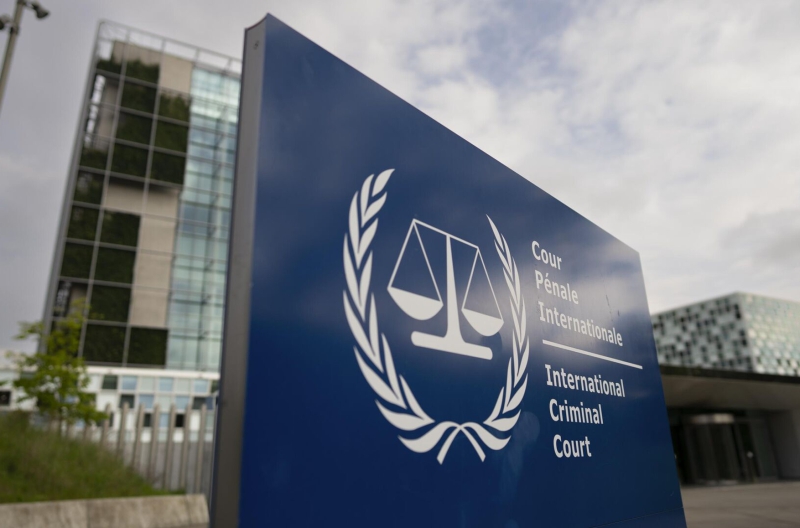
A judge of the Moscow City Court has handed down sentences — in absentia — against a range of figures from the International Criminal Court (ICC), the body that on March 17, 2023, announced an arrest warrant against Vladimir Putin. In the event that they ever travel to Russia, the ruling will affect: ICC president Piotr Józef Hofmański; his deputies Luz del Carmen Ibáñez Carranza, Bertram Schmitt, and Reine Alapini-Gansu; ICC judges Tomoko Akane, Rosario Salvatore Aitala, Sergio Gerardo Ugalde Godínez, and Haykel Ben Mahfoudh; and ICC prosecutor Karim Ahmad Khan.
On Dec. 12, Judge Andrei Suvorov found his international colleagues guilty of “knowingly prosecuting innocent persons,” “unlawful imprisonment,” and “preparing an attack on persons under international protection with the aim of provoking war or worsening international relations.” The ICC judges received sentences ranging from 3½ to 15 years, while the prosecutor was sentenced to 15 years.
According to a statement from the Russian Prosecutor General’s Office, the court “established” that between February and March 2022, ICC prosecutor Khan unlawfully initiated criminal proceedings against Russian citizens, and that the court’s presidency instructed trial judges to issue arrest warrants.
At Khan’s request, in March 2023 the ICC did indeed issue warrants for the arrest of Vladimir Putin and for Russia’s commissioner for children’s rights, Maria Lvova-Belova, as the ICC found reasonable grounds to suspect that Putin and Lvova-Belova were responsible for the war crime of unlawfully deporting and transferring Ukrainian children from occupied areas of Ukraine to Russia. Reuters reported at the time that Putin and Lvova-Belova could be arrested and transferred to The Hague if they travel to any of the 125 states that are party to the Rome Statute.
As noted by the Russian newspaper Kommersant, the court in Moscow concluded that a criminal prosecution of Putin could have led to an attack on him. The alleged victims — Putin and Lvova-Belova — did not appear in the Russian court to state their case personally.