
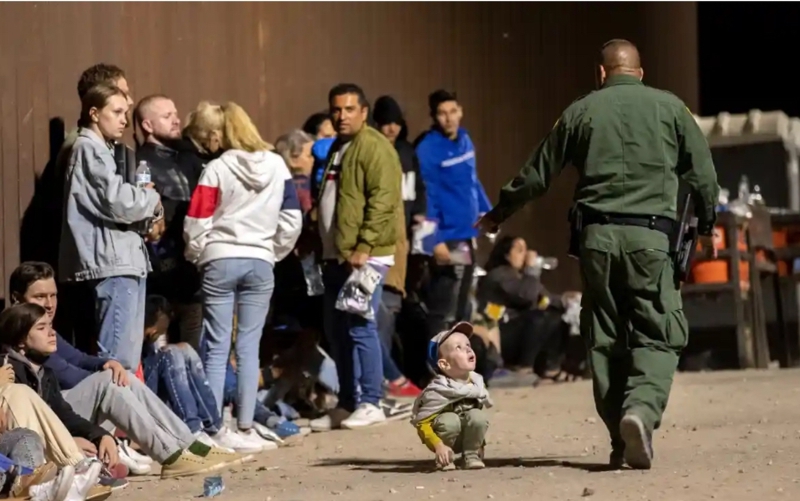
Migrants on the border between Mexico and the U.S. Photo: Étienne Laurent/EPA
On Feb. 16, France took the unprecedented step of issuing humanitarian visas to two former activists from Alexei Navalny’s regional offices, a move prompted by the United States’ refusal to grant them asylum and its threats to deport them to Russia. After Trump’s return to the White House, the U.S. began deporting Russian citizens — primarily asylum seekers who had fled war and repression — directly back to their home country. Upon arrival in Moscow, they are interrogated by security services — some are detained right at the airport, and men are often handed military draft notices. According to ICE, in 2025 the U.S. deported 127 Russian nationals, while human rights advocates estimate that another 1,000 remain in immigration detention centers awaiting decisions. Over the past year, the Trump administration has organized at least four special deportation flights to Moscow, making it virtually impossible to disembark from them during layovers to seek refuge in a third country. The Insider spoke with three Russians who went through U.S. detention and deportation.
Watch the video version on YouTube
I’m from Krasnodar Krai, but in recent years I lived in St. Petersburg with my husband. First I studied, then I worked as a manager at the IKEA restaurant.
In 2025, according to the U.S. Department of Homeland Security, more than 600,000 people were deported from the country. Another 2 million were forced to leave the United States on their own.
During the 2024 election campaign, Russian asylum seekers were increasingly placed in immigration detention centers for national security reasons. Before that, most were allowed to remain free until their court hearings.
A detention center is an immigration facility where many asylum seekers are held after crossing the U.S. border.
A Convention Against Torture interview assesses the risk of torture faced by the applicant in their home country. Usually, the “CAT interview” is conducted as a last chance for protection against deportation.
The “credible fear interview” is an initial meeting aimed at determining whether there are genuine grounds (persecution or fear of future persecution) for the person to fear returning to their home country. The Trump administration expanded the use of expedited deportation following the credible fear interview, so that a refugee can be deported even before their case is heard in immigration court.
CBP One was a mobile app run by U.S. Customs and Border Protection that allowed people to schedule lawful crossings at land ports of entry to apply for asylum. After Donald Trump took office on Jan. 20, 2025, the CBP One system was immediately scrapped.
My husband and I were always opposition-minded. We took part in protests and supported Alexei Navalny. In 2021, I wrote him a letter of support while he was in the Matrosskaya Tishina prison and even received a “thank you” in reply. We were repeatedly assigned administrative penalties for taking part in rallies.
In 2025, according to the U.S. Department of Homeland Security, more than 600,000 people were deported from the country. Another 2 million were forced to leave the United States on their own.
During the 2024 election campaign, Russian asylum seekers were increasingly placed in immigration detention centers for national security reasons. Before that, most were allowed to remain free until their court hearings.
A detention center is an immigration facility where many asylum seekers are held after crossing the U.S. border.
A Convention Against Torture interview assesses the risk of torture faced by the applicant in their home country. Usually, the “CAT interview” is conducted as a last chance for protection against deportation.
The “credible fear interview” is an initial meeting aimed at determining whether there are genuine grounds (persecution or fear of future persecution) for the person to fear returning to their home country. The Trump administration expanded the use of expedited deportation following the credible fear interview, so that a refugee can be deported even before their case is heard in immigration court.
CBP One was a mobile app run by U.S. Customs and Border Protection that allowed people to schedule lawful crossings at land ports of entry to apply for asylum. After Donald Trump took office on Jan. 20, 2025, the CBP One system was immediately scrapped.
In September 2022, IKEA left Russia because of the war, and I was left without a job. We managed for a while, but when mobilization began, it became clear that staying any longer would be dangerous. At first we went to Turkey, and then we decided to try to get to the United States. We had friends who had already made it to America using the CBP One app. Back then, it seemed like a relatively quick and straightforward process.
We arrived in Mexico at the end of September 2024. Of course, we hoped to get a date through the app within a month. But even then, some had already been waiting for six to eight months. By Jan. 20, 2025, when Donald Trump took office, we still hadn’t received a date, and we decided to cross the border by car. For that, we flew to Tijuana and bought a car there. Our Mexican visas had already expired, so the journey was stressful.
In 2025, according to the U.S. Department of Homeland Security, more than 600,000 people were deported from the country. Another 2 million were forced to leave the United States on their own.
During the 2024 election campaign, Russian asylum seekers were increasingly placed in immigration detention centers for national security reasons. Before that, most were allowed to remain free until their court hearings.
A detention center is an immigration facility where many asylum seekers are held after crossing the U.S. border.
A Convention Against Torture interview assesses the risk of torture faced by the applicant in their home country. Usually, the “CAT interview” is conducted as a last chance for protection against deportation.
The “credible fear interview” is an initial meeting aimed at determining whether there are genuine grounds (persecution or fear of future persecution) for the person to fear returning to their home country. The Trump administration expanded the use of expedited deportation following the credible fear interview, so that a refugee can be deported even before their case is heard in immigration court.
CBP One was a mobile app run by U.S. Customs and Border Protection that allowed people to schedule lawful crossings at land ports of entry to apply for asylum. After Donald Trump took office on Jan. 20, 2025, the CBP One system was immediately scrapped.
On Feb. 16, 2025, we headed for the border. The most important thing for us was to cross the Mexican border. Once you get through it, you can finally breathe. No one stopped us.
On the U.S. side, we got out of the car and said simply: “We need asylum.” A lot of officers rushed over immediately, handcuffed us, and took us into the building. The car was confiscated.
When we crossed the border, it was complete chaos. The new laws introduced by Trump had just come into effect, and I got the impression that even ICE officers didn’t fully grasp how things were supposed to work. They immediately started telling us that we wouldn’t get any “credible fear interview,” that we were entitled to nothing, and that we would be deported to Russia. Some customs officers even said outright: “Trump came, and now there is no political asylum in America anymore.”
In 2025, according to the U.S. Department of Homeland Security, more than 600,000 people were deported from the country. Another 2 million were forced to leave the United States on their own.
During the 2024 election campaign, Russian asylum seekers were increasingly placed in immigration detention centers for national security reasons. Before that, most were allowed to remain free until their court hearings.
A detention center is an immigration facility where many asylum seekers are held after crossing the U.S. border.
A Convention Against Torture interview assesses the risk of torture faced by the applicant in their home country. Usually, the “CAT interview” is conducted as a last chance for protection against deportation.
The “credible fear interview” is an initial meeting aimed at determining whether there are genuine grounds (persecution or fear of future persecution) for the person to fear returning to their home country. The Trump administration expanded the use of expedited deportation following the credible fear interview, so that a refugee can be deported even before their case is heard in immigration court.
CBP One was a mobile app run by U.S. Customs and Border Protection that allowed people to schedule lawful crossings at land ports of entry to apply for asylum. After Donald Trump took office on Jan. 20, 2025, the CBP One system was immediately scrapped.
Customs officers said outright: “Trump came, and now there is no political asylum in America anymore”
The next day, my husband and I were sent separately to immigration detention centers in different states. While I was there, I started writing to the officers, trying to get a “credible fear interview,” because it was the only way to access the court system. For a long time, I kept getting the same response: you’re not entitled to it because you crossed the border illegally.
In April, I finally had my interview — but it wasn’t a credible fear interview; it was a torture interview. It was a clever move. “CAT interviews” are held when there’s no other chance to stay in the U.S. Of course, there are refugees who have been subjected to torture in Russia and have had criminal cases opened against them, but there aren’t many. The torture interview simply didn’t fit my situation. The Americans knew this perfectly well, which is why they scheduled it. In the end, I was denied. After that, they tried to deport me, but I refused to board the flight and kept insisting on a credible fear interview.
Later, my lawyer and I learned we could petition the federal court in order to challenge an illegal detention in an immigration jail and denial of access to legal procedures. In my case, this was especially relevant for medical reasons. I have an autoimmune disease and require genetically engineered biological therapy.
After filing this petition in May, I was finally scheduled for a credible fear interview. It was very superficial. I was interviewed remotely, sitting in a cramped booth with my lawyer and an interpreter for two hours. The interviewer asked questions about what had happened to me and why I feared returning. They didn’t even know basic things. For example, when I said that a friend of mine had been kept in SIZO [pretrial detention] and tortured, I had to explain what SIZO is and why people are held there. A week later, I received a denial. They asked me: ‘Are you ready for deportation, or will you appeal?’ I said I would appeal.
My husband went through almost the same process. First, he had a torture interview, and was up for deportation as well. He refused and demanded a credible fear interview. After that, they put him in solitary confinement. It wasn’t as bad as Russian punishment cells, of course, but it put him under a lot of pressure. He was in complete isolation — no phone or tablet for three days. My family and I didn’t know where he was and feared he might have already been deported.
I was frequently transferred from one detention center to another — between California, Arizona, and Louisiana. The best facility, without a doubt, was in California — the Imperial. The food there was very good: chicken almost every day, and not patties, but actual legs and thighs. Friday was fish day — they served us tuna or fish patties, and there was a choice of meals: regular, vegetarian, or halal. Everything is arranged as a diet — medical or based on beliefs. I have a bean intolerance, for instance, but beans are a staple in American jails — they’re added almost everywhere. A doctor prescribed me a bean-free diet, so I had beans replaced with other vegetables.
In 2025, according to the U.S. Department of Homeland Security, more than 600,000 people were deported from the country. Another 2 million were forced to leave the United States on their own.
During the 2024 election campaign, Russian asylum seekers were increasingly placed in immigration detention centers for national security reasons. Before that, most were allowed to remain free until their court hearings.
A detention center is an immigration facility where many asylum seekers are held after crossing the U.S. border.
A Convention Against Torture interview assesses the risk of torture faced by the applicant in their home country. Usually, the “CAT interview” is conducted as a last chance for protection against deportation.
The “credible fear interview” is an initial meeting aimed at determining whether there are genuine grounds (persecution or fear of future persecution) for the person to fear returning to their home country. The Trump administration expanded the use of expedited deportation following the credible fear interview, so that a refugee can be deported even before their case is heard in immigration court.
CBP One was a mobile app run by U.S. Customs and Border Protection that allowed people to schedule lawful crossings at land ports of entry to apply for asylum. After Donald Trump took office on Jan. 20, 2025, the CBP One system was immediately scrapped.
We also had tablets. Normally, one cell block has nine tablets for 64 people. Not all of them are functional, and there’s constant competition for access. You can use the tablets to contact ICE officers for free: to request clothing, submit a query, or sign up for the library. Paid plans are available for communicating with the outside world. Incoming messages are free because you’re already covered by the plan, but the sender pays about 50 cents per message. You can send photos, but those are curated. Video calls are available at roughly $6 for 30 minutes. After 30 minutes, the call is automatically disconnected.
In 2025, according to the U.S. Department of Homeland Security, more than 600,000 people were deported from the country. Another 2 million were forced to leave the United States on their own.
During the 2024 election campaign, Russian asylum seekers were increasingly placed in immigration detention centers for national security reasons. Before that, most were allowed to remain free until their court hearings.
A detention center is an immigration facility where many asylum seekers are held after crossing the U.S. border.
A Convention Against Torture interview assesses the risk of torture faced by the applicant in their home country. Usually, the “CAT interview” is conducted as a last chance for protection against deportation.
The “credible fear interview” is an initial meeting aimed at determining whether there are genuine grounds (persecution or fear of future persecution) for the person to fear returning to their home country. The Trump administration expanded the use of expedited deportation following the credible fear interview, so that a refugee can be deported even before their case is heard in immigration court.
CBP One was a mobile app run by U.S. Customs and Border Protection that allowed people to schedule lawful crossings at land ports of entry to apply for asylum. After Donald Trump took office on Jan. 20, 2025, the CBP One system was immediately scrapped.
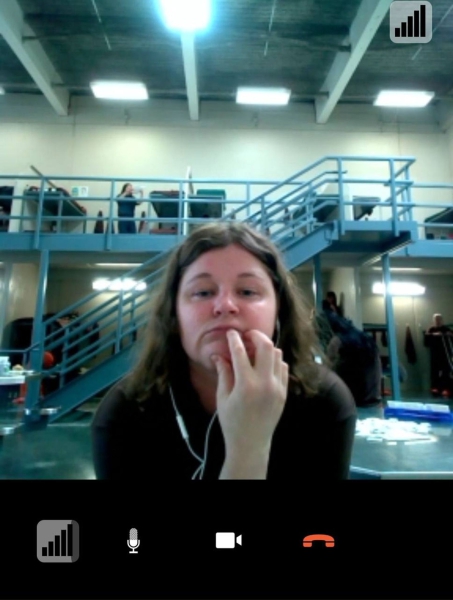
The hardest part of being in jail had to do with my condition. I need expensive medication. In Mexico, I planned ahead and stocked up on medicines for several months. In the immigration jail, I went to the doctors in advance: “Look, I have a diagnosis, here are medical records from Russia and Mexico.” They told me outright: anything issued outside the U.S. didn't matter to them. Their logic was simple: if you don’t feel pain now, you don't get anything. When it starts hurting, you can come back.
At some point, inflammation set in. My joints were stiff, and I started limping. My leg got swollen. They took my blood and said, “Well, you probably played football and got hit.” I began filing complaints. In California, I managed to get a new attending doctor, which is very rare. The new doctor sent me for an X-ray, so they drove me to the hospital and ran additional tests.
As the doctor said, to start my main therapy, I’d need to see a specialist, but the nearest appointment was months away. He also promised to make sure I'd get these medications if I was still there after October. To reduce the inflammation, he prescribed hormones. It’s basic therapy, tough stuff — it makes you swell, feel hungry, and it leaches calcium. But at that time, it saved me. The pain went away.
From the very beginning of my appeal hearing, I had the feeling that the judge was biased against me. Later, I learned that she generally has a very high denial rate for political cases involving Russians. Essentially, she told me: “Look, [Russian security services] reach out to your relatives, look for you, want to talk to you. So what? They just want to talk. Nothing will happen to you. It’s no big deal.” She explicitly said that in the past, what I had in my case would have been enough to get political asylum — but now the laws have changed.
Then she said something that really shocked me: “You know, they beat people with batons in our streets now too.” This was against the backdrop of protests in Los Angeles.
The judge said, “We don’t have democracy either. Here, people get beaten too.”
I replied, “Your Honor, but still, America is not Russia.”
She smirked and replied, “Ma’am, just watch the news. The TV.” At that, she left the decision unchanged. It became clear that we had exhausted our options.
In 2025, according to the U.S. Department of Homeland Security, more than 600,000 people were deported from the country. Another 2 million were forced to leave the United States on their own.
During the 2024 election campaign, Russian asylum seekers were increasingly placed in immigration detention centers for national security reasons. Before that, most were allowed to remain free until their court hearings.
A detention center is an immigration facility where many asylum seekers are held after crossing the U.S. border.
A Convention Against Torture interview assesses the risk of torture faced by the applicant in their home country. Usually, the “CAT interview” is conducted as a last chance for protection against deportation.
The “credible fear interview” is an initial meeting aimed at determining whether there are genuine grounds (persecution or fear of future persecution) for the person to fear returning to their home country. The Trump administration expanded the use of expedited deportation following the credible fear interview, so that a refugee can be deported even before their case is heard in immigration court.
CBP One was a mobile app run by U.S. Customs and Border Protection that allowed people to schedule lawful crossings at land ports of entry to apply for asylum. After Donald Trump took office on Jan. 20, 2025, the CBP One system was immediately scrapped.
The judge said, “We don’t have democracy either. Here, people get beaten too”
When I lost the appeal, my husband still hadn’t had his credible fear interview. We were waiting for a decision in his case and hoped that if things went better for him, I could join his case and avoid deportation. But we were already exhausted and braced ourselves for the worst.
In August, he was denied. Then he also lost his appeal. At that time, I was in California and he was in Arizona. We hoped they would allow a joint deportation, but that didn’t happen.
Typically, no one knows the exact date. The only indicator is when the tablet balance resets. That means either a transfer or deportation. We were counting on getting our passports in Morocco and flying to Istanbul. But at the end of August, my husband was suddenly transferred to the Alexandria Detention Center in Louisiana, close to the airport. It became clear that he was up for deportation. The next day, I was taken to Arizona by bus, in shackles.
In 2025, according to the U.S. Department of Homeland Security, more than 600,000 people were deported from the country. Another 2 million were forced to leave the United States on their own.
During the 2024 election campaign, Russian asylum seekers were increasingly placed in immigration detention centers for national security reasons. Before that, most were allowed to remain free until their court hearings.
A detention center is an immigration facility where many asylum seekers are held after crossing the U.S. border.
A Convention Against Torture interview assesses the risk of torture faced by the applicant in their home country. Usually, the “CAT interview” is conducted as a last chance for protection against deportation.
The “credible fear interview” is an initial meeting aimed at determining whether there are genuine grounds (persecution or fear of future persecution) for the person to fear returning to their home country. The Trump administration expanded the use of expedited deportation following the credible fear interview, so that a refugee can be deported even before their case is heard in immigration court.
CBP One was a mobile app run by U.S. Customs and Border Protection that allowed people to schedule lawful crossings at land ports of entry to apply for asylum. After Donald Trump took office on Jan. 20, 2025, the CBP One system was immediately scrapped.
Typically, no one knows the exact deportation date: the only indicator is when the tablet balance resets
From there, I was sent to Louisiana. I arrived at the same airport where my husband was, but they took me to the women’s center in Belle. They immediately told me, “You’re flying today,” and put me in a room with other Russian women awaiting deportation. I asked if anyone would try to get off in Morocco, but they said they were flying through Egypt and no one was being let off anymore. I was genuinely scared.
In the end, I wasn’t deported that day. They said it was because of issues with my medication. They kept me in Louisiana for a few more weeks. No one knew when the next flight would be. I was transferred between detention centers in different states. These transfers and paperwork were the most exhausting. Every time it involved inspections, documents, and long waits.
In 2025, according to the U.S. Department of Homeland Security, more than 600,000 people were deported from the country. Another 2 million were forced to leave the United States on their own.
During the 2024 election campaign, Russian asylum seekers were increasingly placed in immigration detention centers for national security reasons. Before that, most were allowed to remain free until their court hearings.
A detention center is an immigration facility where many asylum seekers are held after crossing the U.S. border.
A Convention Against Torture interview assesses the risk of torture faced by the applicant in their home country. Usually, the “CAT interview” is conducted as a last chance for protection against deportation.
The “credible fear interview” is an initial meeting aimed at determining whether there are genuine grounds (persecution or fear of future persecution) for the person to fear returning to their home country. The Trump administration expanded the use of expedited deportation following the credible fear interview, so that a refugee can be deported even before their case is heard in immigration court.
CBP One was a mobile app run by U.S. Customs and Border Protection that allowed people to schedule lawful crossings at land ports of entry to apply for asylum. After Donald Trump took office on Jan. 20, 2025, the CBP One system was immediately scrapped.
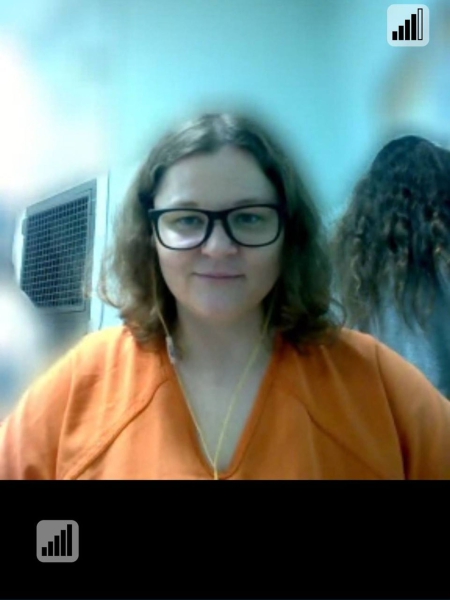
A few days after the last transfer, we were finally called for deportation. Our group consisted of a dozen Russian women. They picked us up in the evening, but we only arrived at the airport early in the morning. We waited while the planes were being prepared. We were brought to different flights one by one: Cuba, Eritrea, Guatemala. We sat on the bus in shackles, waiting. Our flight was only at 3:00 p.m. During boarding, men went on first, then women.
The roll call began. They mixed up our names, struggled to identify anyone, and started threatening that if someone didn’t respond, we’d be kept for another three weeks. Everyone was already on edge. As it turned out, people with Russian passports had been seated in different cabins, so they didn’t hear their names being called. I was asked to assist: I walked with an officer and called out the names. Only after that did we finally take off.
The flight was very long: first a refueling stop in Puerto Rico, then on to Cairo. We thought we would get off there, but we took off to Qatar instead to drop off Iranians, then flew back to Cairo. Finally they unshackled us, returned our belongings, and allowed us to use our phones. We were handed over to Egyptian officers, who accompanied us all the way to the plane bound for Moscow. It was a charter flight solely for deportees. About 45 Russians were on board with me. We tried to persuade the Egyptian officers to hand over our passports. They refused to even listen. I only received my passport once I was in Moscow.
I had mixed feelings. On the one hand, I was terrified. I knew what my husband had already gone through and understood that the same awaited me. At the same time, I felt exhaustion and even some relief at finally being able to call my relatives, have a decent meal, take a shower, and simply be back home.
Inside, I had a rehearsed monologue — what I would say to the officers, what I could leave out, where to pretend, where to lie. They always play the good cop–bad cop game. Even if it's a single person. At first, everything is very friendly: fingerprints, photos, DNA. They make jokes, ask meaningless questions: how do you like America? how’s Moscow? isn’t home great? do you think Trump and Putin agreed on deportations? Then they take your phone and put you in a room. There are four officers: two behind you, two in front. While some are going through your phone, the one in front of you fills out a form: name, parents, education, work. Very basic questions, meant to relax you. And at some point, he just takes out a piece of paper and says: “Now let’s get serious.” His questions become specific: what did you sign? where did you participate? how do you feel about it now? At that moment, the choice is simple: either start explaining, or pretend you’re not interested in politics, because you're scared and just want to go home and be left alone.
On Oct. 1, 2025, I flew to Russia, and a mere 20 days later, my husband and I left the country again. Now we are living in a relatively safe country. I try to look at this experience positively. For some, it’s very hard to accept having spent so much time in detention. As for me, I used this opportunity to improve my English. Sometimes I joke that I’ve traveled across America more than the average American: I saw Las Vegas from above, and I was in California, Louisiana, and San Diego. We also explored Mexico thoroughly. We made many close friends there — some who made it to America, some who didn’t, and some who received asylum in Europe. These people supported me greatly and became closer to me in spirit than many from my previous life.
Now I can share this experience. I run a blog on TikTok and Instagram. Sometimes followers write to me, saying, “You went to prison just to tell stories about it later.” It’s not true, of course. It’s just a part of life that almost no one knows about. Relatively few people have been in U.S. immigration detention, even though thousands go through it in the U.S. — not just Russians.
I lived in St. Petersburg with my wife and child. I worked in the energy sector, assembling equipment at an electrical engineering company.
We first thought of leaving Russia on Feb. 24, 2022. We didn't leave right away, of course. At first, like many, we thought what was going on was abnormal, that it couldn't go on for long. But very quickly it became clear that the screws were being tightened and things would only get worse. The authorities started putting dissidents in prison. I didn’t stay silent. I posted on social media and spoke out publicly.
My wife was born in Ukraine. She still has family there. We kept in touch all that time, hearing the air raid sirens, knowing they were running to the basement with a baby in their arms.
My wife worked in sales at a construction company. At some point, her colleagues decided to report her for opposing what was happening, and she was fired. Notably, her former employer started operating in [occupied] Mariupol, working on “rebuilding” the city.
Our son Maksim was five at the time. At a recital in 2023, his kindergarten displayed a photo of Vladimir Putin. Maksim told his teachers that Putin was a murderer, that he was killing Ukrainian children. After that, we were summoned to the kindergarten for a meeting.
In 2025, according to the U.S. Department of Homeland Security, more than 600,000 people were deported from the country. Another 2 million were forced to leave the United States on their own.
During the 2024 election campaign, Russian asylum seekers were increasingly placed in immigration detention centers for national security reasons. Before that, most were allowed to remain free until their court hearings.
A detention center is an immigration facility where many asylum seekers are held after crossing the U.S. border.
A Convention Against Torture interview assesses the risk of torture faced by the applicant in their home country. Usually, the “CAT interview” is conducted as a last chance for protection against deportation.
The “credible fear interview” is an initial meeting aimed at determining whether there are genuine grounds (persecution or fear of future persecution) for the person to fear returning to their home country. The Trump administration expanded the use of expedited deportation following the credible fear interview, so that a refugee can be deported even before their case is heard in immigration court.
CBP One was a mobile app run by U.S. Customs and Border Protection that allowed people to schedule lawful crossings at land ports of entry to apply for asylum. After Donald Trump took office on Jan. 20, 2025, the CBP One system was immediately scrapped.
Maksim told his preschool teachers that Putin was a murderer, that he was killing Ukrainian children
Just before New Year 2024, we finally realized we couldn’t stay any longer. The kindergarten filed a report against us with child protective services. We collected Maksim’s documents from the kindergarten, moved out of our apartment, and relocated to the city center so the authorities couldn’t find us. And we thought: what would change if Maksim went to a new kindergarten? Nothing.
We left Russia for Turkey, planning to reach Mexico with a layover in Brazil. But when we tried to check in for our next flight in Istanbul, we were told that the other side wouldn’t accept us and that all onward tickets were canceled. There were many cases like this at the time — Russians turned back precisely at this stage.
We had to return to Russia. In Moscow, we were immediately taken to the FSB for questioning. My son and I were released, but my wife was questioned until 2 a.m., likely because of her Ukrainian background. They checked her phones, copied contacts, and extracted data.
At that moment, I realized we urgently needed to find another route. I had been reading chats and understood that many people weren’t getting through directly via Mexico at that time. Three days later, we were allowed to leave the country without any issues. We said we were flying to Cuba for vacation. Then we bought tickets from Cuba to Peru, and from there to Mexico. All the while, we had return tickets to Russia in case of checks. All these flights cost roughly 1.5 million rubles [$19,500].
Eventually, we arrived in Mexico City, where we waited another 63 days for a border-crossing date. We were lucky — some waited as long as nine months. Not once did we think about going back. We lived in the center of Mexico City, in the Amsterdam Street area, where many Europeans and Americans live. It was more expensive, but safer, which was crucial with a child. Maksim treated it like a long vacation. We went to parks, took walks, and tried to make sure the anxiety of waiting did not tire him.
In 2025, according to the U.S. Department of Homeland Security, more than 600,000 people were deported from the country. Another 2 million were forced to leave the United States on their own.
During the 2024 election campaign, Russian asylum seekers were increasingly placed in immigration detention centers for national security reasons. Before that, most were allowed to remain free until their court hearings.
A detention center is an immigration facility where many asylum seekers are held after crossing the U.S. border.
A Convention Against Torture interview assesses the risk of torture faced by the applicant in their home country. Usually, the “CAT interview” is conducted as a last chance for protection against deportation.
The “credible fear interview” is an initial meeting aimed at determining whether there are genuine grounds (persecution or fear of future persecution) for the person to fear returning to their home country. The Trump administration expanded the use of expedited deportation following the credible fear interview, so that a refugee can be deported even before their case is heard in immigration court.
CBP One was a mobile app run by U.S. Customs and Border Protection that allowed people to schedule lawful crossings at land ports of entry to apply for asylum. After Donald Trump took office on Jan. 20, 2025, the CBP One system was immediately scrapped.

When we finally got a date in the CBP One app, two weeks before crossing, we flew to the border city of Juárez. At Mexico City airport, they stopped us and took our passports, but allowed us through with the confirmation of our crossing date.
In early June 2024, we crossed the border. Our host in Juárez, himself an American, drove us to the crossing and wished us luck. The Mexican border guards let us through without any problems, and on the U.S. side, we were ushered into a large waiting hall. It looked almost like a government service center: counters, lots of chairs. About 160 people entered during that time slot. We were the only ones from Russia; everyone else was from Latin America.
The officers took fingerprints, photographs, biometrics, and saliva samples from everyone, including the child. Several more hours passed. People began receiving their documents and leaving. Finally, an officer came out to get us and a man from Venezuela. He explained that there had been no response from Washington regarding our forms, so we couldn’t be released. We had to wait in a special area — for how long, he did not know.
We were moved to the holding area, where we found many families from Russia and other CIS countries in the same situation. Everyone was being called in for short interviews one by one. We were quickly questioned as well.
They held us in cells, men separately from women and children, about 20 people in each cell. Each got a thin yoga mat and foil to cover themselves. It was cold, and the lights never went out. We had no sense of how much time had passed. It’s a very heavy feeling.
All that time, I was separated from my wife and child. Three days later, they took our child. I was brought into a room. My wife, who was already there, knew he was being taken and was packing a bag of clothes for him. She told me: “Let’s calmly explain that he’s going to a facility, and that we’ll pick him up soon. Let’s not panic, fight, or assert ourselves here. We can’t change anything, and it could harm our kid.”
I wasn’t prepared for this. Not at all. But I did as she asked, because at that moment our only priority was to keep my child sane. They told us he would be placed in a facility for children while our case was being processed. I asked how long that could last — a week, a month, a year? There was no answer. This came as a surprise even to our lawyer, whom we had hired before crossing the border. He later said that in his 20 years of practice, he had never seen anything like this.
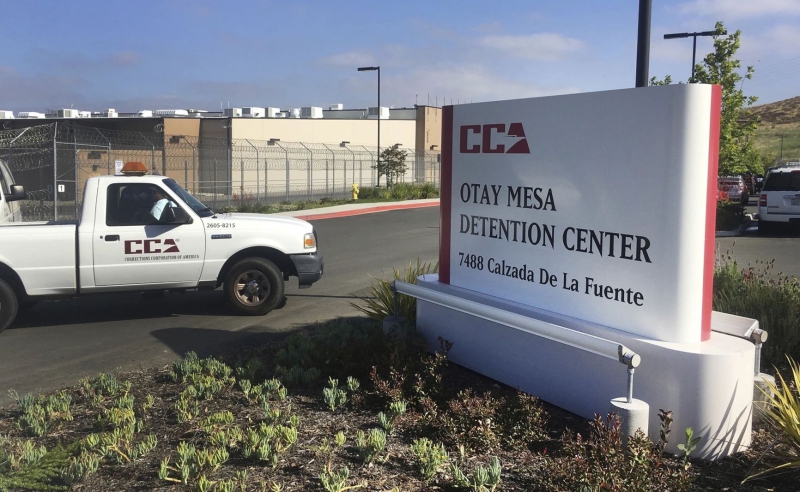
I was sent to the immigration jail a day before my wife. From there, everything was like in an American movie: handcuffs, hands chained at the waist, shackles on our feet. We men were loaded onto a bus with bars — yellow, like a school bus — and taken to the Otay Mesa detention center in California.
In 2025, according to the U.S. Department of Homeland Security, more than 600,000 people were deported from the country. Another 2 million were forced to leave the United States on their own.
During the 2024 election campaign, Russian asylum seekers were increasingly placed in immigration detention centers for national security reasons. Before that, most were allowed to remain free until their court hearings.
A detention center is an immigration facility where many asylum seekers are held after crossing the U.S. border.
A Convention Against Torture interview assesses the risk of torture faced by the applicant in their home country. Usually, the “CAT interview” is conducted as a last chance for protection against deportation.
The “credible fear interview” is an initial meeting aimed at determining whether there are genuine grounds (persecution or fear of future persecution) for the person to fear returning to their home country. The Trump administration expanded the use of expedited deportation following the credible fear interview, so that a refugee can be deported even before their case is heard in immigration court.
CBP One was a mobile app run by U.S. Customs and Border Protection that allowed people to schedule lawful crossings at land ports of entry to apply for asylum. After Donald Trump took office on Jan. 20, 2025, the CBP One system was immediately scrapped.
It was just like in an American movie: handcuffs, hands chained at the waist, shackles on our feet
At first, I was placed in so-called quarantine — almost two weeks of near complete isolation in a cell for four people. No going out, no calls, no information at all. I was with a Mexican, a Venezuelan, and an Afghan. Everyone spoke different languages. My English was poor at the time. The Latin Americans barely spoke English. My family and I only knew the very basics: how to ask for directions and explain simple things in daily life. I wouldn’t have been able to talk politics. At interviews, there was always an interpreter.
After quarantine, I was transferred to the general population block. There were about 120 people, rooms with bunk beds, and a common area. There, I waited for my credible fear interview. A month after the interview, we learned that we had passed it. A court date was set, but we were not released from custody.
It was at that moment that Russians began to be held en masse in detention centers even after a successful interview. When I first arrived, most people around me were Mexican and Latin American, all Spanish speakers. The only Russian speakers were two or three people from Kyrgyzstan and Kazakhstan. But three months later, almost the entire block was speaking Russian.
In 2025, according to the U.S. Department of Homeland Security, more than 600,000 people were deported from the country. Another 2 million were forced to leave the United States on their own.
During the 2024 election campaign, Russian asylum seekers were increasingly placed in immigration detention centers for national security reasons. Before that, most were allowed to remain free until their court hearings.
A detention center is an immigration facility where many asylum seekers are held after crossing the U.S. border.
A Convention Against Torture interview assesses the risk of torture faced by the applicant in their home country. Usually, the “CAT interview” is conducted as a last chance for protection against deportation.
The “credible fear interview” is an initial meeting aimed at determining whether there are genuine grounds (persecution or fear of future persecution) for the person to fear returning to their home country. The Trump administration expanded the use of expedited deportation following the credible fear interview, so that a refugee can be deported even before their case is heard in immigration court.
CBP One was a mobile app run by U.S. Customs and Border Protection that allowed people to schedule lawful crossings at land ports of entry to apply for asylum. After Donald Trump took office on Jan. 20, 2025, the CBP One system was immediately scrapped.
All this time, my wife and I saw each other for one hour a week. We were allowed to call Maksim every day. Our friends helped us a lot. They found the number we could use to call our child. He had been placed in a foster family that treated him poorly. He was six years old, and they demanded that he stay quiet, forced him to finish all his food. Once they even hit him on the hand for playing with a toy car too loudly early in the morning. My friends started calling every possible office. Eventually, they got in touch with a social worker, and he was moved to a different family that treated him properly. A month later, our friends received permission to take him to their home in Phoenix, Arizona.
In August 2024, we had what’s called a master hearing. This is the first session where you formally state what you want — in our case, to apply for asylum. At that time, we were still stalling, hoping to be released on parole so we could pursue permission to stay in the country outside detention, since judges are stricter in jail. But at some point in September, it became clear that no one would be released, so we submitted our asylum application.
On Sept. 15, we were transferred again. I was sent to Texas, my wife to Louisiana. A month later, my wife was also moved to Texas, but to a different detention center, far from mine. Until then, I thought conditions in the California jail were harsh, but then I realized it was almost a resort. In California, we had open spaces, a yard to walk in, tables, and sometimes they let you into the gym to play basketball. In Texas, it was a cell for 12 people, and we weren’t allowed out at all.
From that point, our legal battle really began. We built our case with the lawyer piece by piece. Our friends helped a lot. You’re sitting there without internet, without access to information. All you have is a phone to communicate and a tablet to type text.
Overall, I paid almost $30,000 in legal fees. At some point, I reached out to a second lawyer, a woman I had been introduced to while in detention. I was told she had helped a family with children get released on parole. The lawyer agreed to help me for free. On the morning of Dec. 17, 2024, I was unexpectedly called. The officer immediately said he wasn’t there to process my deportation, but to handle my release from jail. Wow!
In 2025, according to the U.S. Department of Homeland Security, more than 600,000 people were deported from the country. Another 2 million were forced to leave the United States on their own.
During the 2024 election campaign, Russian asylum seekers were increasingly placed in immigration detention centers for national security reasons. Before that, most were allowed to remain free until their court hearings.
A detention center is an immigration facility where many asylum seekers are held after crossing the U.S. border.
A Convention Against Torture interview assesses the risk of torture faced by the applicant in their home country. Usually, the “CAT interview” is conducted as a last chance for protection against deportation.
The “credible fear interview” is an initial meeting aimed at determining whether there are genuine grounds (persecution or fear of future persecution) for the person to fear returning to their home country. The Trump administration expanded the use of expedited deportation following the credible fear interview, so that a refugee can be deported even before their case is heard in immigration court.
CBP One was a mobile app run by U.S. Customs and Border Protection that allowed people to schedule lawful crossings at land ports of entry to apply for asylum. After Donald Trump took office on Jan. 20, 2025, the CBP One system was immediately scrapped.
Overall, I paid almost $30,000 in legal fees
In the end, I was released only on Jan. 2. On the day of my release, transport officers picked me up. They took me to an office in Houston, where they put a GPS ankle bracelet on me, and then the same officers drove me to the airport. They stopped right at the main entrance. I was taken out of the car — handcuffed, shackled, facing the vehicle. People around looked at me as if a particularly dangerous criminal had just been released.
I truly felt free when I walked into a Wendy’s and ordered a burger and a salad with vegetables. In detention, you don’t get cucumbers, tomatoes, or any real food — just lots of beans and spicy stuff. After that, I walked around the airport looking for an outlet to charge my phone. The first calls I made were to my mom, then to my friends.
My friends met me at the Phoenix airport with my child. When I saw my son, tears came to my eyes. He was crying too.
Our friends had booked a hotel for us for a few days. We couldn’t stay at their place because I’m allergic to dogs. Soon after, I found an apartment, even though the only documents I had were my driver’s license and bank statements from a CIS country.
Phoenix is mostly one-storied America. Since it is close to Mexico, the city has many Spanish speakers. Maksim started first grade here. Sometimes he complains about school, and I laugh and say: you should have gone to first grade in Russia first, so you’d have something to compare it to. His school is very supportive. Teachers know our story and treat us with great care. I constantly get updates in a special app, so I always know if Maksim was upset or if something happened. Children don’t get assigned homework. Every morning, a yellow bus picks him up — just like in the movies. Maksim’s English is already better than his Russian.
In 2025, according to the U.S. Department of Homeland Security, more than 600,000 people were deported from the country. Another 2 million were forced to leave the United States on their own.
During the 2024 election campaign, Russian asylum seekers were increasingly placed in immigration detention centers for national security reasons. Before that, most were allowed to remain free until their court hearings.
A detention center is an immigration facility where many asylum seekers are held after crossing the U.S. border.
A Convention Against Torture interview assesses the risk of torture faced by the applicant in their home country. Usually, the “CAT interview” is conducted as a last chance for protection against deportation.
The “credible fear interview” is an initial meeting aimed at determining whether there are genuine grounds (persecution or fear of future persecution) for the person to fear returning to their home country. The Trump administration expanded the use of expedited deportation following the credible fear interview, so that a refugee can be deported even before their case is heard in immigration court.
CBP One was a mobile app run by U.S. Customs and Border Protection that allowed people to schedule lawful crossings at land ports of entry to apply for asylum. After Donald Trump took office on Jan. 20, 2025, the CBP One system was immediately scrapped.
At first I picked up side work as a handyman, doing small repair jobs mostly for people I knew. Now I’ve gotten a job with some guys who work with cars. They pay $20 an hour. I used to have bigger ambitions, but when it became clear that my wife could end up being deported, that went away.
In 2025, according to the U.S. Department of Homeland Security, more than 600,000 people were deported from the country. Another 2 million were forced to leave the United States on their own.
During the 2024 election campaign, Russian asylum seekers were increasingly placed in immigration detention centers for national security reasons. Before that, most were allowed to remain free until their court hearings.
A detention center is an immigration facility where many asylum seekers are held after crossing the U.S. border.
A Convention Against Torture interview assesses the risk of torture faced by the applicant in their home country. Usually, the “CAT interview” is conducted as a last chance for protection against deportation.
The “credible fear interview” is an initial meeting aimed at determining whether there are genuine grounds (persecution or fear of future persecution) for the person to fear returning to their home country. The Trump administration expanded the use of expedited deportation following the credible fear interview, so that a refugee can be deported even before their case is heard in immigration court.
CBP One was a mobile app run by U.S. Customs and Border Protection that allowed people to schedule lawful crossings at land ports of entry to apply for asylum. After Donald Trump took office on Jan. 20, 2025, the CBP One system was immediately scrapped.
I used to have bigger ambitions, but when it became clear that my wife could end up being deported, that went away
I haven't been able to get my wife out of detention. My attorney tried, but by then the administration had changed, and all the possible loopholes had closed. The court hearings were very tough. It felt like they were simply looking for a formal pretext to deny the case. One of those pretexts was connected to Ukraine: the prosecutor argued that my wife had been born there and therefore, in their view, still retained Ukrainian citizenship (she could not prove that she didn’t), which meant she had to separately demonstrate a threat in Ukraine as well.
As a consequence, our joint case was split. I was given a separate hearing scheduled for 2027, while my wife’s court proceedings continued and ultimately ended in deportation via Egypt on Dec. 7, 2025, along with a 10-year ban on entry to the United States.
She wasn’t allowed off the plane in Egypt. In the U.S., a Russian consul personally counted people against a list on board the aircraft. At Domodedovo Airport in Moscow, they were immediately taken in for questioning, called in one by one. Some were released after brief questions. My wife was kept back. She didn’t have a phone, so there was nothing to check. Then they started pressuring her, trying to trick her into saying something about political asylum. She answered vaguely — we had agreed in advance: don’t argue, don’t escalate. In the end, they said they would know where she was as soon as she registered a SIM card, and they added: “We’re very much looking forward to speaking with your husband.”
She didn’t stay in Russia for long — she left the country just a couple of weeks later.
I asked the lawyers how long it would take if I won the case and tried to bring my wife back. He said that the best-case scenario would take about four years — the trial, a possible appeal, then a green card, then family reunification. And all of this with no guarantees, huge expenses, and a child to care for. I realized we couldn’t live like that. A child can’t grow up without his mother. I filed a request for voluntary deportation. That means I leave the United States on my own and can choose a country that is willing to accept me. There’s been no response yet.
My son would prefer to stay in America, but he wants to be with his mom more than anything.
We are from the Moscow Region. I worked in advertising, and my husband worked at a private law firm. We have two adult daughters.
Our family has never watched television — we deliberately stopped watching it in 2012. Our children grew up without propaganda — with the internet, with YouTube. My husband has always been politically active, going back to the Bolotnaya Square protests [of 2011-2012], later serving as an observer for the Yabloko party. In 2019, he started a politically oriented YouTube channel and now has around 120,000 subscribers.
February 24 was a shock so overwhelming that for a while I couldn’t function normally. It felt like negotiations would start immediately, that it would all be over quickly. But at that time, we hadn’t yet grasped the scale of what was happening. Our daughters left Russia almost immediately after the war began. They openly opposed it, attended anti-war protests, and we supported them in that. My husband and I stayed. We are both in our fifties, and at that age, making the decision to leave is much harder.
In March 2022, my husband was fired for his anti-war stance. At my workplace, many people didn’t support the war, but almost no one spoke about it openly. It was a kind of silent dissent. The turning point came two years later, in April 2024, when officers of the security services came to our home with questions. My husband wasn’t home at the time. We realized we couldn’t wait any longer. He left Russia almost immediately, barely coming back home.
In 2025, according to the U.S. Department of Homeland Security, more than 600,000 people were deported from the country. Another 2 million were forced to leave the United States on their own.
During the 2024 election campaign, Russian asylum seekers were increasingly placed in immigration detention centers for national security reasons. Before that, most were allowed to remain free until their court hearings.
A detention center is an immigration facility where many asylum seekers are held after crossing the U.S. border.
A Convention Against Torture interview assesses the risk of torture faced by the applicant in their home country. Usually, the “CAT interview” is conducted as a last chance for protection against deportation.
The “credible fear interview” is an initial meeting aimed at determining whether there are genuine grounds (persecution or fear of future persecution) for the person to fear returning to their home country. The Trump administration expanded the use of expedited deportation following the credible fear interview, so that a refugee can be deported even before their case is heard in immigration court.
CBP One was a mobile app run by U.S. Customs and Border Protection that allowed people to schedule lawful crossings at land ports of entry to apply for asylum. After Donald Trump took office on Jan. 20, 2025, the CBP One system was immediately scrapped.
The turning point came two years later, in April 2024, when officers from the security services came to our home with questions
We knew there was a legitimate procedure for entering the U.S. with CBP One and filing a petition. By then, our younger daughter had also moved to America. So my husband flew to Mexico. I didn’t leave immediately. I had urgent financial matters to settle — we had no savings, so I sold our property within a month and then left Russia as well.
It was very difficult. I didn’t speak any English, was over fifty, and had never had any experience traveling abroad. It was my first major trip. The route was complicated. First I spent three days in Cuba, then about a week in the Dominican Republic. At each stage, you needed to have tickets for the next leg — without them, you simply weren’t allowed on the plane. It was constant stress. You’re always afraid you’ll be turned back. To be on the safe side, I came up with a story. I said I was interested in Latin American artists. It wasn’t entirely made up — for example, I had been to an art museum in Cuba and was genuinely impressed by the exhibition.
In 2025, according to the U.S. Department of Homeland Security, more than 600,000 people were deported from the country. Another 2 million were forced to leave the United States on their own.
During the 2024 election campaign, Russian asylum seekers were increasingly placed in immigration detention centers for national security reasons. Before that, most were allowed to remain free until their court hearings.
A detention center is an immigration facility where many asylum seekers are held after crossing the U.S. border.
A Convention Against Torture interview assesses the risk of torture faced by the applicant in their home country. Usually, the “CAT interview” is conducted as a last chance for protection against deportation.
The “credible fear interview” is an initial meeting aimed at determining whether there are genuine grounds (persecution or fear of future persecution) for the person to fear returning to their home country. The Trump administration expanded the use of expedited deportation following the credible fear interview, so that a refugee can be deported even before their case is heard in immigration court.
CBP One was a mobile app run by U.S. Customs and Border Protection that allowed people to schedule lawful crossings at land ports of entry to apply for asylum. After Donald Trump took office on Jan. 20, 2025, the CBP One system was immediately scrapped.
We lived in Mexico City, in a fairly safe neighborhood. We tried not to go far — our visas had already expired. We were just waiting for the date, trying to stay calm. In the meantime, I was studying English, while my husband maintained his YouTube blog.
We loved Mexico. The Mexicans turned out to be incredibly friendly, cheerful, and hospitable. Upon learning that we were Russian, our neighbors even learned a few words in our language, which was very touching.
My husband had it harder, of course. His departure had been more urgent, and he was fully aware of the danger he was in. I did my best to support him. But the longer we waited, the harder it became. Months of waiting in Mexico was expensive. We had no income. At the same time, news came that Russians were being detained and placed in prisons. But there was no way back. We understood that we were facing real persecution for our public profile and anti-war posts — not just recent, but dating back to 2019. So we continued to wait.
After nine months, we “landed” a date. Once it was confirmed, we could move freely around Mexico — no one questioned us. The crossing took place at the end of November 2024, through the Mexicali border checkpoint.
At six in the morning, we arrived at the border, filled with joy, but also knowing that we would most likely be detained. At that time, there were individual cases of Russians being released on parole a month or three after the hearings. We were hoping for that. We had arranged lawyers in advance, paid for their services, and submitted all our documents.
In the group of 25–30 people entering through the checkpoint, we were the only Russians. We were also the only ones to be handcuffed, shackled, and taken to the border facility like dangerous criminals. There were no beds — just mats and thin shiny blankets, like the ones rescue workers use. Showers were allowed for only three minutes. The food was poor: almost nothing in the morning, a slice of pizza at lunch, and the only hot meal coming in the evening. We weren’t given normal toothbrushes — only foam ones.
In 2025, according to the U.S. Department of Homeland Security, more than 600,000 people were deported from the country. Another 2 million were forced to leave the United States on their own.
During the 2024 election campaign, Russian asylum seekers were increasingly placed in immigration detention centers for national security reasons. Before that, most were allowed to remain free until their court hearings.
A detention center is an immigration facility where many asylum seekers are held after crossing the U.S. border.
A Convention Against Torture interview assesses the risk of torture faced by the applicant in their home country. Usually, the “CAT interview” is conducted as a last chance for protection against deportation.
The “credible fear interview” is an initial meeting aimed at determining whether there are genuine grounds (persecution or fear of future persecution) for the person to fear returning to their home country. The Trump administration expanded the use of expedited deportation following the credible fear interview, so that a refugee can be deported even before their case is heard in immigration court.
CBP One was a mobile app run by U.S. Customs and Border Protection that allowed people to schedule lawful crossings at land ports of entry to apply for asylum. After Donald Trump took office on Jan. 20, 2025, the CBP One system was immediately scrapped.
There were no beds in the border facility — only mats and thin, shiny blankets like the ones rescue workers use
I spent 21 days there, while my husband was sent to detention after just three or four days (there were far fewer spots in the women’s units, so we had to wait). It was very hard. The conditions were completely unsuitable for such a long stay. Almost all women in the facility were Russian, varying in age.
One could say we were lucky — we ended up in the Imperial Detention Center in California, which had the most humane conditions. After the border facility, the detention center almost felt like paradise. We were fed hot meals three times a day and given fruit. There were beds with blankets to sleep on. They offered some clubs — English classes, yoga, and morning exercise. Every day we were allowed outside for an hour and a half — behind barbed wire, but outdoors.
In the women’s unit, 54 out of the 64 people were Russian. Credit where it’s due — there was complete discipline. No scandals, shouting, or conflicts. At least we could sleep peacefully at night. By the way, during that time we significantly expanded the prison library. We ordered books in Russian, asked our relatives to send them, and as a result, the library ended up with a whole collection of Russian classics.
In 2025, according to the U.S. Department of Homeland Security, more than 600,000 people were deported from the country. Another 2 million were forced to leave the United States on their own.
During the 2024 election campaign, Russian asylum seekers were increasingly placed in immigration detention centers for national security reasons. Before that, most were allowed to remain free until their court hearings.
A detention center is an immigration facility where many asylum seekers are held after crossing the U.S. border.
A Convention Against Torture interview assesses the risk of torture faced by the applicant in their home country. Usually, the “CAT interview” is conducted as a last chance for protection against deportation.
The “credible fear interview” is an initial meeting aimed at determining whether there are genuine grounds (persecution or fear of future persecution) for the person to fear returning to their home country. The Trump administration expanded the use of expedited deportation following the credible fear interview, so that a refugee can be deported even before their case is heard in immigration court.
CBP One was a mobile app run by U.S. Customs and Border Protection that allowed people to schedule lawful crossings at land ports of entry to apply for asylum. After Donald Trump took office on Jan. 20, 2025, the CBP One system was immediately scrapped.
In the women’s unit of 64 people, 54 were Russian
But the prison was still a prison. Much depended on the specific guard. There were searches, constant checks — you couldn’t even keep an extra apple; either eat it or throw it away. Everyone in prison has health problems. You can see a physician, but to see a dentist, you have to go to another detention center. I didn’t dare to do that, fearing they might leave me there. So I endured the pain.
I also had an acute attack, similar to appendicitis. Emergency care in such cases is a whole ordeal. They don’t like “sudden” situations there: you have to call senior officers, fill out paperwork. An officer even whispered to me, “Have you seen how Hispanic women ask for help? They cry, fall down, and get help immediately. Why aren’t you crying?” I replied, “That’s not how we do things.” In the end, I did receive help: they took me to a hospital, ran tests, and showed me to a doctor. I’m grateful for that.
My husband had tachycardia. He also received medical care. Overall, everyone who needed help got it — some even got psychiatric care. The conditions are very harsh, so many develop depression and need antidepressants.
Before Trump’s inauguration, some women with children were still being released from prison, but that stopped afterward. Release only became possible through the courts — and the courts began dragging out cases.
Our master hearing, where we filed the form for political asylum, took place in January 2025. The main hearing was initially scheduled for April, but the judge postponed it to June. We had a joint case, and I was listed as an addition to my husband. The hearing consisted of two sessions. The second was a formality: after the witnesses spoke (myself included), the pre-written decision was read immediately.
What shocked me the most was the judge’s behavior. I can hardly even call it a court. In the decision, he literally said that we were being deported to Russia so that we could “atone for our guilt before Putin.” That was said verbatim. Formally, we had the option to appeal, but that would have meant more months in prison, huge expenses, and almost zero chance of success. By that time, we had already spent nine and a half months in detention. So we decided not to appeal, and in mid-September 2025 we were deported. When this became known, one of the officers told my husband, “You are good people, exactly the kind America needs. When Trump leaves — come back.”
Deportation is harsh — handcuffs, shackles, a separate entrance to the plane, being escorted like criminals. We weren’t given our phones. We flew to Morocco via Washington. There were no handcuffs on the plane, but no privileges either — no phones or personal belongings. In Washington, we were taken off the flight again, shackled, and taken to a holding facility with the same mats and the same disposable blankets. Almost no food. We weren’t fed again until the flight to Morocco. My husband and I were held separately.
We were sent to Casablanca on a commercial flight. We had been told in advance that there was a chance not to continue to Moscow if we could arrange to buy tickets to a third country. As soon as we arrived, we immediately asked for permission. The officer agreed. They returned our phones, took us to a waiting area, and said, “Show us the tickets to Turkey — then you’ll be released.” The internet barely worked there, and only for a few minutes. Our children came to the rescue — they hadn’t slept for a day, waited to get in touch, and immediately bought us the tickets. The officer personally escorted us to the plane, handed over our passports, and that was it.
When we arrived in Turkey, we were already different people. Prison makes one lose even the most basic social skills. You step out of a normal life and suddenly don’t know your way around it again — where to turn off the light, how to talk to people. At first, we just walked around, looked at everything, smelled the flowers, and slept a lot. We tried food, tasted it, and relished living in normal, human conditions.
In 2025, according to the U.S. Department of Homeland Security, more than 600,000 people were deported from the country. Another 2 million were forced to leave the United States on their own.
During the 2024 election campaign, Russian asylum seekers were increasingly placed in immigration detention centers for national security reasons. Before that, most were allowed to remain free until their court hearings.
A detention center is an immigration facility where many asylum seekers are held after crossing the U.S. border.
A Convention Against Torture interview assesses the risk of torture faced by the applicant in their home country. Usually, the “CAT interview” is conducted as a last chance for protection against deportation.
The “credible fear interview” is an initial meeting aimed at determining whether there are genuine grounds (persecution or fear of future persecution) for the person to fear returning to their home country. The Trump administration expanded the use of expedited deportation following the credible fear interview, so that a refugee can be deported even before their case is heard in immigration court.
CBP One was a mobile app run by U.S. Customs and Border Protection that allowed people to schedule lawful crossings at land ports of entry to apply for asylum. After Donald Trump took office on Jan. 20, 2025, the CBP One system was immediately scrapped.

There were few options left for where to go. We had never been to Georgia before and had never considered it as a migration destination. But we knew there were many Russian speakers, that we could find work, and that it was time to start earning rather than just spending our last money. We decided to try our luck — and we stayed. We like it here. We feel comfortable, though it’s not entirely safe.
We had a good chance to get asylum in the U.S., but we ended up under Trump, who ran us over. Will we try again? For now, we’re not ready to risk it again and end up in prison for another year.
I changed everything. I started a new life. My English is now much better. In stores, I automatically speak English if people don’t speak Russian. I know simple phrases, and most importantly, I no longer feel insecure about my language skills. Even if I don’t know something, I can explain it with gestures or words and feel calm and confident.
I’ve discovered a completely new profession: working in real estate. We’ll see how well we manage to adapt. It’s harder for my husband. For now, we’re just exploring the new country and observing what’s happening here. Later, we’ll decide whether to stay or not.
In 2025, according to the U.S. Department of Homeland Security, more than 600,000 people were deported from the country. Another 2 million were forced to leave the United States on their own.
During the 2024 election campaign, Russian asylum seekers were increasingly placed in immigration detention centers for national security reasons. Before that, most were allowed to remain free until their court hearings.
A detention center is an immigration facility where many asylum seekers are held after crossing the U.S. border.
A Convention Against Torture interview assesses the risk of torture faced by the applicant in their home country. Usually, the “CAT interview” is conducted as a last chance for protection against deportation.
The “credible fear interview” is an initial meeting aimed at determining whether there are genuine grounds (persecution or fear of future persecution) for the person to fear returning to their home country. The Trump administration expanded the use of expedited deportation following the credible fear interview, so that a refugee can be deported even before their case is heard in immigration court.
CBP One was a mobile app run by U.S. Customs and Border Protection that allowed people to schedule lawful crossings at land ports of entry to apply for asylum. After Donald Trump took office on Jan. 20, 2025, the CBP One system was immediately scrapped.