
Starting March 1, publishers and booksellers in Russia are required to label books that contain references to narcotic substances. This is just one of many restrictions that have already transformed the country’s literary market beyond recognition. For a long time, Russian authorities largely left the publishing world alone (aside from the de facto ban on certain biographies of Vladimir Putin). But everything changed after the war began. At least 600 books have been permanently removed from sale for censorship reasons, more than 50 writers have been designated as “foreign agents,” and criminal and administrative cases are being brought against publishers and booksellers. Books themselves are undergoing striking transformations: publishers are turning gay characters in literary works into “MILF hunters” and drugs into “sleeping pills.”
Доступно на русскомContents
Editor’s note: This article deals exclusively with Russian-language editions of Russian and foreign authors. The titles and quotes are provided in English for the readers’ convenience.
A turning point for the Russian publishing industry came in May 2025, when three employees of Popcorn Books and Individuum, both Eksmo–AST group publishing houses, were arrested on charges of “extremism.” The crackdown on the book market had begun earlier, but after the attack on publishers, pressure increased sharply. Independent bookstores, such as Moscow’s Podpisnye Izdaniya and Falanster, started being hit with fines.
According to the investigation, Popcorn Books and Individuum continued to publish and sell books that “promote LGBT ideology” despite the bans that had recently come into force. A year later, the detained employees remain under house arrest awaiting trial. Popcorn Books announced its closure in January 2026, while Individuum continues to operate.
Since 2022, Russian stores have taken down roughly 600 book titles for censorship reasons, according to Agentstvo. The peak came in February 2024, when the marketplace Megamarket pulled 252 books from sale due to the law on “LGBT propaganda.” Most of the affected works were not contemporary Russian titles, but books by authors like Oscar Wilde, Stephen King, Haruki Murakami, and even Fyodor Dostoevsky (Netochka Nezvanova).
In February 2024, Megamarket pulled 252 books from sale due to the law on “LGBT propaganda,” including works by Fyodor Dostoevsky, Oscar Wilde, and Stephen King
A spike in self-censorship followed the aforementioned “publishers’ case,” when 153 more titles were withdrawn from stores. Most were pulled at the initiative of the publishers, with a slightly smaller share removed by the retailers themselves. Among the offending titles were works by Fredrik Backman, John Boyne, and Ursula K. Le Guin, as well as 26 books published by Elena Shubina Editorial (part of AST), including novels by Lyudmila Ulitskaya, Alexey Salnikov, and Alla Gorbunova. The main reason for the withdrawals was their presentation of a “positive portrayal of LGBT ideas or the presence of LGBT-themed episodes.”
However, LGBT-related content is far from the only subject area under increasing scrutiny from the state. In late February 2026, media outlets published a letter that had been sent to the Russian Book Union from the country’s Main Directorate for Drug Control of Russia’s Ministry of Internal Affairs. The letter recommends taking note of a glossary of drug-user slang compiled by affiliated experts and to prevent the appearance of such terms in print. The list contains roughly 800 words drawn from a variety of reference materials (including one dissertation abstract).
Then, starting March 1, new restrictions came into force in Russia. Books containing references to narcotic substances can no longer be sold to persons under 18, and for adults they may only be sold in sealed plastic packaging, with special “18+” labels and the following warning: “Illegal consumption of narcotic drugs, psychotropic substances, and their analogues is harmful to health; their illegal circulation is prohibited and entails liability under the law.”
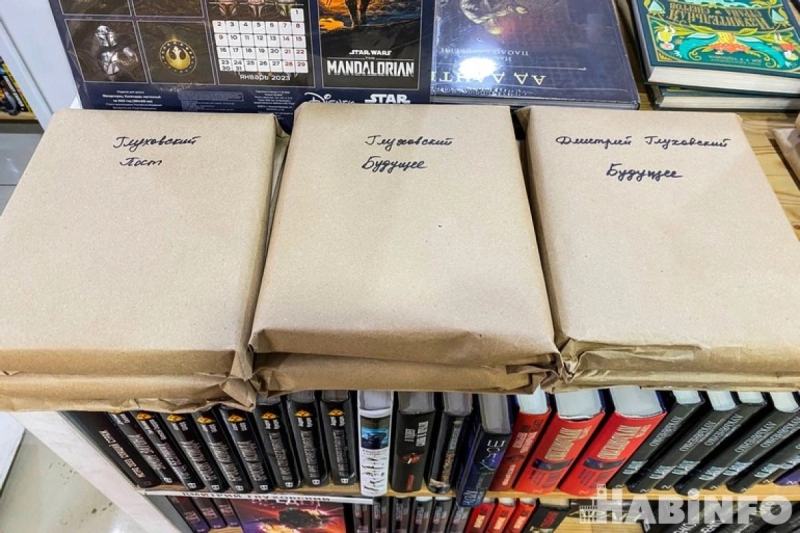
Books by writer Dmitry Glukhovsky, who has been designated a “foreign agent”
These rules apply to any books that so much as mention prohibited substances, meaning they affect tens of thousands of publications. Photos of classic literature with warning labels have already circulated online, with works from 19th-century classic Alexander Pushkin to World War II-era poet Olga Berggolts being slapped with the advisory note. The label on a book by Berggolts in the Falanster bookstore appeared after writer Roman Osminkin posted an excerpt from the poet’s memoir on Facebook:
“Everything would have been fine — if only that damned tooth hadn’t started hurting again — as painfully as in childhood. I swallow all kinds of painkillers, including luminal, and that makes it a little easier, but makes me feel drowsy, like a stunned zander.”
Luminal is a barbiturate with strong sedative, hypnotic, and anticonvulsant effects. Since 2013, it has been classified in Russia as a controlled substance that can cause dependence.
On the subject of the March ban, Falanster owner Boris Kupriyanov wrote that although the new restrictions are sweeping in nature, the government’s attention to narcotic substances is just one episode in a broader censorship landscape:
“You can still buy books about folk beliefs, but not about witches who believe in Satan, let alone books on Satanism. Books that mention people with non-traditional sexuality cannot be sold at all, without any exceptions, even if they paint such individuals in a negative light.”
Security forces do, in fact, carry out occasional raids in search of “satanic” literature. In St. Petersburg, a court banned four such titles following a prosecutor’s lawsuit.
Earlier, books by writers labeled “foreign agents” began disappearing from stores and libraries. Although there is no formal ban on their sale (only special packaging requirements), some sellers choose to err on the side of caution.
However, if the share of “prohibited content” in a book is minimal, it has the chance to see the light of day. Publishers typically redact offending passages, replacing them with black rectangles or ellipses, sometimes adding a note explaining that the passage was removed in accordance with Russian law.
In the Ad Marginem edition of Simone de Beauvoir’s The Coming of Age (La Vieillesse), a passage discussing the play Casina by the Roman playwright Titus Maccius Plautus was removed. The text reads: “In the Casina, Stalinon sprinkles himself with scent to make himself agreeable to a girl beloved by his son,” followed by a blacked-out rectangle. In the original, the censored sentence describes how the father is outwitted and finds another man in bed instead of his son’s beloved: “He hopes to find her in bed, but a man is put into it in her place.”
Another example is Collected Stories by Susan Sontag, also published by Ad Marginem. In Baby, a reflection on a high school student — “We always feel that Baby is hiding something from us. That he’s ashamed,” — is interrupted by another black rectangle. In the original, the continuation reads: “…particularly the crush he had on his journalism teacher, Mr. Berg.”
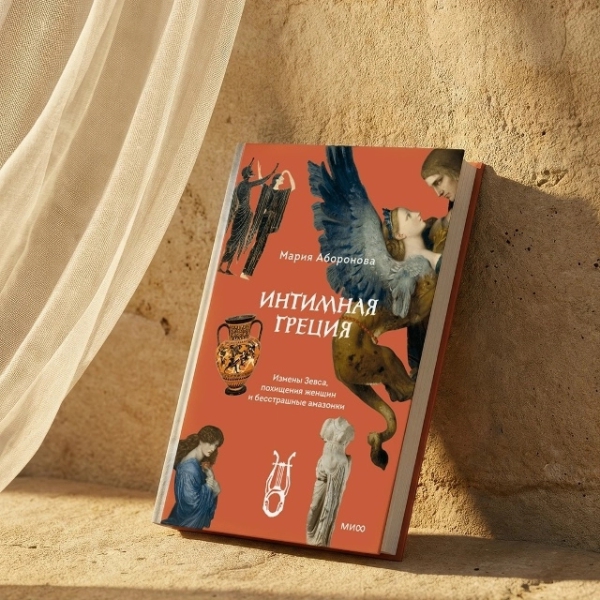
Intimate Greece by Maria Aboronova
Even books dealing with topics historically connected to homosexual culture now effectively ignore this layer of the story. One example is Maria Aboronova’s Intimate Greece, published by the MIF publishing house with the subtitle “Zeus’s infidelities, abductions of women, and fearless Amazons.”
On the very first pages, the author placed a disclaimer stating that the work does not claim to reflect reality: “When the topic is the status of women, people often expect sensationalism, headlines, and revelations. I may disappoint some readers right away, but there will be none of that in this book. First of all, because it does not attempt to cover the entire body of knowledge about the status of women in Ancient Greece, but only a few myths, analyzed from the perspective of how the ancient Greeks understood them. It would be inappropriate to draw serious conclusions about society as a whole based on a handful of examples.”
Intimate Greece is a successful attempt to hide an elephant in the room: a reader will learn many details about the private lives of ancient Greeks (in one polis, a divorce could be initiated by the husband’s father, while in another, a father could sell his daughter into slavery), but they will not see a single word about its homosexual dimension.
Kupriyanov outlines several interpretations of events currently circulating within the publishing community. The first, which he dismisses as the least relevant, involves the possible incompetence of the government agencies tasked with enforcing the new bans. The second is that the state is seeking to create an environment in which any bookstore or publishing house can be shut down at any moment — “a kind of warning to all players that we are watching you, so don’t step out of line, because you’ll have only yourselves to blame.” The third is that the government is attempting to create conditions for shutting down the entire retail book trade: “After all, it’s easier to control two large marketplaces than hundreds of small and medium-sized bookstores.”
But Kupriyanov himself favors a fourth version: that the pressure on the book industry has been triggered by a group of literary figures who are trying to accelerate the planned transfer of the industry from the Ministry of Digital Development to the Ministry of Culture:
“Some literary figures and sympathetic copywriters want to demonstrate their influence over the authorities. They want to attract the government’s attention. A group of writers is very eager to carry out the authorities’ directives. They are appealing to the Soviet model, but only to one side of it: the privileges and benefits for a select few.”
Kupriyanov mentions one “aspiring classic” who believes that “no state ideology is possible without literature” — a not-so-subtle reference to author Zakhar Prilepin, who actively cooperates with the Ministry of Culture. At the same time, Kupriyanov believes that such initiatives are unlikely to facilitate the transfer of the sector to the Ministry of Culture given that independent publishing is not of notable interest to the ministry.
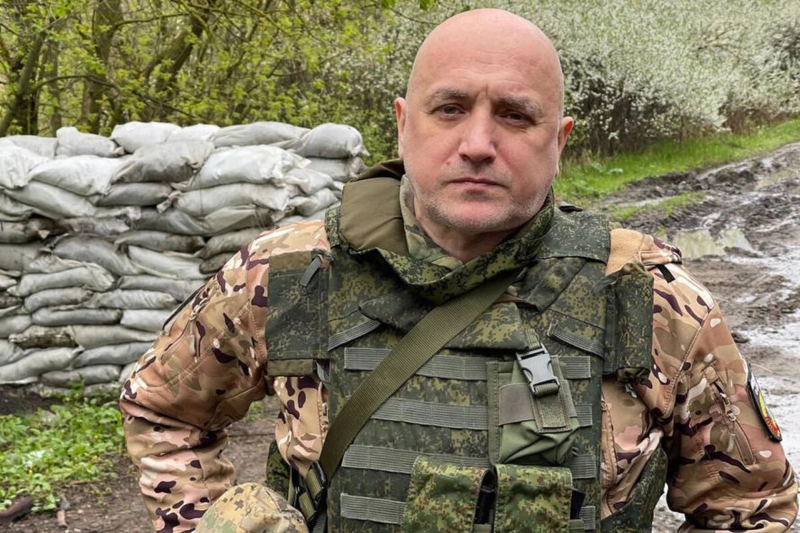
Zakhar Prilepin
Nikolai (name changed), who works with several independent Russian publishing houses specializing in fiction, believes that the new wave of bans is coming from two directions. On the one hand, it reflects a consistent national strategy and the aspirations of patriotic and conservative groups such as the Union of February 24, and on the other, it is promoted by local “trigger-happy” enthusiasts.
Nikolai recalls an incident that took place at the state-affiliated Reading Russia festival, where he was selling books:
“A man comes over, browses the shelves for a long time, chats with the shop assistants — and then suddenly stumbles across a book about gender. Something instantly snaps in his head, and he starts being hostile with the staff. He even calls the police, but the two officers who arrive brush him off, because they clearly don’t want to deal with ‘LGBT propaganda’ at a state festival. And this happens quite often.”
The Russian book market is highly monopolized, with the Eksmo–AST group producing a significant share of titles. However, Russia has hundreds of small publishing houses, often releasing less popular and more radical literature. While large holding companies have sufficient resources to deal with the new restrictions — by maintaining their own expert review systems, restructuring their publishing policies to meet state requirements, and paying fines when they are imposed — smaller publishers face much greater difficulties. Some of them have simply chosen to shut down.
As early as December 2024, the publishing house No Kidding Press, which specialized in translated experimental prose, mostly written by women, announced its closure. Among the reasons for the decision, the publisher cited blocked distribution channels, blacklistings from book fairs, and the development of a general environment in which its continuing operation had become unsafe. Indeed, it is difficult to imagine that books from this publishing house — most of which often touch on “non-traditional” values — would have escaped the scrutiny of the authorities.
Although the biggest players continue to operate, the difficulties associated with increased state control fall on the shoulders of ordinary employees. This is how Anna (name changed), an editor in one of the popular imprints of a major Russian publishing house, describes the situation:
“My segment is monitored especially closely — popular literature, often read by young women. It all started two years ago, when the first censorship directives began coming from management. One book had a gay character, but back then it was enough that he was not the main character. Later it turned out he was not supposed to be a positive character either. The storyline featuring the well-known ‘gay friend’ trope had to be changed at the last moment, with him becoming a ‘MILF hunter.’”
Additional workload caused by tightened state control falls on the shoulders of ordinary employees
A similar case was reported to The Insider by an employee of Podpisnye Izdaniya. The bookstore’s publishing arm has been unable to release a book for three years, because just as the title was ready for print, a new set of restrictions came into force — and this pattern repeated itself several times.
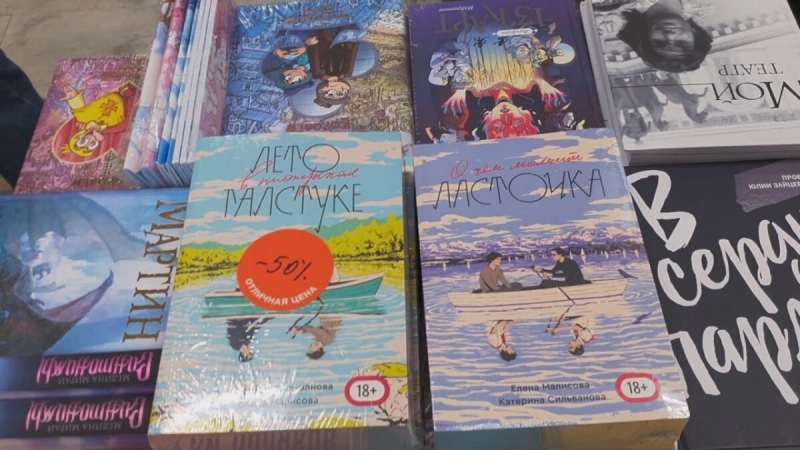
Summer in a Pioneer Tie (second left) was one of the first titles to face pressure over alleged “LGBT propaganda”
Anna says that over time the number of internal bans in her company has only increased: anything even remotely connected to LGBT themes has become prohibited, including even negative and jocular references. She also recalls the description of a threesome sex scene, and how any suggestion that one man interacted with another during sex had to be removed in light of the new restrictions.
Similar edits have also been made in books that mention drugs. In one case, drugs were replaced with sleeping pills, but the ban even applies to fictional substances. Anna says the publisher may have to replace “soma” from Aldous Huxley’s Brave New World, as well as genetic modification drugs appearing in other works of science fiction.
According to Anna, the situation changed significantly after the arrests of publishers last year:
“The arrests triggered major changes inside the holding. Many imprints were closed or refocused. Oversight and censorship practices were also introduced, such as an AI agent where you can upload a text and receive a summary of problematic passages. At first, the screening only covered LGBT content, but it was then extended to include drugs, pornography, childfree ideology, and pedophilia. Naturally, the AI often malfunctions, so a special commission was introduced, with heads of departments meeting weekly to discuss controversial passages. Without AI analysis, you cannot submit a manuscript for publication.”
After the AI screening, Anna says, the text is proofread by literary editors. This is followed by negotiations with the author about changes to the text or cuts. But as Anna explains, this is not the most alarming part of her new job responsibilities:
“We, the editors, have all signed a document agreeing that we assume liabilities related to the publication of materials. I think this is the publishing house trying to incentivize employees to carry out all these checks.”
Even though the new measures were met with discontent from editors, the publishing house issued an ultimatum, Anna says: if you don’t like it, you’re free to leave. Several editors did resign, but the majority accepted the new rules, especially since management emphasized that these measures would help safeguard the publisher against problems in the future.
The publishing house gave employees an ultimatum: if you don’t want to assume liability for publication, you are free to leave
Anna says that authors usually resist censorship-related changes, but she has always managed to persuade them to accept the edits. The publisher’s stance toward authors is no less strict than toward employees: if an author does not agree to the revisions, the book will not be published. However, while losing an individual author is not a major problem for the holding company, negotiations with best-selling authors take longer and require a detailed explanation of the risks involved.
A brand manager at a major publishing house (who asked to remain anonymous) brought up the case of Roxy Dunn’s As Young As This, which Loft planned to publish absent several censored passages. “The rights holder prohibited cutting the text, and the book was never released. The cover was ready, bloggers had started promoting it, but then it suddenly disappeared from all websites,” he says.
A translator of Japanese literature shared a similar case with The Insider: “Japanese publishers are usually willing to cooperate with Russia, although I know, for example, that Haruki Murakami is against censorship cuts, which is why his new book was never translated.”
As the translator adds:
“Everything starts with reviewing. I used to review books, since publishers need to decide whether to buy rights or not, and they don’t know the language. Earlier, we had a separate item about the presence of LGBT content and questionable elements. But now it’s stricter: as I filled out a review form recently, there were questions like, ‘From a parent’s perspective, do you think this book could harm a child?’”
The translator also told The Insider that among her peers an active debate is ongoing about who should be responsible for identifying “subversive content.” As she explains, “There is a general consensus that this is not the translator’s job; the translator’s job is to report it. However, translation contracts sometimes include clauses such as ‘the translator guarantees that their work does not violate the laws of the Russian Federation.’”
The interviewee said she has personally encountered censorship: “When we published Sympathy Tower Tokyo by Rie Qudan, some small details were changed. Things like ‘N. became pregnant at 14 and wanted to commit suicide’ — that one wasn’t removed, but was softened. At the same time, I translated a detective novel that included an entire scene in a gay bar, but it stayed intact. In general, I occasionally come across LGBT references in translated Japanese books that I read.”
The situation of bookstores is further complicated by legal uncertainty. For example, in early March 2026, Artem Faustov, co-founder of the bookstore Vse Svobodny, was fined 50,000 rubles ($670) for selling Fredrik Backman’s Beartown even though an expert review by the Russian Book Union had concluded that the book contained nothing prohibited.
The situation of bookstores is further complicated by legal uncertainty
Employees of Vse Svobodny say they had removed the book from sale in December 2025 almost immediately after news broke that the Chitai-Gorod bookstore chain had been fined for carrying the title, but it was still purchased by a customer, who filed a report. As Vse Svobodny wrote on social media, the same buyer had also reported on another St. Petersburg bookstore.
The new labeling regulations do not appear to be fully coherent either. Irina, an employee of an independent bookstore, describes the consequences of the new restrictions:
“The new law on prohibited substances seems like complete madness, because it is extremely difficult, if it is even possible, for a small team to carry out all the required procedures, especially given that it is not always clear which books may mention such substances and what exactly is meant by the references. As usual, the wording is far too broad.”
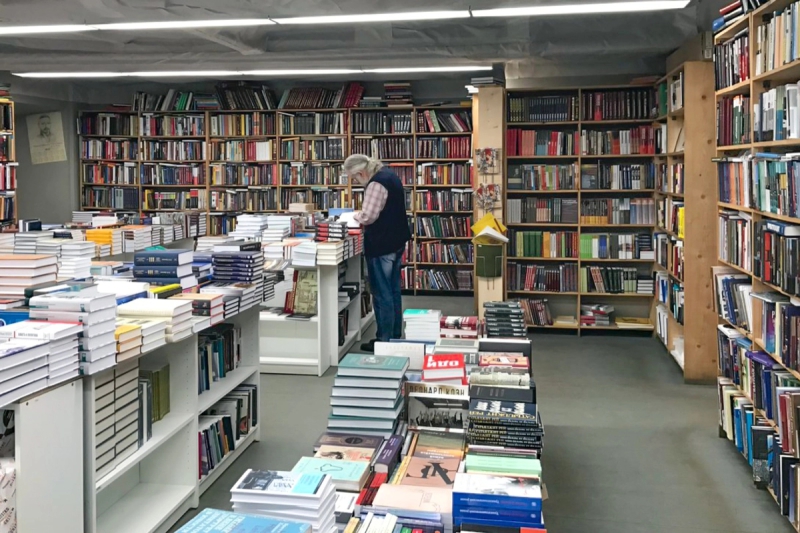
The bookstore Falanster
According to The Insider’s interviewee: “We have to identify some titles ourselves, since not all publishers send lists. In general, a huge number of books fall under the new restrictions, and unfortunately, we cannot label them all, no matter how hard we try. An independent publisher wrote that they can only clearly remember one book, and that everything else from them would have to be checked manually.”
Although the bookstore where Irina works has not been fined over titles containing prohibited content, cases involving other stores have prompted it to take precautions. For example, the shop removed Olivia Laing’s Everybody and Susan Sontag’s On Women from sale after the Podpisnye Izdaniya bookstore was fined for carrying them.
Books that have not yet come to the attention of the authorities are also being pulled from sale. Irina says that, as a precaution, staff removed all books from Kolonna Publications — a publisher specializing in avant-garde fiction by such authors as William S. Burroughs, Pierre Guyotat, Kathy Acker, and Georges Bataille: “Some of their books definitely can no longer be sold, but just in case, we removed everything. And it seems we are not the only ones. People constantly look for these books in the store and ask about them.” Previously, staff could sell such books discreetly to trusted customers, but after an incident in another bookstore, where a seemingly “like-minded” customer reported an employee who sold them a “questionable” book, the store abandoned this practice and permanently removed the titles from sale.
After a seemingly “like-minded” customer reported a staff member who had sold them a “questionable” book under the counter, the store abandoned this practice
Another reason for caution is the occasional undercover visits by officials to events held in the bookstore. According to Irina, it is often easy to tell that such a visitor is not an ordinary customer: their appearance and behavior usually stand out against the background of other attendees.
The new legislative environment calls for creative operating strategies. One of the interviewees describes an increasingly widespread return of samizdat (lit. “self-publishing”) — clandestine replication and distribution of prohibited literature, a practice that dates back to the era of Soviet censorship:
“The emerging samizdat projects completely ignore the usual, illusory logic that a publishing house needs to be registered, that it needs to place orders with a printing house, and so on. In fact, all you need is a printer at home. You buy another printer, a paper cutter, an industrial stapler — and that’s it, you are your own publisher. If you can also do your own layout, then you essentially have a full production cycle in your living room.”
He added that such practices are best suited for projects publishing underground literature, whether the restricted work was originally written in Russian or if it has been translated. Since print runs for such books are small in any case, for readers the final product is practically indistinguishable from books printed in a professional print shop.
Publishers who have left Russia are now printing books that are banned in the country itself — a practice commonly referred to as tamizdat (lit. “publishing there”). Georgy Urushadze, the founder of Freedom Letters, often takes on books that are prohibited in Russia:
“We publish everything that is banned in Russia almost immediately — for example, [Vladimir] Sorokin’s The Heritage. We will soon publish [Alexander] Genis’s books that have been removed from sale in Russia. We have also published two books featuring selected titles from the newspaper Sobesednik and the magazine Gorbi — they were designated ‘foreign agents’ and forced to shut down. We preserve these texts for history. We have also released full versions of books that were published in Russia in censored form.”
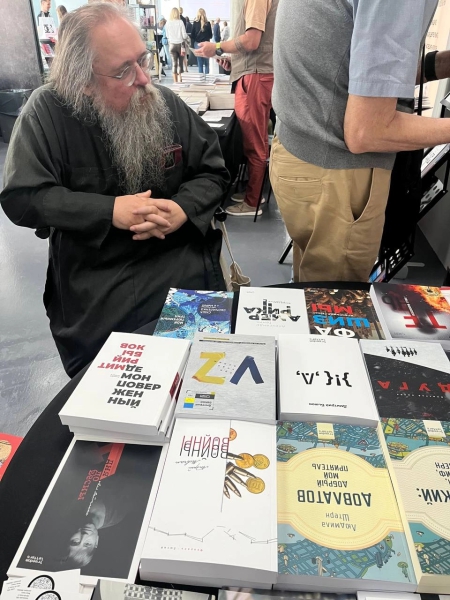
Tamizdat book fair in Prague, September 2025
Urushadze notes that Freedom Letters makes every effort to ensure its titles reach Russian readers. Sometimes the publisher brings books in from abroad, and sometimes it prints them in Russia. The decision on which approach to take is made on a case-by-case basis: “Whether we print or import depends on the situation, which changes daily. We printed [Sergei Davydov’s] Springfield and [Ivan Filippov’s] Mouse in Moscow — until they were banned by the Prosecutor General himself, and part of the print runs were destroyed. But we continued to sell these books even after the ban.”
The need to censor books inevitably raises questions in the publishing industry about the cost of compromise and whether censorship is justified at all. One of the most high-profile scandals highlighting this issue is connected to a collection of poems by Anna Gorenko, an émigré writer who died in Israel in 1999.
The Moscow-based Vyrgorod publishing house released this collection with ellipses replacing potentially sensitive passages in the poems. A striking example of such cuts is found in the poem “I Caught You and Was Caught…,” in which two words were replaced with ellipses. Those words were “bisexual” and “drug addict.”
Gorenko wrote extensively about topics that are now banned in Russia, and she died of a drug overdose. As the researcher Ilya Kukulin noted in his article on the case, “This is how they published a book by a poet who valued freedom above all and rejected all taboos during her lifetime.”
Kukulin acknowledges that the decision to publish redacted texts is itself controversial:
“The cost of self-censorship in each specific case is a very painful question. It brings us dangerously close to the debate about the permissibility of compromises with a repressive regime in order to ‘preserve institutions.’ I agree with those who argue that in such compromises, ‘preserving institutions’ very quickly becomes an end in itself, and in most cases all that remains of the institution is its former name — and not always even that.”
Public reaction to the publisher’s decision to release the book with ellipses was mixed. An employee of another Moscow-based publisher specializing in popular literature who spoke to The Insider believes that Vyrgorod is overcautious and is “falling to the ground before the shot is fired.”
However, poet and prose writer Yevgeny Nikitin came to the publishers’ defense:
“Boris Kutenkov publishes this series with his own money in a country where you can go to jail for it. That makes all claims against him somewhat questionable. The brackets marking omitted words make the gaps visible — and thereby make visible the repressive apparatus that compels the creation of such gaps in the first place. Criticizing this compromise effectively means leaving Russian publishers with a choice between silence and prison.”
Kukulin believes that this dispute exposes the tension created by the asymmetry between the cultural opportunities available to those who have left Russia and those who have remained. Instead of engaging in spats on social media, Kukulin suggests that those who have left the country — and who thus have much greater freedom for public speech — focus on “responding to this publication with reflections on what Gorenko’s poetry means today for the development of Russian literature in the context of the current aggression against Ukraine and the new wave of emigration.” By doing so, censored literature can serve as a means for those outside Russia to better understand the effects of repression inside the country.