
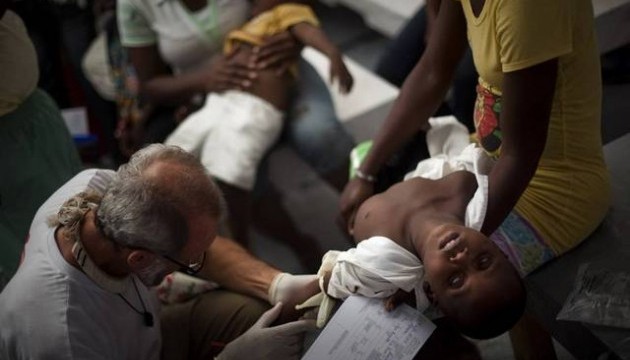
Over the past three years, every sixth bacterial infection worldwide has stopped responding to treatment with standard antibiotics. Today, more people die from drug-resistant infections than from HIV/AIDS and malaria combined. At the same time, in 2026, the development of new antibiotic drugs by major pharmaceutical companies decreased by around one third. If the problem is not addressed, up to 40 million people could die from resistant bacteria between now and 2050.
Contents
In late 2022, an elderly man from North Carolina returned home from Nepal, where he had been visiting family. He soon fell ill with what seemed to be a routine bacterial infection. He was treated at one of the best clinics in the United States, and doctors gave him their strongest antibiotics. But the E. coli that caused the infection turned out to be resistant to all available drugs. The man died. “Antibiotic resistance is a real problem that, with little or no warning, can affect the lives of any of us at any time,” Vance Fowler, the man’s treating physician and an infectious disease specialist at Duke Health, said. “We don’t have enough drugs.”
This is far from the first such case. In 2017, in the state of Nevada, a 70-year-old woman died from a Klebsiella bacterium that proved resistant to all 26 antibiotics available in the United States. Doctors could do nothing.
Stories like these no longer shock infectious disease specialists. “I have had the sad duty to have to tell a patient that we couldn’t [offer] chemotherapy for their cancer, or [give them] a joint replacement or a heart transplant, because they had an infection that was resistant to antibiotics,” says Helen Boucher, dean of the medical school at Tufts University School of Medicine.
All of this resembles a dystopia, but it is the reality of the past decade. Now, the scale of the problem has been precisely measured.
As early as 2023, roughly one in six bacterial infections worldwide did not respond to treatment with standard antibiotics. This figure was first established by experts from the WHO’s Global Antimicrobial Resistance Surveillance System (GLASS), who analyzed more than 23 million confirmed cases of infections from 104 countries.
In 2023, roughly one in six bacterial infections worldwide did not respond to treatment with standard antibiotics
In other words, if 60 bacterial infections are identified in a hospital in a given day, around 10 of them are caused by bacteria against which standard antibiotics no longer work. Doctors are being forced to look for emergency alternative treatment options — and these are becoming increasingly scarce.
Previously, specialists possessed only partial assessments of the situation: reports from individual countries and hospitals, data on specific bacteria, or mortality projections. However, in 2015, the World Health Organization created the global GLASS surveillance system, which has since been collecting and systematizing data worldwide.
GLASS specialists examined 23 million confirmed cases of infections from 104 countries. They focused on eight main types of bacteria that cause four common types of infections: bloodstream infections (sepsis), intestinal infections, urinary tract infections, and gonorrhea.
In simple terms, when a person was admitted to a hospital with an infection, doctors first determined which bacterium had caused the illness. They then tested which antibiotics worked against it and which no longer did. All these data from dozens of countries were transmitted to the international GLASS system, which collected them in one place.
In total, experts obtained 93 “infection type – bacterium – antibiotic” combinations and, using statistical modeling, calculated adjusted estimates of resistance to 22 antibiotics. It is precisely on this vast database – more than 23 million cases – that the figure emerged: every sixth confirmed bacterial infection worldwide turned out to be resistant to antibiotics.
Antibiotic resistance varies significantly by region. The worst situation is in Southeast Asia and the Eastern Mediterranean countries,where around every third recorded infection is resistant, while in Africa, roughly every fifth infection is resistant. According to a 2024 study in The Lancet, the largest number of deaths from antibiotic-resistant infections is expected in South Asia – in India, Pakistan, and Bangladesh, where 11.8 million deaths from such infections are projected between 2025 and 2050.
The World Health Organization directly states that antibiotic resistance is more common and grows faster in areas where healthcare systems lack the capacity for diagnosis and treatment.
Antibiotic resistance is more common and grows faster where healthcare systems lack the capacity for diagnosis and treatment
Why is the situation worse in some regions than in others? First, weak laboratory capacity: when it is not possible to quickly determine which bacterium caused the illness, doctors prescribe antibiotics “blindly,” thereby accelerating the emergence of resistant bacteria. Second, medications: even if a diagnosis is made, a patient may be prescribed an antibiotic that already works poorly against local bacteria simply because there is no alternative. Third, weak oversight: in hospitals where hygiene rules are poorly observed and infection control is lacking, resistant bacteria spread more quickly.
Among all resistant bacteria, two worry doctors the most: E. coli (Escherichia coli) and Klebsiella pneumoniae, a bacterium that can cause pneumonia and bloodstream infections. These two alone are most often responsible for severe infections that do not respond to treatment.
Both bacteria belong to the so-called Gram-negative group, meaning that they have a special protective outer membrane that many antibiotics struggle to penetrate. According to global estimates, more than 40% of isolated E. coli samples and over 55% of Klebsiella samples are already resistant to third-generation cephalosporins — the sort of antibiotics that doctors have long used as the main treatment for such infections, a kind of “first line of defense.”
In Africa, resistance to these drugs already exceeds 70%. Even more alarming, however, is the fact that “last-resort antibiotics” are also becoming ineffective. This refers to carbapenems, which are reserved for the most severe cases, in which standard treatments are powerless.
In September 2025, the U.S. Centers for Disease Control and Prevention (CDC) published an alarming report: the number of carbapenem-resistant infections in the United States rose by 69% from 2019 to 2023. An especially dangerous type of such bacteria — those carrying the NDM gene, which destroys even carbapenems — showed an increase of 461%. Doctors have dubbed them “nightmare bacteria” due to the fact that there are virtually no effective drugs left against them.
Gonorrhea, one of the most common sexually transmitted infections, also risks becoming incurable. According to World Health Organization data from November 2025, resistance of gonococcus to ceftriaxone, the last recommended antibiotic, increased from 0.8% in 2022 to 5% in 2024. In some countries in Southeast Asia, the increase has been sixfold. At present, only one class of antibiotics remains effective against gonorrhea.
Antibiotic resistance is a common problem that affects routine medical procedures. Antibiotics are needed for any surgery: cesarean sections, cancer treatment, organ transplants — any instance in which the body is weakened and vulnerable to infection. If antibiotics stop working, all these routine medical procedures become life-threatening.
If antibiotics do not work, routine medical procedures become life-threatening
Here is a simple example: urinary tract infections (cystitis) are one of the most common reasons for visiting a doctor, especially among women. In the past, such infections were easily treated with a pill. But in the United States, the resistance to antibiotics of bacteria causing cystitis increased by more than 50% from 2013 to 2019. More and more patients with ordinary cystitis now have to be hospitalized and treated with intravenous antibiotics.
The World Health Organization emphasizes that without effective antibiotics, medical interventions such as organ transplants, cesarean sections, chemotherapy, and diabetes treatment would become significantly more dangerous.
The economic implications are enormous. In the European Union alone, antibiotic resistance costs about €11.7 billion per year due to treatment expenses and productivity losses.
In September 2024, The Lancet published the largest study in the history of the problem — an analysis of data from 204 countries over 30 years. The results were alarming: from 1990 to 2021, more than one million people died each year from antibiotic-resistant infections. By 2050, if nothing changes, the annual death toll will increase to 1.91 million. In total, more than 39 million people could die from such infections between 2025 and 2050. Already, more people die from antibiotic-resistant infections each year than from HIV/AIDS and malaria combined.
The greatest burden will fall on the elderly, as mortality from resistant infections among people over 70 has increased by more than 80% over the past 30 years and will continue to rise. Among children under five, however, the situation has improved, with mortality cut in half thanks to vaccination and improved sanitation. According to researchers’ estimates, improving the quality of medical care and access to antibiotics could save up to 92 million lives over the same period.
The GLASS report shows a global trend, but it is still too early to determine whether it provides a complete picture worldwide. From 2016 to 2023, the number of participating countries increased more than fourfold from 25 to 104, but nearly half of the world’s countries still have not submitted any data at all. And among those that have, many still lack sufficiently developed surveillance systems for the data to be considered fully reliable.
The paradox is that the most affected regions produce the poorest data, simply because they lack laboratories and specialists. This means that the real situation is most likely even worse than the report suggests.
Amid all these alarming data, there is some encouraging news. In December 2025, the Food and Drug Administration (FDA) approved Zoliflodacin – the first new antibiotic for treating gonorrhea in decades. It belongs to an entirely new class of drugs and works differently from all existing antibiotics. This is important because gonorrhea has already learned to withstand all currently available medications.
However, the development of new antibiotics is lagging behind the pace at which resistance is spreading. According to a 2026 report by the Access to Medicine Foundation, only 60 antibiotic development projects are being conducted by major pharmaceutical companies in 2026, compared to 92 in 2021. And there is a particularly acute shortage of medicines for children: only 5 of the 35 drugs in development are intended for those under five.
It may seem that precise figures are a concern only for scientists. In reality, they determine which antibiotics a country will purchase, what recommendations doctors will receive, and where funding allocated to address the problem will go.
Surveillance data allow countries to more accurately procure antibiotics and diagnostic tools, revise clinical guidelines, and establish rational antibiotic use. This is precisely why the World Health Organization is developing the GLASS system: it sets unified standards, ensures data are comparable, and makes it possible to track where and in which bacteria resistance is growing most rapidly.
Antibiotic resistance is not only a concern for doctors and scientists. And there are a few simple steps everyone can take in order to mitigate the problem:
- Refrain from taking antibiotics for every cold or acute respiratory viral infection. Antibiotics do not work against viruses – they help only with bacterial infections. Every unnecessary use of antibiotics “trains” bacteria to become resistant.
- If a doctor prescribes antibiotics, complete the full course. Do not stop treatment as soon as you feel better. An incomplete course allows the most resistant bacteria to survive.
- Do not share antibiotics with others.
- Get vaccinated. Vaccination prevents infections and therefore reduces the need for antibiotics.
In the past, antibiotic resistance was discussed in abstract terms — everyone knew it existed somewhere, but there were no precise figures quantifying the scale of the problem. Now there are, and they show that this is not some distant threat of the future, but a reality that doctors are already facing today when treating pneumonia, intestinal infections, cystitis, gonorrhea, and postoperative complications.
“Antimicrobial resistance is outpacing advances in modern medicine, threatening the health of families worldwide,” Tedros Adhanom Ghebreyesus, head of the World Health Organization, said. From this point on, the conversation about the future of antibiotics will be a conversation about the present of medicine.