
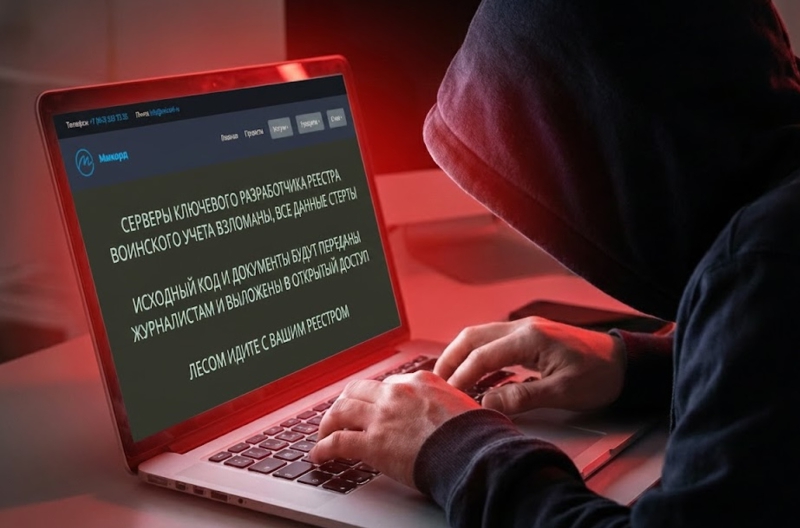
Hackers have breached Mikord, one of the key developers of Russia’s Unified Military Registration Record (Единый реестр воинского учета, or “ERVU”), spending several months inside its systems and gaining access to source code, technical documentation, and internal correspondence. The cyberattack was disclosed by the human rights project Get Lost (Idite Lesom), which says it received the data trove from the hackers.
Get Lost shared the materials with the independent investigative outlet Important Stories, which verified their authenticity and confirmed Mikord’s role in building the registry. The outlet says it plans to publish an investigation detailing how the system works.
The hackers claim they destroyed Mikord’s infrastructure. The Russian company’s director, Ramil Gabdrakhmanov, confirmed the attack to Important Stories, saying, “Listen, it happens to everyone. A lot of people are being attacked lately.” However, he declined to answer questions about the firm’s connection to the ERVU.
For its part, Russia’s Defense Ministry said on Wednesday that “claims about an alleged breach of the military registration registry do not correspond to reality.” The ministry insisted all hacking attempts against the registry had been successfully repelled, that “no leaks of citizens’ personal data” had occurred, and that information security was “fully ensured.”
Notably, however, no reports had alleged a breach of the registry itself — Get Lost stressed that the compromise had affected the developer Mikord. As noted by Important Stories, it remains unclear how the breach may have affected the operation of the military registration system.
Grigory Sverdlov, founder of Get Lost, provided some indication, telling the independent outlet NeMoskva that the registry’s summons website — one of the key components of the ERVU — had been down from Dec. 5 to 10 for “technical work.”
Russia’s Unified Military Registration Record is a new nationwide digital database that tracks all citizens eligible for service and links their personal information (such as passport data, employment and medical records, tax filings, and travel history) to the Ministry of Defense. It is intended to replace the old paper-based conscription process and allows the state to issue electronic draft notices and automatically impose strict penalties on anyone who fails to report for duty, including bans on traveling outside the country, driving, receiving loans, and registering companies.
Once fully implemented, the system will make it far harder for Russian men to avoid conscription or mobilization into the armed forces, as the authorities will be able to locate them more easily, instantly deliver notices, and restrict their everyday rights until they comply.
Russia began rolling out the unified registry in October 2025, and draft offices in dozens of regions had begun issuing electronic summonses through the system, with four regions abandoning paper notices entirely. Nevertheless, the registry is still far from fully operational: automatic penalties for failing to respond to a summons — such as bans on driving a car, receiving loans, or traveling abroad — have not yet taken effect.
Officials initially planned to launch the ERVU ahead of the fall 2024 conscription cycle. The State Duma passed the bill creating the registry in April 2023 in a single day, and the government appointed state telecom provider Rostelecom as the main contractor. But the work was not finished by its initial Dec. 31, 2024 deadline.