
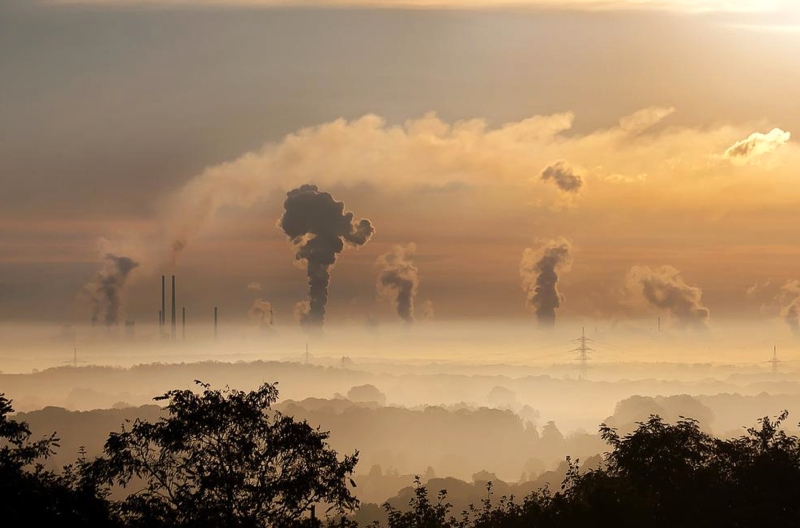
The United Nations climate conference, held in Brazil last month, deemed global efforts to tackle climate warming to be insufficient. Countries that signed the Paris Agreement ten years ago have failed to hold temperature growth under the 1.5°C threshold, UN Secretary-General António Guterres acknowledged. Not long ago, China was considered the world’s main polluter, while the United States was among the leaders in the fight against climate change. Now the situation has flipped: Trump has withdrawn the U.S. from the agreement and halted funding for related programs, while China has emerged as a frontrunner in the production of renewable energy. Global warming is expected to bring a range of severe consequences. Even in a favorable scenario, the annual number of extremely hot days will rise, making life unbearable in many regions and increasing the risk of wildfires. Rising sea levels will lead to flooding — to the point that some small island nations like Kiribati and Tuvalu, and even entire coastal cities like Jakarta — may disappear. The most critical threat, however, one projected to affect nearly 1 billion people, will be an acute shortage of fresh water.
“December 12, 2015, will remain a historic date for the planet. Paris has witnessed many revolutions over the centuries. Today we have seen the most beautiful and most peaceful revolution ever — a revolution in the fight against climate change,” French President François Hollande declared ten years ago at the signing of the Paris Climate Agreement.
“It’s a victory for all of the planet, and for future generations,” U.S. Secretary of State John Kerry said, still unaware that just a few years later his country would withdraw from the Paris Agreement twice.
Despite the official enthusiasm coming out of the 2015 Paris conference, even back then experts were pointing out the vagueness of the language included in the agreement. Meanwhile, Paris itself saw waves of demonstrations calling the new framework too weak to save the planet.
The Paris Agreement replaced the Kyoto Protocol, which had been adopted in 1997 to impose binding commitments to reduce greenhouse gas emissions only on developed countries. After Paris, however, emission reduction targets were now determined by countries themselves, and the previous division into groups — those with climate obligations and those acting on a voluntary basis — was eliminated.
The main stated goal of the new 25-page document was to limit global warming to within 2°C of pre-industrial levels by 2100. In addition, the signatories agreed not only to aim for 2°C, but also to strive for a 1.5°C limit. To achieve this, parties committed to significantly reducing global greenhouse gas emissions while also developing low-carbon development strategies and taking efforts to mitigate the increasingly noticeable impacts of climate change.
Signatories pledged to review their emissions reduction contributions every five years in an effort to ultimately achieve carbon neutrality. In addition, developed nations agreed to provide funding to help poorer countries reduce their greenhouse gas emissions and adapt to climate change.
The agreement stated that countries should “reach a global peak of greenhouse gas emissions as soon as possible,” then begin their rapid reduction. By 2050, the world was to achieve a balance between the amount of gases emitted into the atmosphere from industrial activities and those absorbed naturally by forests, soil, and the World Ocean.
…And reality
In large part, the Paris Climate Agreement was made possible thanks to commitments from the world’s largest emitters — China and the U.S. Over the past decade, however, the U.S. has withdrawn from the agreement twice — in 2017 during Donald Trump’s first term and, after the Biden administration reversed that decision, again following Trump’s return to the White House. America’s second withdrawal is set to officially take effect on Jan. 27, 2026.
Additionally, in 2025, the Trump administration shut down USAID and stopped contributing to international climate funds and the UN Framework Convention on Climate Change (the UN body in charge of the climate process). As a result, the UNFCCC secretariat’s budget dropped by 20%, forcing the organization to cut interpretation costs at the Bonn climate talks in June 2025.
The 2021 conference in Glasgow pledged to double climate adaptation funding to $40 billion by 2025; according to some estimates, by 2023 this amount had already reached $34 billion.
The interim session of the UN climate talks that takes place every summer in Bonn.
Carbon neutrality is a level of socio-economic development at which all greenhouse gas emissions produced by the economy are absorbed by natural ecosystems or through alternative methods, effectively reducing net emissions to zero.
After the U.S. withdrawal from the Paris Agreement, the UNFCCC secretariat’s budget decreased by 20%
In contrast, at the latest round of climate talks in Brazil, China was increasingly hailed as the new leader in the fight against climate change, a reality that has prompted many researchers to challenge the notion that environmental and climate action is the prerogative of democracies. The regular UN Climate Conference (COP30) held from Nov. 10–22 in the Brazilian city of Belém offered a very different mood from the one in Paris ten years before. While in the French capital then-UN Secretary-General Ban Ki-moon assured the world that “history will remember this day” (December 12, 2015) and called the agreement “a monumental triumph for people and our planet,” the current UN chief António Guterres, on the eve of COP30, stated quite bluntly: “Let’s recognise our failure.”
The 2021 conference in Glasgow pledged to double climate adaptation funding to $40 billion by 2025; according to some estimates, by 2023 this amount had already reached $34 billion.
The interim session of the UN climate talks that takes place every summer in Bonn.
Carbon neutrality is a level of socio-economic development at which all greenhouse gas emissions produced by the economy are absorbed by natural ecosystems or through alternative methods, effectively reducing net emissions to zero.
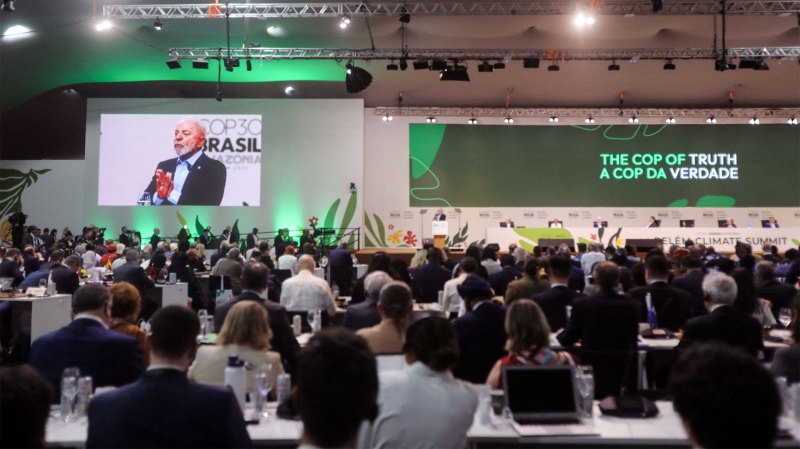
“The truth is that we have failed to avoid an overshooting above 1.5°C in the next few years. And going above 1.5°C has devastating consequences. Some of these devastating consequences are tipping points, be it in the Amazon, be it in Greenland, or western Antarctica, or the coral reefs,” Guterres said, urging COP30 participants to reflect on his words and “change course” in order not to one day see “the Amazon as a savanna.”
The host of the event, Brazilian President Luiz Inácio Lula da Silva, echoed the grim tone of the UN Secretary-General, concluding: “Climate change is not a threat to the future – it is a tragedy of the present.”
Guterres and Lula da Silva are largely correct. The past 11 years have been the warmest in recorded history, and 2024 turned out to be the hottest year on record.
In 2024, extreme temperatures caused the deaths of election commission workers in India and pilgrims performing the Hajj in Saudi Arabia. In Paris, the Eiffel Tower closed during the peak tourist season, and several French nuclear power plants had to halt operations because the water used to cool the reactors no longer performed its function due to the high air temperatures.
The 2021 conference in Glasgow pledged to double climate adaptation funding to $40 billion by 2025; according to some estimates, by 2023 this amount had already reached $34 billion.
The interim session of the UN climate talks that takes place every summer in Bonn.
Carbon neutrality is a level of socio-economic development at which all greenhouse gas emissions produced by the economy are absorbed by natural ecosystems or through alternative methods, effectively reducing net emissions to zero.
In 2024, extreme heatwaves caused the deaths of election commission workers in India
However, shortly before the summit in Brazil, other opinions were voiced. Just a few days earlier, billionaire Microsoft co-founder Bill Gates wrote a memorandum in which he acknowledged the seriousness of the problem but stated that “it will not destroy humanity,” urging a focus on climate adaptation measures and placing human well-being at the center of climate action programs.
The Secretariat of the UN Framework Convention on Climate Change, in its report on the eve of the Brazilian conference, also noted a few achievements. According to the document, the emissions curve is trending downward: by 2035, global emissions are expected to decrease by 12% compared to 2019 levels. The UN Environment Programme (UNEP), however, emphasizes in its annual report that to meet the 2°C and 1.5°C targets, emissions reductions by 2035 would need to reach 35% and 55%, respectively.
Before COP21 in Paris, scientists projected an average global temperature rise of about 4°C by the end of the century. By 2025, based on the document adopted in Belém, this estimate had fallen to 2.6°C (although some experts provide a less optimistic estimate of 3°C). Since 2015 alone, the planet has warmed by 0.3°C.
On one hand, progress is evident, and it could hardly have been achieved without the Paris Agreement. On the other hand, in just one decade, the planet has approached global temperatures 1.5°C above pre-industrial levels, a reality that led the UN Secretary-General to declare failure.
As noted by Christiana Figueres, former Executive Secretary of the UNFCCC secretariat and the perceived architect of the Paris Agreement, the global community is moving “in the direction that we established in Paris at a speed that none of us could have predicted,” yet humanity’s efforts to combat climate change are still insufficient to prevent the most damaging scenarios for the planet.
Experts emphasize that holding temperature increases to within 2.6°C is necessary, but achieving even this goal is far from guaranteed. Moreover, under such a scenario, the Earth would still face a host of devastating consequences.
In the 19th century, heatwaves occurred once every 50 years and were considered extraordinary. Today, they happen once every six years. With 2.6°C of warming by the end of the 21st century, such phenomena could strike every two to three years. With a warming of 4°C, they might occur annually — or even twice a year.
Mitigation will not solve the problem, but it will at least prevent certain areas from becoming effectively uninhabitable. If humanity manages to keep global warming within 2.6°C by the end of the century, we will still be experiencing an additional 57 extremely hot days per year compared to the current level, but this is still far preferable to the alternative. Under the pre-Paris scenario of a 4°C rise in average temperature, the number of deadly heat days would increase by 114 per year, with catastrophic consequences for countries such as the Seychelles or Indonesia, where at 2.6°C the increase would reach 137 and 134 hot days, respectively. Without the Paris Agreement, however, these numbers would have soared to 262 and 248 days.
Another consequence of the 2.6°C scenario will be rising sea levels and the flooding of certain territories, potentially leading to the disappearance of small island nations such as Kiribati and Tuvalu — or of entire coastal cities, such as Indonesia’s capital, Jakarta. Globally, this would affect around 50 million people, mainly in Southeast Asia and the Pacific (compared to roughly 100 million under a 4°C scenario). Some experts note that the disappearance of several countries due to global warming is no longer a risk but merely a question of time.
The most serious consequence of a temperature rise of 2.6°C will be an acute water shortage affecting around 1 billion people (up to 3 billion under a 4°C scenario). A significant portion of these people will likely become climate migrants.
Overall, experts emphasize that the ramifications will vary from region to region. Some areas will experience severe water shortages. Some territories will become uninhabitable due to more frequent storms and landslides. And elsewhere, the oceans will simply swallow the land. Even so, without the Paris Agreement, the planet’s prospects would be far worse.
More positive forecasts are based on several factors. First, the rate of increase of greenhouse gas emissions into the atmosphere has indeed slowed. While emissions are still rising — and reached a record 53.2 gigatons of CO2 equivalent in 2024 — the year-on-year percentage growth has been slower than it was before the adoption of the Paris Agreement.
At the same time, two-thirds of all emissions come from eight major global economies — led by China, the U.S., India, the EU, and Russia. However, some of them have reduced greenhouse gas emissions successfully (though still insufficiently) between 2015 and 2024: Japan by 20%, the EU by 19%, and the U.S. by 7%. Meanwhile, India’s emissions increased by 32%, and China’s by 20%.
The 2021 conference in Glasgow pledged to double climate adaptation funding to $40 billion by 2025; according to some estimates, by 2023 this amount had already reached $34 billion.
The interim session of the UN climate talks that takes place every summer in Bonn.
Carbon neutrality is a level of socio-economic development at which all greenhouse gas emissions produced by the economy are absorbed by natural ecosystems or through alternative methods, effectively reducing net emissions to zero.
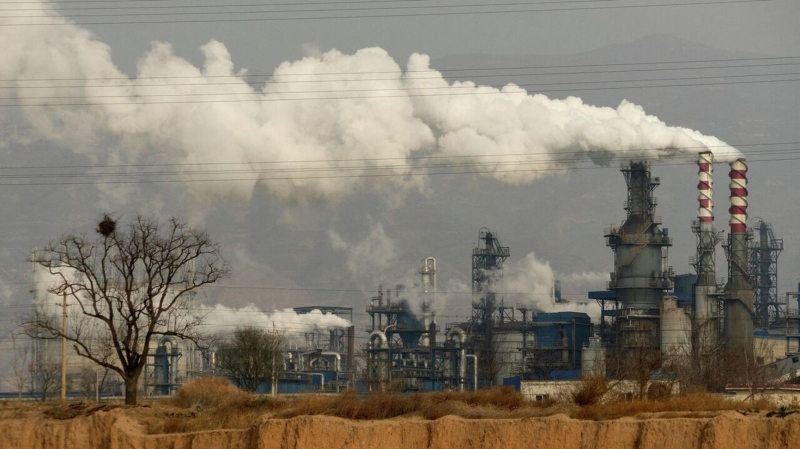
Second, the Paris Agreement brought about a boom in renewable energy generation, with solar power becoming the largest contributor to the growth in electricity production, especially in China. While still the largest emitter of greenhouse gases, China has also emerged as a leader in renewable energy.
In 2024, China installed twice as many solar panels and wind turbines as the rest of the world combined. Additionally, China scaled up production of the components for solar and wind power so extensively that prices for these products fell by 80%, making them far more accessible.
The 2021 conference in Glasgow pledged to double climate adaptation funding to $40 billion by 2025; according to some estimates, by 2023 this amount had already reached $34 billion.
The interim session of the UN climate talks that takes place every summer in Bonn.
Carbon neutrality is a level of socio-economic development at which all greenhouse gas emissions produced by the economy are absorbed by natural ecosystems or through alternative methods, effectively reducing net emissions to zero.
In 2024, China installed twice as many solar panels and wind turbines as the rest of the world combined
Today, investments in clean energy are twice as high as those in fossil fuels, and energy produced from renewable sources has tripled since the signing of the Paris Agreement, reaching 40% of global electricity generation in 2024. Moreover, in the first half of 2025, renewable energy sources surpassed the role of coal in electricity generation for the first time in history.
Global coal consumption has also slowed. However, despite plans by many countries to phase out coal entirely, 2024 set a record for absolute coal consumption. Nevertheless, it should be noted that several countries, including China, claim to be building next-generation coal power plants that produce lower emissions.
Alongside the boom in renewable energy, the world has seen a sharp rise in the use of electric vehicles. At the time of the Paris conference, electric vehicles made up only 1% of the global auto market. In 2024, one in every five cars sold worldwide was electric. China played a key role in this shift as well, becoming the world leader in electric vehicle production, with BYD surpassing American Tesla in EV output for the first time in 2024.
As The New York Times emphasizes, the growing popularity of electric vehicles is crucial in the fight against climate change. The use of electric cars has cut the planet’s oil demand by about 2 million barrels per day, roughly equivalent to Germany’s daily consumption of “black gold.” However, it is important to consider how the electricity used by these vehicles is generated — that is, the national or regional energy mix — as well as the environmental impacts associated with extracting the resources needed for EVs and their disposal.
A range of destabilizing factors — various wars and international conflicts, economic crises in multiple countries, rising inequality and social tension, the U.S. withdrawal from the Paris Agreement, and the tariff war launched by the Trump administration — have diverted attention from the global challenge of climate change and hindered more vigorous efforts to implement the 2015 agreement. Importantly though, aside from the U.S., all other signatories of the Paris Agreement remain committed to the document, at least on paper. However, Washington’s self-exclusion creates a dangerous precedent — for the second time.
The first time Trump decided to withdraw the U.S. from the agreement, the move was not particularly disruptive. During his 2016 presidential campaign, Trump had promised to pull the U.S. out of the climate accord. However, for the first three years after the agreement came into force, withdrawal was closed to all participants. As a result, Trump had to wait until Nov. 4, 2019, to submit the exit request. The U.S. officially ceased to be a party to the agreement only a year later, on the day after the 2020 presidential election — which was won by Democrat Joe Biden, who returned the country to the accord two months later.
The second time, however, is likely to prove significantly more serious. The U.S. will officially leave the Paris Agreement again on Jan. 27, 2026, meaning the country will not be bound by the accord until at least until Jan. 20, 2029, when the next U.S. president is sworn into office.
For the next three years at least, the rhetoric coming out of Washington regarding climate change is likely to echo the president’s statement to the UN General Assembly this past September. In those remarks, Trump called climate change “the greatest con job ever perpetuated,” claimed that forecasts of its consequences were made by “stupid people,” and urged other countries to follow the U.S. example.
The 2021 conference in Glasgow pledged to double climate adaptation funding to $40 billion by 2025; according to some estimates, by 2023 this amount had already reached $34 billion.
The interim session of the UN climate talks that takes place every summer in Bonn.
Carbon neutrality is a level of socio-economic development at which all greenhouse gas emissions produced by the economy are absorbed by natural ecosystems or through alternative methods, effectively reducing net emissions to zero.
In September 2025, Trump called climate change “the greatest con job ever perpetuated”
The belligerence of the U.S. president is somewhat surprising, given that the 2015 agreement imposes no binding obligations on participants and that each party independently determines its contribution to combating climate change. Moreover, there are no penalties for failing to meet these self-imposed targets.
The 2021 conference in Glasgow pledged to double climate adaptation funding to $40 billion by 2025; according to some estimates, by 2023 this amount had already reached $34 billion.
The interim session of the UN climate talks that takes place every summer in Bonn.
Carbon neutrality is a level of socio-economic development at which all greenhouse gas emissions produced by the economy are absorbed by natural ecosystems or through alternative methods, effectively reducing net emissions to zero.
On Nov. 12, at COP30 in Belém, the Declaration on Information Integrity on Climate Change was officially adopted. It aims to combat misinformation that undermines climate action and to promote fact-based climate awareness. Brazilian President Lula da Silva, commenting on the document, said: “We live in an era in which obscurantists reject scientific evidence and attack institutions. It is time to deliver yet another defeat to denialism.”
The U.S. withdrawal from the Paris Agreement is both a psychological and practical blow to global climate efforts. Achieving the key goal of the agreement — keeping the average temperature within 2°C — requires massive investments. Under the 2015 accord, developed countries committed to providing $100 billion per year in climate finance to developing and the most vulnerable nations.
Then the tampering with statistics began. If we were to take into account all possible climate-related resources — public and private investments, resources from international development banks, grants, loans, and so on — the target amount appears to have been reached.
However, many Global South countries insist that climate finance should consist only of public funds and grants, with separate allocations for climate adaptation (not just emission reduction programs) and for covering so-called “loss and damage” — the irreversible negative impacts of climate change, such as the loss of territory in island nations, the disappearance of coral reefs, forest losses due to fires, and the loss of plant and animal species from reduced biodiversity.
In Belém, delegates also agreed to aim for a threefold increase in funding for climate adaptation efforts in the most vulnerable countries by 2035. But with the U.S. accounting for roughly 8% of international climate finance as of 2024, Washington's withdrawal does pose a problem.
Moreover, despite the green energy boom, investments in this sector are still far below the level required to achieve the Paris Agreement targets. To implement countries’ emission reduction plans by the end of the 2030s, global investment in renewable energy should reach $4.5 trillion — more than twice the current level.
The 2021 conference in Glasgow pledged to double climate adaptation funding to $40 billion by 2025; according to some estimates, by 2023 this amount had already reached $34 billion.
The interim session of the UN climate talks that takes place every summer in Bonn.
Carbon neutrality is a level of socio-economic development at which all greenhouse gas emissions produced by the economy are absorbed by natural ecosystems or through alternative methods, effectively reducing net emissions to zero.
Despite the boom in green energy, climate investments are still far below the level required to achieve the Paris Agreement targets
However, the outcomes of the recent UN Climate Conference in Brazil demonstrate two important trends. First, the role of the largest Global South countries in climate finance is growing, with traditional donors from the Global North now joined by China, India, Saudi Arabia, the UAE, Singapore, and South Korea.
Second, so-called subnational actors — regions, cities, and companies — maintain their significance. In the absence of the U.S. in the climate talks process, the Michael Bloomberg Foundation and some other private funds have stepped in to cover part of the country’s climate contributions to the UN, while California Governor Gavin Newsom, who specifically traveled to Belém to demonstrate his commitment to the climate agenda, has become the loudest voice representing the U.S. at the forum.
There are also numerous examples of regions and cities worldwide that are pursuing more ambitious climate measures than their national governments have committed to. The input of such stakeholders in the international process will likely continue growing, even though climate talks are still formally an intergovernmental process.
Language matters
Although scientific evidence of anthropogenic climate change has been known to academics and the public for decades, text outlining the role of “fossil fuels” in the process appeared in a UN conference outcome document for the first time only two years ago, at the 28th session of climate talks. Paradoxically, this conference was hosted by the UAE — one of the world’s largest oil producers. Although the outcome documents of international conferences are not legally binding, they set the direction for further development and private sector investments, demonstrating the level of consensus among nations on climate, the environment, energy, and many related issues.
At the 2023 climate summit in Dubai, the outcome document included a call to “transition away from fossil fuels.” Although the “menu” of climate solutions encompassed a range of technologies — many of which are criticized by environmentalists, including nuclear and gas power, carbon capture technologies, and others — the very mention of fossil energy and the direction toward its phase-out had a significant impact.
And yet, the language adopted at COP30 in Brazil was once again diluted, and, as a result of resistance from oil- and gas-producing countries including Saudi Arabia, Nigeria, and Russia, it contained no explicit mention of “fossil fuels.” Russia’s official wording, for instance, emphasizes the principle of “technology neutrality,” which allows nations to set energy development priorities and support specific generation sources (such as natural gas as a transitional fuel).
As the talks in Brazil showed, support for more restrictive language on limiting the use of fossil fuels now comes mainly from the European Union and Latin America. Speeches by delegates from the latter criticizing the outcome document’s text over its omission of the phrase “fossil fuels” delayed the closing plenary session by several hours and held up the entire conference for more than a day.
Clearly, international debates on climate change remain rife with tensions. Nevertheless, most countries still rank the fight against climate change among their top priorities.
The 2021 conference in Glasgow pledged to double climate adaptation funding to $40 billion by 2025; according to some estimates, by 2023 this amount had already reached $34 billion.
The interim session of the UN climate talks that takes place every summer in Bonn.
Carbon neutrality is a level of socio-economic development at which all greenhouse gas emissions produced by the economy are absorbed by natural ecosystems or through alternative methods, effectively reducing net emissions to zero.