
Photo: RIA Novosti
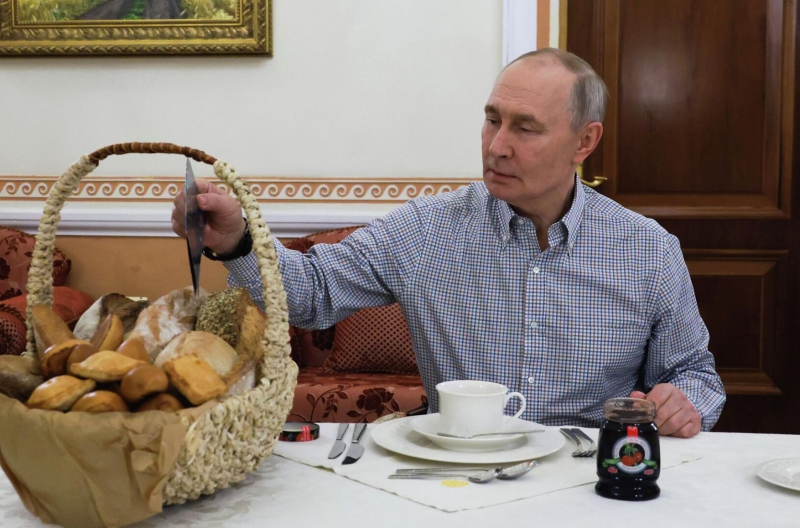
During his year-end call-in show this past December, Vladimir Putin once again fielded questions from small business owners, effectively giving them a shot of free publicity. For example, the owner of the Mashenka bakery in the Moscow region said customer traffic “rose significantly” after their exclusive on-air exchange. Other brands — including producers of ice cream, as well as the fermented drinks kefir and kvass — have also felt the effects of what has become known as “presidential” promotion. For some, the boost was short-lived, while for others, even years later, the label of being Putin’s “favorite” product has stuck. The Insider looks back at several food brands and businesses that received “presidential” attention.
Ruzskoye Milk
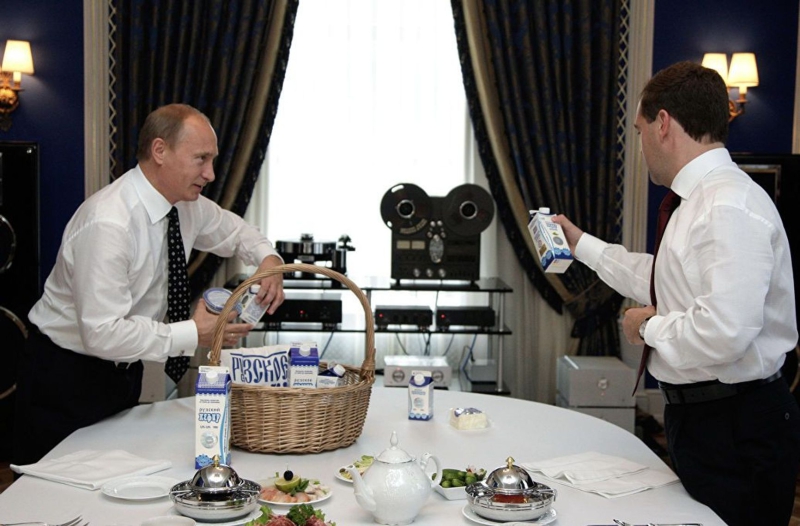
One of the earliest examples of “presidential” marketing involved Ruzskoye Milk, which Vladimir Putin and then-President Dmitry Medvedev drank at the Zolotaya Osen’ (lit. “Golden Autumn”) agricultural fair in 2010 and later at a “working lunch” attended by photographers from state-run RIA Novosti. The dairy’s owner, Vasily Boiko-Veliky, later said that by 2014 his plant’s revenue had skyrocketed and that its products were being supplied to the State Duma and the Russian government.
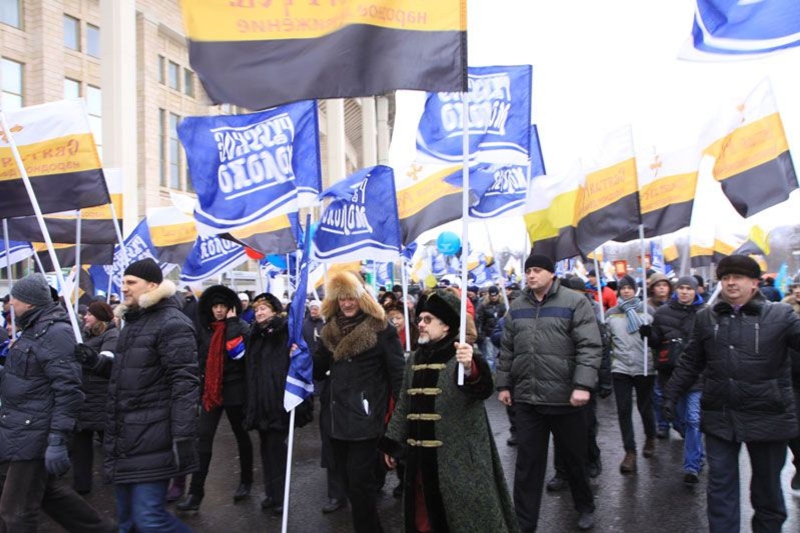
In 2012, a procession of people flying flags with the company’s logo was spotted at a pro-Putin rally held at Moscow’s Luzhniki Stadium. Notably, the milk enthusiasts were surrounded by rally attendees carrying flags in the Russian imperial colours (black, yellow, and white). It was claimed that nearly 1,500 employees of the agribusiness holding had come to support the president.
Kefir is a fermented dairy drink made from milk and kefir grains, known for its tangy taste and probiotic cultures.
Kvass is a traditional fermented drink popular in Eastern Europe, made mainly from rye bread, water and sugar, with a low alcohol content.
The benefits of “presidential” marketing, however, proved to be short-lived. In 2016, the Moscow Arbitration Court fined the business a symbolic 100,000 rubles (around $1,500 at the time) for displaying a photograph of Putin and Medvedev on its building facade. The Federal Antimonopoly Service ruled that the image “created the impression that it was staged and intended to advertise the product.”
Kefir is a fermented dairy drink made from milk and kefir grains, known for its tangy taste and probiotic cultures.
Kvass is a traditional fermented drink popular in Eastern Europe, made mainly from rye bread, water and sugar, with a low alcohol content.
But that was far from the end of the firm’s legal troubles. In 2023, Boiko-Veliky was handed six and a half years on embezzlement charges, and in November 2025 he received a further 15.5-year sentence in a case involving the creation of a criminal organization.
Vyatsky Kvass
During a call-in show in 2014, a journalist from the Kirov Region told Putin that large retail chains were refusing to stock locally produced Vyatsky Kvass. Putin replied that he would “help reclaim the market.” About three months later, the French Auchan hypermarket chain said it would begin selling the drink, and soon after, the kvass producer became a general partner of a concert tour by Russian rappers Timati and L’One.
Two years later, at a 2016 news conference, the same journalist again thanked Putin for promoting Vyatsky Kvass, noting that it was now being exported to China and the United States. He joked that he would keep coming to Putin’s press conferences “with every Vyatka brand” for the next 300 years.
“Russian Parmesan”
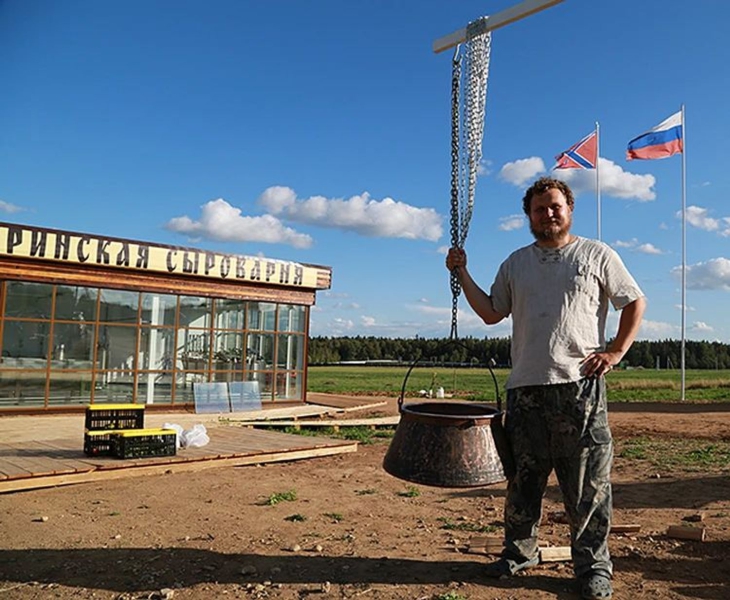
After 2014, when Russia implemented counter-sanctions barring the import of several Western food products, local producers turned to the work of “import substitution.” One of the symbols of that era was farmer Oleg Sirota, a former programmer who decided to try his hand at producing cheese in the Moscow Region.
Sirota marked the anniversary of the counter-sanctions by opening a cheese factory in the Istra district and even invited Putin to the event (though he did not attend).
Kefir is a fermented dairy drink made from milk and kefir grains, known for its tangy taste and probiotic cultures.
Kvass is a traditional fermented drink popular in Eastern Europe, made mainly from rye bread, water and sugar, with a low alcohol content.
Sirota eventually met Putin three years later, in 2018, at the Valdai Discussion Club. There, the cheese maker thanked the head of state for the sanctions and spoke of an “agricultural breakthrough” driven by Russia’s protectionist policies. Sirota also said he had tried nine times to present his cheese to the president as a gift, only for his security guards to confiscate it. Putin replied that his bodyguards had eaten the cheese.
Sirota managed to present his cheese to the president in 2019. Putin then promised that he would order it to be placed on his New Year's table. From that moment on, Sirota's socio-political career took off: in 2020, he became chairman of the Civic Chamber’s commission on agro-industrial development; in 2021, he moved up to co-chair of the All-Russia People’s Front (ONF) in the Moscow Region; and in 2023, he was appointed by presidential decree to the eighth composition of the Civic Chamber.
Ahead of the 2024 presidential election, Sirota became an official campaign representative for Putin. On social media, he regularly praises Putin’s policies, speaking enthusiastically about meetings with him and raising funds on behalf of the All-Russia People’s Front to support Russian troops fighting in Ukraine.
“Presidential” ice cream
Perhaps the most famous case of presidential marketing involves the ice cream brand Korovka iz Korenovki (lit. “The Little Cow from Korenovka”). Putin first tried it at the MAKS international air show in 2019 and followed that up with another tasting in 2021.
In 2019, Putin also gave a box of the same ice cream to Xi Jinping to mark the Chinese leader’s 66th birthday. The brand was not named in media reports at the time, but the director of the Korenovsky Milk and Canning Plant later disclosed the details himself.
“Some time after [Putin met with Xi], a delegation from China came to the Krasnodar region and unexpectedly asked the regional administration to show them our plant,” he said. “Their first question was: Why was your ice cream given to our president?”
After the air show and the gift to Xi, the company announced plans to build a production facility for ice cream exports. Since then, it has regularly reported growth in exports of ice cream and condensed milk.
Kefir is a fermented dairy drink made from milk and kefir grains, known for its tangy taste and probiotic cultures.
Kvass is a traditional fermented drink popular in Eastern Europe, made mainly from rye bread, water and sugar, with a low alcohol content.
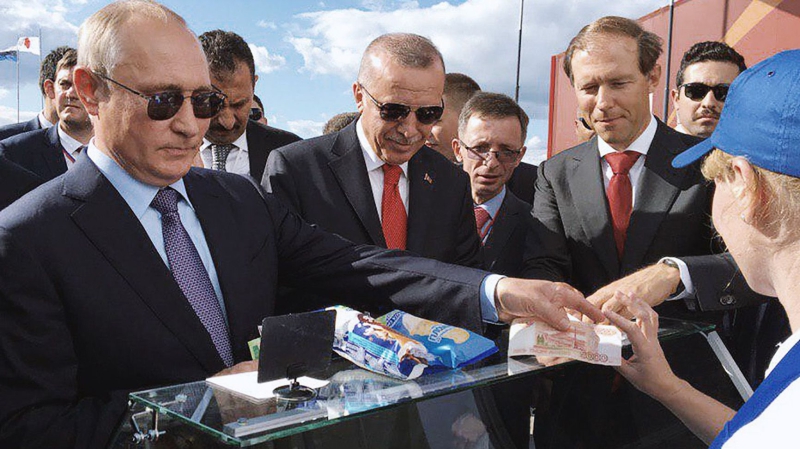
Another ice cream brand that Putin bought at the air show as early as 2017 was Vologda Plombir. He also treated Turkish President Recep Tayyip Erdogan to it in 2019, handing the change from the purchase to Russia’s industry and trade minister and quipping that the funds should be put towards “the development of the aviation sector.”
The Vologda ice cream, however, never earned the title of the president’s “favorite.” Even so, by the end of 2022 its producer, the Iceberry Group, ranked first among Russia’s largest ice cream manufacturers and retained that position in 2023 and 2024.
The de facto owner of Iceberry Group since 2005 has been Alexander Zhukov, the father of Daria Zhukova, the former wife of billionaire Roman Abramovich. Among Zhukov’s other assets are the oil and gas company JKX Oil & Gas PLC and terminal facilities at the port of Ust-Luga, according to reporting by the investigative outlet Proekt.
Anderson: From ombudsman to a “foreign agent” on the wanted list
A very different fate befell Anastasia Tatulova, the founder of the Anderson family café chain. During the COVID-19 pandemic in 2020, Tatulova told Putin about her venture at a meeting between the president and entrepreneurs and tried to persuade him of the need for additional support measures for small businesses.
Kefir is a fermented dairy drink made from milk and kefir grains, known for its tangy taste and probiotic cultures.
Kvass is a traditional fermented drink popular in Eastern Europe, made mainly from rye bread, water and sugar, with a low alcohol content.

In July of that year, Tatulova was appointed public ombudsman for small and medium-sized enterprises, but she announced she was leaving the post less than a year later. The entrepreneur said her decision was due in part to pressure on herself and her family. As Tatulova later told The Insider, the threats came from “one of the deputy ministers.”
Immediately after her appointment to the post, Tatulova’s business began to face problems with authorities. Her cafés were subjected to mass inspections, and her company received around 60 tax inquiries of various kinds. Tatulova repeatedly and publicly criticized Russia’s “Honest Sign” product labeling system, calling it corrupt. She wrote that the paid labeling scheme was being promoted with the support of the Industry and Trade Ministry by Mikhail Dubinin, chairman of the board of the Center for the Development of Advanced Technologies, which operates the system.
Tatulova left Russia following the start of Russia’s full-scale invasion of Ukraine. In 2023, she sold the Anderson brand and the company’s core assets to the grocery chain VkusVill. In April 2024, Russia’s Justice Ministry designated her as a “foreign agent,” and she was placed on a wanted list in July 2025.
Kefir for the president
In May 2025, the television channel Rossiya aired the film “Russia. Kremlin. Putin. 25 Years,” in which the Russian president showed journalists his Kremlin apartment and treated them to kefir. Viewers noticed that the bottle in Putin’s refrigerator had come from the Ryazan-based producer EkoVakino. The brand immediately became the subject of dozens of media articles (1, 2, 3), including reports on the “buzz” sparked by its appearance in the documentary and claims that Russians had “rushed” to buy the kefir that Putin drinks.
Kefir is a fermented dairy drink made from milk and kefir grains, known for its tangy taste and probiotic cultures.
Kvass is a traditional fermented drink popular in Eastern Europe, made mainly from rye bread, water and sugar, with a low alcohol content.
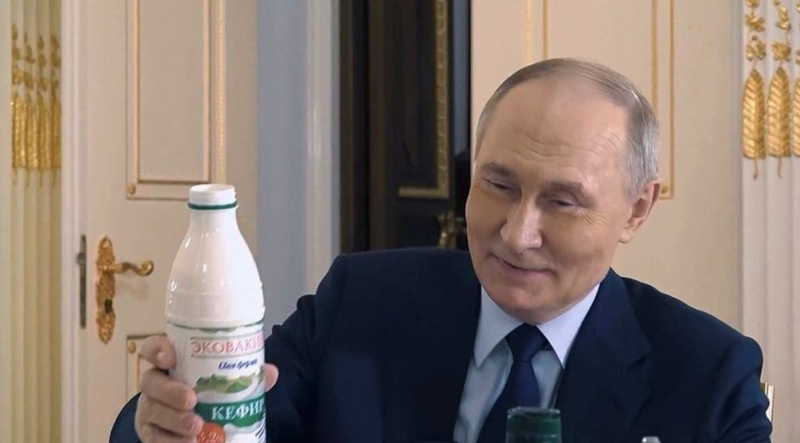
Putin’s spokesman Dmitry Peskov later said the excitement was not about the kefir itself, but was instead a sign of “the consolidation of society” and a “manifestation of society’s unity around the president.”
Public interest in the brand, however, quickly faded. By June, mentions in the media of EkoVakino as “the kefir the president drinks” had all but disappeared.
The owner of the EkoVakino brand is Vakinskoye Agro LLC (ООО «Вакинское Агро»). Its key co-founder is businessman Sergei Turta, a former Moscow City Duma MP whose name appeared on the so-called “Luzhkov list,” an unofficial roster of lawmakers backed by the city authorities in the 2000s. In the 1990s, Turta was also a general director at Khoper-Invest, a company later exposed as a financial pyramid.
Mashenka bakery
The most recent brand to receive presidential promotion was the Mashenka bakery outside Moscow.
During Putin’s annual call-in show this past December, baker Denis Maksimov asked the president about changes to tax legislation and the requirement to pay VAT, saying entrepreneurs were “looking to the future without optimism” as a result of the policy change. Putin replied that businesses should not suffer from the transition to the new tax system and promised to “raise this issue with the government.”
Putin also asked who the bakery was named after and whether it made “tasty buns.” Later that same day, it became known that the bakery’s owner intended to send his baked goods to the president. They reached the Kremlin the following day.
Kefir is a fermented dairy drink made from milk and kefir grains, known for its tangy taste and probiotic cultures.
Kvass is a traditional fermented drink popular in Eastern Europe, made mainly from rye bread, water and sugar, with a low alcohol content.
Within hours of the broadcast, the head of the Moscow Region’s city of Lyubertsy, Vladimir Volkov, paid the bakery a visit. Days later, staff told reporters that the number of customers had “increased significantly.” The bakery’s owner also said he had received an order for a karavai, a ceremonial loaf of bread that would be sent to Belarus.
Whether Mashenka will ultimately earn the status of “Putin’s favorite bakery,” however, remains to be seen.
Kefir is a fermented dairy drink made from milk and kefir grains, known for its tangy taste and probiotic cultures.
Kvass is a traditional fermented drink popular in Eastern Europe, made mainly from rye bread, water and sugar, with a low alcohol content.