
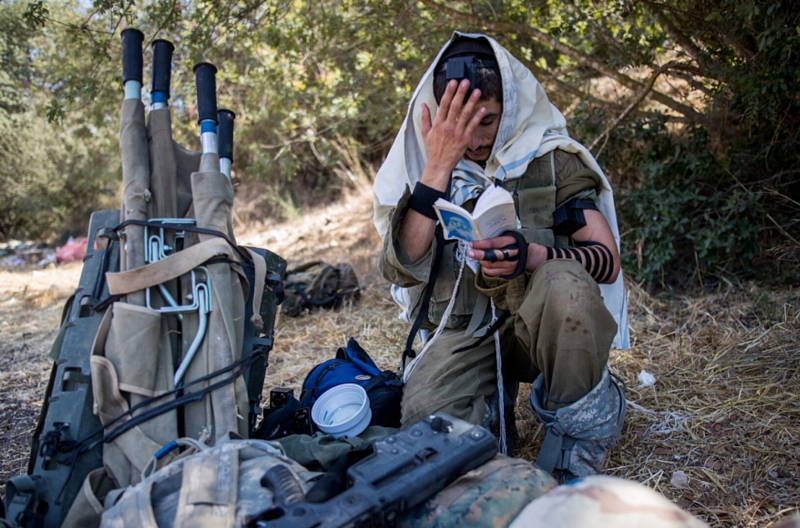
On Nov. 19, Israel’s Supreme Court gave the government 45 days to develop effective measures to reduce draft evasion among ultra-Orthodox Jews, who rarely serve in the army despite making up 14 percent of the population. For the past 70 years, this group has been exempt from mandatory conscription. In 2017, the Supreme Court ruled the status quo discriminatory, and yet the exception persisted in practice for several more years. Then, on Nov. 19, the Court ordered the government to devise a solution within six weeks.
Starting from the founding of Israel in 1948, students of Jewish religious seminaries were formally exempt from military service, and other members of the ultra-Orthodox sector were likewise rarely drafted. In 2023, the policy was officially changed, but the practice of allowing Israel’s most religious citizens to eschew military service remained.
Now Israel’s Supreme Court (Bagatz) has ordered the government to revoke religious exemptions and introduce criminal penalties for draft evasion within 45 days. The justices accused state authorities of effectively sabotaging the universal conscription law. “The severe, blatant inequality that formed the basis of previous decisions on this issue has been seriously aggravated by the outbreak of war on Oct. 7, 2023,” the Court’s decision read.
The justices noted that the issue is about more than just inequality and unfairness. At the present moment, the IDF is facing a shortage of personnel.
Litvaks are members of a stream within Orthodox Judaism, historically originating in Lithuania as an opposition to Hasidism.
After World War I, Great Britain received a mandate to administer the territories of present-day Israel, Jordan, and the Palestinian Authority in order to establish Jewish and Arab states. The mandate ended in 1948 with the creation of the State of Israel.
The law bears the name of Supreme Court judge Tzvi Tal (currently retired), who chaired the committee examining the drafting of ultra-Orthodox Jews into the IDF. Based on the Tal Committee’s recommendations, a temporary law was passed granting yeshiva students a deferment from military service until the age of 22. After that, they had to choose between continuing their studies and starting work. If they opted for the latter, Haredim had to complete a shortened military or alternative service. Those who chose the first option could remain in yeshivas and kollels until the age of 30, but without the right to work.
Unlike yeshivas, kollels are educational institutions that enroll married men. Students normally receive a monthly stipend.
A higher religious educational institution whose graduates receive a rabbi’s diploma.
Since the founding of Israel, from 1948 to 2023, students of religious institutions were officially exempt from military service
In 1948, religious communities were small, and only 400 individuals received a deferment. However, by 2023 more than 60,000 young people of conscription age were effectively exempted from military service. This included both yeshiva students and a category called avrechim — young men who were already married and could continue studying the Torah in a kollel until the end of conscription age. Jewish education differs from Christian or Islamic education in that it is not limited by time: Jewish sacred texts can be studied even up to the age of one hundred.
According to the Israel Democracy Institute (IDI), ultra-Orthodox Jews, or Haredim, make up roughly 14% of the country’s population (in 2024 they numbered 1.392 million). It is important not to confuse them with religious Zionists — a still larger group.
Religious Zionists — also called “knitted kippa-wearers” — likewise practice Orthodox Judaism. However, they see the existence of Israel as the fulfillment of a Torah commandment, while the ultra-Orthodox do not. As a result, religious Zionists combine yeshiva studies with military service, whereas the ultra-Orthodox defend their right to deferment. Members of the most radical sects even consider the modern Jewish state illegitimate.
Ultra-Orthodox Jews have more children than other population groups, averaging 6.4 children per woman. Among all other Israeli Jews, the average is 2.5 children per family (with religious Zionists coming in at 3.8 and secular Jews at only 2).
Litvaks are members of a stream within Orthodox Judaism, historically originating in Lithuania as an opposition to Hasidism.
After World War I, Great Britain received a mandate to administer the territories of present-day Israel, Jordan, and the Palestinian Authority in order to establish Jewish and Arab states. The mandate ended in 1948 with the creation of the State of Israel.
The law bears the name of Supreme Court judge Tzvi Tal (currently retired), who chaired the committee examining the drafting of ultra-Orthodox Jews into the IDF. Based on the Tal Committee’s recommendations, a temporary law was passed granting yeshiva students a deferment from military service until the age of 22. After that, they had to choose between continuing their studies and starting work. If they opted for the latter, Haredim had to complete a shortened military or alternative service. Those who chose the first option could remain in yeshivas and kollels until the age of 30, but without the right to work.
Unlike yeshivas, kollels are educational institutions that enroll married men. Students normally receive a monthly stipend.
A higher religious educational institution whose graduates receive a rabbi’s diploma.
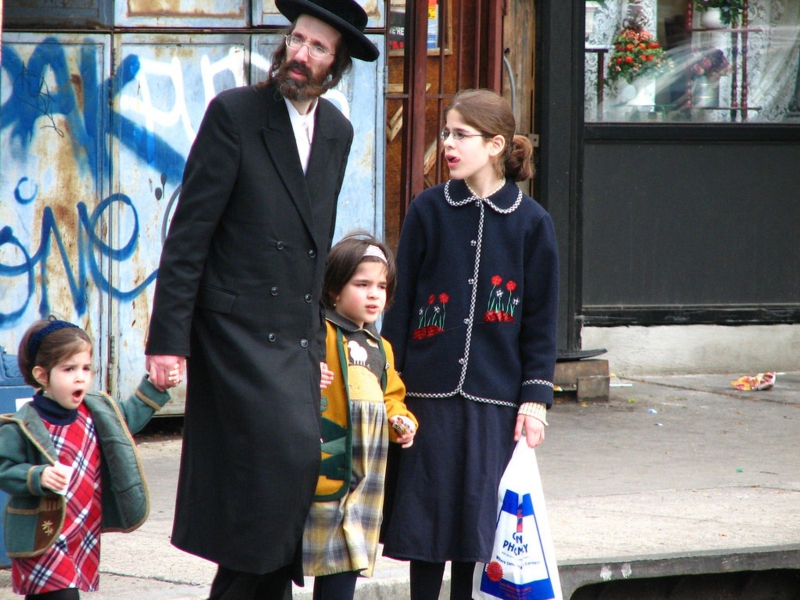
Unsurprisingly, since 2009 the Haredi population has nearly doubled. By 2045, it is projected to reach 3 million and surpass the Arab population. Yet this continuously growing minority of Israelis contributes almost no soldiers to the IDF.
This reality is evident from the army’s statistics on reservist mobilization during the current war. For instance, the average resident of Modi’in-Maccabim-Re’ut spent 24 times as many days on reservist duty as the average resident of nearby Modi’in Ilit, a city with a large ultra-Orthodox population.
Similarly, Bnei Brak near Tel Aviv has a mostly Haredi population of 234,000 people — 36 times as many as in Beit El, a 6,500-strong settlement of religious Zionists in Samaria. Yet over the past year, the people of tiny Beit El collectively spent approximately the same number of days on reservist duty as the residents of populous Bnei Brak.
During the war with Hamas, Israel mobilized hundreds of thousands of reservists, who went away from home to fight for periods of six months or more. Several hundred people gave their lives defending Israel — business owners, engineers, programmers, teachers, office clerks, professors, and students. Most Haredim cannot serve in the reserves at all, as they did not complete compulsory service and lack military training.
At the age of 21, 88% of Jewish men (excluding Haredim) are serving or have already served in the military. Among ultra-Orthodox Jews, according to the IDI, only 1.7% of men have been drafted by the age of 24.
Until 2002, the deferment for Haredim existed in practice but was not formally codified. From 2002, it was regulated by the Tal Law, which expired in 2012. After that, students of ultra-Orthodox yeshivas who did not serve in the army remained exempt based on a temporary provision. In 2017, however, the Bagatz ruled all deferments unfair and instructed the Knesset to develop a new legal framework.
The temporary provision was repeatedly extended and finally expired only in July 2023, just months before the Hamas terrorist attack. In June 2024, the Bagatz panel ruled that since the law no longer exists, deferments should no longer apply.
Moreover, there have never been any formal legal reasons exempting ultra-Orthodox young men who do not study in yeshivas or kollels. They, too, rarely wanted to join the army, and the military turned a blind eye to their lack of service for years, according to military analyst Sergei Auslender: “Until Oct. 7, the IDF, for the most part, sabotaged their draft. But now it is faced with a catastrophic shortage of personnel.”
Litvaks are members of a stream within Orthodox Judaism, historically originating in Lithuania as an opposition to Hasidism.
After World War I, Great Britain received a mandate to administer the territories of present-day Israel, Jordan, and the Palestinian Authority in order to establish Jewish and Arab states. The mandate ended in 1948 with the creation of the State of Israel.
The law bears the name of Supreme Court judge Tzvi Tal (currently retired), who chaired the committee examining the drafting of ultra-Orthodox Jews into the IDF. Based on the Tal Committee’s recommendations, a temporary law was passed granting yeshiva students a deferment from military service until the age of 22. After that, they had to choose between continuing their studies and starting work. If they opted for the latter, Haredim had to complete a shortened military or alternative service. Those who chose the first option could remain in yeshivas and kollels until the age of 30, but without the right to work.
Unlike yeshivas, kollels are educational institutions that enroll married men. Students normally receive a monthly stipend.
A higher religious educational institution whose graduates receive a rabbi’s diploma.
“Until Oct. 7, 2023, the IDF mostly sabotaged the draft of the ultra-Orthodox. But now it is faced with a catastrophic shortage of personnel”
The main burden of military service falls on the rest of the Jewish population. Israeli Arabs and Bedouins serve in the army only on a voluntary basis, often in special Bedouin units that recruit 500–600 people per year. For the Druze (except those living on the Golan Heights), military service is mandatory, but only for men. About 80% of Druze men are drafted into the IDF.
For the third consecutive year, the Israeli army has been trying to draft more Haredim. In 2022, 1,266 ultra-Orthodox conscripts joined the military, and in 2024 this figure rose to 2,940. Still, the increase is modest in the context of total conscription. For scale, in 2025 the IDF planned to send out 54,000 draft notices.
In addition, Haredim have access to the Shlav Bet (“Second Stage”) program, which allows them to complete a short military course and immediately become reservists in relatively low-responsibility positions. Over the past two years, more than 1,200 ultra-Orthodox have taken advantage of this opportunity.
Litvaks are members of a stream within Orthodox Judaism, historically originating in Lithuania as an opposition to Hasidism.
After World War I, Great Britain received a mandate to administer the territories of present-day Israel, Jordan, and the Palestinian Authority in order to establish Jewish and Arab states. The mandate ended in 1948 with the creation of the State of Israel.
The law bears the name of Supreme Court judge Tzvi Tal (currently retired), who chaired the committee examining the drafting of ultra-Orthodox Jews into the IDF. Based on the Tal Committee’s recommendations, a temporary law was passed granting yeshiva students a deferment from military service until the age of 22. After that, they had to choose between continuing their studies and starting work. If they opted for the latter, Haredim had to complete a shortened military or alternative service. Those who chose the first option could remain in yeshivas and kollels until the age of 30, but without the right to work.
Unlike yeshivas, kollels are educational institutions that enroll married men. Students normally receive a monthly stipend.
A higher religious educational institution whose graduates receive a rabbi’s diploma.
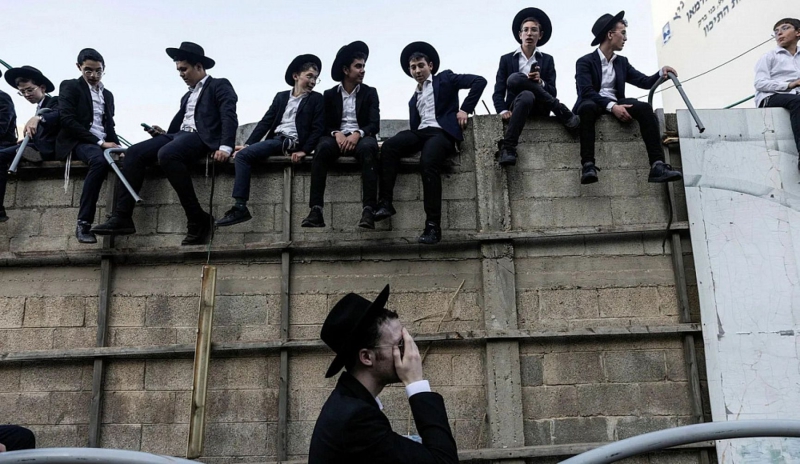
Since 2022, the Knesset has been discussing various options for a new draft law. The latest version, prepared by Knesset member Boaz Bismuth, proposes to refrain from drafting yeshiva students but to draft half of the Haredim who do not study the Torah within five years.
Bismuth, a member of the ruling Likud party, formed a coalition including two Haredi parties, but the law he proposes remains far less strict than what the majority of the population wants, according to polls. An October survey by IDI showed that 49.5% of Jews and 26% of Arabs support mandatory conscription of Haredim, except for a few particularly outstanding yeshiva students. Another 31% of Jews and 23% of Arabs agree that yeshivas can be left alone while applying the draft to all other young ultra-Orthodox, rather than just half. Only 15% of Jews and 35% of Arabs support maintaining the current policy.
Litvaks are members of a stream within Orthodox Judaism, historically originating in Lithuania as an opposition to Hasidism.
After World War I, Great Britain received a mandate to administer the territories of present-day Israel, Jordan, and the Palestinian Authority in order to establish Jewish and Arab states. The mandate ended in 1948 with the creation of the State of Israel.
The law bears the name of Supreme Court judge Tzvi Tal (currently retired), who chaired the committee examining the drafting of ultra-Orthodox Jews into the IDF. Based on the Tal Committee’s recommendations, a temporary law was passed granting yeshiva students a deferment from military service until the age of 22. After that, they had to choose between continuing their studies and starting work. If they opted for the latter, Haredim had to complete a shortened military or alternative service. Those who chose the first option could remain in yeshivas and kollels until the age of 30, but without the right to work.
Unlike yeshivas, kollels are educational institutions that enroll married men. Students normally receive a monthly stipend.
A higher religious educational institution whose graduates receive a rabbi’s diploma.
49.5% of Jews and 26% of Arabs support mandatory conscription of Haredim
According to a July study by the Institute for National Security, 62% of Israeli Jews consider the exemption of the Haredim from the IDF draft a threat to national security, and 71% believe that this practice significantly reduces the motivation to serve across society.
Opposition politicians, who are aware of public sentiment, are proposing bills with strict penalties for draft evaders. On Nov. 5, the Yisrael Beiteinu party submitted a bill to the Knesset that would strip men who had not served of their voting rights. Despite support from centrist opposition politician Yair Lapid’s Yesh Atid party, the bill was rejected in the Knesset.
As for the Haredim, they view even Bismuth’s bill as an extreme measure. According to the same poll, only 15% of ultra-Orthodox respondents believe that community members who are not studying in yeshivas should serve. The idea of drafting yeshiva students has no support at all.
Even before the High Court’s November ruling, the IDF had begun applying coercive measures against Haredi draft evaders. In September, ahead of Rosh Hashanah, when many religious Jews go on pilgrimage, military patrols were deployed at Ben Gurion Airport. They arrested draft evaders and sent them to military prison.
On the eve of the holiday, the IDF offered all Haredim evading service amnesty if they reported to draft offices. But as the army’s press service told The Insider, only 50 people responded. The crackdown provoked widespread outrage among ultra-Orthodox Jews.
On Oct. 30, tens of thousands of protesters filled the streets of Jerusalem. The ultra-Orthodox called the rally the “March of the Million.” Journalists counted 200,000 participants, while organizers claimed 500,000 — an unlikely figure given the size of the community.
The protesters chanted a range of slogans, from the harmless “We are not afraid of arrests!” to the more radical “To hell with the Zionists!” and “We will die before we are drafted!” This protest, while larger than other gatherings, was not a one-off. Throughout the past year, small groups of ultra-Orthodox Jews have occasionally blocked highways to protest the draft.
Litvaks are members of a stream within Orthodox Judaism, historically originating in Lithuania as an opposition to Hasidism.
After World War I, Great Britain received a mandate to administer the territories of present-day Israel, Jordan, and the Palestinian Authority in order to establish Jewish and Arab states. The mandate ended in 1948 with the creation of the State of Israel.
The law bears the name of Supreme Court judge Tzvi Tal (currently retired), who chaired the committee examining the drafting of ultra-Orthodox Jews into the IDF. Based on the Tal Committee’s recommendations, a temporary law was passed granting yeshiva students a deferment from military service until the age of 22. After that, they had to choose between continuing their studies and starting work. If they opted for the latter, Haredim had to complete a shortened military or alternative service. Those who chose the first option could remain in yeshivas and kollels until the age of 30, but without the right to work.
Unlike yeshivas, kollels are educational institutions that enroll married men. Students normally receive a monthly stipend.
A higher religious educational institution whose graduates receive a rabbi’s diploma.
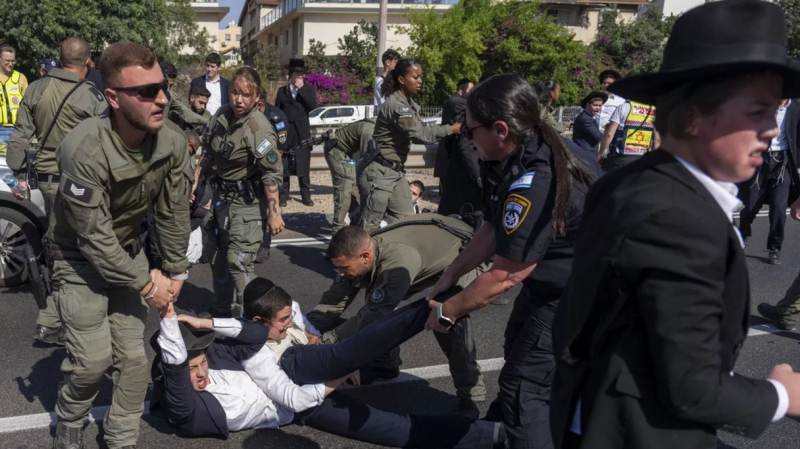
Leading rabbis have also been fueling the fire. Yitzhak Yosef, who was until recently one of Israel’s two chief rabbis, became known for statements such as: “Anyone who studies the Torah is forbidden to go into the army. He must not be drafted — even if it means going to prison,” “Whoever receives a draft notice should tear it up,” and “If yeshiva students are forced to enlist, we will leave the country.”
Members of the ultra-Orthodox factions commented on the Bagatz ruling of Nov. 19 as follows: “The High Court has proven that it does not want a draft law — it wants a civil war.”
The Torah does not prohibit military service, ultra-Orthodox publicist Yaakov Solganik told The Insider. In the latest Knesset elections, Solganik led the Russian-language campaign for the Degel HaTorah party, which entered parliament as part of the United Torah Judaism bloc to represent the positions of Ashkenazi communities.
“Jews served in the armies of David and Solomon, and many would be willing to serve in such an army today. The ultra-Orthodox also fought in the War of Independence. One of the Haredi battalions lost almost all its fighters. What is more pertinent is the reason why they stopped serving,” says Solganik. Indeed, units of religious Jews already existed within the Haganah, the Jewish underground defense forces that operated during the British Mandate.
At the height of the War of Independence, the soldiers were urgently called to participate in an operation on the Sabbath. The believers did not refuse, following the principle of pikuach nefesh: it is permissible to violate a commandment to save a human life.
But the fighters set out hungry. A secular officer was outraged and forced the cooks, despite the Sabbath, to prepare hot food. Two of them, ultra-Orthodox Shimon Manheim and Eliezer Blumenthal, refused, as cooking was not required to save anyone’s life.
After the operation, the cooks were tried for disobeying orders and arrested for seven days. This was a kind of compromise — the prescribed penalty for such offenses at the time was much harsher. The cooks appealed the decision, but instead of forgiveness their arrest was extended to three months, and religious soldiers went on a hunger strike to support the imprisoned cooks. In the end, the scandal reached the government: the Minister of Religion resigned, and the cooks were released. The incident instilled a deep mutual distrust between the military and the ultra-Orthodox.
The Haredi community remembers this story well, explains Yakov Solganik: “Everyone saw that simply serving in the army was not enough. The armed forces wanted to re-educate the ultra-Orthodox, to make them secular. The army’s education department still pursues this objective. After that incident, a rabbinical congress was convened. The ultra-Orthodox decided they would not serve. The religious Zionists decided they would serve and try to turn the army into a democratic space that suits everyone.”
Litvaks are members of a stream within Orthodox Judaism, historically originating in Lithuania as an opposition to Hasidism.
After World War I, Great Britain received a mandate to administer the territories of present-day Israel, Jordan, and the Palestinian Authority in order to establish Jewish and Arab states. The mandate ended in 1948 with the creation of the State of Israel.
The law bears the name of Supreme Court judge Tzvi Tal (currently retired), who chaired the committee examining the drafting of ultra-Orthodox Jews into the IDF. Based on the Tal Committee’s recommendations, a temporary law was passed granting yeshiva students a deferment from military service until the age of 22. After that, they had to choose between continuing their studies and starting work. If they opted for the latter, Haredim had to complete a shortened military or alternative service. Those who chose the first option could remain in yeshivas and kollels until the age of 30, but without the right to work.
Unlike yeshivas, kollels are educational institutions that enroll married men. Students normally receive a monthly stipend.
A higher religious educational institution whose graduates receive a rabbi’s diploma.
Simply serving in the army was not enough. The armed forces wanted to re-educate the ultra-Orthodox, to make them secular
All this gave rise to the Torato Umanuto arrangement. Translated literally as “The Torah is his vocation,” it means that people who have chosen the study of Jewish sacred texts as their life’s work may receive a deferment from the army. But in this case, they are not allowed to work or take on side jobs.
Critics call this arrangement and the corresponding instruments a legalized exemption from service. However, the ultra-Orthodox interpret it quite differently, Solganik explains: “The Haredim were not satisfied with not going to the army and being excluded from building the country. In Bnei Brak lived the great Rabbi Chazon Ish (Avraham Yeshayahu Karelitz), who decided that our service would be the study of the Torah.”
At the turn of the 1940s and 1950s, the arrangement seemed to offer an acceptable solution. With a great many rabbis having perished in the Holocaust, the nation was struggling with a shortage of clergy. And at that time, the ultra-Orthodox youth in Israel were not very numerous, meaning their absence from the army did not make much of a difference.
Since then, military service among the ultra-Orthodox has remained effectively voluntary, and the number of volunteers has varied across communities. Haredi Mizrahim (descendants of immigrants from Middle Eastern and North African countries) rarely served, while among Ashkenazi Haredim, members of the Chabad Hasidic movement were more likely to join the army. Other Hasidim and Litvaks were rarely drafted.
Yigal Dubinsky is a Chabad rabbi and reservist sniper. He was called up to the reserves on Oct. 7, 2023, and since then has served, with breaks, for over a year.
Litvaks are members of a stream within Orthodox Judaism, historically originating in Lithuania as an opposition to Hasidism.
After World War I, Great Britain received a mandate to administer the territories of present-day Israel, Jordan, and the Palestinian Authority in order to establish Jewish and Arab states. The mandate ended in 1948 with the creation of the State of Israel.
The law bears the name of Supreme Court judge Tzvi Tal (currently retired), who chaired the committee examining the drafting of ultra-Orthodox Jews into the IDF. Based on the Tal Committee’s recommendations, a temporary law was passed granting yeshiva students a deferment from military service until the age of 22. After that, they had to choose between continuing their studies and starting work. If they opted for the latter, Haredim had to complete a shortened military or alternative service. Those who chose the first option could remain in yeshivas and kollels until the age of 30, but without the right to work.
Unlike yeshivas, kollels are educational institutions that enroll married men. Students normally receive a monthly stipend.
A higher religious educational institution whose graduates receive a rabbi’s diploma.
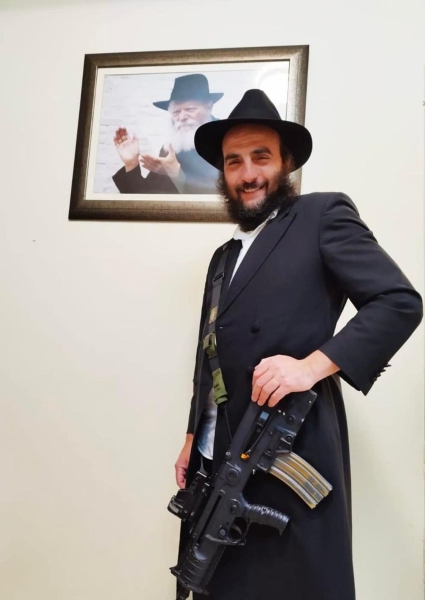
Dubinsky is expecting another call-up to come by the end of December. He takes a philosophical view of the situation: “On one hand, it really throws you off balance, both in terms of family and work — I teach and help new immigrants. But in reserve service, I am doing no less important work: I am a messenger.”
In the Chabad teaching, a special role is given to “messengers” — people who spread the faith and commandments among secular and assimilated Jews. On city streets on Fridays, one can see young men in black hats handing out prayer items — these are also Chabad messengers.
Military service opens up great opportunities for this work, Yigal explains: “In the army, you meet a great many different people — city dwellers, kibbutz members. Many of them have never interacted with the Haredim. But you serve together, complete missions together, and they realize that the Haredim are not bad people, that they also shoulder this collective burden. In military service, everyone meets people they would not encounter in civilian life: of diverse ethnicities, creeds, political views. That’s how the nation becomes united.”
For these reasons, Chabad members serve in the IDF much more often than other Haredim do. Until 2024, Chabad had an agreement with the army — one that fell victim to the decision by the Bagatz to cancel deferments. According to this agreement, young community members would begin service at the age of 21 or 22, after completing their religious education.
This was important because older men are more resistant to the temptations of secular life, Dubinsky explains, adding that the army environment does not always meet “requirements of virtue,” and that a “still-developing soul risks finding himself in an immodest situation.” Therefore, a young man needs to acquire basic knowledge and have time to marry before joining the army.
In Yigal’s community in Haifa, 70–80% of eligible men are reservists. Some have completed regular service, while others have followed the Shlav Bet recruitment track.
At the same time, serving is objectively difficult for a Jew who strictly observes religious commandments, notes Rabbi Dubinsky. Although all food in the IDF is kosher, the kashrut standards there are lower than those of the Haredim. Yigal only eats dairy products and bread from the communal table, and brings tuna and other canned goods from home to supplement his diet during reserve service.
The sniper rabbi has more grievances with the IDF. He is convinced, for example, that it is much easier for a secular person than for a religious one to get a promotion. “In my unit, the entire junior officer staff wears knitted kippot,” he says. “But at the top, people are completely different. If you want the Haredim to serve, be prepared to see them among the top commanders as well.”
Litvaks are members of a stream within Orthodox Judaism, historically originating in Lithuania as an opposition to Hasidism.
After World War I, Great Britain received a mandate to administer the territories of present-day Israel, Jordan, and the Palestinian Authority in order to establish Jewish and Arab states. The mandate ended in 1948 with the creation of the State of Israel.
The law bears the name of Supreme Court judge Tzvi Tal (currently retired), who chaired the committee examining the drafting of ultra-Orthodox Jews into the IDF. Based on the Tal Committee’s recommendations, a temporary law was passed granting yeshiva students a deferment from military service until the age of 22. After that, they had to choose between continuing their studies and starting work. If they opted for the latter, Haredim had to complete a shortened military or alternative service. Those who chose the first option could remain in yeshivas and kollels until the age of 30, but without the right to work.
Unlike yeshivas, kollels are educational institutions that enroll married men. Students normally receive a monthly stipend.
A higher religious educational institution whose graduates receive a rabbi’s diploma.
“If you want the Haredim to serve, be prepared to see them among the top commanders as well”
Yigal is certain that the ultra-Orthodox community cannot be forced into a drastic change or compelled to serve en masse under current terms. In the army, whoever does not want to serve will not serve, he explains.
“An evader will end up serving two to four weeks in a military prison and receive an exemption from service for life. Currently, only a small portion of the Haredim serve — those willing to serve. And if the state tries to draft thousands of those opposed to the idea, the system will collapse. It would be easier for the army to forgo the draft than to provide the conditions,” Yigal says. “Even a complete cancellation of state benefits for draft evaders won’t help. Seculars fend for themselves, but here you have a consolidated community that votes unanimously and protects its members. They’ll find money from an American fund. So force is not the answer. You need to sit down with the rabbis and find out their requirements.”
The army has long attempted to create conditions suitable for the Haredim. Those who are not Chabad members are drafted into special units with strict kashrut and no female soldiers. These include the Netzah Yehuda Battalion of the Kfir Infantry Brigade, the Hetz Company of the Paratroopers Brigade, the Tomer Company of the Givati Brigade (which no longer recruits conscripts), the Negev unit, and several companies within the Border Police (MAGAV). In addition, Haredim serve in rear and support roles in the Home Front Command, the Communications and Cyber Defense directorates, Military Intelligence (Aman), and the Air Force and Navy.
This year's new arrival is the special ultra-Orthodox Hashmonaim Brigade, which adopted a strict religious internal code from the onset. The brigade has recruited its first fighters and has fought in its first battles.
Litvaks are members of a stream within Orthodox Judaism, historically originating in Lithuania as an opposition to Hasidism.
After World War I, Great Britain received a mandate to administer the territories of present-day Israel, Jordan, and the Palestinian Authority in order to establish Jewish and Arab states. The mandate ended in 1948 with the creation of the State of Israel.
The law bears the name of Supreme Court judge Tzvi Tal (currently retired), who chaired the committee examining the drafting of ultra-Orthodox Jews into the IDF. Based on the Tal Committee’s recommendations, a temporary law was passed granting yeshiva students a deferment from military service until the age of 22. After that, they had to choose between continuing their studies and starting work. If they opted for the latter, Haredim had to complete a shortened military or alternative service. Those who chose the first option could remain in yeshivas and kollels until the age of 30, but without the right to work.
Unlike yeshivas, kollels are educational institutions that enroll married men. Students normally receive a monthly stipend.
A higher religious educational institution whose graduates receive a rabbi’s diploma.
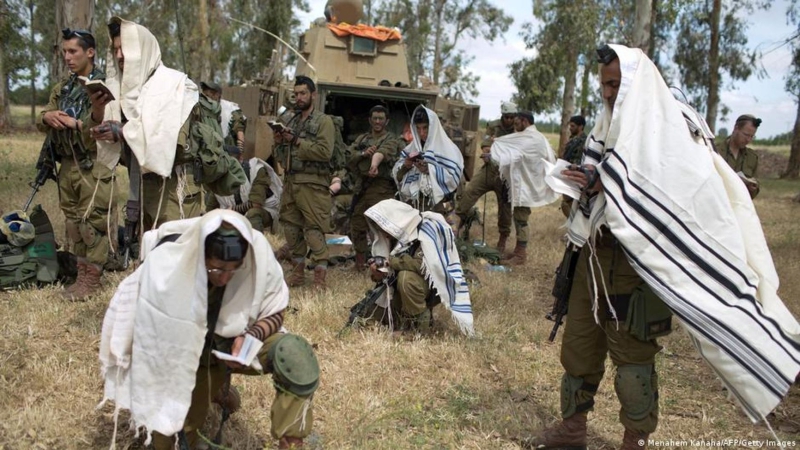
One of the Hashmonaim recruits is Yitzhak (name changed), who immigrated from Russia in 2014, later returned, but in 2022 came back to Israel for good. In Russia, Yitzhak was also a member of an ultra-Orthodox community. After Oct. 7, he completed Shlav Bet and was assigned to the Military Rabbinate. One of its most challenging tasks is identifying the bodies of the dead. This is exactly what Yitzhak had to do during the first months of the war. When he learned about the formation of Hashmonaim — and that he could undergo additional training to reach combat level— he passed the tests, trained as a machine gunner, and was already fighting in Gaza as part of the new brigade by the fall of 2025.
The main objective of Hashmonaim commanders is to ensure that the soldiers maintain their religious way of life after completing their service, Yitzhak explains. That is why the requirements for observing religious rules are particularly strict here. Those who stay on base for Shabbat are asked to bring traditional clothing. Many conscripts spend the day in frock coats and hats, and some even wear shtreimels — wheel-shaped fur hats. Since not everyone in the unit is strictly Haredi (though all are observant), others are asked to wear black kippahs, Yitzhak told The Insider.
Yitzhak wears black trousers and a white shirt at the base on Saturdays. But that applies only when there is no operational mission, he explains: “A duty shift, guard service, patrols — these are matters of saving lives, so these duties exempt you from observing Shabbat. Using a night-vision device on a Saturday is not forbidden. The Hashmonaim Brigade has now been officially withdrawn from the Gaza Strip, but a few of our guys, me included, stayed there even after the ceasefire.”
Litvaks are members of a stream within Orthodox Judaism, historically originating in Lithuania as an opposition to Hasidism.
After World War I, Great Britain received a mandate to administer the territories of present-day Israel, Jordan, and the Palestinian Authority in order to establish Jewish and Arab states. The mandate ended in 1948 with the creation of the State of Israel.
The law bears the name of Supreme Court judge Tzvi Tal (currently retired), who chaired the committee examining the drafting of ultra-Orthodox Jews into the IDF. Based on the Tal Committee’s recommendations, a temporary law was passed granting yeshiva students a deferment from military service until the age of 22. After that, they had to choose between continuing their studies and starting work. If they opted for the latter, Haredim had to complete a shortened military or alternative service. Those who chose the first option could remain in yeshivas and kollels until the age of 30, but without the right to work.
Unlike yeshivas, kollels are educational institutions that enroll married men. Students normally receive a monthly stipend.
A higher religious educational institution whose graduates receive a rabbi’s diploma.
A duty shift, guard service, patrols — these are matters of saving lives, so these duties exempt you from observing Shabbat
The point about the night-vision device is not hypothetical, since pressing a button that closes an electrical circuit is a direct violation of Shabbat rules. Still, Yitzhak tries to avoid doing this more than is necessary. If his shift falls on Shabbat, he does not monitor the radio traffic like other soldiers; he only presses the buttons when he needs to report the situation.
Hashmonaim is far from the first attempt to create service conditions suitable for Haredim, publicist Solganik notes: “From the experience of previous units, we know that the food they brought in was kosher but absolutely inedible. But kashrut is not only about food. There cannot be any women on the base. Yet there were cases when a female fitness instructor was deployed to the unit.”
The son of Solganik’s friend served in the Netzah Yehuda Battalion, which was originally created as a religious unit. But after two or three years, the arrangements changed, and the new commander said that he had never promised gender separation, Solganik says.
Litvaks are members of a stream within Orthodox Judaism, historically originating in Lithuania as an opposition to Hasidism.
After World War I, Great Britain received a mandate to administer the territories of present-day Israel, Jordan, and the Palestinian Authority in order to establish Jewish and Arab states. The mandate ended in 1948 with the creation of the State of Israel.
The law bears the name of Supreme Court judge Tzvi Tal (currently retired), who chaired the committee examining the drafting of ultra-Orthodox Jews into the IDF. Based on the Tal Committee’s recommendations, a temporary law was passed granting yeshiva students a deferment from military service until the age of 22. After that, they had to choose between continuing their studies and starting work. If they opted for the latter, Haredim had to complete a shortened military or alternative service. Those who chose the first option could remain in yeshivas and kollels until the age of 30, but without the right to work.
Unlike yeshivas, kollels are educational institutions that enroll married men. Students normally receive a monthly stipend.
A higher religious educational institution whose graduates receive a rabbi’s diploma.

“There were girls in the army, and my friend's son started interacting with them. From a secular point of view, there’s nothing wrong with that. But from a religious perspective, you send your child to a place where he loses the most important thing: understanding why we live, why we were born, why we will die,” Solganik says. “Look at it from another angle. What if your children were legally obliged to serve in an army that tended to convert half of its soldiers into ultra-Orthodox Jews with payot? Would you send your child to such an army?”
Within the religious community, serving in such units is seen as unacceptable, Solganik explains. Still, if a young man is unable to study the Torah, then he may serve. That’s how his friend's son ended up in the army — after being expelled from five yeshivas in a row.
After October 2023, the situation changed. Many Haredim realized they wanted to defend their people, Yitzhak notes: “This is a new phenomenon for the community. That’s why in our unit there are many Litvaks, who previously rarely served.”
One of these conscripts, David (name changed), had never thought about military service before the Hamas attack: “I wasn’t raised for this, quite the opposite. Fifteen years ago, I served in alternative civilian service and was exempted from the army. But after Oct. 7, I wanted to give my all. I remember pacing around the house like a caged lion in the first days. Praise be to the Almighty, who paved the way for me.”
Almost none of David’s peers in the community have served in the army, and they have not changed their minds. David himself has to hide his service from his neighbors. On leave, David wears civilian clothes and carries no weapon — another exception made for ultra-Orthodox soldiers in the IDF. This way, he can avoid standing out in an environment where many oppose army service: “It’s better if no one at my children’s school knows about this.”
Litvaks are members of a stream within Orthodox Judaism, historically originating in Lithuania as an opposition to Hasidism.
After World War I, Great Britain received a mandate to administer the territories of present-day Israel, Jordan, and the Palestinian Authority in order to establish Jewish and Arab states. The mandate ended in 1948 with the creation of the State of Israel.
The law bears the name of Supreme Court judge Tzvi Tal (currently retired), who chaired the committee examining the drafting of ultra-Orthodox Jews into the IDF. Based on the Tal Committee’s recommendations, a temporary law was passed granting yeshiva students a deferment from military service until the age of 22. After that, they had to choose between continuing their studies and starting work. If they opted for the latter, Haredim had to complete a shortened military or alternative service. Those who chose the first option could remain in yeshivas and kollels until the age of 30, but without the right to work.
Unlike yeshivas, kollels are educational institutions that enroll married men. Students normally receive a monthly stipend.
A higher religious educational institution whose graduates receive a rabbi’s diploma.
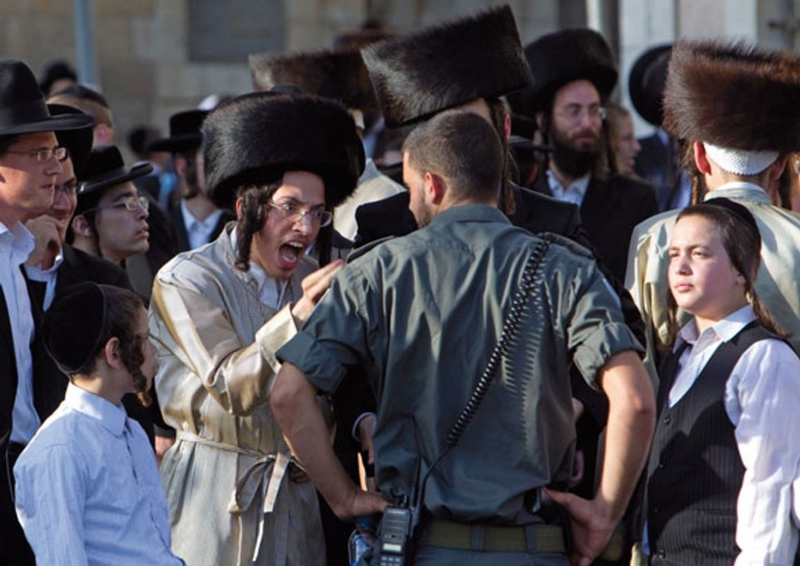
According to Yitzhak, many of his fellow soldiers face the same problems. They do not publicize their service, fearful of dirty looks from their neighbors and condemnation from their children's school teachers.
Still, David could only recall one instance when other Haredim directly insulted him for serving in the army. They called him a “Mizrochnik” — a slur that in the ultra-Orthodox Ashkenazi community was originally used against Eastern Jews (Mizrahi) but which is now directed at religious Zionists. “But on the personal level, most comments are positive,” he adds. “People clearly appreciate my choice and even envy me a little. The majority of the Haredi community respects and values IDF soldiers, who sacrifice their souls for all of us. Everyone understands that without the army, there is no state.”
Litvaks are members of a stream within Orthodox Judaism, historically originating in Lithuania as an opposition to Hasidism.
After World War I, Great Britain received a mandate to administer the territories of present-day Israel, Jordan, and the Palestinian Authority in order to establish Jewish and Arab states. The mandate ended in 1948 with the creation of the State of Israel.
The law bears the name of Supreme Court judge Tzvi Tal (currently retired), who chaired the committee examining the drafting of ultra-Orthodox Jews into the IDF. Based on the Tal Committee’s recommendations, a temporary law was passed granting yeshiva students a deferment from military service until the age of 22. After that, they had to choose between continuing their studies and starting work. If they opted for the latter, Haredim had to complete a shortened military or alternative service. Those who chose the first option could remain in yeshivas and kollels until the age of 30, but without the right to work.
Unlike yeshivas, kollels are educational institutions that enroll married men. Students normally receive a monthly stipend.
A higher religious educational institution whose graduates receive a rabbi’s diploma.
The majority of the Haredi community respects and values IDF soldiers, who sacrifice their souls for all of us
Solganik explains the community’s attitude toward soldiers: “Why do the ultra-Orthodox approach people in uniform cautiously? Because the soldier takes pride in his uniform. Parents are afraid that if their children see him, they will also want to become soldiers. That’s why many do not pray for soldiers openly, so as not to have to explain all the nuances to their children.”
Solganik shares statistics, recently cited by left-leaning Channel 12, that confirm the concerns of ultra-Orthodox parents. After serving in the army, only 30% of ultra-Orthodox retain their religious way of life; 40% continue to lead a religious life but cease to be Haredim, and the remaining 30% choose to identify as secular.
However, this percentage reflects not so much a loss of faith during service as army record-keeping designed to show that members of these communities are being successfully drafted. According to the full study, 63% of the IDF's “ultra-Orthodox” had left their communities before being drafted, and 17% did so within the first year of service.
Only 20% of those who lost their community affiliation and 14% of all drafted Haredim had a true change of heart that occurred as a result of army service. Given that the ultra-Orthodox community continues to resist conscription, it is little surprise that most of its members who choose to serve in the army were already morally prepared to break away from their roots.
The experiment with the Hashmonaim brigade is unfolding amid this context. Although the results of the 2025 draft are not yet available, the media report a significant personnel shortfall in the new brigade. It is known that on the first day, Sept. 1, Hashmonaim expected 120–130 recruits, but only 54 showed up.
Many ultra-Orthodox distrust this brigade too. Its formation was overseen by Rabbi David Leibel, head of Ahvat Torah. Not all communities approve of this choice, according to Solganik: “They must have decided to put him in charge because he is more liberal. But why didn’t they consult the Haredim? The Haredim do not see him as an authority. Leibel himself recently gave an interview and said that he does not yet recommend his students serve in Hashmonaim. So what can you expect from other ultra-Orthodox?”
Rabbi Leibel’s interview did indeed cause a stir, as he urged not only yeshiva students but also young Haredim not studying Torah to avoid joining the army. For now, in the rabbi’s view, service is only acceptable in high-tech units where a soldier can sleep at home every night.
Litvaks are members of a stream within Orthodox Judaism, historically originating in Lithuania as an opposition to Hasidism.
After World War I, Great Britain received a mandate to administer the territories of present-day Israel, Jordan, and the Palestinian Authority in order to establish Jewish and Arab states. The mandate ended in 1948 with the creation of the State of Israel.
The law bears the name of Supreme Court judge Tzvi Tal (currently retired), who chaired the committee examining the drafting of ultra-Orthodox Jews into the IDF. Based on the Tal Committee’s recommendations, a temporary law was passed granting yeshiva students a deferment from military service until the age of 22. After that, they had to choose between continuing their studies and starting work. If they opted for the latter, Haredim had to complete a shortened military or alternative service. Those who chose the first option could remain in yeshivas and kollels until the age of 30, but without the right to work.
Unlike yeshivas, kollels are educational institutions that enroll married men. Students normally receive a monthly stipend.
A higher religious educational institution whose graduates receive a rabbi’s diploma.
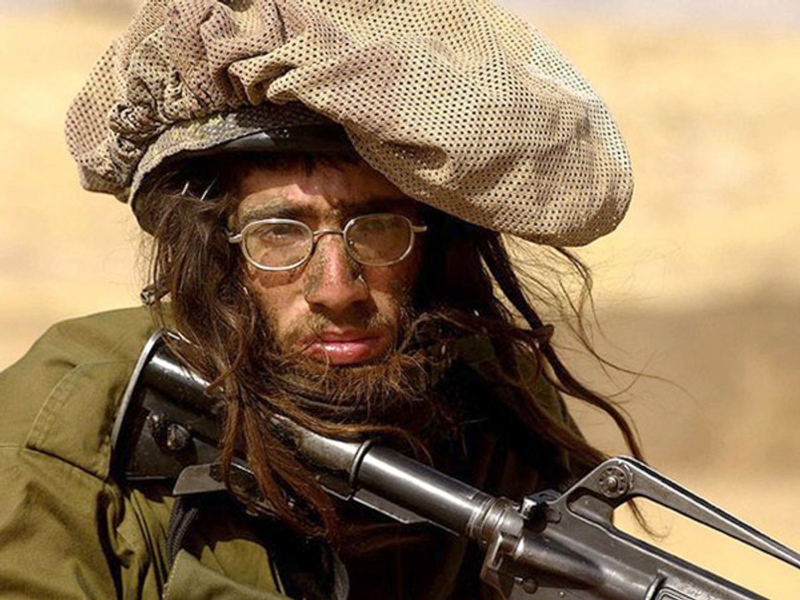
In the interview, Leibel also expressed outrage that the army’s education department invites lecturers who question faith. He demanded that Hashmonaim's rules of conduct, which protect soldiers' rights to maintain a religious way of life, be formalized at the IDF General Staff level. Moreover, the rabbi categorically opposes putting any pressure on Haredim who do not want to serve. He called on his students to participate in the March of the Million against conscription.
And yet, high hopes are still being pinned on the Hashmonaim. Perhaps when the rabbis see that people who have served there continue to lead an Orthodox lifestyle, their attitude toward conscription will change, the rabbi sniper Dubinsky reasons. However, the problem is not only the service conditions but also decades of government policy: “The government bribed the ultra-Orthodox, offering them benefits and concessions. They know that if they vote for specific parties, they will receive tangible advantages.”
There are 120 seats in the Israeli Knesset, meaning that after elections, a ruling coalition of at least 61 members must be formed. After the elections, a coalition of 61 members must be formed, as no single party enjoys enough support to win a clear majority. That’s why small parties are invited into the government, and very often religious parties agree to this role in exchange for concessions on key issues. The current coalition would collapse if the religious parties withdrew, and unsurprisingly, this is exactly the threat they make in the event that a draft law they oppose is passed.
There is no need to force Haredim to serve at military bases with weapons in their hands. Instead, alternative civilian service could be greatly expanded, Solganik believes: “You know that in ZAKA, United Hatzalah, and many other charitable organizations, the majority of employees are already Haredim? But the state does not recognize this as alternative service. This could be a good solution. There are multiple options. One could serve not for two full years, but for a few hours a week, stretched across 15 years.”
ZAKA is a volunteer rescue organization that assists emergency services and also handles the collection of victims’ bodies and their preparation for burial. United Hatzalah is a charitable equivalent of an ambulance service. Even in the official ambulance service, MADA, more and more Haredim have been joining recently, Yigal Dubinsky says.
“They understand that if a girl loses consciousness, they will have to touch her, see nudity, perform CPR, but for the sake of saving a life, they are prepared to do it. Ultra-Orthodox could serve in MADA, the fire service, or the police. This threatens their way of life much less, because a person sleeps at home and remains within the community,” the rabbi says.
Litvaks are members of a stream within Orthodox Judaism, historically originating in Lithuania as an opposition to Hasidism.
After World War I, Great Britain received a mandate to administer the territories of present-day Israel, Jordan, and the Palestinian Authority in order to establish Jewish and Arab states. The mandate ended in 1948 with the creation of the State of Israel.
The law bears the name of Supreme Court judge Tzvi Tal (currently retired), who chaired the committee examining the drafting of ultra-Orthodox Jews into the IDF. Based on the Tal Committee’s recommendations, a temporary law was passed granting yeshiva students a deferment from military service until the age of 22. After that, they had to choose between continuing their studies and starting work. If they opted for the latter, Haredim had to complete a shortened military or alternative service. Those who chose the first option could remain in yeshivas and kollels until the age of 30, but without the right to work.
Unlike yeshivas, kollels are educational institutions that enroll married men. Students normally receive a monthly stipend.
A higher religious educational institution whose graduates receive a rabbi’s diploma.
If a girl loses consciousness, ultra-Orthodox paramedics will have to touch her, see nudity, but for the sake of saving a life, they are prepared to do it
Nevertheless, military analyst Sergei Auslender is skeptical of this approach. Ultra-Orthodox are indeed present in ZAKA, MADA, and United Hatzalah, but they are usually from the older generation, he says: “If they want to serve that badly, we have civilian service. There is a catastrophic shortage of personnel there.”
For now, the situation is at a deadlock, Auslender believes. The ultra-Orthodox demand special conditions, essentially asking for “a separate army, separate bases without women — and this in Israel, where there are many female soldiers.” Meanwhile, secular Israelis demand that all citizens serve. “As a result, dialogue is impossible. And you cannot solve this problem through drastic measures and without dialogue,” Auslender concludes.
Litvaks are members of a stream within Orthodox Judaism, historically originating in Lithuania as an opposition to Hasidism.
After World War I, Great Britain received a mandate to administer the territories of present-day Israel, Jordan, and the Palestinian Authority in order to establish Jewish and Arab states. The mandate ended in 1948 with the creation of the State of Israel.
The law bears the name of Supreme Court judge Tzvi Tal (currently retired), who chaired the committee examining the drafting of ultra-Orthodox Jews into the IDF. Based on the Tal Committee’s recommendations, a temporary law was passed granting yeshiva students a deferment from military service until the age of 22. After that, they had to choose between continuing their studies and starting work. If they opted for the latter, Haredim had to complete a shortened military or alternative service. Those who chose the first option could remain in yeshivas and kollels until the age of 30, but without the right to work.
Unlike yeshivas, kollels are educational institutions that enroll married men. Students normally receive a monthly stipend.
A higher religious educational institution whose graduates receive a rabbi’s diploma.