
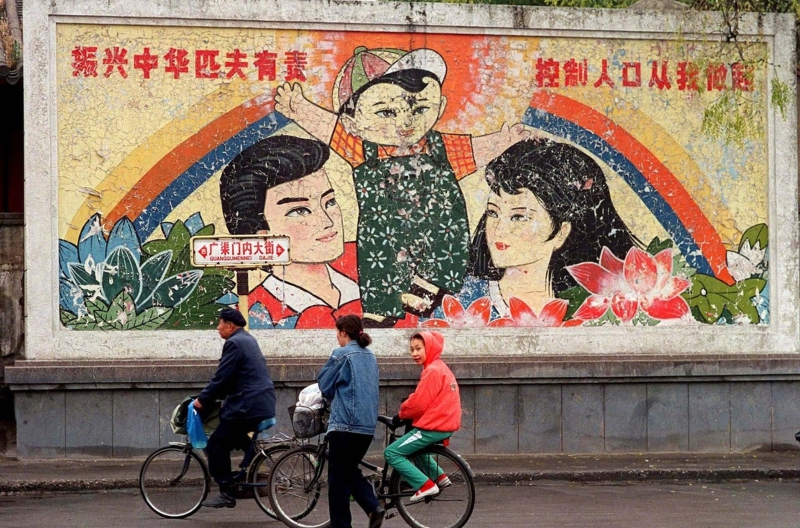
In December, Chinese authorities announced a 13% tax on contraceptives, including condoms. At the same time, Beijing promised to exempt people from taxes on childcare services — nurseries, kindergartens, and other services meant to make raising a child easier. For decades, China punished its citizens for having “extra” children, pushing the country into a “low fertility trap.” One continuity remains, however: neither during the period of the “one child policy” nor during the current push to boost fertility has Beijing listened to women. In response to state pressure, Chinese women have become more radicalized — and they increasingly prefer not to have children at all.
In the 1970s, China was going through hard times. The country had only begun to overcome the consequences of the Cultural Revolution, the economy was depleted, agriculture was inefficient, and memories of the mass famine that resulted from the Great Leap Forward had not yet faded. At the same time, birthrates remained extremely high: almost six children per woman. One measure aimed at combatting the crisis involved the implementation of demographic controls.
At the beginning of the decade, Beijing launched the nationwide campaign “Later, longer, fewer” (wan, xi, shao), which promoted later marriages, limits on the number of children per family (no more than two in cities and three in rural areas), and three–four-year gaps between births.
For the first time, the state deployed a whole set of tools: free contraceptives, mandatory consultations with specialists, and fines for failing to follow the state’s recommendations. But these measures did not produce the desired results. By the time Deng Xiaoping came to power in 1978, China’s population had reached 960 million people, while income levels and labor productivity remained extremely low.
In 1978, China’s population reached 960 million people, while income levels and labor productivity remained extremely low
The new government declared its ambition to guide the country towards modernization and rapid economic growth, and it viewed the extremely high birthrate as a threat to national prosperity. In its effort to overcome the perceived problem, an unexpected figure became the architect of China’s new demographic policy: military engineer and missile-systems and cybernetics specialist Song Jian.
Borrowing mathematical models from the 1972 Club of Rome report — The Limits to Growth, which, among other things, warned of a future collapse of humanity due to overpopulation — Song Jian presented his calculations to the party leadership. If China did not sharply reduce its birthrate, he warned, the country’s population would surpass an apocalyptic four billion people over the course of the next century.
The state of demographic science in China in the 1970s was poor, largely due to the fact that many specialists had been repressed or pushed out of the country. In this context, Song Jian’s cybernetic approach looked modern and persuasive to the authorities, writes Harvard anthropologist Susan Greenhalgh. With no alternative scenarios available, the idea of treating the population as a manageable system in which fertility is merely a parameter that administrators can adjust at will was accepted as a scientifically grounded solution.
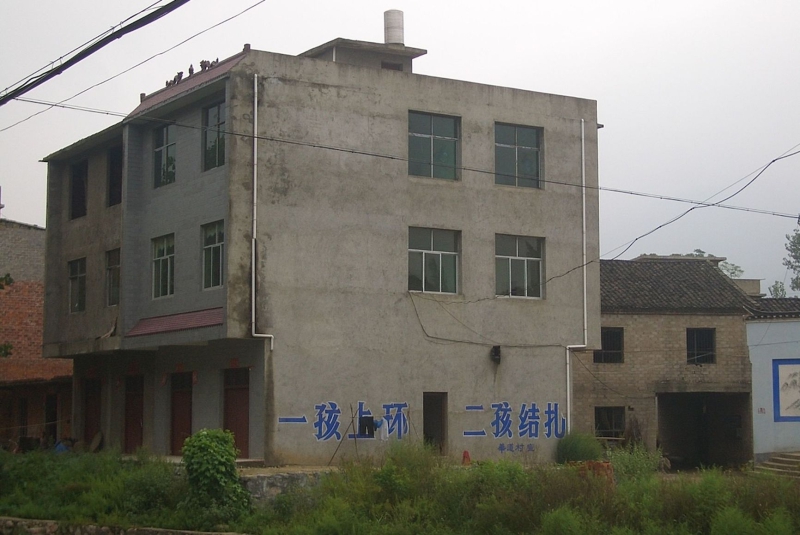
In August 1979, the party introduced one-child quotas for urban families. And on September 25, 1980, the authorities published the famous “Open Letter to All Members of the Party and Youth League on Controlling the Growth of Our Country’s Population,” marking the start of the one-family-one-child policy — the largest demographic experiment of the twentieth century.
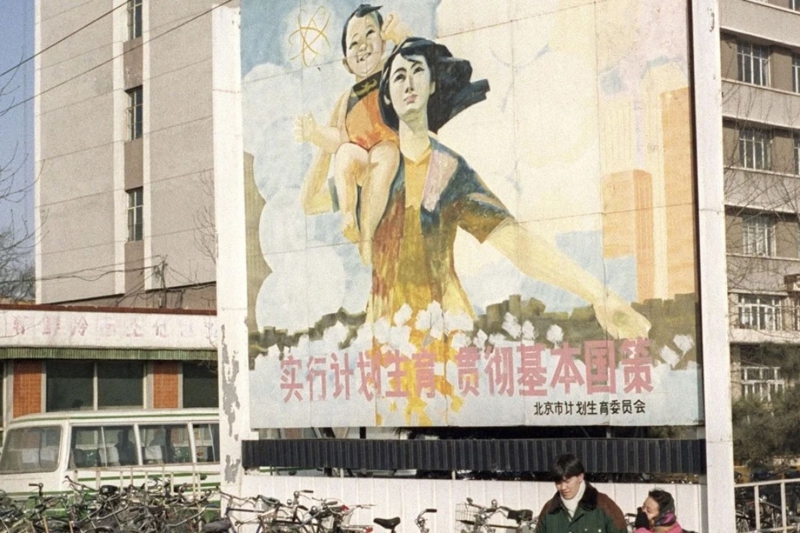
Birth control became multilayered. Family-planning officers appeared in villages and urban districts. They were responsible for creating lists of women of childbearing age, tracking menstrual cycles, logging pregnancies, and ensuring mandatory clinic visits. The party’s policy was reinforced through visual propaganda: posters with threatening slogans such as “Better let blood flow like a river than allow an unplanned birth,” or “If one person has an extra child, the whole village will be sterilized.”
For “extra” children, the authorities introduced a “social maintenance fee” — a fine pegged to the family’s annual income. Its size varied by province, ranging all the way up to ten years of income. For many, the sum was unbearable, giving rise to the practice of hiding children, especially in rural areas. If a family could not pay the social maintenance fee, in order to avoid punishment the child’s birth was not registered in the national household registry (hukou). These children were called heihaizi (“black children”). Without registration, they lived effectively outside the legal system: they could not attend school, receive medical care, obtain a passport, or work officially.
For the birth of “extra” children, the authorities introduced a fine tied to the family’s average annual income
In some rural areas of Guangxi, Guizhou, and Henan provinces, the share of “hidden” children reached 5–15%. Amnesty International documented cases in which parents kept a child at home for years, fearing fines and forced sterilization.
The state distributed condoms and oral contraceptives through medical outposts in villages and factory clinics in cities, but the foundation of the birth-control system consisted of so-called “passive methods.” After the first birth, a woman was fitted with an IUD, and after the second she was strongly encouraged to undergo sterilization. According to research, from 1980 to 2014 China carried out around 324 million IUD insertions and 108 million sterilizations. By the early 1990s, more than 70% of married women were using “passive methods.”
By the 2000s, demographers were beginning to realize that China’s official statistics did not reflect reality. In an article for Population and Development Review, researchers Philip Morgan, Gu Zhigang, and Sarah Hayford recalculated the figures, taking unregistered children into account. They estimated that the country’s total fertility rate had fallen below the replacement threshold, reaching 1.4–1.6 children per woman compared to the normal rate of 2.1, but it had not fallen to 1.0.
In 2013, Chinese authorities allowed couples to have two children if at least one spouse was an only child. Then, starting from Jan. 1, 2016, further amendments to the population and family-planning law took effect granting any family the right to have a second child. In May 2021, Beijing permitted Chinese families to have three children, issuing the document “On optimizing birth policies and promoting long-term and balanced population growth.”
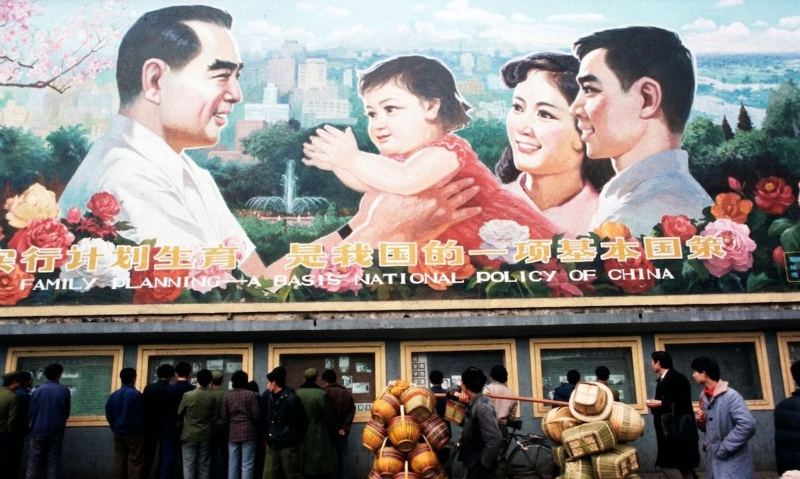
The one-family-one-child policy helped reduce China’s population growth, but it was not the only factor contributing to the decline. As a group of researchers from the Brookings Institution notes, China’s demographic indicators are nearly identical to those of South Korea, Singapore, and Taiwan, where such harsh restrictions never existed. In those three cases, the total fertility rate fell to 1.0–1.3 not because of state-mandated population controls, but because of socioeconomic changes: rapid urbanization, rising incomes, mass higher education for women, later marriages, more expensive housing, and intense labor-market competition.
Demographers call this phenomenon the “low fertility trap.” Once a society’s fertility rate drops below 1.4–1.5, economic models, infrastructure and social norms begin to shift toward families with one child, and sometimes toward having no children at all.
In a study published in November in the European Journal of Population, researcher Shen Shaomin points out that the “generation of only children” tends to want even fewer children than their parents. The share of those who prefer not to have children at all has nearly tripled when compared with the 1980s generation. Once it becomes normal in society to have a single child, reversing that norm is nearly impossible.
The share of Chinese who do not want to have children at all has nearly tripled since the 1980s
According to China’s Institute of Population and Labor Economics, the country ranks second in the world in the cost of raising a child to age 18. Nationwide, this figure reaches 538,000 yuan ($76,100), and in megacities such as Beijing, Shanghai, and Shenzhen it approaches 1-1.5 million yuan ($140,000–210,000).
With an average annual income of 160,000 yuan for two young parents, this means that raising one child consumes 20–35% of a family’s yearly budget, while a second child becomes financially out of reach for most city dwellers. As a result, Chinese society showed little enthusiasm when Beijing allowed people to have more children. If modern couples plan to have a child at all, they tend to do so later, once they have reached certain career and financial milestones.
The contraceptive tax introduced in December 2025 is the most notable, but not the only attempt by Chinese authorities to influence the country’s demographics. Over the past five years, dozens of provinces and cities across China have adopted their own programs to boost birthrates, experimenting with direct cash payments, tax breaks, housing subsidies, and extended parental leave.
The ideological component is also growing stronger. In 2021, China’s State Council issued a “Development Plan for Chinese Women,” which included language about “strengthening national resources” and “building a harmonious family.” In line with this, state media and party platforms began actively promoting the image of a “responsible mother,” who is expected to “contribute to the nation’s destiny” by having two or three children.
At the same time, human rights organizations are noticing attempts to restrict access to abortion, especially those sought for nonmedical reasons. In its “World Report 2025: China,” Human Rights Watch notes increasing gender discrimination and growing limits on reproductive rights. Amnesty International reports cases in which medical institutions were advised to dissuade women from terminating pregnancies, and the set of documentation required for performing such procedures has expanded.

A telling example of the advance of China’s state policy into women’s reproductive rights is the case of Xu Zaozao. In 2018, the unmarried Beijing resident sought to cryogenically preserve her eggs, but the clinic at which she sought service refused, citing Ministry of Health rules allowing such procedures only for married women or for medical reasons.
Xu took the matter to court, arguing that the ban violated the principle of gender equality, as men in China are free to freeze their sperm. In August 2024, a Beijing court rejected her final appeal. Human rights advocates viewed the decision as a symbolic defeat for unmarried women amid government calls for them to have children earlier and in greater numbers.
In its attempts to stimulate population growth, the government completely ignores women’s perspectives, which only worsens the situation. In the article “China’s Low Fertility Rate from the Perspective of Gender and Development” (2021), researchers Ji Yuxiang and Zheng Zhou note that domestic labor still falls almost entirely on women, even as they are expected to build careers. Motherhood results in slower career advancement for women, a 30–40% drop in income, and additional burdens at home. These losses cannot be offset by a 10,000-yuan payment.
In October 2020, Chinese social media began circulating a translation of the article “We Are Not Flowers, We Are a Fire”, which sets out the principles of the South Korean radical feminist movement known as “6B4T.” This ideology calls for rejecting heterosexual relationships, marriage, childbearing, emotional labor for men, and adherence to beauty standards. The name is a direct reference to the Confucian code of gender relations “Three Obediences and Four Virtues,” which places women in a subordinate position, requiring them to obey their father before marriage, their husband during marriage, their son in widowhood, and to preserve “moral purity,” modesty, and domestic skills.
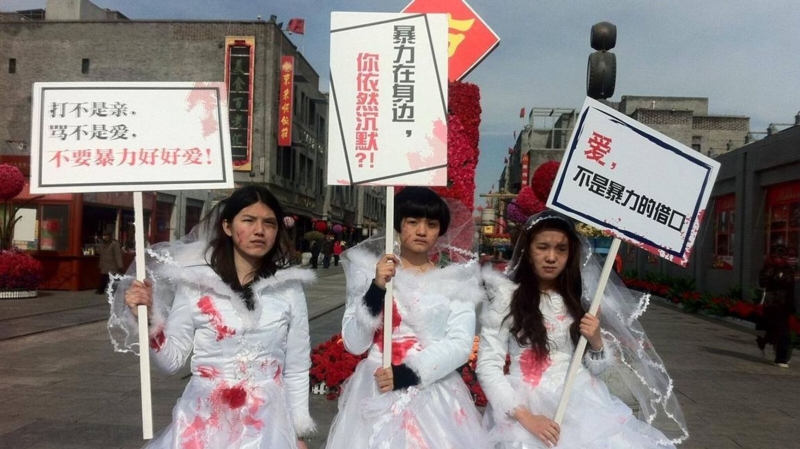
The radical approach of 6B4T contrasts with the ideas of earlier women’s-rights movements in China, note researchers Shu Li and Yijia Gu of the University of Melbourne. For women aged 18–30, refusing marriage and choosing voluntary childlessness have become a way to avoid economic and psychological pressure.
Young women mock official slogans and government incentive programs on social media: on Douyin (China’s TikTok) and Weibo, hashtags such as “don’t marry and don’t give birth to live in peace” (不婚不育保平安), “better to invest in yourself than in a child” (生孩子不如养自己) and “being childfree is fine” (丁克也很好) are popular. Against such sentiments, the introduction of a 13 percent tax on contraceptives looks more like an act of desperation than an effective measure.
China is aging rapidly. According to the country’s National Bureau of Statistics, at the start of 2025 the population stood at 1.4 billion people. As shown in research by demographers Xuejian Peng and Dietrich Fausten, by 2035 a quarter of China’s population — roughly 350 million people — will be over 60. This means the “demographic window” in which several working-age people supported each retiree is effectively closing.
By 2035, a quarter of China’s population — roughly 350 million people — will be over the age of 60
The aging of the population is placing a heavy burden on the pension system, prompting the authorities to adopt painful reforms. On Jan. 1, 2025, China began a gradual increase in the retirement age. Over an implementation period of 15 years, the age for men will rise from 60 to 63, and for women from 50–55 to 55–58, depending on their type of employment. At the same time, more flexible retirement rules are being introduced, and the period of pension contributions is being extended.
The country is feeling an increasingly acute shortage of young workers, especially in the low-wage segments of the labor market. Whereas in the 2010s China had more than a billion people aged 15–64, by 2024–2025 the number had fallen to about 880–890 million. The corporate sector is responding to the problem by expanding automation, while the authorities are discussing bringing in workers from neighboring countries.
The one-family-one-child policy also led to a significant gender imbalance. This was largely tied to the traditional patriarchal model of rural Chinese families: the son remains in the household, inherits the land, and bears responsibility for supporting his parents in old age (the pension system in rural areas was virtually nonexistent).
Birth restrictions helped entrench this practice: if a family was allowed only one child, that child had to be a boy. As a result, the number of sex-selective abortions using ultrasound diagnostics increased. In the 1990s–2000s, some provinces saw the ratio of newborn boys to girls reach 120 to 100 (the biological norm is about 105 to 100). According to estimates by demographers, by the 2020s China had more than 30 million “surplus” men. Entire “bachelor villages” emerged, where residents over 30 had never married.
The gender imbalance has increased risks for women across the region. Human Rights Watch reports that each year thousands of women and girls are taken from Myanmar, Cambodia, Laos, and Vietnam to China, where they are sold as “brides” and kept in domestic servitude.
In Cambodia, according to the Global Initiative Against Transnational Organized Crime, criminal networks have formed that abduct women for the Chinese “market.” Recruiters promise jobs or “marriage to a well-off man,” but in reality the women become victims of traffickers. Cases of “brides” being resold from one family to another are widespread. Overall, according to the 2023 Global Slavery Index, about 5.8 million people are living in modern slavery in China.
A generation raised amid intense economic competition, expensive housing, and the one-child norm increasingly sees motherhood as a form of bondage and rejects it. The state, however, continues by inertia to rely on the same tools it used forty years ago, viewing women’s bodies merely as a means of reproducing the population. But it is no longer possible to return women to the model of “laborers by day, mothers of the nation by night.” Efforts to increase pressure only fuel resistance, as in the case of 6B4T. And the more radically the authorities try to control fertility, the more painful the side effects become.