
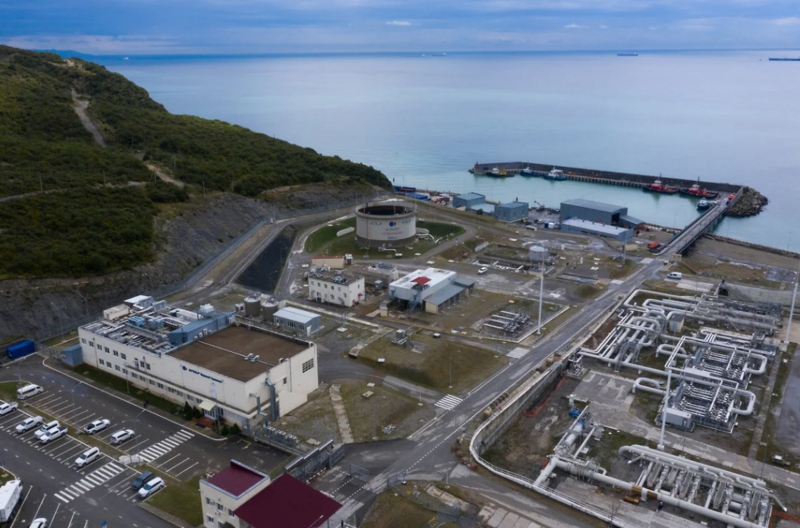
A series of Ukrainian drone strikes on infrastructure belonging to the Caspian Pipeline Consortium, or CPC, has become a serious test for Kazakhstan’s key oil export route. Damage to one of the CPC’s offshore loading terminals has taken the facility offline, with production cuts reaching 480,000 metric tons a day.The Insider examines whether there are alternatives to the CPC, how much damage such attacks cause, and why Kazakhstan’s oil exports are now under threat as a direct consequence of Russia’s ongoing invasion of Ukraine.
Attacks on the CPC
In recent months, Ukraine has significantly stepped up strikes on facilities linked to Russia’s fuel and energy sectors. In addition to targeting oil refineries and gas processing facilities deep inside Russia, Ukraine attacks have expanded to include pipeline infrastructure, export terminals, and pumping stations, some of them operated by the Caspian Pipeline Consortium, which transports Kazakh oil for export and, in much smaller volumes, Russian crude.
The first serious strike came on Feb. 17, 2025, affecting operations at the CPC’s largest oil pumping station, Kropotkinskaya. According to a report by Russia’s state pipeline operator Transneft, the attack destroyed the roof and damaged a range of equipment: a closed switchgear unit, a gas turbine, cables, two transformers, and the fire suppression system. Russian Deputy Prime Minister Alexander Novak said oil flows from Kazakhstan fell by 30% to 40% after the strike.
Then, on Sept. 24, drones struck the consortium’s office in the Russian Black Sea port city of Novorossiysk. As a result, two oil terminals there temporarily halted tanker loading.
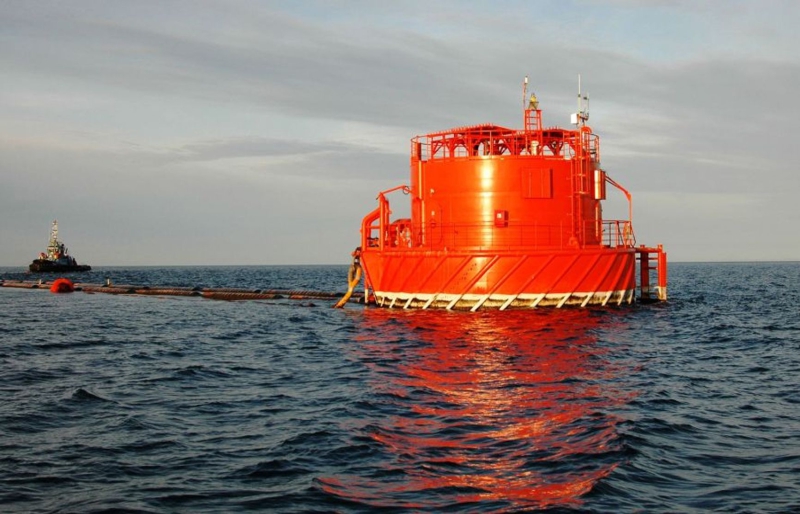
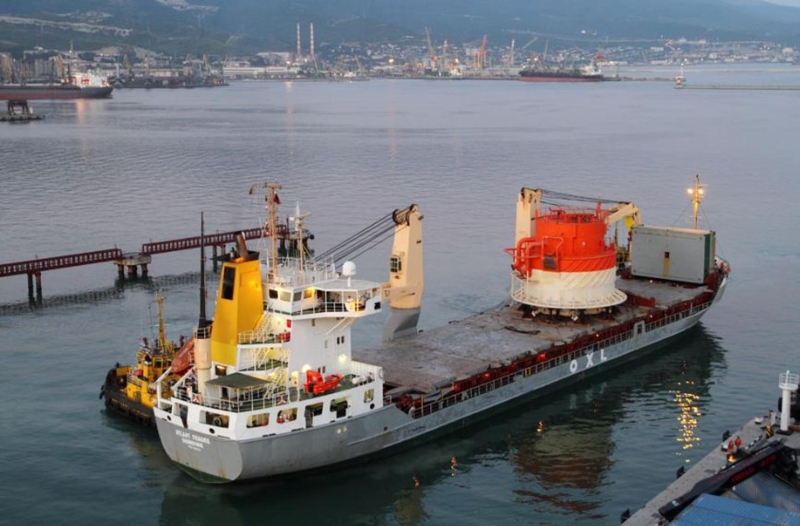
A Single Point Mooring (SPM) system is an offshore floating buoy or jetty that allows large tankers to connect and safely load/offload liquid cargo (like oil) in deep water, even without onshore facilities, by letting the ship «weathervane» (rotate freely) around the buoy to align with wind, waves, and currents, minimizing stress.
Even greater damage was inflicted in an attack on Nov. 29, when Ukrainian uncrewed surface vessels struck one of the consortium’s single point mooring (SPM) systems, SPM-2. In a statement, the CPC said the terminal had sustained “significant damage” and that further use was “not possible.” Oil shipments at the port were suspended.
“Under an order issued by the captain of the Novorossiysk seaport, loading operations and other activities were halted, and tankers were moved outside the CPC’s water area. There were no casualties among CPC personnel or contractors,” the statement said.
A Single Point Mooring (SPM) system is an offshore floating buoy or jetty that allows large tankers to connect and safely load/offload liquid cargo (like oil) in deep water, even without onshore facilities, by letting the ship «weathervane» (rotate freely) around the buoy to align with wind, waves, and currents, minimizing stress.
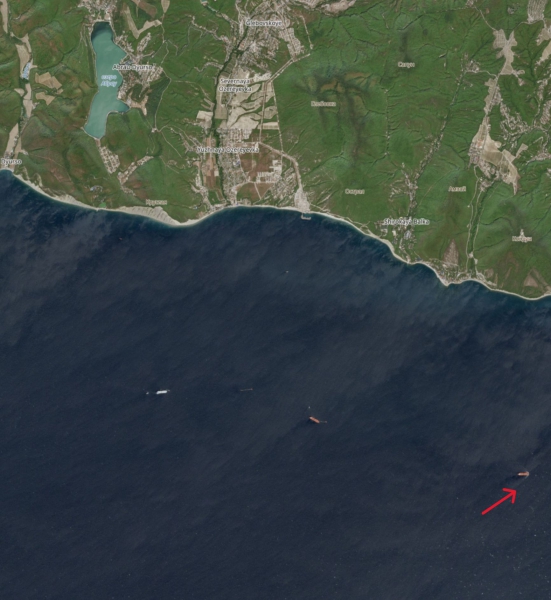
The CPC oil terminal has three offshore loading facilities — SPM-1, SPM-2, and SPM-3. However, SPM-3 has been undergoing scheduled maintenance since mid-November. As a result, only one loading buoy remains operational following the attack.
Kazakhstan’s Energy Minister Erlan Akkenzhenov said it remains unclear whether SPM-2 can be brought back online.
“The consortium is working to restore buoyancy. Once buoyancy is restored, it will be clear whether it can be repaired or not. The damage was too severe — a hole measuring three meters by two and a half meters,” he said.
George Voloshin, an independent expert on the post-Soviet region, told The Insider that the drone strike on the CPC terminal was a major incident that disrupted shipments and put strong pressure on both Kazakhstan and the global energy sector. Using one offshore loading facility instead of two cuts the CPC’s capacity by nearly half, he said.
“This capacity reduction led to an approximately 6% decline in Kazakhstan's oil and gas condensate production in the initial days of December. Industry sources estimate the loss of CPC loading capacity when using only one SPM to be approximately 900,000 tons per week… Losses from the attack could reach approximately 20% of its oil exports, potentially resulting in financial damage of at least $1.5 billion,” Voloshin said.
Political analyst Dosym Satpayev, director of the Almaty-based Risk Assessment Group, agreed with that assessment. He said the loss of even one offshore loading facility significantly limits CPC operations, while the loss of two or three could fully paralyze the consortium.
“This could deal a serious blow to Kazakhstan’s economy, its National Fund, and budget revenues. Any disruptions to oil supplies to end consumers in Europe could also undermine Kazakhstan’s image as a reliable supplier,” Satpayev said.
Kazakhstan’s Energy Ministry has already reported a production decline of 480,000 tons. Bloomberg estimates this is equivalent to about 270,000 barrels per day. Akkenzhenov said Kazakhstan will transport 68 million tons of oil via the CPC this year instead of the planned 72 million.
What Is the CPC?
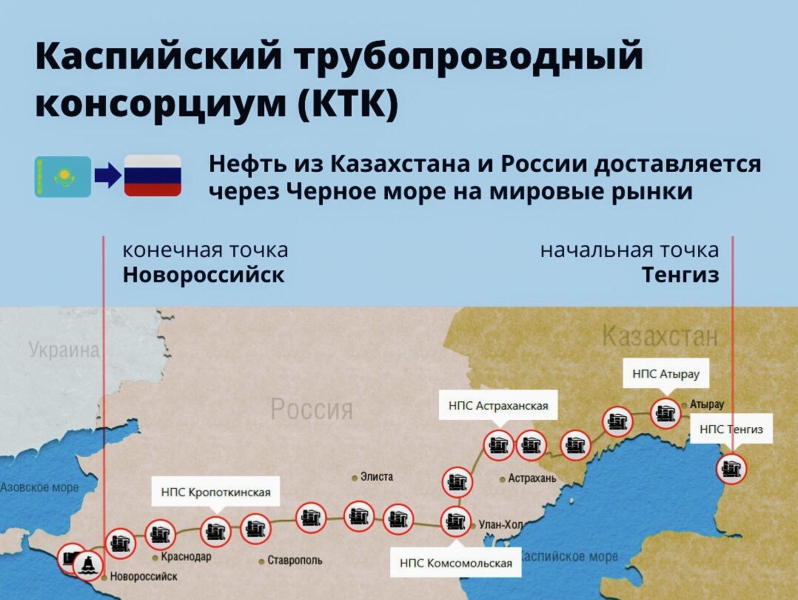
About 80% of Kazakhstan’s total oil exports currently pass through the Caspian Pipeline Consortium system. The pipeline carries oil from the country’s three largest fields — Tengiz, Kashagan, and Karachaganak — which together account for nearly 40% of Kazakhstan’s export revenues. Russian oil makes up a much smaller share, around 15% to 20% of total throughput.
In 2024, about 63 million tons of oil were exported through the CPC, nearly 55 million tons of it from Kazakh fields. As a result, despite Russia and Kazakhstan holding nearly equal equity stakes in the consortium — 24% and 20.75%, respectively — Kazakhstan accounts for the bulk of the oil flow.
Russia could theoretically delay Kazakh oil shipments to send its own crude, but doing so would damage relations with U.S. companies Chevron and ExxonMobil, which are also CPC shareholders with stakes of 15% and 7.5% respectively, Satpayev said.
Other shareholders include Russia’s Lukoil at 12.5%; Shell, jointly with Russia’s state-owned oil company Rosneft, at 7.5%; the UK's BG and Italy's Eni at 2% each; and Oryx at 1.75%.
After the attack, the British multinational Shell decided to terminate its partnership with Rosneft. If the deal proceeds, Shell would retain its stake in the consortium but no longer hold it jointly with the Russian company.
A Single Point Mooring (SPM) system is an offshore floating buoy or jetty that allows large tankers to connect and safely load/offload liquid cargo (like oil) in deep water, even without onshore facilities, by letting the ship «weathervane» (rotate freely) around the buoy to align with wind, waves, and currents, minimizing stress.
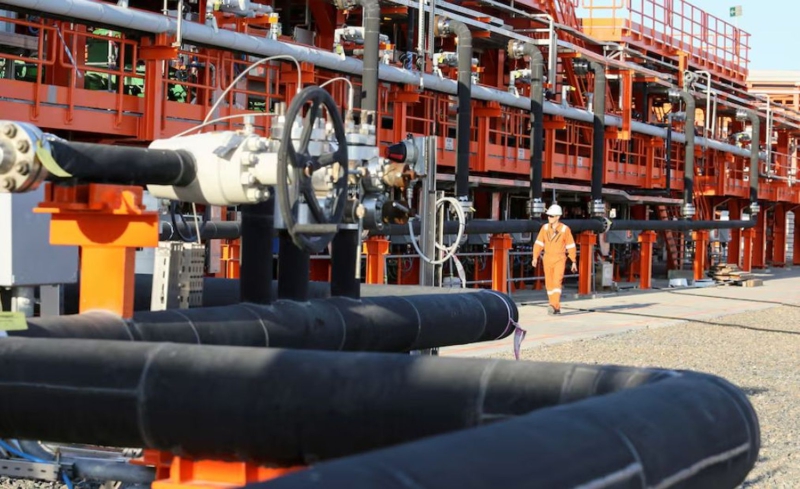
As the pipeline runs through Russian territory, Kazakhstan remains objectively dependent on Russian transit. Voloshin said this dependence emerged due to several factors.
First, Kazakhstan is landlocked, and the roughly 1,500-kilometer route through Russia provides the most direct and least costly access to the Black Sea and European markets.
Second, the CPC was built in the post-Soviet period using existing Soviet infrastructure and became the main export route long before serious alternatives emerged.
Third, large initial investments and subsequent expansion made the consortium economically efficient, and decades of development only deepened the dependence.
Satpayev agreed, saying Kazakhstan’s reliance on the Russian route was driven primarily by efforts to minimize both economic and political risks. Exporting oil via the CPC costs a fraction of what it would to ship it along alternative routes like the Baku-Tbilisi-Ceyhan (BTC) pipeline.
“There were plans to export 23 million tons of oil per year via BTC, with a subsequent increase to more than 50 million tons. In 2007, the creation of the Kazakhstan-Caspian Transport System was even announced, with a potential capacity of up to 70 million tons per year. But oil production at Kashagan was repeatedly delayed. There was also a shortage of rail tank cars and tankers to ship oil across the Caspian. Against this backdrop, the launch of the CPC proved to be the more economically viable option for its shareholders,” Satpayev said.
Laying an oil pipeline overland directly to the Black Sea also seemed a better solution at the time than transporting oil by tanker across the Caspian Sea, which would inevitably have led to higher export costs.”
Political considerations also played a role. Satpayev said Russia, seeing attempts by Kazakhstan and Azerbaijan to create alternative oil routes bypassing its territory, actively promoted the CPC as a safer and more advantageous option.
“In 2008, Russia invaded Georgia, which created certain risks for the BTC pipeline. Against that backdrop, CPC shareholders approved an expansion of the Tengiz–Novorossiysk pipeline from 32 million to 67 million tons. As a result, Kazakhstan abandoned the creation of a full-fledged alternative route at that time,” he said.
A Single Point Mooring (SPM) system is an offshore floating buoy or jetty that allows large tankers to connect and safely load/offload liquid cargo (like oil) in deep water, even without onshore facilities, by letting the ship «weathervane» (rotate freely) around the buoy to align with wind, waves, and currents, minimizing stress.
In 2014, when Russia-backed separatists began their incursion into the Donbas region of eastern Ukraine, Kazakhstan again returned to discussions about diversifying its oil export routes. However, the idea again failed to gain support among shareholders of the CPC, Satpayev continued.
“Seeing that these events did not lead to sanctions against the CPC, despite the participation of Russian companies, Western CPC shareholders operating at Tengiz, Kashagan, and Karachaganak again placed their bets on the CPC, deciding not to change horses midstream,” Satpayev said. “Moreover, in 2019 a decision was made to further expand the CPC’s capacity to 83 million tons per year — 72.5 million tons of Kazakh oil together with Russian crude.”
As a result, Kazakhstan and Western companies effectively drove themselves into a trap, becoming hostages to the current geopolitical situation, in which drone strikes from air and sea against CPC infrastructure have begun to pose serious economic risks, Satpayev concluded.
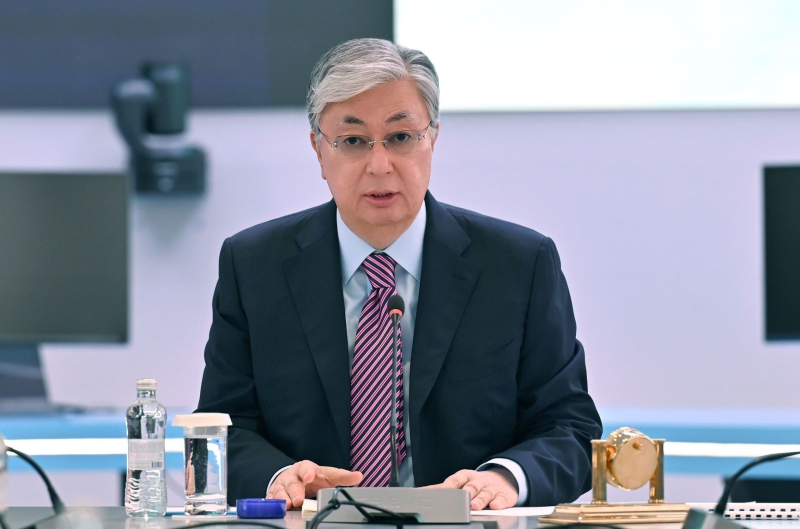
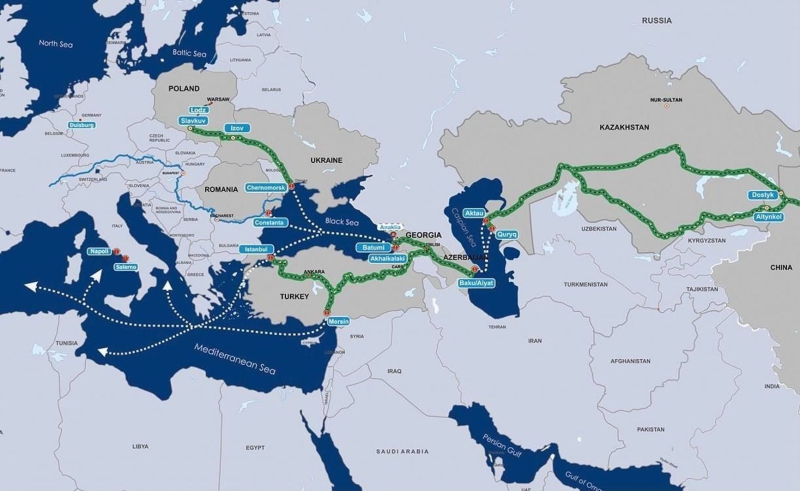
Ukrainian attacks on Russia’s pipeline infrastructure have once again forced Astana to revisit the issue of export diversification. Kazakhstan first raised the need for alternative routes in the summer of 2022 following a series of disruptions in the consortium’s operations that were caused by Russia. At the time, Kazakhstan’s President Kassym-Jomart Tokayev instructed officials to explore options for developing the Trans-Caspian route and expanding the capacity of the Atyrau-Kenyak and Kenyak-Kumkol pipelines in order to bypass Russia.
A Single Point Mooring (SPM) system is an offshore floating buoy or jetty that allows large tankers to connect and safely load/offload liquid cargo (like oil) in deep water, even without onshore facilities, by letting the ship «weathervane» (rotate freely) around the buoy to align with wind, waves, and currents, minimizing stress.
However, the Trans-Caspian route remains stuck at the feasibility study stage, with plans to expand infrastructure scheduled for 2026-2035. As a result, immediately after the latest attack Kazakhstan began redirecting oil exports along routes that remain available — in particular through the Atasu-Alashankou pipeline directly to China. For the first time, shipments along this line will be supplied from the Kashagan oil field.
A Single Point Mooring (SPM) system is an offshore floating buoy or jetty that allows large tankers to connect and safely load/offload liquid cargo (like oil) in deep water, even without onshore facilities, by letting the ship «weathervane» (rotate freely) around the buoy to align with wind, waves, and currents, minimizing stress.
Kazakhstan’s response to the attacks
The day after Ukrainian drones struck a CPC oil terminal located about five kilometers near the port of Novorossiysk, Kazakhstan’s Foreign Ministry lodged a protest with Kyiv.
“We view what happened as an action that damages bilateral relations between the Republic of Kazakhstan and Ukraine, and we expect the Ukrainian side to take effective measures to prevent such incidents in the future,” the ministry said in a statement.
Kazakhstan’s Foreign Minister, Aybek Smadiyarov, emphasized that this was already the third such incident directed “exclusively against a civilian facility” affecting Kazakhstan’s economic interests.
At the same time, Satpayev noted that Kyiv views the CPC as being an essentially Russia-controlled asset, regardless of whose oil is transported through it.
“Ukraine proceeds from the assumption that Russia controls 51% of the CPC, even though it exports far less oil than Kazakhstan. But it still brings Russia income, which it channels into the war,” he said.
Ukraine’s Foreign Ministry responded by saying Kyiv had “taken note of the Republic of Kazakhstan’s concerns regarding the infrastructure of the Caspian Pipeline Consortium,” stressing that Ukraine’s actions “are not directed against the Republic of Kazakhstan or other third countries.”
A Single Point Mooring (SPM) system is an offshore floating buoy or jetty that allows large tankers to connect and safely load/offload liquid cargo (like oil) in deep water, even without onshore facilities, by letting the ship «weathervane» (rotate freely) around the buoy to align with wind, waves, and currents, minimizing stress.
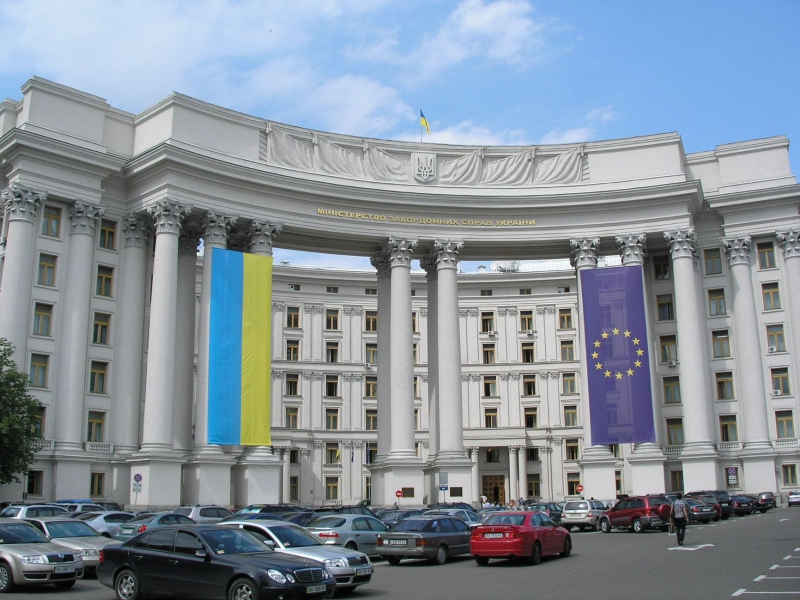
Kyiv also noted that Ukraine is acting within its right to self-defense under Article 51 of the U.N. Charter and expressed concern that Kazakhstan has not issued similar protests over Russia’s regular strikes on Ukraine’s civilian and energy infrastructure.
A week after the public exchange of statements, Kazakhstan’s Foreign Ministry spokesman Aybek Smadiyarov said Foreign Minister Yermek Kosherbayev discussed the situation around the CPC with his Ukrainian counterpart Andrii Sybiha during a meeting in Vienna.
“Unfortunately, I was not at that meeting, but I was nearby. I am confident that the CPC issue was discussed. We will not comment further on this matter. We remain in contact with the Ukrainian side and will continue work through closed diplomatic channels. At the ambassadorial level, we are working,” Smadiyarov said.
According to Ariel Cohen, a senior expert at the Atlantic Council and founder of the consulting firm International Market Analysis, further attacks on CPC infrastructure could complicate diplomatic relations between Kazakhstan and Ukraine.
“There is fairly widespread sympathy for Ukraine in Kazakhstan: Kazakhs do not recognize Russia’s seizure of Crimea or its attempts to extend occupation to Donbas,” Cohen said. “However, Ukrainian strikes on facilities affecting Kazakhstan’s interests undermine that solidarity.”
Satpayev agreed, saying strikes on Russian energy infrastructure, including on facilities in Novorossiysk, are likely to continue. After all, the CPC carries not only Kazakh oil but also crude from Russian fields.
At the same time, Satpayev stressed that Ukraine is not interested in a complete shutdown of the CPC, as such a scenario would directly harm Kyiv’s European partners, who are the main buyers of Kazakh oil:
“For example, of the more than 35.4 million tons of oil exported by Kazakhstan in the first half of 2025, about 83% went to European countries. The largest buyer of Kazakh oil is Italy, with more than 14.4 million tons.
Apart from Italy, other major importers include Germany, the Netherlands, France, Greece, and Romania. In 2025, Kazakhstan also began supplying oil to Hungary. By year’s end, Kazakhstan became Europe’s third-largest supplier of crude oil, after the United States and Norway.”
Satpayev said Kyiv also has no interest in harming U.S. oil and gas companies that produce oil in Kazakhstan and export it via the CPC.
Still, the threat of new attacks is forcing Astana to gradually adjust its foreign policy. According to Temur Umarov, a regional expert at the Carnegie Center in Berlin, Kazakhstan will seek to reduce its dependence on the Russian pipeline.
“Kazakhstan has traditionally pursued a multi-vector foreign policy, so no sharp shift in priorities is expected,” Umarov said. “Rather, we will see a continuation of the same flexible course the country has followed over the past decade.”
Cohen shared a similar assessment, saying Astana will continue to maneuver between its various international partners:
“Kazakhstan has joined the Abraham Accords and participates in the C5+1 format — the five Central Asian countries of Kazakhstan, Kyrgyzstan, Tajikistan, Turkmenistan, and Uzbekistan, plus the United States. For many years, the country has successfully pursued a multi-vector policy, seeking to balance relations with Russia, China and the United States. So far, there is no reason to believe this approach will stop working.”
A Single Point Mooring (SPM) system is an offshore floating buoy or jetty that allows large tankers to connect and safely load/offload liquid cargo (like oil) in deep water, even without onshore facilities, by letting the ship «weathervane» (rotate freely) around the buoy to align with wind, waves, and currents, minimizing stress.
Consequences of attacks on the CPC
As noted earlier, Ukrainian drone strikes are forcing Kazakhstan to partially diversify its export routes. However, existing alternatives are unable to fully compensate for lost CPC capacity.
According to regional expert George Voloshin, alternative routes are less competitive because they involve higher transportation costs and complex, multi-stage logistics.
“This reduces the profitability and global market price of the redirected oil. The estimated total capacity of the current alternatives is approximately 300,000 barrels per day, which represents roughly only 20% of normal export volumes,” he said.
Kazakhstan currently has a handful of alternative export options, but they all come with their own unique limitations:
- the Baku-Tbilisi-Ceyhan pipeline, whose capacity is far lower than the CPC’s and requires complex multi-stage logistics;
- the Atasu-Alashankou pipeline, which is designed to meet limited demand in western China and can transport only about 400,000 barrels per day, making it unable to quickly offset losses;
- the Aktau export terminal, which supports only limited seaborne shipments, has outdated infrastructure and faces serious tanker capacity constraints;
- the Baku-Supsa pipeline and the Druzhba pipeline. The former provides access to the Black Sea, with up to 3 million tons per year, and the latter to Europe, including Hungary, but neither matches the CPC’s capacity.
A Single Point Mooring (SPM) system is an offshore floating buoy or jetty that allows large tankers to connect and safely load/offload liquid cargo (like oil) in deep water, even without onshore facilities, by letting the ship «weathervane» (rotate freely) around the buoy to align with wind, waves, and currents, minimizing stress.
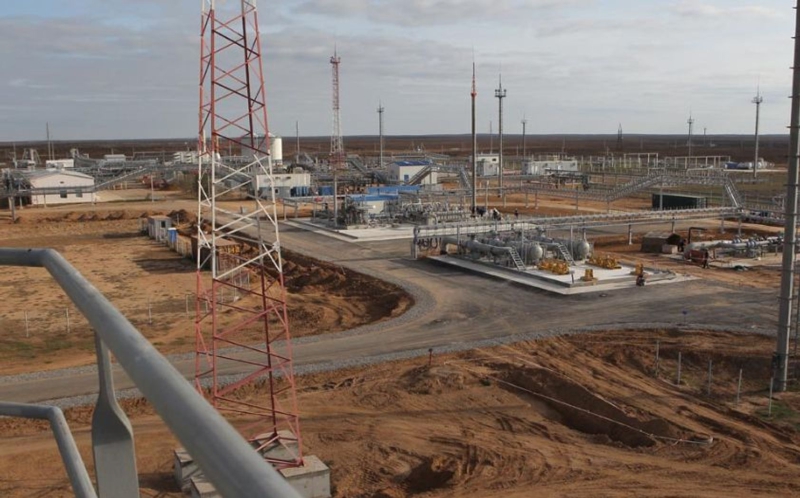
Over the next one to three months, Kazakhstan will be able to reroute only a small share of its export volumes, explained George Voloshin.
“Rapid volume substitution is impossible due to routing and infrastructure limitations. Redirecting bulk oil through alternative routes could prove both technically difficult and more expensive and take up to 36 months,” he said.
One possible way to partially offset losses would be to process Kazakh oil and gas condensate at facilities inside Russia. However, this option also carries serious risks. Building Kazakhstan’s own refineries and gas-processing plants would require significant time and investment, explained Dosym Satpayev.
“For example, in October an emergency occurred at the Orenburg gas processing plant after a Ukrainian drone attack, and the plant temporarily stopped accepting gas from Kazakhstan’s Karachaganak field,” he said. “Since 2002, the Orenburg plant has processed up to 9 billion cubic meters of Kazakh gas per year and then sold it to Kazakhstan and Russia. The problem is that, as with the CPC, Kazakhstan has yet to find an alternative to the Orenburg plant. In the future, perhaps it could be replaced by a new plant at Karachaganak, but that would require investors and years of construction and commissioning.”
Despite the constraints, Kazakhstan has managed to gradually increase the volume of its oil shipments bypassing Russia.
“In November, KazTransOil shipped 136,000 tons of oil through Aktau toward the BTC route,” Satpayev said. “By comparison, shipments via BTC totaled 27,000 tons in October and just 18,000 tons in September. According to official forecasts, exports via BTC could soon reach 2.2 million tons per year, and in the long term up to 20 million tons.”
Kazakhstan is also increasing oil exports to China, South Korea, and India, while expanding sales to Turkey. Turkey’s largest refineries — SOCAR Star refinery and Tupras — have already begun replacing Russian oil with Kazakh and Iraqi crude. China’s Yanchang Petroleum is also diversifying its purchases with supplies from the United Arab Emirates and Kazakhstan.
As a result, Kazakhstan is feeling the impact of the attacks on two fronts: financial losses from forced export cuts, as well as a strategic shift toward a cautious, gradual diversification of its export routes.
A Single Point Mooring (SPM) system is an offshore floating buoy or jetty that allows large tankers to connect and safely load/offload liquid cargo (like oil) in deep water, even without onshore facilities, by letting the ship «weathervane» (rotate freely) around the buoy to align with wind, waves, and currents, minimizing stress.