
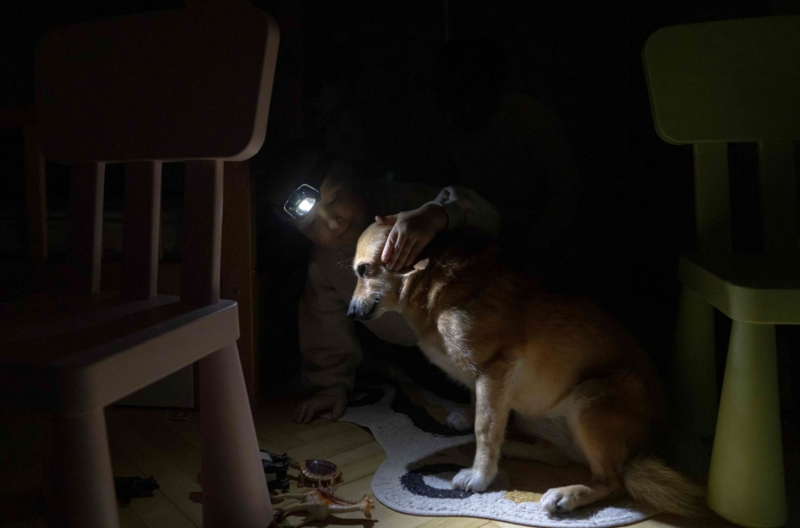
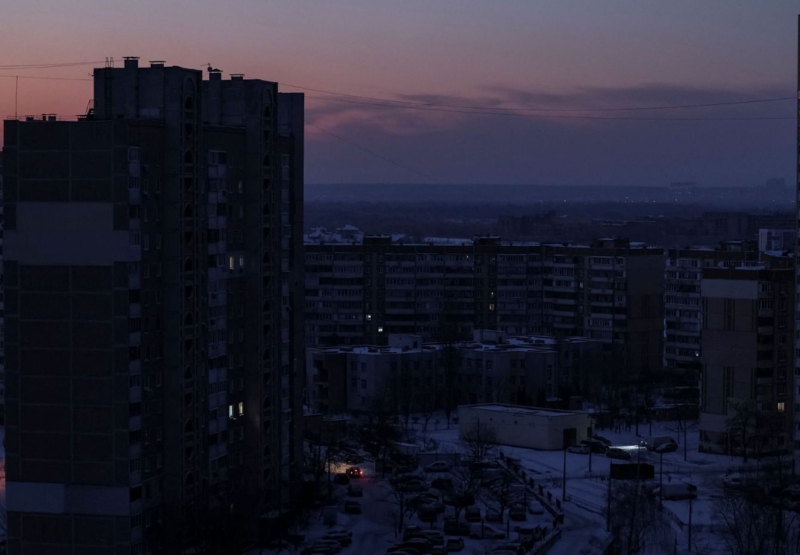
Kyiv residents during a blackout, Jan. 13, 2026 / Andrew Kravchenko / AFP
In the early hours of Jan. 24, Russia carried out another massive strike on Kyiv’s energy system. Six thousand residential buildings were left without heating, and 800,000 people were without power. Ongoing attacks across the Kyiv Region have left an untold number of residents without basic amenities — electricity, water, and heat — in the middle of winter. While energy workers are doing everything possible to restore damaged infrastructure, Kyiv residents are learning to survive under any conditions. The Insider reports on how the most extensive power outages in Kyiv are unfolding, why people have no plans to leave the city, and how they have adapted by pitching tents inside their apartments and warming up with bonfires in the courtyard.
For almost a month, Kyiv has been without a stable supply of electricity, and thousands of apartment buildings have been left without heating and water. Against the backdrop of severe frost and heavy snowfall, Russia has intensified strikes on critical infrastructure. The first massive attack on Kyiv’s energy system in the new year took place on Jan. 9. Nearly half of all multi-storey residential buildings were left without heat and power, and train service on the red metro line was restricted. DTEK reported that “the power grid has been significantly damaged, and repair crews are being hindered by strong winds and frost.” Power lines were down in many parts of the city.
“I realized then that we would be without power for a long time,” says Kyiv journalist Tetiana Popova. “It had rained the day before, and an icy layer formed on the branches. Trees couldn’t withstand the weight and fell, tearing down high-voltage lines. As I was told, if not for the aftermath of the strikes, all of this could have been fixed much faster.”
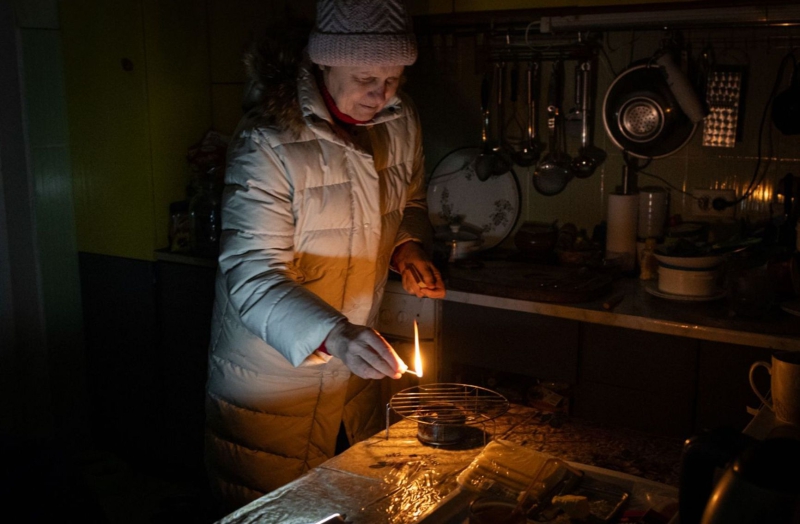
After the next strike in the early hours of Jan. 13, the situation worsened. Kyiv Mayor Vitali Klitschko said that the new attack had caused “an even greater shortage of electricity,” and there was no longer enough supply to keep critical infrastructure running. While the Left Bank of the Ukrainian capital had suffered more heavily on Jan. 9, after the Jan. 13 attacks the substations on the Right Bank were also “finished off.”
Until January 2026, power outages in Kyiv followed schedules, and residents could adjust to them. Now the supply of electricity is completely unpredictable.
“I have fiber optic internet — I’m always connected, and in the evenings I can watch films. But to be honest, it’s depressing. You sit there, it’s cold, you’re wearing three sweaters and a fur hat. Every hour without electricity, the radiators get weaker, and you no longer feel like watching anything. But at least I have YouTube,” says Mikhail Sheitelman, a blogger and political strategist who streams from Kyiv. “Before, knowing about outages in advance, you could plan your life. On good days the power might be off for four hours, on bad ones for seven, but now you don’t know anything.”
Without electricity, central heating also stops working. Because radiators are barely warm, temperatures in many Kyiv residential buildings do not rise above 8–10 °C. According to Sheitelman, this leads to several problems:
“First, when your apartment is only a few degrees above freezing, no matter how warmly you dress, it doesn’t fully help. Second, the cold causes pipes to freeze, and for some people even the water in their toilets freezes, meaning their plumbing stops working.”
Additional difficulties arise with water supply. Electric pumps used in high-rise buildings cannot push water up: “Even if you install a generator for the building, it still won’t be as powerful as the grid. The grid can pump water to the 25th floor, but a generator will lift it only to, say, the fifth. So to get water you have to go down and climb back up carrying buckets,” Sheitelman explains.
Elevators pose an even greater danger. During emergency shutdowns, a lift can stop at any moment, and no one knows how long it might be before those stuck inside can be rescued:
“You could spend a full day in the lift, and in such cold you could die. My friend climbs to the 25th floor several times a day. It takes her eight minutes, but she’s young. Older people barely leave their homes because they’re physically unable to climb up and down that many times.”
The situation is worsened by disruptions to mobile phone service. Power outages often disable base stations across the city, and in these conditions, older people and those living alone cannot reach volunteers to ask for food deliveries, medicine, or an ambulance. “I think there are many people right now who have died in their apartments but haven’t been found yet — most likely because there’s simply no one to find them,” Sheitelman says.
Older people and those who live alone cannot reach volunteers to ask for medicine deliveries or to call an ambulance
Users on social media describe the same problems. Kyiv resident Inna writes about the situation on Facebook:
“Our Ukrainian reality is this: it’s 9 °C in the apartment, there is no power for 18 hours a day, and water is out for roughly the same amount of time. And this is not the worst scenario — sometimes light and heat are absent for several days in a row. Today Russia is systematically destroying Ukraine’s energy infrastructure at the peak of the frost. This is the deliberate deprivation of millions of people of heat, light, and water. The energy system is almost destroyed. Peace talks have reached a dead end.
The authorities, speaking from warm offices, tell us that we are strong and must hold on. For politicians, people are just statistics. But for us it means:
– elderly people on high floors who cannot go out for food and will not live to see an ambulance arrive. Has anyone counted how many die every day, unable to endure these horrific conditions?
– mothers with infants left without water and heat;
– children who fall asleep from the cold in frozen rooms and wake up to explosions.
This is what modern war looks like — the systematic destruction of the civilian population.”
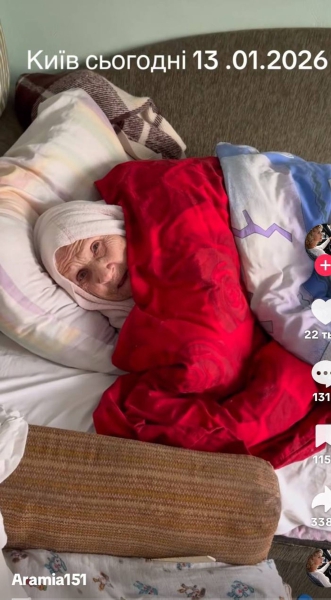
Similar posts are appearing on other social networks. TikTok user Aramia1512 posted a video showing an elderly woman covered with several blankets. In the clip, she says: “The reality of our days: this is how poor elderly pensioners lay down.”
At one point or another, everyone begins to think about what to do and how to cope with what is happening.
“On Jan. 12 we had electricity for three hours the entire day — from 3 p.m. to 6 p.m. On Jan. 13 there was none. We have a generator, which keeps the lift running. It also provides water. But heating is becoming a problem — the radiators start to cool. And all this against the backdrop of discussions about whether it’s better to drain the water from the pipes so that they don’t burst, meaning we can’t understand how best to act in this situation,” says Marina from Kyiv’s Shevchenkivskyi district.
In a conversation with The Insider, Marina clarifies that even after the first strike on Jan. 9, her building still had power, but by Jan. 12 it had disappeared completely. The situation grew even more difficult after Jan. 20, when Russian forces again struck the Ukrainian capital. As a result of that attack, more than 5,500 apartment buildings were left without heat, and the Left Bank faced serious problems with water supply.
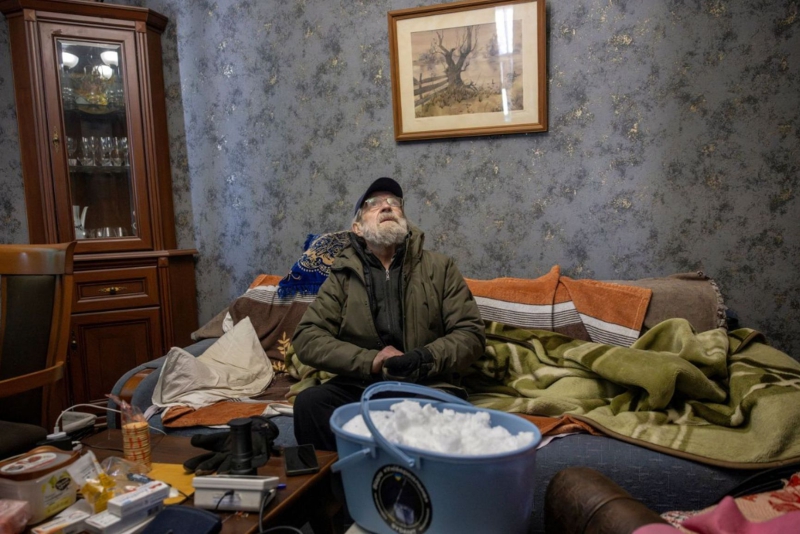
In the cold and without electricity, city residents are forced to look for creative ways to keep warm. On TikTok, for example, a video is circulating of a man who has set himself up in a tent together with his cat.
“The fact that there’s no power is no news to anyone. But my cat and I still need to keep warm somehow. I rigged up a little tent for myself right on the bed in the bedroom, and now my cat and I will sit inside — I have a camping light — and we’ll warm up,” he says.
Another TikTok user, Andrei Martynenko, shares a story about turning his bathroom into the only livable space in his apartment:
“That feeling when you live in Kyiv in a 105-square-meter apartment but, because of the cold, you live in a five-square-meter bathroom. We have a whole lounge there: toilet, bidet, kitchen, gas. Here’s a couch, a place to wash up and shave, even a carpet. You can sleep here while the other three rooms are freezing.”
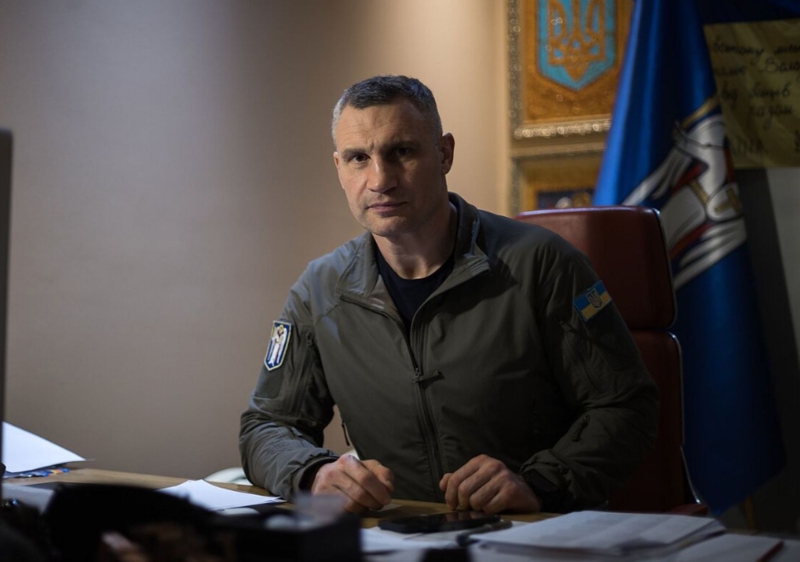
After the first attack on Jan. 9, Kyiv Mayor Vitali Klitschko urged residents to temporarily leave for other towns. But people in Kyiv and the surrounding region say this advice is not always practical when most residents have nowhere better to go.
“I’ve lived in the suburbs of Kyiv for more than ten years, and I can’t say that public services are much better here. If you don’t have batteries, a generator, a stove, or a fireplace, you will simply freeze when the power goes out. The nearest ‘invincibility point,’ for example, is six kilometers from our house. At minus twenty, at night, you can’t walk there,” says Anna, a resident of the village of Lisnyky in Kyiv region.
According to her, in Kyiv itself people at least have relatively accessible places where they can warm up, drink hot tea, and charge their devices:
“In the city such a place might be just a few hundred meters from home. Maybe the mayor meant leaving the country or going to western Ukraine, where there are no such outages. But most Kyiv residents don’t have free accommodation there. So I don’t understand this statement. If the mayor cannot cope with his duties during wartime — and repairing infrastructure and providing public services fall within the city authorities’ responsibility — then perhaps he should step down.”
Another Anna, this one from the Obukhiv district of Kyiv region, says her electricity went out on Jan. 8, several hours before the strikes. “Previously everything was restored within 12 hours at most,” she says. “But this time it was different.”
Anna was saved by the fact that before the war she and her husband had bought two generators and three batteries. With their help, they managed to keep heating in the house, lights in the children’s room and dining room, and minimal warmth in a small greenhouse where Anna grows tropical and subtropical plants.
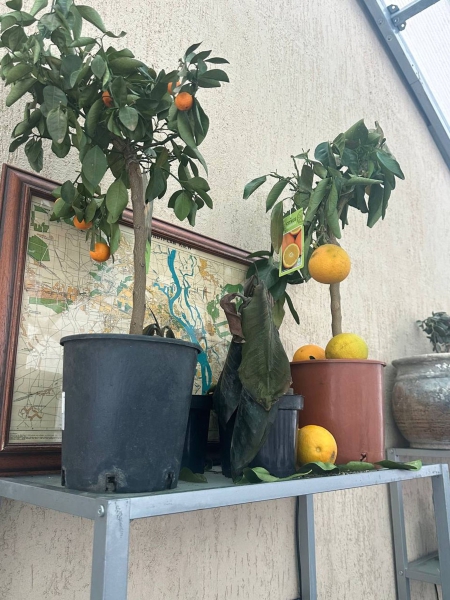
“In the morning after the first night without power, it was +13 °C in the house and +0.3 °C in the greenhouse. I managed to bring most of the plants inside, but not all of them,” she says. When the frost grew stronger, the old generators stopped working, and the family had to urgently buy new ones, but some of the plants could not survive the temperature swings. “The energy workers later said that if not for the strikes, power would have been restored within a day,” Anna says.
Now electricity in their village is being cut off again, albeit according to a rough schedule that limits outages to 6-10 hours a day.
In the winter of 2022, things were different. “I never left Kyiv, and I remember — you would walk outside and everything was dark. No traffic lights, no lights in the windows. It was frightening to walk down the street. The first thing I bought then was reflective bike blinkers, just to be visible somehow,” recalls Sheitelman. Back then, not a single café was open. Now, however, many people have batteries at home, and the city hums with the noise of generators.
Home battery stations have become nearly standard, but they are often not enough. “You can plug in a fridge, a computer, or a TV,” Sheitelman says. “But not a heater. It will drain the battery in half an hour. Only a generator can handle heating — and you need a powerful one.”
Journalist Tetiana Popova confirms that one or two batteries are not enough in severe frost. “My neighbors bought large batteries, but they drain quickly. One lasted a day, another two. They had to rent generators. Otherwise you can’t survive,” she says.
Tetiana herself has three batteries at home: one with 220 amp-hours and two with 100 each. In total, about 4.5 kilowatts — enough for internet, devices and heating. “If the generator is off and the batteries have drained, after two or three hours you already feel that something’s wrong. The radiators become room temperature, and the rooms immediately feel chilly and uncomfortable,” she explains.
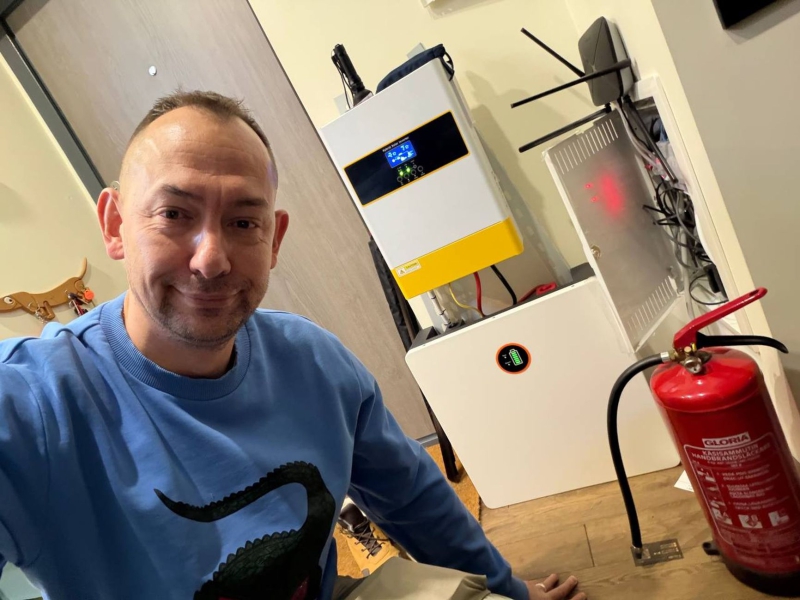
Residents of a building in southeastern Kyiv bought a generator together a year and a half ago and held a meeting to prepare in advance for the heating season
The type of building also matters. Older housing tends to let in more drafts, while newer high-rise developments do a better job of retaining heat but present the issue of long climbs up and down the stairs. The most fortunate are often those who live in buildings with homeowners’ associations, where residents manage the infrastructure themselves. As an electrical engineer named Taras told The Insider, the residents of his building in the Osokorky district of southeastern Kyiv got together a year and a half ago to pool money for a generator:
“We even connected two internet providers, whose batteries weren’t enough for long outages, and set up free Wi-Fi in the bomb shelter so people could stay connected. And we created a small ‘invincibility point’ for our residents — there’s no electricity in the apartments, and people’s power banks and other devices run out. EcoFlows also drain, and now people can come and charge whatever they need. There’s also a spot where you can boil water: when there’s no power for 10–12 hours, it gives you a chance to cook something,” he says.
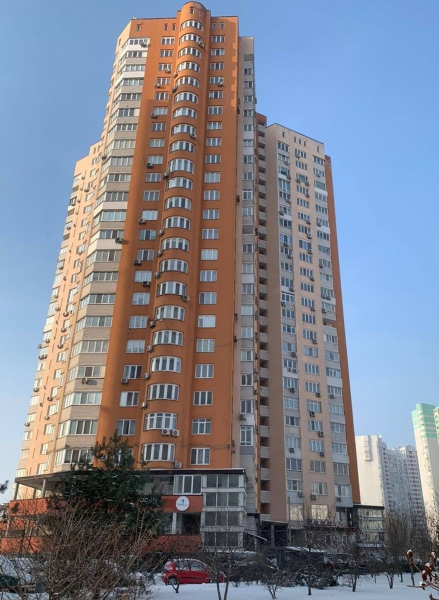
The generator was originally intended to power the building’s elevators and water pumps, but as often happens, these plans were too ambitious. “The generator is 38 kW, and the building’s equipment consumes an average of 9–11 kW, with the elevators adding another 10–12 kW. It turned out to be underloaded, yet the fuel consumption was too high,” Taras explains.
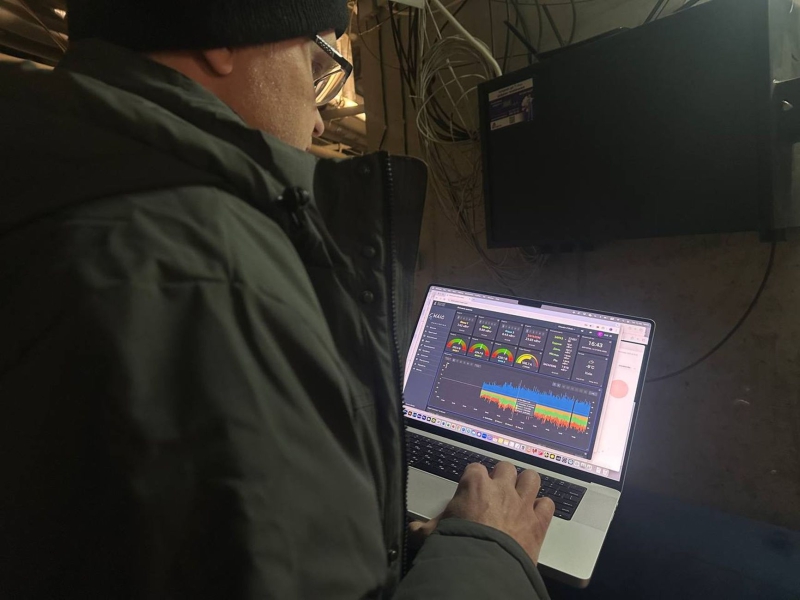
Even in relatively new residential complexes, utility services remain limited. Blogger Roman Tsymbalyuk lives in a gated housing complex in Sviatoshynskyi district that has its own boiler plant, but after the January strikes, electricity in his building still went out for about half a day. “The most unpleasant thing is this feeling when you watch your power bank running down, no matter how big it is,” Tsymbalyuk says. “You understand that if it switches off, your quality of life will change dramatically.”
At the same time, he notes that the duration of outages in his complex does not depend on the “privileged” status of the district but on the technical capabilities of the power system. “If there’s an opportunity to supply electricity — they supply it. There are no schedules, and we assume the power can be cut at any moment,” Tsymbalyuk explains.
Heating in his building is currently maintained only thanks only to the separate boiler plant that will continue to keep residents warm so long as it “hasn’t been bombed. If it is — then things will certainly be bad,” he adds.
Those living in older buildings — where the walls and floors will literally “go cold” — units are struggling the most with the frost. “To escape the cold, people go to spend the night with friends in homes with diesel generators,” Sheitelman says. “Around thirty people gather there and stay overnight. The main thing is that there is diesel at the gas stations, so we survive.”
Those who stay in their apartments wrap themselves in multiple layers of clothing, put bottles of hot water in their beds, or heat bricks on gas burners and then wrap them in blankets. Some switch to sleeping bags. “If it’s ten degrees or colder in the apartment, they really save you,” Popova says. “Otherwise it’s simply impossible to get warm.”
Many face additional difficulties because they do not have gas. “If you have a gas water heater in the apartment, you’ll always have hot water. If you have a gas stove, you’ll have hot food. And if not, you’ll have to look for a place to wash and figure out how to cook,” Sheitelman says.
In such cases people usually stock up on camping gear: they buy a small disposable gas canister with a burner or a mini-stove on which they can cook soup or heat food. For example, TikTok user Nataliya Ziuziun shows how she cooks even after 18 hours without electricity: “Our radiators are cold, and the supply pipe is a little warm. We have a small gas stove on which we cook pasta. One canister of gas is enough for a couple of times. And we also have these little glow sticks that give us light.”
But even as Kyiv residents gradually adapt to the circumstances, anxiety and exhaustion continue to grow. Popova recalls that in the first days of severe frost and strikes she barely slept. “I got up every hour. I had to switch the batteries manually. They aren’t connected to each other, and when one ran down, I had to turn on another. It was real stress. And even now my sleep is still bad.”
Sheitelman also speaks about the depression brought on by the cold and darkness:
“I have a friend who moved to Kyiv only this winter, and she complains of depression. I wrote to her that she’s simply inexperienced: you need to hang Christmas lights all over the apartment — battery-powered ones. And then you’ll have an endless New Year’s eve. They shine everywhere, and you sort of feel good all the time — like a disco. Many people do this. You walk past buildings and see garlands hanging in the windows.”
There is another trick to combat low spirits: install motion-sensor light bulbs at home. “You walk through the apartment, and the light switches on wherever you need it. First, it’s simply beautiful, and second, it makes you walk around instead of sitting in a chair,” Sheitelman says.
Candles have also become an essential part of everyday life. “I have dozens of them at home,” Popova says. “In case the batteries run down and there’s no light at all.”
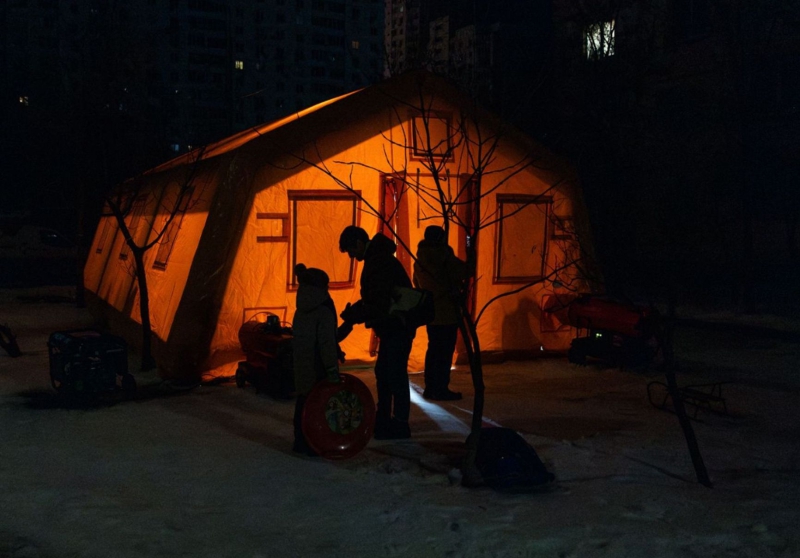
When power outages drag on and home batteries drain one after another, Kyiv residents head outside in search of the most essential thing: connection. On Jan. 10, mobile “Invincibility Points” began appearing across the capital — large heated tents with generators where people can warm up and charge their devices. Pavlo Petrov, head of the press center of the Kyiv emergency services, says their deployment is more related to the strikes than to the frost. “If not for the enemy’s attacks, then even with the current temperatures, this winter would have been much more bearable for people,” he notes.
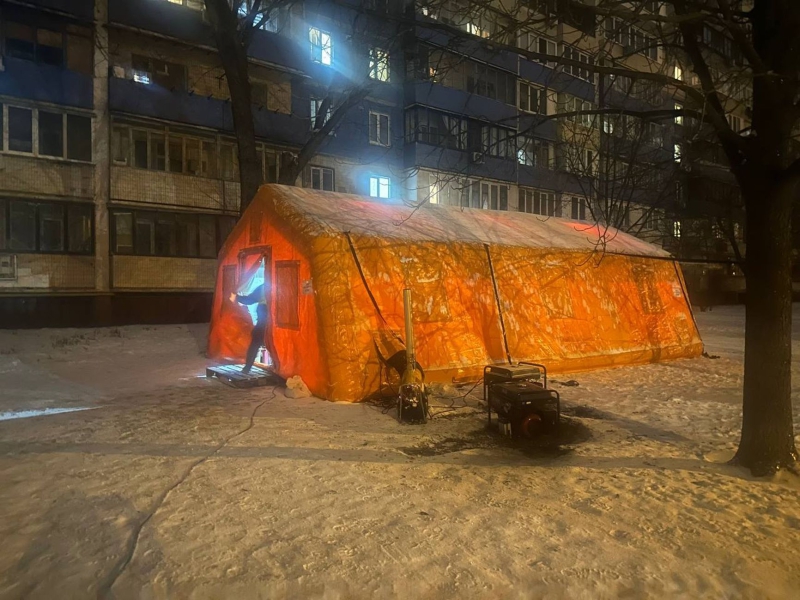
Unlike the permanent points, which have been operating at fire and rescue stations since 2022, the mobile tents are set up directly in the courtyards of apartment buildings and wherever else it is easiest for people to reach them. According to Petrov, more than forty such points were initially operating in the city, and now around thirty remain.
Attendance at the mobile aid points varies greatly — on weekends there are more people, on weekdays fewer, and the crowds grow noticeably towards sunset. “The main flow begins after five or six in the evening,” Petrov says. Most often, older people come to the tents — not for the internet, but for hot water. “A grandmother came to fill up some water and said, ‘I don’t have hot water at home, but you do here. I’ll go make myself some tea.’”
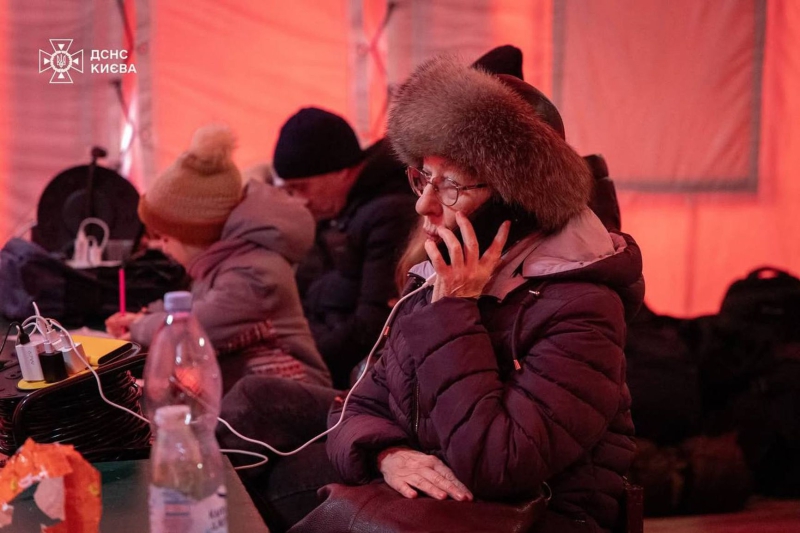
These points operate around the clock, regardless of the curfew. People charge everything here, from phones and flashlights to tablets and battery stations. For many, this is the only way to stay connected.
Mobile “Invincibility Points” are, for many, the only way to stay connected
At the same time, the staff working in the tents face the same dangers as everyone else. On Jan. 9, five emergency service workers were injured in the Russian strikes. A team of medics was working alongside them, and one of them, 56-year-old Serhiy Smolyak, was killed on the spot.
“Our mobile ‘invincibility points’ will operate for as long as needed. Until the situation in the city stabilizes and people no longer need to go outside to charge their devices or warm up,” Petrov said.
Tetiana, who lives in a 1980s apartment building on the Kharkivske highway, says that the only thing that saved her after the heat and power went out were the “invincibility points”:
“We were without power for 48 hours starting on Jan. 10. We told the emergency services, and by Sunday evening they came to us. They set up tents here. At first there was only one, and there were so many people it was impossible to get inside. The next day, there was a second one. And the tea — the warmth — really helped us get through all this.”
In addition to the “invincibility points,” people also gather in courtyards — around improvised bonfires, with hot tea and music (1, 2).
Cafés and theatres continue to operate in the city as well. “And this is a big contrast with the first winter of 2022. I remember going to the opera — it was the first thing to reopen. We left the performance and wanted to go to a restaurant, but it turned out there wasn’t a single one open in the city. No one had a generator back then,” says Sheitelman.
Social media users also share their experiences of attending cultural events:
“Today it was −13 °C outside. The trees turned into ice sculptures. Since Friday we’ve had heat and electricity only for a couple of hours. No hot water. Cold water appears sometimes, sometimes not.”
“I went to a concert in a church with my dad — there was no electricity there either, but a man at the entrance cheerfully suggested we check our coats. Some people listened and regretted it. My dad gave me his fur hat so I could warm my hands in it during the concert.”
“In one of the restaurants (they have a generator), the toilet had a bidet shower with hot water. I figured that if anything happened, I’d go there to shower. But for now I shower at the gym, where I go every day. Turns out I still have the ability to wake up exactly when the electricity comes on (usually deep in the night). I charge the batteries, eat breakfast, and go back to sleep. And then I get up and have breakfast again.”
“Today I got a haircut from the best stylist in Kyiv (they also have generators). I was sorry to put on a hat over the new hairdo, but I’m not five years old — I put on the hat and the hood (and two sweaters and tights).”
Kyiv is adapting to the cold and darkness just as it has adapted to air raid sirens and strikes — through small, practical solutions. And while the supply of electricity remains unpredictable, the city continues to go outside — for warmth, connection, and the sense that life still goes on.