
Environmental group Greenpeace has calculated that in the event of an oil spill in the Gulf of Finland, the environmental impact would affect approximately 100,000 residents of the Russian cities of Vyborg, Primorsk, Vysotsk, and other coastal communities, as well as unique natural sites. The NGO’s specialists reached those conclusions after studying an oil-spill simulation prepared by the German research center Helmholtz Center Hereon. Outdated tankers from Russia’s “shadow fleet” that carry sanctioned petroleum products regularly travel through the area of the hypothetical spill.
The NGO analyzed eight possible spill scenarios in different parts of the Baltic Sea. They used wind and sea-current data for February 2025 provided by Germany’s Federal Maritime and Hydrographic Agency, as well as the routes of the sanctioned “shadow fleet” tanker Peace, an aging ship that operates without a flag or proper insurance while carrying up to 110,000 tons of oil.
The modeling showed that if an accident involving a tanker carrying only 48,000 tons of fuel were to occur near the lighthouse on Seskar Island in Russia’s Leningrad Region, about half that volume would reach shore within 30 days. As a result, most of the coastline of the Vyborgsky and Kingiseppsky Districts of the Leningrad Region would be polluted, including protected nature preserves — Kurgalsky, Vyborgsky, and the Berezovye Islands.
The NGO’s representatives, speaking with The Insider, said that in the event of an accident, St. Petersburg also could be at risk:
“A major accident involving a tanker from Russia’s ‘shadow fleet’ is a matter of time. Russia uses tankers older than 15 years. Older vessels are especially susceptible to corrosion and wear, which significantly increases the risk of accidents. Many of these tankers sail without proper insurance, which means that in the event of an oil spill, neighboring countries would have to cover the damage themselves.
In the Gulf of Finland there is a phenomenon known as a storm surge: the current goes from west to east, and water from the gulf enters the Neva River. Before the dam there was built, this often led to flooding. On average, a storm surge occurs several times a year with varying intensity. If such a phenomenon happens during an accident, petroleum products could enter the Neva, including water intakes, posing a threat to the city’s water supply, since St. Petersburg has no water-supply sources other than the Neva, except for a few small districts. But even if there is no storm surge at the moment of the accident, sooner or later it will occur and carry the petroleum products remaining in the gulf or on its bottom into the Neva.”
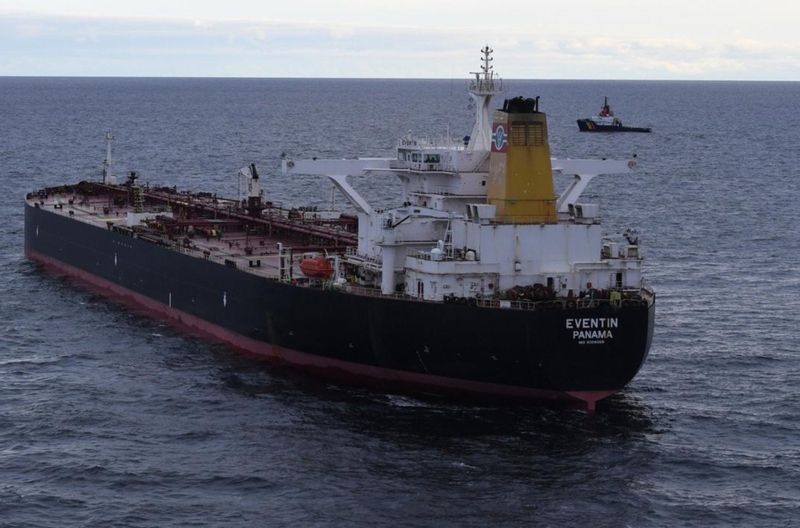
As noted by Greenpeace, incidents involving “shadow fleet” vessels in the Baltic Sea have already occurred. In March 2024, the tanker Andromeda Star, with an unknown owner and invalid insurance, collided with another vessel in the Oresund Strait in Denmark’s territorial waters. Then, in January 2025, all control systems failed on the 20-year-old tanker Eventin, which was loaded with 100,000 tons of Russian oil; the ship drifted for several hours until the German coast guard towed it to safety.
Greenpeace is urging European countries to take more active steps to counter the “shadow fleet”:
“The EU’s December declaration clarified that European countries have the right to inspect these vessels and, if the absence of proper registration is confirmed, to take appropriate measures. Despite the fact that these legal instruments already exist, in practice they are hardly used. Greenpeace calls on the governments of European Union countries — in particular the Scandinavian countries and the Baltic states, whose ecosystems and communities are directly exposed to the threat posed by the ‘shadow fleet’ — to join forces and jointly develop a concrete action plan. These measures must put an end to the constant threat to the marine environment. Greenpeace insists it is time to move from declarations to real action: EU countries have not only the right, but also the obligation to protect the vulnerable marine ecosystem of the Baltic Sea.”
In December 2025, Sweden detained the “shadow fleet” container ship Adler, which was suspected of transporting weapons. However, the country’s prosecutors ultimately decided not to open a preliminary investigation into suspected sanctions violations and instead released the vessel. In January, Germany for the first time denied entry to the Baltic Sea to the tanker Tavian, flying the flag of Cameroon, which is linked to Russia’s “shadow fleet.” It was ultimately forced to head north toward Russia’s coast.